Someone asks how was your night and most people answer with one flat word that closes the conversation instead of opening it. The fix is not lying about your night, it is picking the one true detail that actually makes it worth answering. What follows is organized by what actually happened, a boring night, a sleepless one, a bad one, a good one, plus the version for someone closer to you, so you can find the reply that matches your night instead of guessing.
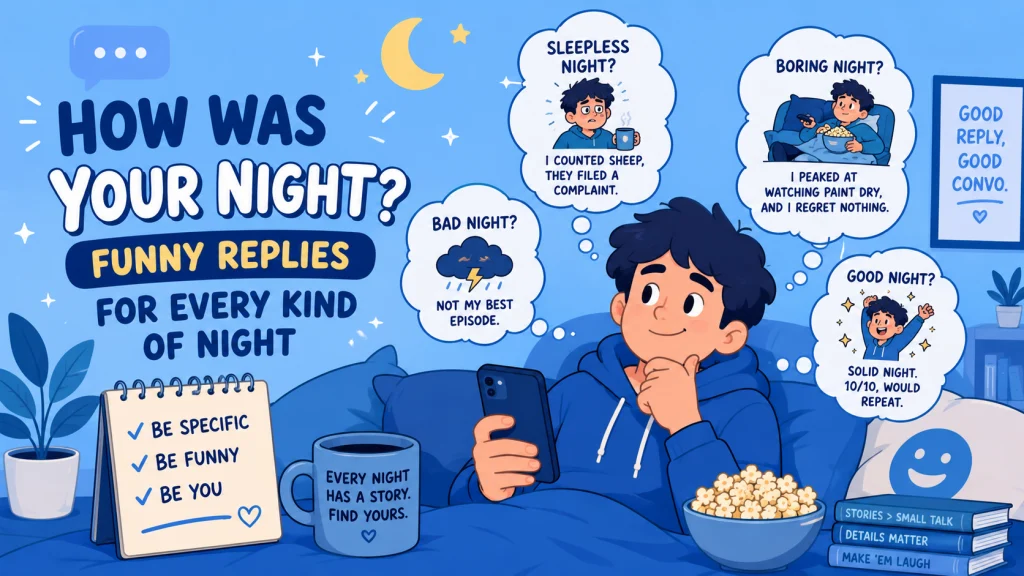
Why “How Was Your Night” Wants a Story, Not a Status Update
Someone asks how was your night and most people answer like a form, fine, good, tired, three words that close the conversation instead of opening it. That is exactly why funny replies to how was your night tend to work better than the literal truth. It is not that fine is dishonest, it is that fine gives the other person nothing to hold onto, no detail, no opening, nothing to ask about next. The question is really an invitation for a tiny story, even a forgettable one, and most people skip straight past it.
I get why people default to the short version. A real story takes effort, and most nights are not exciting enough to seem worth telling. But a recap does not need a plot. It needs one specific detail, the moment that made the night what it was, even if that moment was choosing to do absolutely nothing. The reply works the second it sounds like an actual answer instead of a placeholder.

What People Actually Want When They Ask
Most people searching for a funny response to how was your night already know the literal answer. What they actually want is a version that gives the other person something to laugh at or follow up on. That usually breaks down into a few familiar shapes: a short funny line for when nothing happened, something for the nights you barely slept, something for when things went wrong, and a handful of quick one-liners for when you just want to answer fast without overthinking it. Each shape solves a slightly different problem, which is why one generic joke rarely covers every night.
What separates a good answer from a flat one usually comes down to specificity. A reply that is actually funny picks one true detail and exaggerates it slightly, instead of reaching for a generic joke that could apply to literally anyone’s evening. The most forgettable replies are the ones that could have been copied and pasted into any conversation. The specific version takes maybe ten extra seconds to think of, and it is almost always worth it.
Let What Actually Happened Pick the Reply
Most lists built around this question organize replies by tone, witty, sarcastic, cute, without asking what actually happened the night before. That backwards approach is part of why so many of those replies feel interchangeable. The honest starting point is not tone, it is the actual night. Did nothing happen. Did you barely sleep. Did something go wrong. Was it actually a good one. The right reply follows from that answer, not the other way around.
Nine years behind a bar means I have heard this exact question answered in real time more times than I can count. The good answers were never generic. They picked the one detail that actually happened, the wrong drink order, the friend who vanished for twenty minutes, the song that played four times in a row. Even the boring nights got the same treatment from anyone who actually had something resembling a sense of humor. A recap only works as a story if you pick the true detail instead of defaulting to fine because it feels safer.
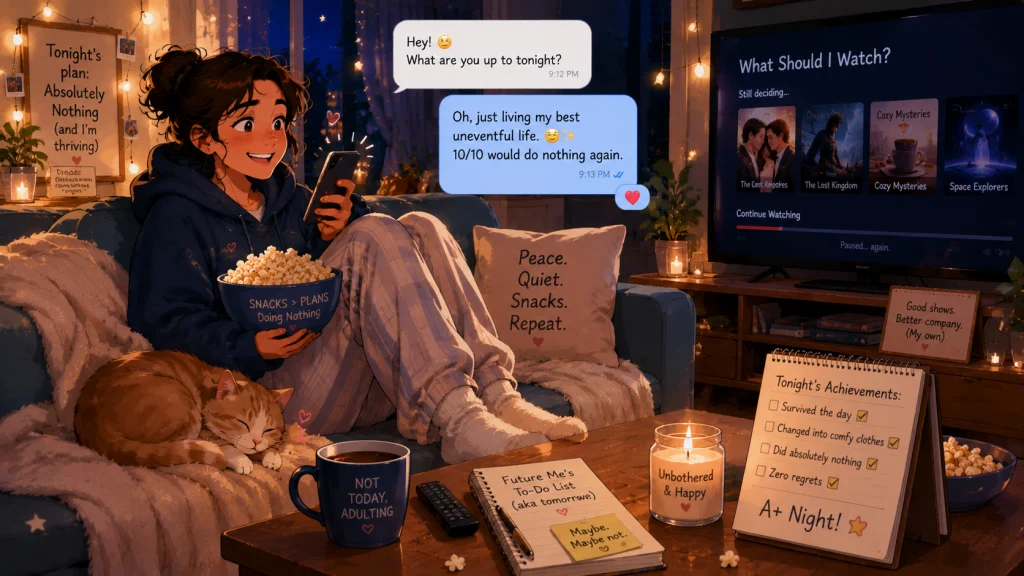
When Nothing Happened, Make Nothing Sound Like a Choice
Some nights genuinely have no story in them, and that is fine. The trick with a boring night is making the nothing sound deliberate instead of sad, like you chose stillness over chaos rather than just running out of options. These work because they treat doing nothing as its own small victory. Nobody needs an apology for a quiet night, least of all the person texting you about it.
- “Honestly? I peaked at watching paint dry, and I regret nothing.”
- “Nothing happened. I have never felt so accomplished.”
- “I did absolutely nothing, and it was the best decision I made all week.”
- “My night was so boring even my phone gave up notifying me.”
- “I stayed in and called it self-care. Works every time.”
- “Nothing to report. I am living my villain origin story in slow motion.”
- “I watched three episodes of something I will not remember by tomorrow.”
- “My night was a thrilling marathon of doing absolutely nothing.”
- “I had a wild night of laundry and going to bed early.”
- “Zero plot twists today, and I’m completely fine with that.”
- “I stared at the ceiling and called it reflection.”
- “My biggest accomplishment was choosing a show and not finishing it.”
- “I lived the quiet life of someone with zero responsibilities for once.”
- “Boring on purpose. I needed the rest more than the story.”
Any of these works without needing a follow-up. If the asker wants more, you genuinely have nothing else to add, and that is part of the joke. The whole point is that a quiet night does not need padding to sound interesting.
When You Did Not Sleep, Skip Sounding Like an Emergency
A bad night of sleep walks a thin line. Too dramatic and the other person starts asking if you are actually okay, which is not the energy you are usually going for. These replies keep the exhaustion funny instead of concerning, exaggerated enough to read as a joke, not a warning sign. The line between funny-tired and genuinely worrying is thinner than people think, so it helps to lean toward the absurd instead of the literal.
- “I saw every hour of the night and none of them were good.”
- “Sleep and I had a disagreement, and somehow I lost.”
- “I am running on caffeine and pure stubbornness today.”
- “My brain decided 3 AM was the perfect time to plan my whole life.”
- “I closed my eyes for what felt like five minutes and then it was morning.”
- “I am operating on the bare minimum amount of sleep humanly possible.”
- “Sleep was more of a suggestion than an actual event last night.”
- “I counted sheep, ceiling cracks, and bad decisions instead of sleeping.”
- “My eyes are open but my brain filed for the day off.”
- “I think I slept. The jury is still out.”
- “Four hours of sleep and a personality powered entirely by coffee.”
- “I was up late negotiating with my own thoughts and losing.”
- “Sleep skipped me last night and did not even leave a note.”
- “I think my bed and I are taking a short break from each other.”
If someone reads genuine worry into one of these, that says more about how rough you actually sound than the line itself. Adjust accordingly, and maybe actually go take a nap. Either way, the joke did its job if it got a laugh instead of a follow-up question about your wellbeing.

When the Night Went Wrong, Turn It Into a Story
A bad night deserves better than a complaint dump. Nobody wants the play-by-play of everything that went wrong over text, but almost everyone wants the headline. These lines hint at chaos without actually unloading it, which usually gets you a follow-up question instead of an awkward silence. Save the full story for when you are actually talking, not typing.
- “Let’s just say last night had a plot twist nobody asked for.”
- “It went sideways fast, but at least it makes a good story now.”
- “I will tell you, but you have to promise not to laugh too hard.”
- “Rough night. Ten out of ten do not recommend, would still tell the story though.”
- “It started fine and then chaos showed up uninvited.”
- “I now have a new story for the next group chat.”
- “It was a mess, but a memorable one.”
- “Things went wrong in a way that is funnier today than it was last night.”
- “I survived, which is honestly the headline here.”
- “Last night had main character energy, just not the good kind.”
- “It was rough, but I am framing it as character development.”
- “Things escalated in ways I did not see coming.”
- “I have a story, a small bruise, and zero regrets.”
- “Last night earned itself a follow-up question, easily.”
The goal is curiosity, not concern. If the reply makes someone want to know more, it has already done its job. The full story can wait until you are actually telling it out loud, where the details land better anyway.
When It Was Actually a Good Night
Good nights are easy to undersell because people worry about sounding like they are bragging. You are not. A good recap just needs enough confidence to make the other person actually want the details instead of assuming you are being polite. Undersell it too hard and it just sounds like another boring night, which defeats the purpose entirely.
- “Honestly? Pretty great. Ask me the right way and I’ll tell you everything.”
- “It went better than expected, and I’m not mad about it.”
- “Last night was the kind of good I’m still smiling about.”
- “Good night, good people, good decisions for once.”
- “I had one of those nights that makes today feel easier.”
- “It was genuinely great, and yes, there’s a story attached.”
- “Last night earned itself a five-star review from me.”
- “Surprisingly great. I’ll give you the details if you ask nicely.”
- “Last night went right for once, and I’m still riding that.”
- “Great night, minimal regrets, solid story to tell.”
- “It was a good one, the kind worth actually talking about.”
- “Mine was the rare kind of good that’s hard to undersell.”
- “Last night hit different, in the best way.”
- “It was good enough that I’m already smiling thinking about it.”
These work best when you genuinely plan to follow up with the real story if they ask. Leaving them hanging after a tease like this undoes the whole point. A good night is worth actually talking about, not just gesturing at.
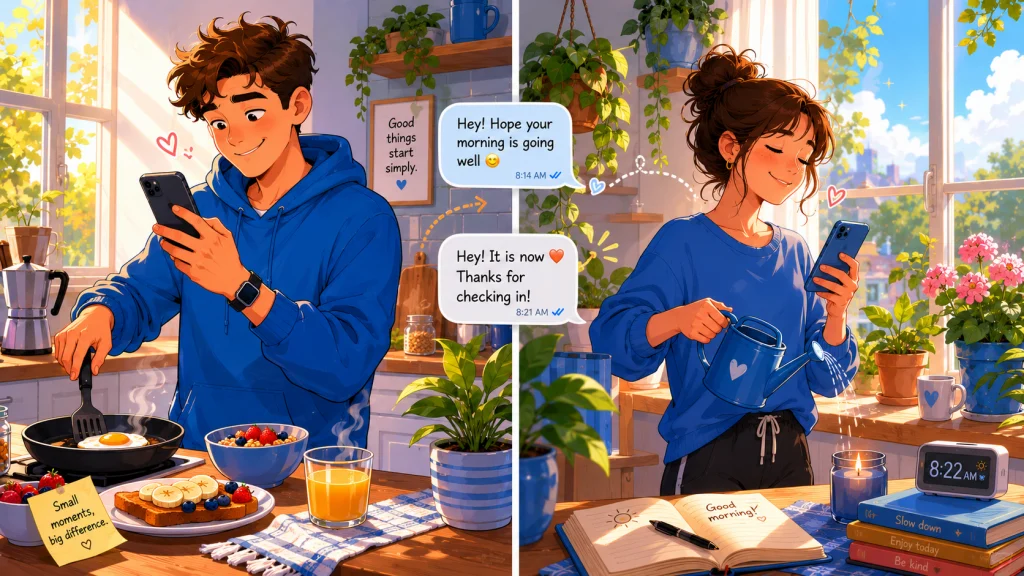
Replies for a Crush or Someone Closer
The version you send a crush or someone you are close to does not need to flirt to land. It just needs a little more warmth than the version you would send anyone else, mostly by acknowledging that they asked, not by saying anything overtly romantic. The shift is subtle, less about what happened last night and more about how glad you are this particular person is the one checking in.
- “Pretty good, actually. Better now that you asked.”
- “It was fine, but this conversation is already the best part of today.”
- “Nothing exciting, but I’m glad you’re the one asking.”
- “Honestly forgettable, until right now.”
- “It was decent. Tell me about yours, I need the upgrade.”
- “Mine was quiet. Yours better have a better story.”
- “Nothing much happened, but I’m not mad you checked in.”
- “It was alright. Ask me again when I have a better answer.”
- “Pretty average, but you asking just made it slightly better.”
- “Nothing wild, just the usual last night.”
- “It was fine. I spent most of it wondering how today would feel.”
- “Mine was low-key. This text already improved it though.”
- “Nothing crazy, just normal stuff, and now this tiny plot twist.”
- “It was good enough. Better since you asked.”
None of these promise anything bigger than they actually say. They just make it obvious you are glad this particular person was the one who asked. That is usually enough to keep the conversation going without forcing it somewhere neither of you has decided to go yet.
What Not to Send Back
A few replies reliably misfire here, usually for the same reason. People either give too little or way too much, and both versions end the conversation instead of continuing it. The fix is almost always somewhere in the middle.
The flat fine usually comes from not wanting to put in the effort, while the overshare usually comes from finally having an outlet for something that has been sitting heavy all night. Neither one is malicious, they are just miscalibrated for a text thread. Texting works best with just enough information to make someone curious, not so little that it reads as cold and not so much that it reads as a crisis.
| The Mistake | Why It Falls Flat | Send This Instead |
|---|---|---|
| A flat “fine” with nothing else added | Reads as disinterest and ends the exchange right there | A short funny line that still gives them something |
| A dramatic overshare of every detail from a bad night | Turns a casual question into emotional labor for the other person | A short story-style line that hints at the mess instead |
| A joke that sounds like a real cry for help | Makes the asker genuinely worried instead of amused | A no-sleep or bad-night line that stays clearly exaggerated |
| No reply at all to the question | Leaves the asker either confused or assuming the worst | Any short, low-effort reply, even a boring-night one |
If you catch yourself either typing one word or typing four paragraphs, you have probably overcorrected. The middle version is almost always the better text to actually send. Aim for one sentence with one real detail, and let the conversation build from there if they want it to.
Where to Go From Here
How was your night is really just one half of a conversation that usually runs both directions. If you want the wider range of funny good morning and good night replies, that collection covers the rest of the daypart questions people send around the same exchange. And if mornings are usually where you actually freeze up, the funny replies for good morning texts built specifically for that moment cover the other side of it.
On the flip side, if someone is asking how your night went because they already said good night to you earlier, the funny good night replies made for that exact handoff are worth a look too. And if the funny angle is working for you generally, not just at night, more funny replies for other situations cover everything else worth a witty answer. Between the four, there is almost always a better fit than whatever you were about to send by default.
Final Thoughts: The Story Matters More Than the Mood
None of these replies are about hiding what actually happened. They are about giving the other person something to actually respond to instead of a dead-end word that ends the exchange before it starts. A boring night can still make someone smile if you frame it right, and a bad one can turn into a story worth telling instead of a complaint nobody asked for. The honest version and the funny version are not actually in conflict here, they are usually the same thing told slightly better.
Pick whichever version actually matches your night, then let the conversation go wherever it goes from there. Nobody needs the full story in the first reply, they just need enough to want to ask for it. Send it, and let them ask the follow-up question if they want one.
FAQs
😴 What is a funny response to how was your night when nothing happened?
Lean into how uneventful it was instead of apologizing for it. A line that treats doing nothing as a personal achievement usually lands better than a flat “nothing much.”
🥱 How do you answer how was your night when you barely slept?
Keep it exaggerated instead of literal so it reads as a joke, not a warning sign. Something about negotiating with your alarm clock or running on caffeine alone usually does the job.
😬 What do you say when someone asks how was your night and it was bad?
Give them the headline, not the full play-by-play. A short line that hints at chaos usually gets a better reaction than listing everything that went wrong.
😏 Is it okay to flirt when replying to how was your night from a crush?
You do not need to. A reply that is just a little warmer than usual already does the work without saying anything overtly romantic.
🙃 What should you avoid saying when someone asks how your night was?
Skip the flat “fine” and skip the full emotional download too. Both versions tend to end the conversation instead of continuing it.
✨ What is a witty reply to how was your night when it was actually good?
Confidence works better than modesty here. A short line that hints the night went well, paired with an offer to tell more, usually gets exactly the follow-up you want.