A fake friend usually wants access without loyalty, the front row seat to your life without ever actually showing up for it. This covers savage lines for fake friends, the kind of replies that show you finally noticed without turning into a confession or a plea for honesty you already know you are not getting. None of this is about revenge. It is about closing the door with your dignity intact, instead of standing in it asking why it was always half shut.
The Moment You Stop Pretending Not to See It
I tended bar long enough to watch the same friendship dynamic play out at table after table. Two people, one of them doing all the showing up, the other one cashing in whenever it was convenient and disappearing the second it wasn’t. The one doing the showing up almost always knew. They just hadn’t said anything yet, because saying it out loud makes it real, and real means doing something about it.
Savage lines for fake friends are not about cruelty. They are about ending the performance of not noticing. A fake friend depends on you staying quiet, on you absorbing the inconsistency without naming it, because the moment you name it, the arrangement stops working for them. The right line does not need to wound. It needs to make clear that the show is over.
What I have noticed, more times than I can count, is that people wait far too long to say the obvious thing out loud, hoping the other person will catch themselves first. They almost never do. The line that actually changes anything is usually shorter and calmer than the speech you have been rehearsing in your head. This is a different animal than someone who is just outright rude to you, where the best comebacks for rude people are built for open disrespect rather than the quieter betrayal of someone pretending to be on your side.

Subtle Callout Lines That Make the Pattern Visible
Sometimes you are not ready for a full conversation, but you are done pretending you haven’t noticed. These lines make the pattern visible without forcing the confrontation. They work as a first move, a way of letting someone know the act has been seen.
- “Funny how you only show up when it’s convenient for you.”
- “I’ve noticed the difference between how you act with me and without me.”
- “You’re really good at being supportive when people are watching.”
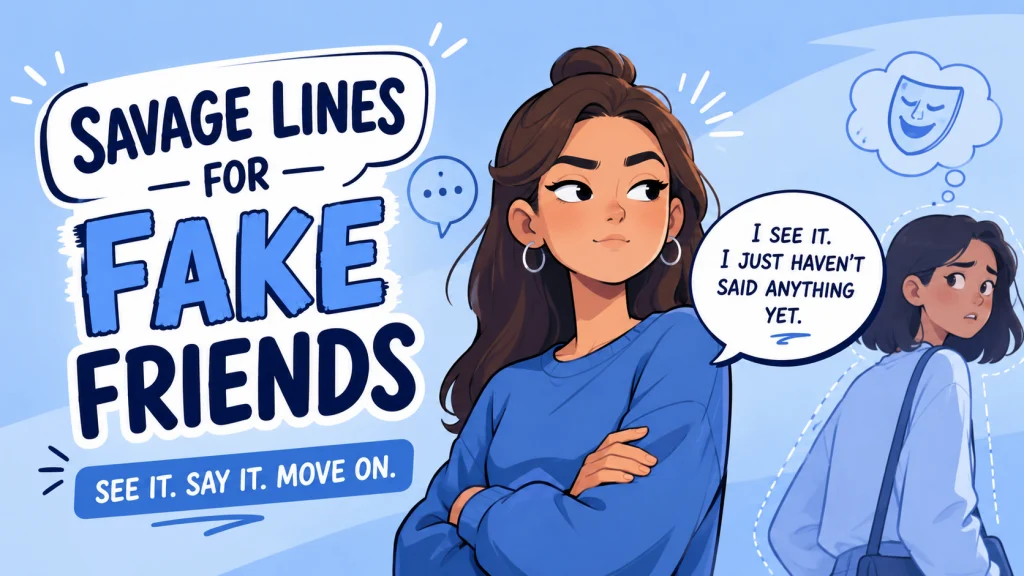
- “I see it. I just haven’t said anything yet.”
- “It’s interesting what you post versus what you actually do.”
- “I used to think that was an accident. I don’t anymore.”
- “You’re consistent, just not in the way you think.”
- “I noticed you skipped me on that one too.”
- “That’s twice now you’ve forgotten I exist when it mattered.”
- “I’m not surprised anymore. That’s the part that says it all.”
“I see it. I just haven’t said anything yet” is the line I come back to most, because it does something a direct accusation cannot. It tells the other person the curtain is down without giving them anything to argue against. There is no claim to defend against, just an observation sitting there, fully formed.

Direct Lines for When You Are Ready to Stop Pretending
At some point, the subtle version stops being enough, and you need something that actually says the thing out loud. This is where the actual betrayal gets named, not just the pattern around it: the favor that was never returned, the loyalty that only showed up when it was easy. Direct lines for a fake friend do not need to be elaborate. The goal is naming the behavior plainly enough that there is no version of this where they can claim they did not understand what you meant.
- “You’re only loyal when it doesn’t cost you anything.”
- “I’ve watched you be a completely different person depending on who’s in the room.”
- “You show up for the version of friendship that makes you look good.”
- “I don’t think you actually like me. I think you like having me around.”
- “You’re not a bad person, you’re just not my friend.”
- “I stopped expecting honesty from you a while ago.”
- “You talk about loyalty a lot for someone who’s never shown me any.”
- “I think you’ve mistaken access for friendship this whole time.”
- “You’re great at performing this. I’ll give you that.”
- “I don’t need you to admit it. I just needed to say it.”
“You’re not a bad person, you’re just not my friend” tends to land harder than anything more aggressive, because it refuses to give the other person a villain to fight. There is nothing to defend against in that sentence. It just states a fact and leaves the room.
Fake-Nice Responses for the Sweetest-Sounding Betrayal
Some fake friends never say anything outright unkind. The damage happens in tone, in timing, in compliments that land like a quiet dig. Fake-nice responses meet that energy without dropping the niceness entirely, which tends to confuse the other person more than open hostility ever could.
- “Aw, that’s so sweet of you to say, considering.”
- “You’re always so supportive when it costs you nothing.”
- “That’s kind. I’ll remember it the next time I need you and you’re busy.”
- “Thank you, that really means a lot, coming from you.”
- “You always know exactly what to say in front of people.”
- “I appreciate the compliment. I just notice the pattern more than the words now.”
- “How thoughtful of you to mention that here.”
- “That’s a nice thing to say. It’s also new.”
- “I love how kind you are when other people are listening.”
- “Sweet. I’ll take it as the apology you’re not giving.”
This kind of line works because it agrees on the surface while quietly noting what the other person is actually doing. It does not require raising your voice or your temperature. It just refuses to let the nice version go unexamined, which is usually all a fake-nice moment can survive.
Text Replies Short Enough Not to Become a Paragraph Fight
Texting a fake friend is its own trap. Send too much and you hand them a transcript to pick apart later, possibly with other people reading over their shoulder. Comebacks for fake friends over text work best when they are short enough to end the thread instead of extending it. If part of the problem is that this same person never lets you finish a thought even in person, the comebacks for someone who interrupts you cover that specific friction directly.
- “Got it.”
- “That’s fine. I’m just not going to pretend I didn’t notice.”
- “No worries, I’ve adjusted my expectations accordingly.”
- “I don’t think we need to keep doing this.”
- “I’ll leave that there.”
- “Cool, thanks for clarifying where I actually stand.”
- “I think I already had my answer before you sent that.”
- “I’m not going to argue about it. I just see it differently now.”
- “Appreciate the honesty, even if it took a while.”
- “Noted. Moving accordingly.”

Group-Setting Lines That Do Not Air Every Wound in Public
A fake friend often performs the loudest in front of an audience, which makes a group setting tempting territory for a real callout. Resist it. Airing the entire history of the betrayal in front of other people rarely lands the way you imagine, and it tends to make you look like the one who started something. These lines hold ground without turning into a public scene.
- “We can talk about this when it’s just us.”
- “I’ll let that one go for now.”
- “Interesting, considering everything.”
- “I think we both know that’s not quite accurate.”
- “Sure, we can go with that version.”
- “I’m not going to get into it here.”
- “That’s one way to remember it.”
- “We can circle back to that privately.”
- “I’ll save my real thoughts for later.”
- “Noted, for a different conversation.”
“Interesting, considering everything” works in a room full of people because only the person it is aimed at fully understands what “everything” means. Everyone else hears a mild comment. The intended target hears the whole history compressed into two words, which is usually exactly the amount of acknowledgment the moment calls for.
Final-Message Lines for a Clean Exit
There is a version of ending things with a fake friend that turns into months of half-finished conversations, each one reopening the wound a little more. A final-message line is meant to close the door once, clearly enough that there is no real opening for round two.
- “I think we’ve said what needed to be said. I’m good from here.”
- “I’m not upset anymore. I’m just done.”
- “I don’t think we need to keep circling this. Take care.”
- “This isn’t a punishment, it’s just where things ended up.”
- “I hope things go well for you. I just won’t be part of it.”
- “No hard feelings, just no more effort either.”
- “I think we both know this has been over for a while.”
- “I’m not interested in fixing this one. I’m okay with that.”
- “I wish you well. I just don’t need to be close to find out how it goes.”
- “That’s the last word I have on this.”
“I hope things go well for you. I just won’t be part of it” sounds gentler than most lines on this list, and that is exactly why it works as an ending. It removes the option of a fight without removing the fact of the decision. There is nothing left to escalate against, which is the entire point of a final message.
What Not to Say, and Why It Backfires
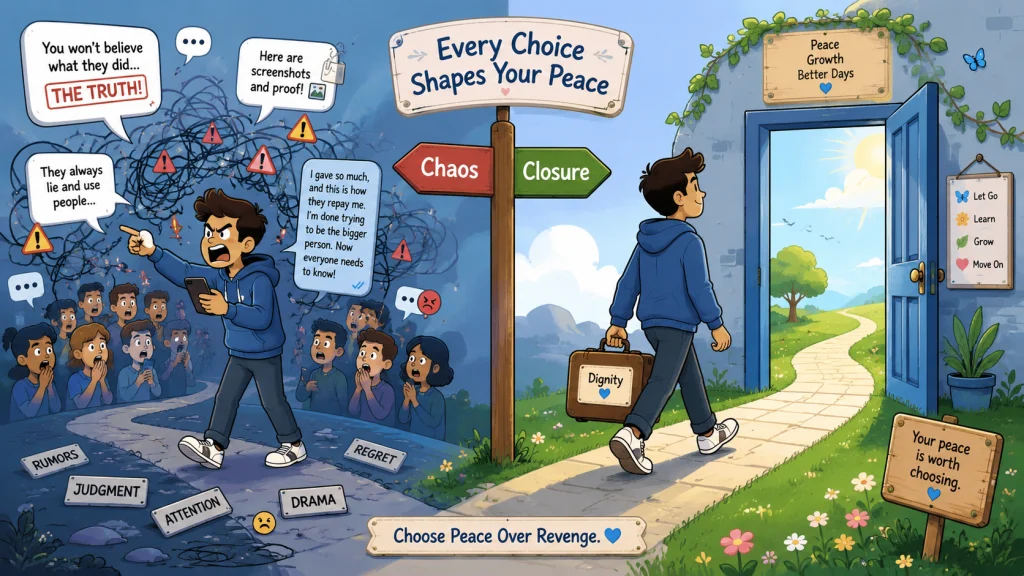
The line between a savage exit and something you regret is thinner than it feels in the moment, especially when the hurt is fresh and the urge to make the other person feel exactly what you felt is strong. A few patterns consistently make things worse rather than better.
| What people reach for | Why it backfires |
|---|---|
| Exposing a private secret they told you | Turns you into the untrustworthy one in the story, regardless of how the friendship actually ended. |
| A public callout in front of mutual friends | Forces everyone to pick sides and usually reads as bigger drama than the actual betrayal. |
| Anything you would not want screenshotted | Assume it will be. Write every message as if it might end up in someone else’s group chat. |
| Listing every grievance at once | Dilutes the one thing that actually mattered into a pile the other person can argue with piece by piece. |
| Threatening to expose them to others | Reads as leverage, not closure, and rarely accomplishes anything beyond prolonging the conflict. |
The version of this that lasts is the one where you said what needed saying and left it there. The version that follows you around is the one where you said too much, to too many people, and spent the next six months explaining yourself instead of just being done.
It is worth noting that not every two-faced moment comes from someone who is fundamentally self-centered. Some people genuinely cannot hear how they sound when they are seeking attention, and the angle shifts slightly when the issue is more about comebacks for narcissistic behavior than plain disloyalty. The line between the two is usually whether the inconsistency is calculated or just careless.
Final Thoughts: Closure Does Not Need an Audience
None of these sixty lines are going to make a fake friend admit what they did. That was never the point. The point is saying what you noticed, clearly enough that you can walk away from the conversation knowing you did not shrink yourself to keep the peace one more time.
The reader who walks away from this best is not the one who delivered the sharpest line. It is the one who said something true, once, and then let it be enough. A fake friend thrives on you staying quiet and confused. The smallest act of dignity is simply not doing that anymore, and that quiet kind of control is what separates a genuinely sharp savage comeback from something said purely out of anger.
FAQs
👀 What do you say to a fake friend without starting a fight?
Keep it observational rather than accusatory. “I see it. I just haven’t said anything yet” makes the pattern visible without giving them anything to argue against.
💬 What’s a savage but classy text to send a fake friend?
“That’s fine. I’m just not going to pretend I didn’t notice” does the job. It is short, it is calm, and it does not invite a paragraph back.
🙅 Should I call out a fake friend in front of other people?
Usually not. It tends to make you look like the one who started something, even when you didn’t. Save the real conversation for when it’s just the two of you.
✋ How do you end a friendship with someone two-faced without drama?
A clean final line works better than a long explanation. “I think we both know this has been over for a while” closes the door without opening up a debate about who did what.
🤐 Is it okay to bring up old hurt when confronting a fake friend?
One clear point lands better than a list of every grievance. Naming the pattern, not every individual incident, keeps the conversation focused and harder to argue against.