What to say to a bully is not about being meaner back, it is about denying them the reaction they came for. A bully wants a performance they can use, something to repeat to an audience or replay in their own head, and the comeback that actually works is the one that refuses to give it to them. Here are sixty lines sorted by the situation you are actually in, short neutralizers, public-room lines, responses for someone who keeps targeting you, friend-group moments, and clean exit lines, plus the kinds of lines that will only make things worse.
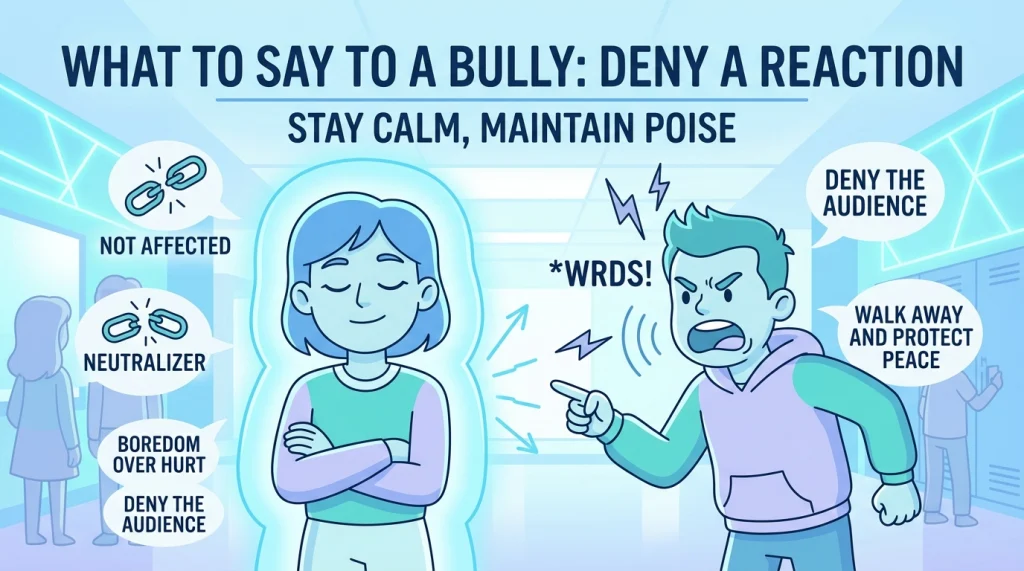
A Bully Wants a Reaction They Can Use
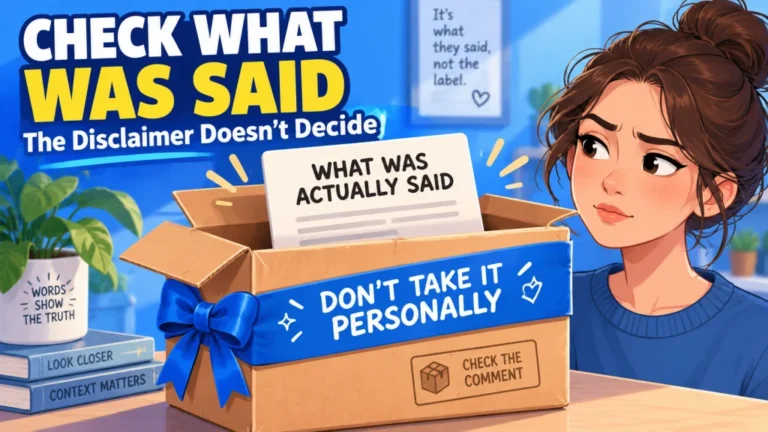
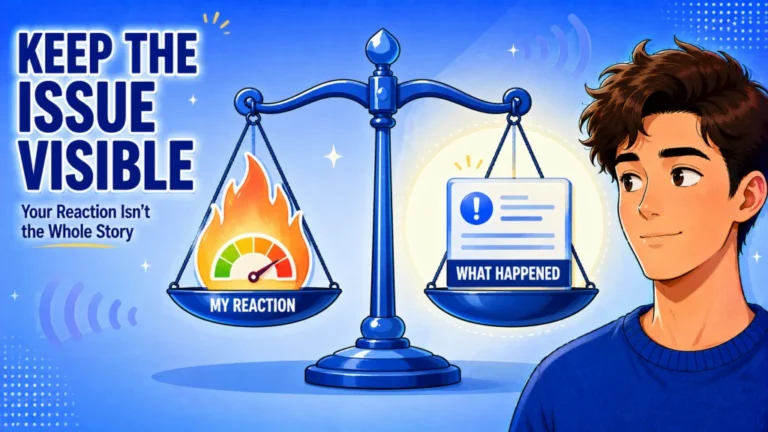
A bully is not looking for a witty exchange. They are looking for a reaction big enough to repeat later, to an audience, to themselves, to whoever they are trying to impress by picking you. That is what makes most comeback advice miss the point. A line built to sound clever often hands them exactly what they wanted, proof that they got under your skin. The lines that actually work are short, controlled, and hard to twist into a new story about you.
This sits alongside the wider breakdown of comebacks for rude people, since a bully is one specific kind of rude behavior, the repeated kind, not a single insult that happened once. What follows is sorted by setting, because the same line that works on a stranger can fall apart in front of a group, or with someone you have to see again tomorrow.
Short Neutralizers That Deny Them the Big Reaction
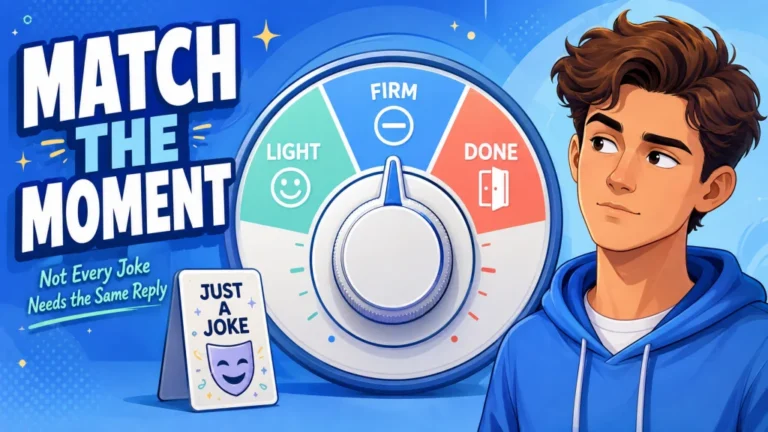
These are built for the moment itself, when something just got said and the bully is watching your face for the reaction. The goal is not to win, it is to look so unaffected that the comment loses its entire purpose. Flat delivery matters more than the words themselves here, said too sharp and it reads as hurt, said flat and it reads as boredom.
- That’s a strange thing to need from me.
- Okay. Anything else?
- Noted.
- You can keep going, I’m not really listening.
- That’s the best you’ve got?
- Cool story.
- I’ll let you have that one.
- Working hard on that, huh.
- You sound like you need this more than I do.
- Alright. Moving on.
- That took effort, I can tell.
- I’m good, but thanks for checking.
None of these escalate, and none of them require a follow-up. A neutralizer works best when it is the last thing you say, not the opening move in a longer exchange.

Public-Room Lines That Protect Your Dignity Without Starting a Scene
Bullying done in front of other people changes the math entirely. The audience is often the point, so a line here has to work for the room, not just the bully. These protect your standing without turning the moment into a bigger scene than it already is, which matters because a scene tends to get remembered as drama, not as someone standing their ground.
- Let’s not do this in front of everyone, it’s not a good look for you.
- I think the room would rather talk about something else.
- You’re making this weird for everyone, not just me.
- I’m not playing along with this one.
- That landed differently than you think it did.
- We can talk about this later, just the two of us.
- I’ll pretend I didn’t hear that, for your sake.
- Everyone heard that the same way I did.
- You don’t have to perform for them, just talk to me.
- That’s not the version of this story they’re going to remember.
- I’m not going to make this easy for you to repeat later.
- You can have the floor, I’m stepping back.
The quiet move here is letting the room draw its own conclusion. You do not need to point it out for everyone to notice exactly what just happened.
Lines for Someone Who Keeps Targeting You
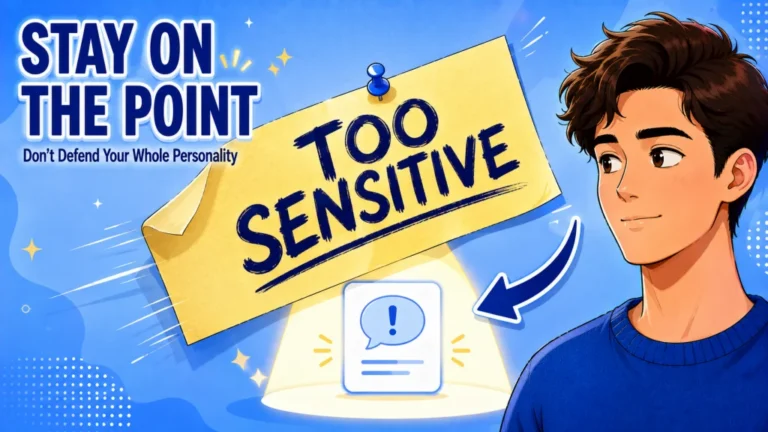
This is the moment to name the pattern, not the person. Calling someone a bully to their face rarely lands the way you want, but pointing at the repetition itself, the fact that this keeps happening to you specifically, takes the conversation somewhere a single comeback cannot reach. These work best once you have enough history to point to, not after one bad interaction. Use them when you feel safe enough to name the pattern out loud, ideally with other people around who have seen it too.
- This is becoming a pattern, and I’ve noticed.
- You always seem to find me when you need a target.
- I’m not the only one who’s clocked this about you.
- This is the third time this month, for the record.
- You don’t do this to everyone, just to me. I’ve noticed that too.
- I’m done acting surprised when this happens.
- This isn’t new behavior, so don’t act like it is.
- You keep circling back to me specifically. Why is that?
- I see exactly what this is at this point.
- You’re going to need a new target eventually.
- This stopped being funny a while ago, for anyone watching.
- I remember the last time too.
Naming a pattern out loud is often more uncomfortable for a repeat bully than any single sharp line, because it tells them you have been keeping track the whole time.
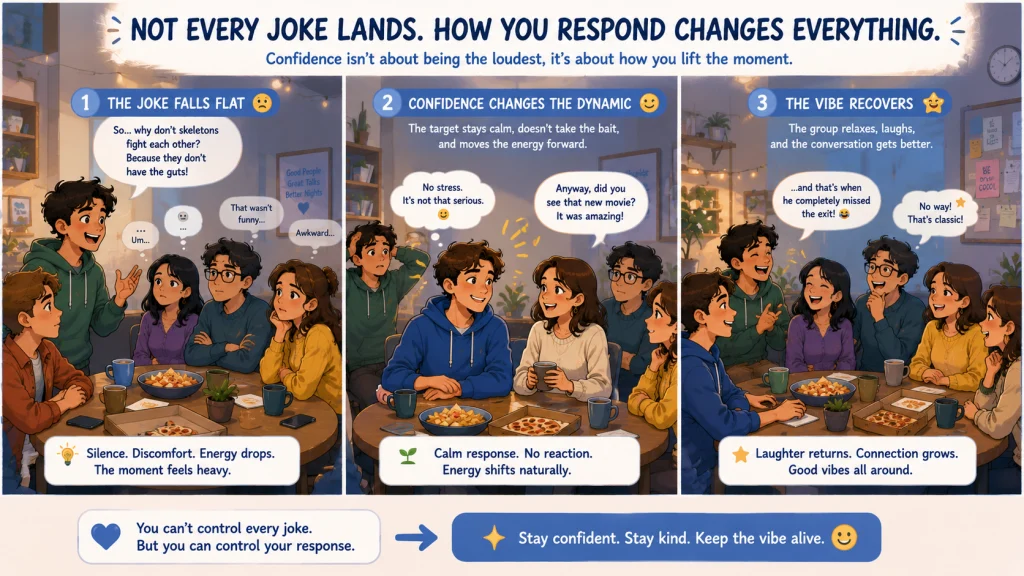
Friend-Group Lines That Make the Room Notice
Bullying inside a friend group is its own particular mess, because the bully is using shared history and inside jokes as cover. The line here often works less by confronting the person directly and more by making the rest of the group register, openly, that the joke has stopped being a joke. People who would never call it out themselves often follow once someone else names it first.
- That one wasn’t actually funny, just so you know.
- I think we left that joke behind a while ago.
- That’s the third time you’ve gone for me tonight.
- Does anyone else think that landed weird, or just me?
- I’m good, but I don’t think that one worked.
- We can find a new bit, that one’s tired.
- I’m not really here for that tonight.
- That’s a lot of energy aimed at one person.
- I’ll take the joke when it’s actually a joke.
- You’ve been doing this all night, I’m just noting it.
- Someone else can be the target this time.
- That’s not the vibe I came here for.
If a friend-group bully realizes everyone else has noticed, the behavior usually loses most of its appeal fast. An audience that stops laughing is the strongest deterrent in the room.

Exit Lines for When Leaving Is the Stronger Move
Sometimes the sharpest thing you can do is not say a comeback at all, it is leave the conversation entirely, and do it in a way that makes the exit itself the statement. These work when staying would only give the bully more rounds to take, or when the situation has any edge that makes you want distance more than the last word.
- I’m done with this conversation.
- I don’t need to stay for this part.
- This isn’t worth my time, I’m out.
- I’ll talk to you when you’re being normal again.
- I’m not doing this right now.
- Find me when this has stopped.
- I’ve got better places to be than this conversation.
- We can pick this up never.
- I’m walking away because this stopped being worth it.
- This conversation is over, on my end at least.
- I don’t owe you the rest of this exchange.
- I’m choosing peace over this, see you around.
An exit line does not need to be clever to work. It only needs to close the door cleanly enough that there is nothing left to twist into a new round.
What Not to Say to a Bully
Threats do not belong in any of this, even ones that feel justified in the heat of the moment. A threat gives a bully a real excuse to escalate, and it can turn a verbal situation into something physical or something that involves consequences you did not sign up for. Slurs and humiliation bait belong in the same pile, since both hand a bully proof that you stooped to their level, which is often exactly the story they want to tell afterward. Also avoid over-explaining yourself in the moment. A bully can twist a long defense into more material to work with, so a short boundary usually protects you better than justifying every detail of why their comment was wrong.
If the bullying involves any threat of violence, repeated harassment that feels unsafe, or a power dynamic you cannot walk away from, like a boss or someone controlling something you depend on, no comeback is the right tool for that. That situation calls for documentation, a trusted person, or in serious cases the right authority, not a clever line. The full breakdown of savage comebacks covers more on reading when a moment calls for words at all, and when it genuinely does not.
Final Thoughts
The goal with any of these lines was never to humiliate a bully back into silence. It was to take away the one thing they actually came for, a reaction worth repeating. Pick the line that matches the room you are in, deliver it flat, and let the silence after it do the rest of the work.
If what you are actually facing is someone correcting you with condescension instead of targeting you repeatedly, clever comebacks for know it alls will fit better. If it is someone talking over you instead of intimidating you, comebacks for someone who interrupts you is the closer match.
FAQs
😤 What is the best comeback for a bully?
Something short, flat, and impossible to repeat as proof they got to you. Calm beats clever every time with someone looking for a reaction.
🙊 Should I ignore a bully instead of responding?
Sometimes, yes. If walking away is an option and the bullying is not escalating, removing the audience often works better than any line.
🚨 What if the bully threatens me or gets physical?
No comeback applies there. Get yourself to safety first, then involve a trusted adult, supervisor, or the right authority depending on the situation.
🗯️ How do I respond to a bully in front of other people?
Keep it short and let the room draw its own conclusion. A controlled response usually reads better to onlookers than a dramatic one.
🔁 What if the same person keeps bullying me over and over?
Name the pattern, not just the latest comment. Pointing out that this keeps happening often lands harder than reacting to one moment in isolation.