Some people take up every square inch of a conversation without noticing, or caring, that anyone else is in the room. This covers comebacks for narcissistic people, meaning the ones who monologue, redirect every subject back to themselves, and treat a simple pushback like a personal attack. None of these lines require a psychology degree to use. What they do require is knowing which moment calls for which kind of reply, because the wrong line in the wrong setting hands the other person exactly the opening they were waiting for.

When the Room Becomes Someone Else’s One-Man Show
Nine years behind a bar taught me that the most exhausting people in any room share a specific pattern. They are not necessarily loud. Some are perfectly polished. But every conversation eventually finds its way back to them, every problem is subtly smaller than theirs, and any attempt to redirect gets met with either wounded silence or a sharper monologue. Comebacks for narcissistic people are not about starting a fight. They are about reclaiming enough ground to breathe.
The mistake most people make is trying to out-argue someone who rarely, if ever, admits they are wrong. You cannot win that argument. What you can do is stop feeding it. The right line does not need to be devastating. It needs to be short enough that there is nothing obvious to grab onto, and calm enough that the other person looks unhinged if they escalate. That gap between what they expected and what they got is where every reply on this list lives.
I have watched people spend three minutes composing the perfect takedown in their head while the other person just kept talking. By the time the comeback arrived, the moment had already moved on. The lines that actually land in these situations are rarely the ones that took the longest to think of.
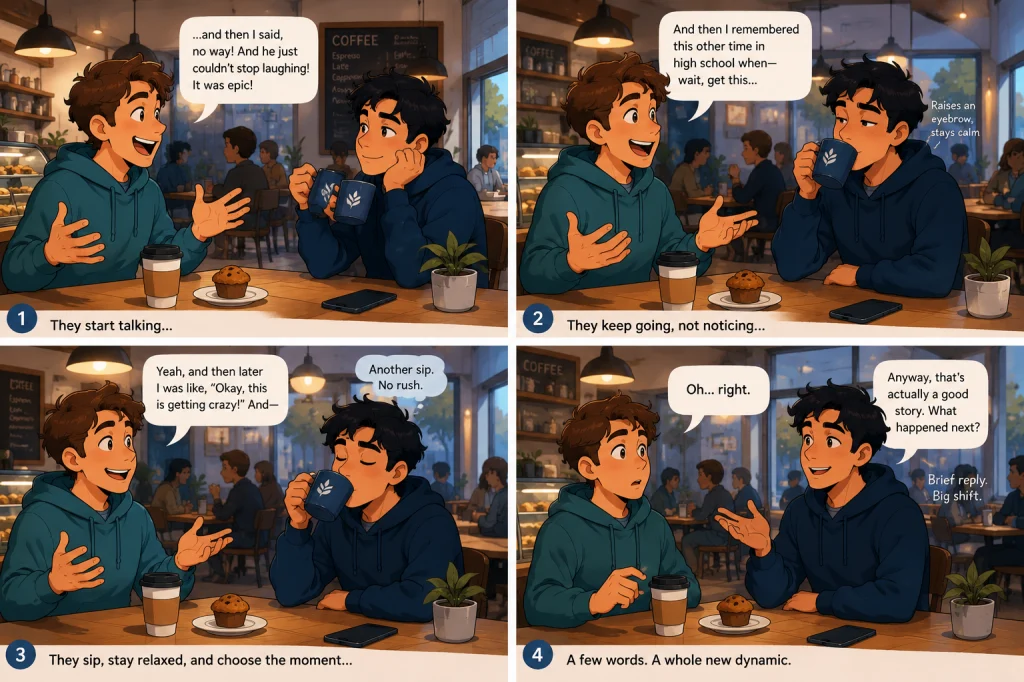
Short Comebacks That Cut Without Cutting Deep
Short replies work best with someone who runs on attention. A long response is a gift to them. It means they have something to dissect, misquote, and turn into evidence that you are the difficult one. A short line, delivered flatly, gives them nothing new to work with. These are the ones I reach for first.
- “That’s a lot of words for something that’s really not about me.”
- “I’ll let you finish, but I already know how this ends.”
- “Hm. Noted.”
- “I hear you. I just don’t agree.”
- “You’ve told me this before.”
- “That must have been really important to share.”
- “I’m going to stop you there.”
- “That’s one way to see it.”
- “Interesting take.”
- “I think we remember that differently.”
- “You’re describing a version of events I don’t recognize.”
- “This conversation keeps ending up in the same place.”
- “I’m not really the audience for this one.”
- “That’s a you thing, not a me thing.”
- “I genuinely don’t have a response to that.”
The temptation with someone who performs is to match their energy. It feels satisfying in theory. In practice, a flat, dry reply lands harder than anything theatrical, because it refuses to play the game. “Interesting take” delivered with zero inflection does more damage to a monologue than a perfectly constructed argument ever could.
Boundary Lines That Sound Like Normal English
There is a version of a boundary line that sounds like it was lifted directly from a self-help book, and it tends to make things worse in real time. “I feel dismissed when you do that” is a valid sentence in a therapist’s office. In a live conversation with someone who is already mid-monologue, it just becomes new material for them to reframe. The lines below hold the same ground without sounding like you have been workshopping them.
- “I need you to let me finish.”
- “We’re not going to keep having this version of the conversation.”
- “I’ve already said how I feel about this. That hasn’t changed.”
- “I’m not going to keep explaining myself.”
- “That’s not something I’m willing to revisit right now.”
- “You don’t need to agree with me, but I need you to hear me.”
- “I’m not asking for permission. I’m telling you.”
- “This is the last time I’ll address this.”
- “What you’re describing as concern feels a lot like control from where I’m standing.”
- “I understand you see it that way. I don’t.”
The one I almost did not include because it felt too blunt was “I’m not going to keep explaining myself.” A friend used it with someone who had spent forty minutes reframing a situation to make her look unreasonable. She told me later the conversation stopped almost immediately, because there was nothing left to argue against. It works precisely because it does not leave a door open.

When Other People Are Watching
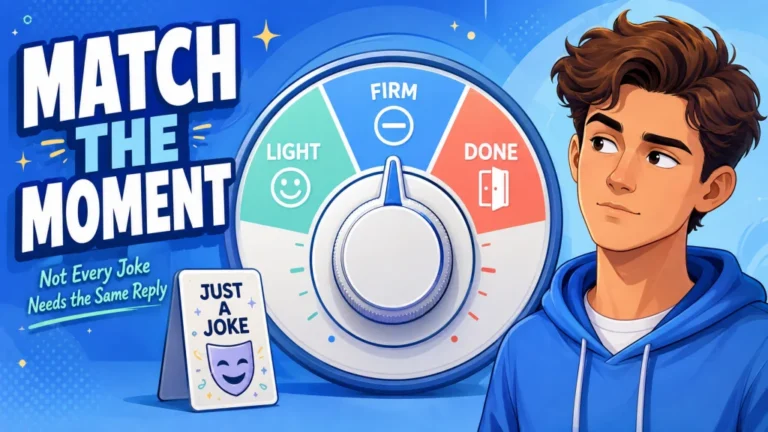
Public situations require a different calibration. Escalating in a group setting usually benefits the person you are dealing with, not you. They know how to play a crowd. What they do not always know how to handle is a reply that makes them look performative without making you look cruel. When other people are watching, the cleverest comeback is usually the one that sounds calm on the surface.
- “I think we should come back to this when it’s just us.”
- “You’re clearly passionate about this.”
- “I’ll give you that one.”
- “I don’t think this is the place, but I’m happy to continue later.”
- “That’s a really specific memory you have of that.”
- “We’re telling very different stories about the same room.”
- “You’ve made your point. I think everyone heard it.”
- “I’m choosing not to engage with this version of events right now.”
- “We can pick this up when it’s just us.”
- “That’s not how I remember today going.”
“You’ve made your point. I think everyone heard it” sounds cooperative on the surface. What it does underneath is signal to anyone watching that the other person has been going too long. It lands cleanest when said quietly and without any added expression. The person it is aimed at usually knows exactly what just happened, even if nobody else catches it in the moment.
Text Replies Short Enough Not to Start an Essay War
Texting someone who performs is its own specific trap. If you write three sentences, you will get ten back. If you write a paragraph, you will get a wall. Over text, the best reply is almost always shorter than the one you actually want to send. Typing out your full, honest response and then deleting everything except the last sentence is a trick I have recommended more than once, and it consistently works better than sending the whole thing.
When someone’s behavior has crossed from self-centered into flat-out rude, the approach shifts a little, and the best comebacks for rude people deal with that version more directly. For the specific texture of someone who makes every thread about themselves, these tend to do the most with the least:
- “I saw this.”
- “Okay.”
- “I’ll think about it.”
- “I’m not getting into this over text.”
- “We can talk about this in person.”
- “That’s not how I remember it either.”
- “I’ve said what I have to say.”
- “I don’t think more words are going to help here.”
- “Let me know when you want to actually talk.”
- “I’m going to leave this here for now.”

Exit Lines for When the Pattern Is Not Worth Debating
Sometimes the best line is the one that ends the conversation entirely. Not dramatically, not with a speech. Just a clean exit that does not invite a follow-up. The lines that tend to fail here are the ones that explain too much. If you tell someone exactly why you are leaving the conversation, you have handed them a premise to pick apart. The ones below leave the door shut.
- “I’m done with this conversation.”
- “I’ve got nothing left to add here.”
- “I think we’re past the point where talking helps.”
- “I’m going to go.”
- “I’m stepping out of this one.”
- “This is not a conversation I’m going to keep having.”
- “Good luck with that.”
- “I wish you the best. I mean that.”
- “I think we’re done here.”
- “I’m not going to be available for this.”
“I wish you the best. I mean that” sounds almost warm until you realize it is a complete close. There is no ask in it, no accusation, no argument. It is final without being hostile, which is harder to escalate against than something sharp. I have seen it used in person and over text, and it tends to produce a longer pause than anything more obviously cutting. That pause is the exit window. Use it.
One thing worth saying plainly: if the situation feels like it could turn into something unsafe, retaliatory, or threatening, skip the line entirely and just leave. No comeback is worth staying in a room that no longer feels safe.
If the person you are dealing with was once someone you considered a friend, the exit looks a little different. The overlap between what you are dealing with here and what comes up when a friendship itself turns out to be one-sided is real enough that the comebacks for fake friends are worth reading separately.
What Not to Say, and Why It Backfires
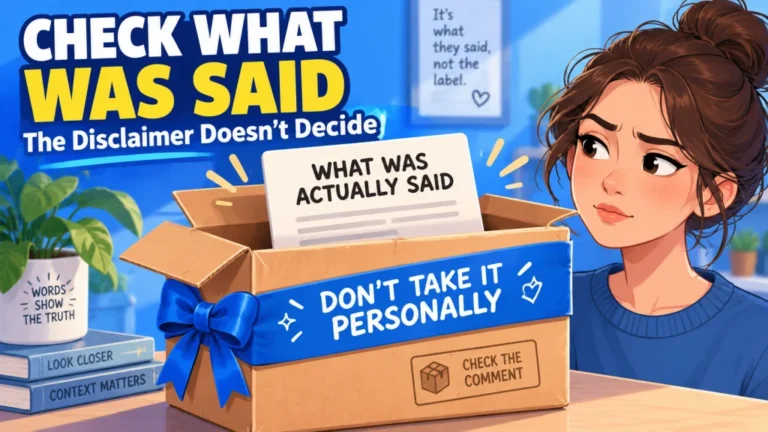
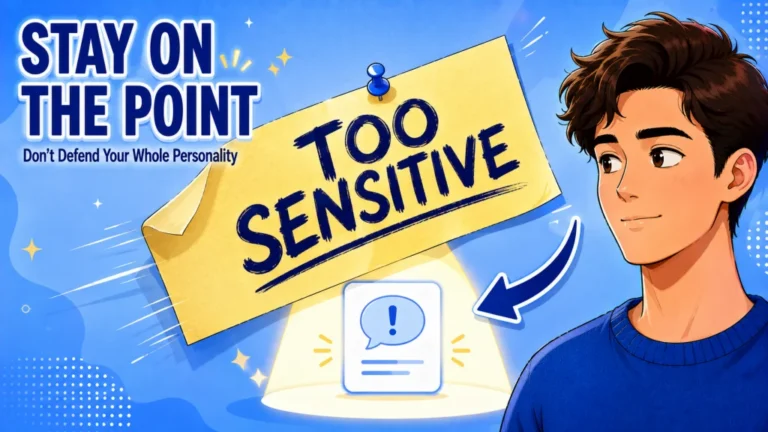
The most common mistake I watch people make in these situations is reaching for the clinical label. It is completely understandable. When someone’s behavior fits a pattern that has a name, saying that name out loud feels like it should do something. It almost never does. What it tends to do instead is hand the other person a grievance and a new topic, both of which they will use enthusiastically for the next forty-five minutes.
A few other patterns that consistently make things worse, and what drives each one:
| What people reach for | Why it backfires |
|---|---|
| “You’re such a narcissist.” | Becomes the subject of the next hour. The actual behavior disappears from the conversation entirely. |
| A long, detailed explanation of how they made you feel | Gives them new material to reframe and use against you. The longer you explain, the more they have to work with. |
| “Why do you always do this?” | Opens a philosophical conversation they are very prepared to have. You will not win it. |
| Apologizing to reset the mood | Confirms that the pressure worked. Expect the same pattern again. |
| Bringing in other people’s opinions | “Everyone else thinks you’re wrong” is fuel, not a closer. |
Anyone who has spent time with a solid collection of sharp savage comebacks will notice that the ones people remember longest are almost always the shortest ones. That holds here too. The instinct to out-explain someone who runs on attention is the trap. The exit is always shorter than the argument.
Final Thoughts: The Line That Stops the Performance
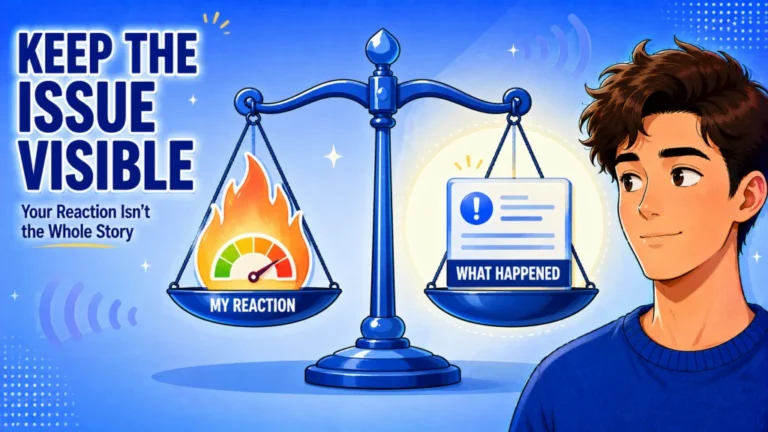
None of these lines will fix the dynamic. That is not what they are for. What a good comeback can do in this kind of situation is break the rhythm, the one that has probably been running on autopilot for a while. When someone expects a long response and gets “Noted,” the gap between those two things is a small but real form of control in a conversation that usually does not leave you much of it.
The goal is not to win. The goal is to stop letting the performance run on your energy. A short, flat reply, an unhurried exit, or a boundary line that sounds like ordinary speech rather than a scripted one does exactly that. You do not need to diagnose the situation to handle it. You just need the right sentence at the right moment, and now you have fifty-five of them.
FAQs
💬 What do you say to someone who always makes everything about themselves?
Keep it short and flat. “That’s a you thing, not a me thing” or “I hear you, I just don’t agree” both hold ground without handing them anything to argue against. The more you explain, the more material you are giving them to work with.
🤐 Should I call someone out as a narcissist directly?
Almost never worth it. The label becomes the new subject, and the actual behavior disappears from the conversation entirely. Stick to what they did and what you are not going to accept, not what you think they are.
😐 How do you shut down someone who monologues constantly?
“I’m going to stop you there” is about as clean as it gets. Delivered without apology, with a flat tone, and nothing after it. The explanation is what they are waiting for. Do not give it to them.
📱 What do you text someone who makes everything about them?
Shorter than you want to. “Okay,” “I saw this,” or “I’ve said what I have to say” cuts the thread without giving them a wall to climb. A long reply is an invitation. A short one is a door closing.
🚪 When is it better to just not respond at all?
When any response, including a good one, will be used as an opening. If the pattern has been running long enough that you already know how they will respond to whatever you say, silence or a clean exit is often the sharper move.
🎭 Why do comebacks feel like they never actually work on these people?
Because the goal is not to change their mind. A good comeback in this situation is not for them. It is for you, to hold your own position without getting pulled into the loop. That is what it can do, and that is all it needs to do.