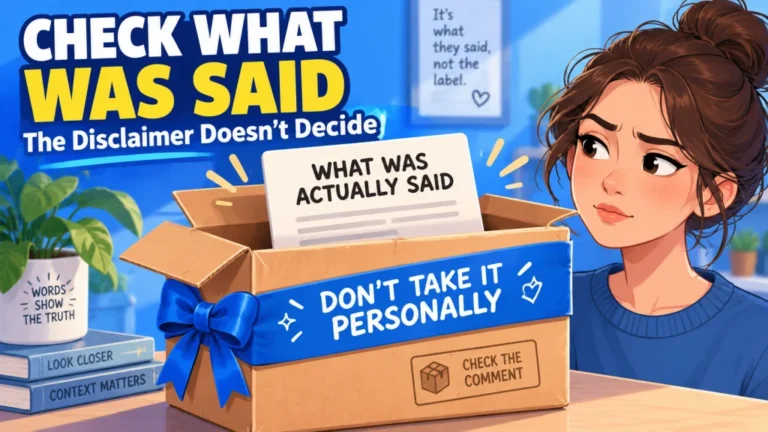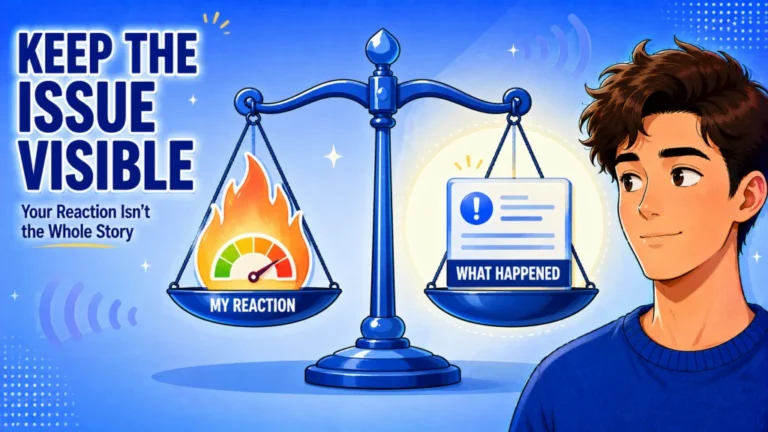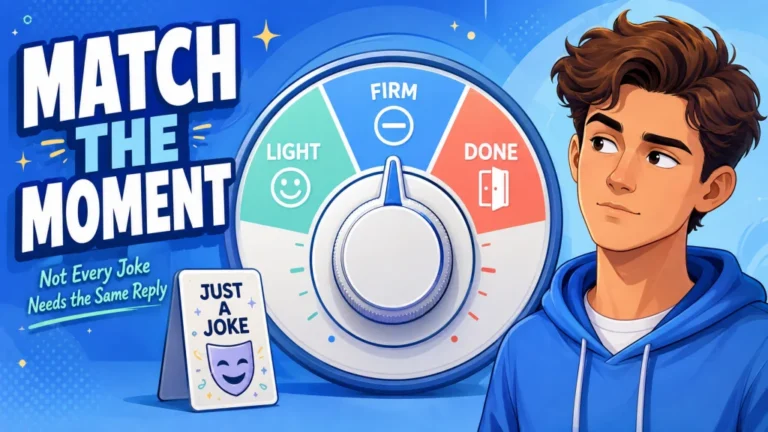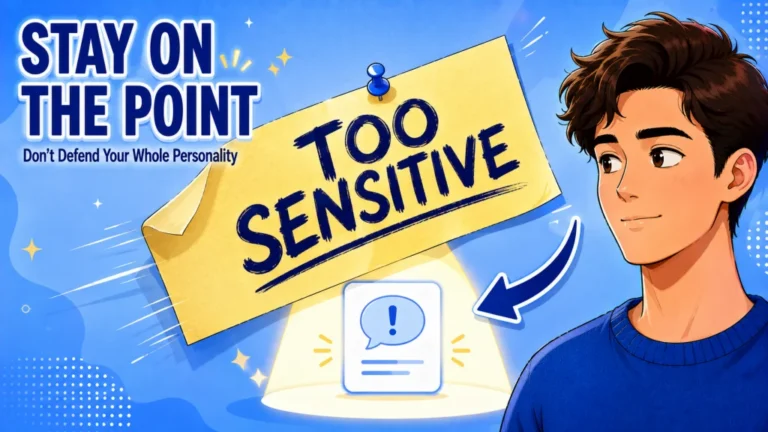
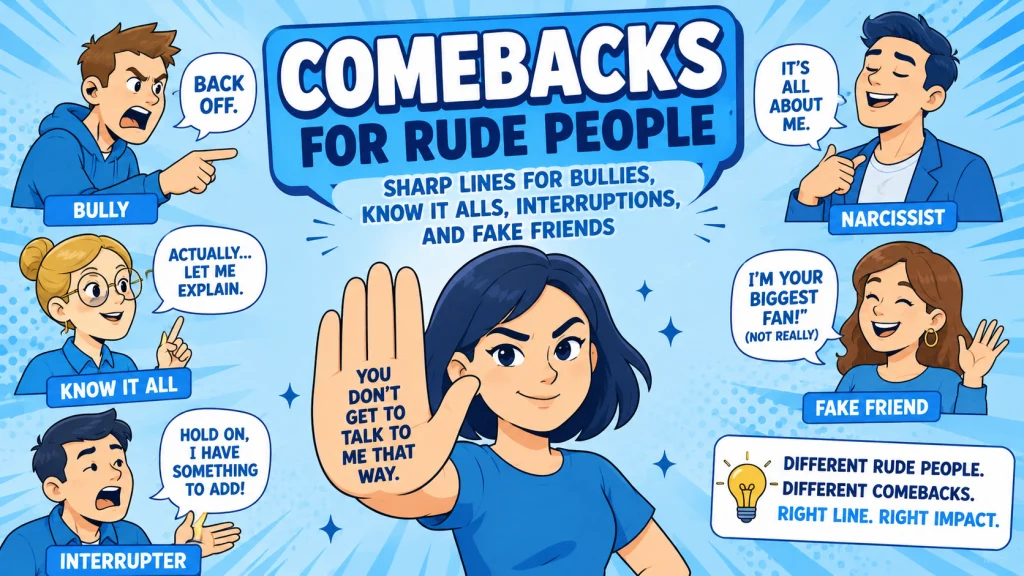
Comebacks for rude people are not one thing, because rude people are not one thing. A bully, a know-it-all, a fake friend, and someone who will not stop talking over you are all technically rude, but each one needs a completely different response. This sorts out which kind of rude behavior you are actually dealing with, what changes the tone of your reply, and where to go for responses that actually fit that situation.
Why One List of Comebacks for Rude People Never Works
I stopped trying to keep a single mental list of comebacks for rude people years ago, because the line that shuts down a stranger cutting in front of you would sound completely wrong aimed at a coworker who interrupts every meeting. The tone has to shift depending on who sent the message, what they expect to happen next, and whether you will still be dealing with this person tomorrow. A one-off rude stranger and a repeat offender in your group chat are not the same problem, even if both moments made you want to say something sharp.
This is where I sort comebacks by who you are actually facing, not by how angry the moment made you feel. Below is the quick read on each type, and a clear path to the response made for that person.

The Quick Decision Rule Before You Pick a Comeback
Before reaching for any line, ask three things. First, the relationship: is this a stranger you will never see again, or someone who is part of your daily life? Second, the stakes: is this a low-pressure social moment, or would handling it the wrong way cost you something at work or in a friendship you actually want to keep? Third, what the message is doing: is it opening a conversation, closing one down, checking in, insulting you outright, or fishing for flirtation dressed up as banter?
A stranger being pushy in line calls for something short and final, since you do not need the relationship to survive the exchange. A coworker who talks over you every single meeting calls for something controlled enough to use again next week, since you do still have to sit across from them tomorrow. Reading these three things first keeps you from grabbing a line built for a stranger and using it on someone you actually have to keep dealing with.
When It Is a Bully, Not a One-Off Insult
A bully is not someone who said one rude thing on a bad day. A bully is repeated intimidation, the same target picked again and again, usually because the first reaction was silence or visible discomfort. The pattern is the tell. If this is the second, third, or tenth time the same person has gone after you specifically, you are not dealing with rudeness anymore, you are dealing with someone testing whether you will ever push back. What makes it sting is not just the comment itself. It is the audience, the sense that they are performing for whoever else is watching.
I watched this play out behind the bar more times than I can count, one regular needling the same friend every single week until it stopped being a joke to anyone but the person doing it. The comeback that works here is not about being funnier than the bully. It is about being calm enough, and clear enough, that the pattern stops being entertaining to keep up. A line in this lane sounds more like “We’ve done this joke already, find a new one” than anything that tries to out-insult them in front of a crowd. What to say to a bully goes deeper into responses made for repeated intimidation, not single jabs.
When Someone Needs to Control the Room
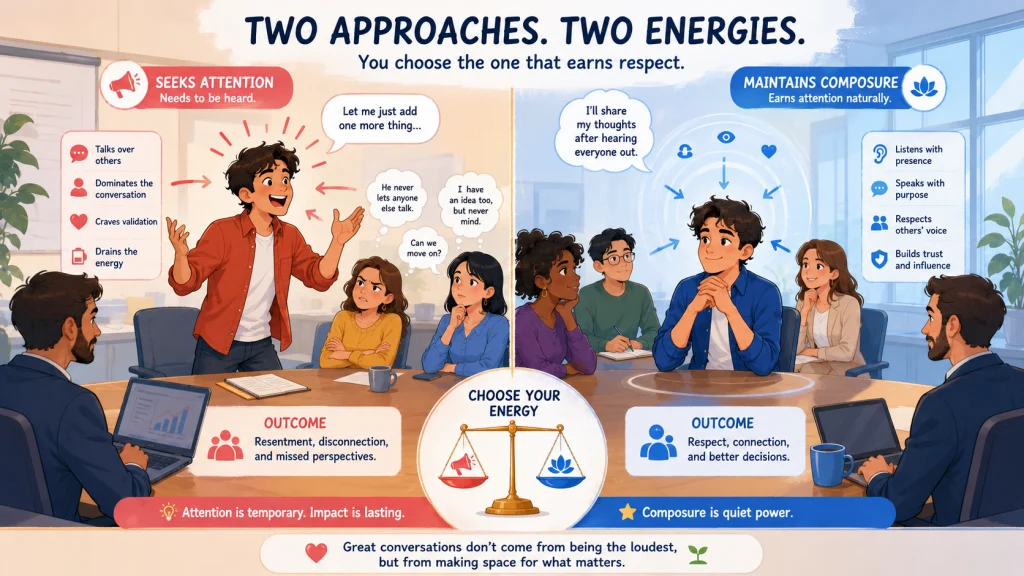
I am not in the business of diagnosing anyone, and I will not pretend a few rude comments add up to a clinical label. What I can talk about is a pattern of behavior: someone who needs to be the center of attention, who redirects every conversation back to themselves, who reacts badly the moment they are not the one in control of how a room sees them. That pattern shows up constantly, in friend groups, at family dinners, in group chats, and it has a very specific texture that is different from someone who is simply rude in the moment.
Lines aimed at this kind of behavior work differently than lines aimed at a one-off insult, because the goal is not to win an argument, it is to stop feeding the dynamic. Reacting too big gives exactly what the behavior is fishing for. Something flat and short, like “Sounds like you’ve already decided, so I’ll let you have it,” takes the air out of the moment without handing them a bigger stage. Comebacks for narcissistic people covers this in more depth, without putting a diagnosis on anyone, the reader included.
When Condescension Is Wearing the Costume of Expertise
The know-it-all is a specific flavor of rude that is easy to misread, because it usually arrives wrapped in helpfulness. They correct you in front of people, explain something you already know in painstaking detail, or frame their opinion as the only informed one in the room. It rarely feels like an attack in the moment, which is exactly why it is so hard to respond to. By the time you realize you have been condescended to, the conversation has already moved on.
The right comeback here punctures the performance without turning the exchange into a fight about who actually knows more. It is less about proving them wrong and more about making the condescension visible to everyone else in the room, including them. A line like “I’ll let you finish explaining my own job to me” usually does more work than actually arguing the point. Clever comebacks for know it alls has lines made for exactly this texture of rude, the kind dressed up as expertise.
When the Rudeness Comes From Someone Who Is Supposed to Be on Your Side
This one stings differently. A fake friend is not a stranger being pushy or a coworker talking over you. It is someone who smiles to your face and undercuts you the second you are not in the room, or only shows up when they need something. The betrayal is the actual injury, more than any single comment, and it has a way of making you doubt the moments that felt real too. A comeback aimed at a fake friend has to carry that weight. It is answering years of two-faced behavior, not one bad text.
I have seen people try to use a stranger-grade comeback on a fake friend and watch it land flat, because the line was built for a one-time interaction, not for someone who has been doing this for months. Something closer to “Funny how loyal you are when you need something” carries the history a single jab never could. Savage lines for fake friends is made for that history, not for a single moment of rudeness.
When Someone Will Not Let You Finish a Sentence
Being interrupted constantly is its own specific kind of rude, and it is easy to underrate because no single interruption looks like much on its own. It is the pattern that wears you down, the quiet sense that what you were about to say was never going to matter as much as what they wanted to say instead. Some people do this without meaning any harm at all. They are just bad at reading the rhythm of a conversation. Others do it because talking over someone is a way of controlling who gets to be heard.
Either way, the comeback that works is not about getting louder than the interruption. It is about reclaiming the floor cleanly enough that the pattern actually breaks instead of repeating five minutes later. A simple “Let me finish this thought, then it’s all yours” usually resets the rhythm without making it a confrontation. Comebacks for someone who interrupts you covers responses made for exactly that, reclaiming a conversation without starting a shouting match over who gets to talk.
When a Sharp Line Is Not Actually the Winning Move
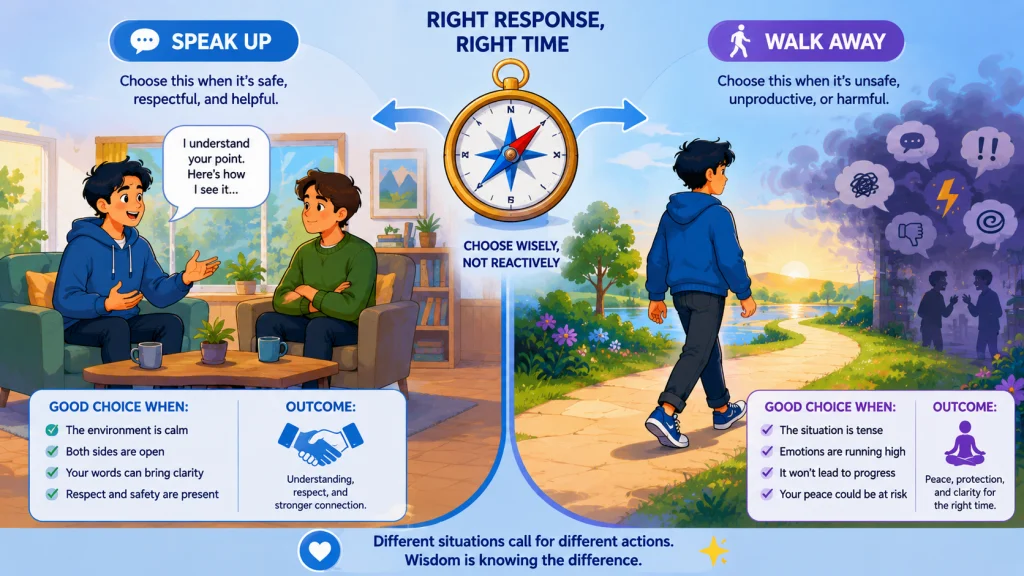
A good comeback is not automatically the right call just because it is available. If the rude person has any pattern of real aggression, the kind that could turn physical or follow you somewhere you cannot easily leave, the sharpest move is distance, not dialogue. The same goes for a boss or anyone holding power over your job or living situation, where being technically right costs more than it is worth.
The line is also not the winning move when you are too rattled to deliver it with any control. A comeback said with a shaking voice and a red face reads as upset, not composed, no matter how clever the words are. Sometimes the better move is to let the moment pass, gather yourself, and address it later when you are not running on adrenaline. None of that is losing. It is just choosing the right tool for what is actually in front of you.
Final Thoughts
Rude is a wide word covering a lot of different behavior, and the comeback that works depends entirely on which version of rude you are actually facing. A bully needs something different from a know-it-all. A fake friend needs something different from a stranger cutting in line. Sort the behavior first, then go find the response made for it.
If none of these five quite match what just happened to you, the wider breakdown of savage comebacks covers how to read the moment itself, including when the sharpest move is no reply at all.
Where to Go From Here
Each of the five behaviors above has its own dedicated set of lines, built around the specific dynamic at play rather than a generic insult format. Pick the one that matches who you are actually dealing with.
| Article | What it covers |
|---|---|
| What to say to a bully | Lines for repeated intimidation, not a single rude comment |
| Comebacks for narcissistic people | Responses to attention and control dynamics without diagnosing anyone |
| Clever comebacks for know it alls | Lines for condescension dressed up as expertise |
| Savage lines for fake friends | Replies built for two-faced behavior and betrayal, not a single slight |
| Comebacks for someone who interrupts you | How to reclaim a conversation from someone who keeps talking over you |
FAQs
🙄 What is the best comeback for a rude person?
It depends on which kind of rude you are dealing with. A line built for a pushy stranger will not work on a coworker who interrupts you weekly, and using the wrong one usually backfires.
😤 How do I know if someone is bullying me or just being rude once?
Look at the pattern, not the moment. A bully targets the same person repeatedly. A single rude comment from someone you barely know is a different, smaller problem.
🗣️ How do I get someone to stop interrupting me without starting a fight?
Reclaim the floor calmly instead of getting louder. A short, direct line that names what is happening usually breaks the pattern faster than matching their energy.
🎭 What do I say to someone who acts nice to my face but talks badly about me?
That calls for a line built around the betrayal itself, not just the latest comment. A generic comeback will not carry the weight of an ongoing two-faced pattern.
🧠 Can I tell someone they are being narcissistic in a comeback?
Better to respond to the specific behavior than to hand out a label you cannot actually confirm. Naming the pattern, not the diagnosis, keeps the line accurate and fair.
🤐 Is it better to ignore a rude person or reply?
Depends on the stakes. A one-off stranger usually is not worth the breath. A repeated pattern from someone in your life often needs a clear response before it gets worse.