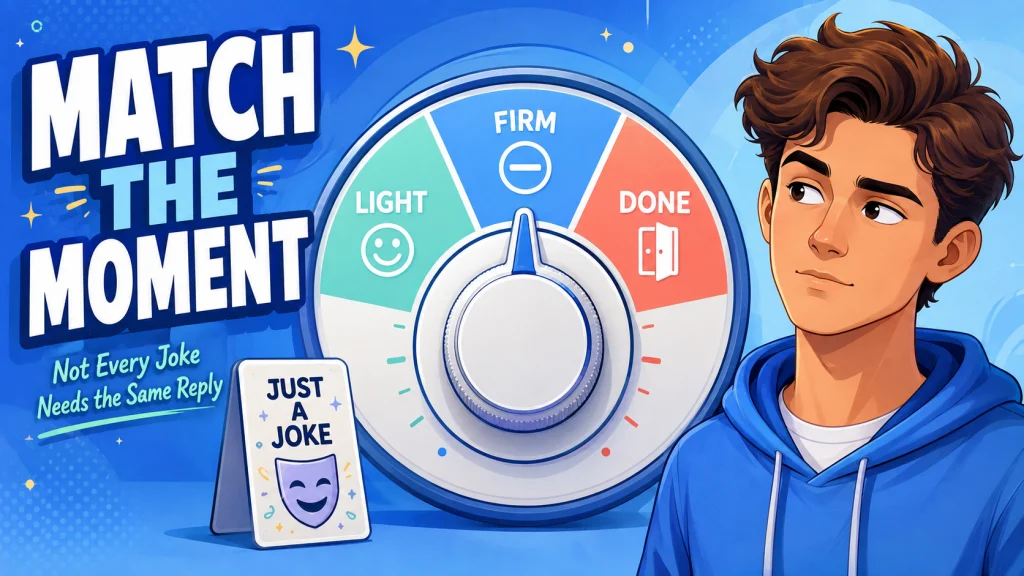
When someone says “it was just a joke,” the best reply depends on what happened before the defense showed up. A harmless joke that missed needs a lighter answer than a joke that crossed a boundary you already made clear, and both are different from a mean comment being relabeled after you object. I usually keep the reply short enough that it deals with the moment instead of creating a second argument about whether humor itself is allowed. The goal is to know when to laugh it off, push back once, return to the original comment, or stop giving the exchange more attention.
When “just joking” changes the moment
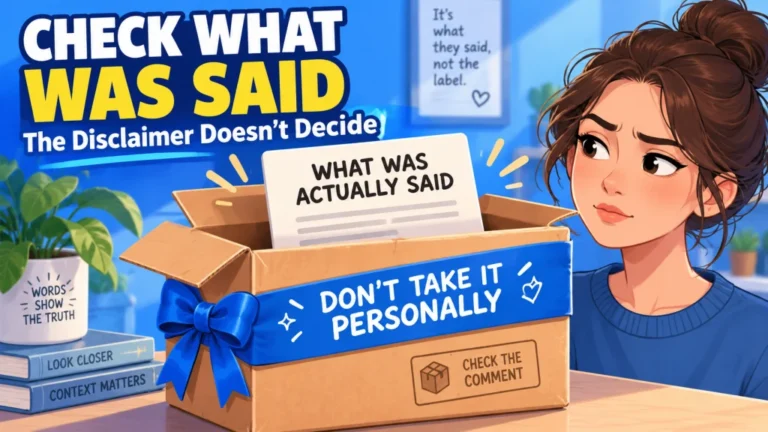
If you are trying to figure out how to respond to “it’s just a joke,” start with the timing. A joke can miss and still be harmless, and I have watched plenty of people throw out a line that simply died in the room without anyone needing to make it bigger. The moment feels different when “just joking” only appears after someone objects to what was said. That timing does not prove bad intent, but it does tell you what your reply actually needs to address.
I spent nine years working behind a bar in three cities, and the clearest pattern was never whether everyone had the same sense of humor. It was whether the person who made the joke could let a miss be a miss, or whether they immediately tried to make the other person responsible for laughing. More than once, I watched a whole table relax the second someone admitted a joke had missed and simply moved on. If the exchange is basically friendly, a dry little answer is usually enough. If the defense starts replacing the original issue, it helps to know a few ways to handle dismissive replies without getting dragged into a longer performance.
Quick responses to “it was just a joke”
The fastest way to choose a reply is to decide which of three situations you are actually in. If it was a harmless miss, you can acknowledge that and move on without pretending it was funny. If it crossed a line you had already made clear, the reply should point to that line instead of debating comedy. If the phrase is being used to erase the original comment, keep your answer on the comment itself.
Most people get stuck because they try to find one perfect comeback that works for all three. That usually creates a line that is too harsh for a harmless miss and too cute for a real boundary problem. I would rather match the weight of the reply to the weight of the moment. The table below gives you the shortest useful lane before the rest of the wording gets more specific.
| What happened | What to say |
|---|---|
| Harmless miss | “I got it. It just did not land.” |
| Crossed boundary | “I know you were joking. I still asked you not to joke about that.” |
| Comment relabeled afterward | “Calling it a joke does not change what you said.” |
Those lines work because none of them tries to win a trial about humor. They answer what is directly in front of you, then leave the other person to decide whether they want to keep the exchange normal. You can make any of them softer or sharper depending on the relationship and the setting. The useful part is the structure, not memorizing one sentence word for word.

If the joke was harmless but simply did not land
Sometimes there is no hidden problem to solve. A friend makes a weak joke, you do not laugh, they say they were kidding, and the whole thing can end there if nobody starts overexplaining. I have seen people turn a tiny miss into an awkward five-minute defense of their own sense of humor, which is much more uncomfortable than the original bad joke. A small reply gives everyone an exit.
Good responses here are plain because the stakes are plain. Try “I know, it just missed,” “Yeah, I got the joke,” “Not your strongest one,” or “You cannot win them all.” If the relationship normally includes teasing, “Needs another draft” can work without sounding wounded or cruel. The point is not to punish a joke for failing, only to avoid being pressured into performing a laugh you did not have.
- “I got it. It just missed.”
- “Not every one is a winner.”
- “Yeah, I knew you were joking.”
- “Needs better material.”
- “We can retire that one.”
Delivery matters more than cleverness in this lane. If you say a light line with a furious tone, it stops being light, and if you grin through something that actually bothered you, the other person may reasonably think the topic is fine. Use the version that matches what you mean, not the version that sounds best on a list. Then let the conversation move somewhere else.
If you want to challenge the material without starting a fight
There is a middle lane between laughing it off and turning the whole exchange into a character judgment. Maybe the joke was cheap, too personal, or aimed at something you do not want used as material, but you still want to keep the conversation intact. In that case, challenge the joke rather than the person. It is easier to stay clear when you are talking about what was said instead of trying to explain what kind of person would say it.
Lines like “Then get better material,” “That one needed more work,” or “You can joke, just not with that” keep the focus narrow. “I know it was a joke, I am telling you it was a bad one” is a little more direct when someone keeps insisting that intent should end the conversation. I like this approach because it leaves room for the other person to shrug, adjust, and move on. It also gives you a clean place to stop if they refuse to do that.
What commonly goes wrong here is adding three extra sentences after the good line. People do it because they do not want to sound harsh, so they soften, explain, qualify, and accidentally reopen the argument they were trying to close. A short challenge is often easier to hear than a long defense of why you are allowed not to laugh. Say the clean version once, then see what the other person does with it.
If you already said the topic was off-limits
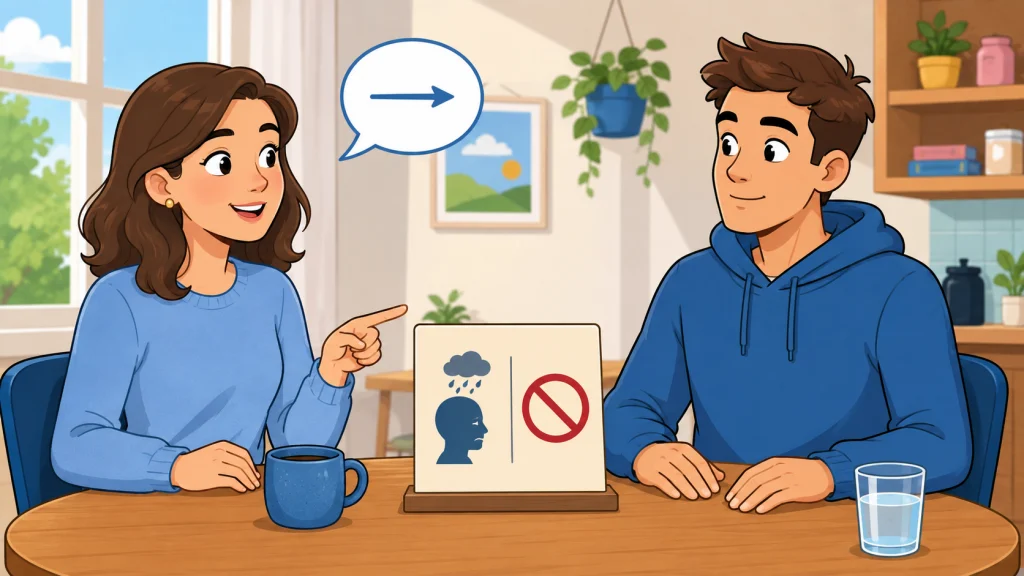
Once you have already told someone a topic is not one you want joked about, the next reply does not need to explain your entire history with it. The useful fact is simple: they knew the boundary and used the topic anyway. “I know you were joking. I already asked you not to joke about that” is enough to put the conversation back where it belongs. You do not have to prove that every person in the room would have made the same choice.
This is where playful comebacks can become a distraction, because they invite another round instead of making the limit clear. If you want it firmer, try “The joke is not the issue. You already knew that topic was off-limits,” or “You can call it a joke, but my answer is still no.” Neither line tells the other person what they intended. It tells them what you are willing to keep participating in.
If they acknowledge it and change course, you have your answer without needing a speech. If they keep trying to renegotiate the boundary by arguing that you are too serious, you can repeat the limit once or leave the exchange. Repetition is useful when it stays short because it denies the argument new material. The more reasons you add, the more individual reasons there are for someone to pick apart.
Replies to “learn to take a joke” and “can you not take a joke?”
“Learn to take a joke” shifts the target from the joke to your reaction, which is why people often feel tempted to hit back harder. You can, but you do not need a nuclear line for every version of it. A clean answer is “I can take a joke, that one just was not funny to me,” while “I understood it, I still did not like it” fits when the subject was the problem. Both replies make your point without pretending your opinion is a universal verdict.
If the setting is friendly and you want more bite, try “I can take one when you tell one” and leave it there. “I am still waiting for the funny part” pushes harder, so I would save it for a moment where a sharper answer actually fits the relationship. There is a whole separate lane for savage comebacks, but most everyday exchanges do not need that much force. The best line is usually the one that makes your point without creating work for you afterward.
For “can you not take a joke?” I prefer answers that refuse the fake yes-or-no test. Try “I can, I am also allowed not to like one” or “Sure, I just do not have to laugh at every one” when you want to keep the ground steady. Neither line asks the other person to agree that the joke was objectively bad. They simply separate someone else’s right to joke from your obligation to approve of it.

When the conversation should return to the original comment
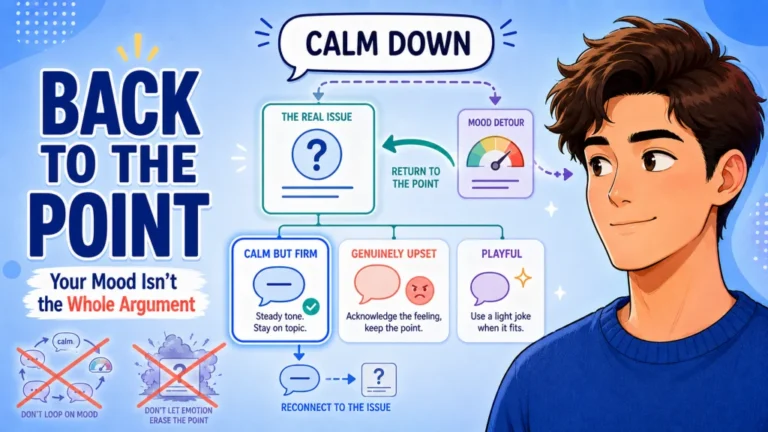
Sometimes “just joking” is not really the issue anymore because it has become a side road away from the comment you objected to. If you were talking about one specific remark and the whole exchange suddenly becomes a debate about your sense of humor, redirect it. “We can disagree about whether it was funny. I am talking about what you said” is a clean reset. It gives the conversation one subject again.
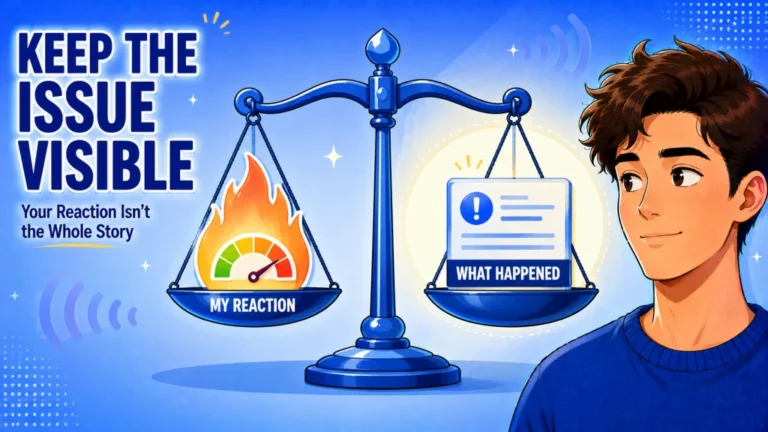
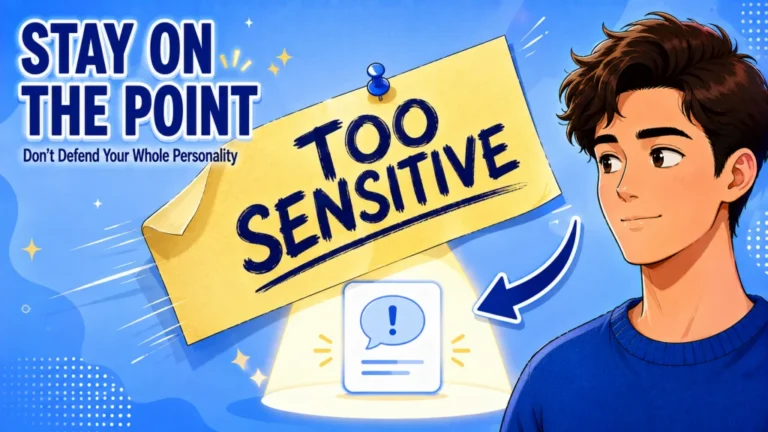
I have watched this kind of exchange get lost because both people start arguing about tone, intent, sensitivity, comedy, and who is allowed to joke about what, all at once. Once that happens, the original sentence almost disappears. If the dodge turns into a claim that you are overreacting, these responses to “you’re too sensitive” stay focused on that specific move. Otherwise, pick the one thing you actually wanted addressed and keep returning to it in nearly the same words.
Useful redirects include “That still does not answer what I said,” “The joke label is not what I am asking about,” and “We can leave the humor debate alone. I mean the comment itself.” These are deliberately less entertaining than a comeback because entertainment is not always the job. If the other person answers the original point, you have movement. If they refuse and keep changing the subject, that tells you something practical about whether continuing is worth it.
When to exit instead of arguing about humor
Not every “just joking” exchange deserves a final winning line. If the other person keeps repeating the same defense, mocking every answer, or clearly wants a reaction more than a conversation, another comeback can simply buy them another round. “Okay,” “We are not going to agree on this,” or no reply at all may do more work than the cleverest sentence. Ending the exchange is still a response to what is happening.
The same goes when the person is acting threatening, aggressive, or unsafe. This is not the moment to prove you can stand your ground with wording alone. Step away, stop replying, get around people you trust, or use whatever real-world support fits the situation. A line on a screen is never more important than your ability to leave a bad interaction.
If the situation is only annoying rather than unsafe, use a smaller exit. “Anyway,” followed by a subject change can be perfect in person, while a simple reaction or silence can close a text exchange without creating a dramatic ending. I have always liked exits that feel almost boring because boring gives the other person very little to push against. You do not have to litigate humor until someone admits you were right.
What not to say when a joke lands badly
One bad joke is not enough information to diagnose someone, label their entire personality, or announce that every joke they make is secretly cruel. That kind of leap usually makes the reply bigger than the evidence in front of you. It also gives the other person an easy new argument about the label instead of the actual comment. Stay with the behavior you can point to and the boundary you actually mean.
Avoid demanding that everyone agree the joke was objectively offensive before you are allowed to dislike it. Humor is too dependent on relationship, context, history, timing, and delivery for that to be a useful test. You can say “I did not like that,” “Do not use that topic with me,” or “That crossed a line for me” without recruiting the entire room as a jury. A specific answer is harder to derail because it does not pretend to speak for everybody.
Also avoid turning a harmless miss into a moral indictment just because you have a sharp line ready. If a friend made a dumb joke, noticed it missed, and was ready to move on, let the moment stay small if that is what you want. The same skill that helps you push back when a line crosses a boundary should also help you recognize when there is nothing worth escalating. Proportion is what keeps a comeback useful instead of making it the biggest problem in the room.
Final thoughts: answer the moment you actually have
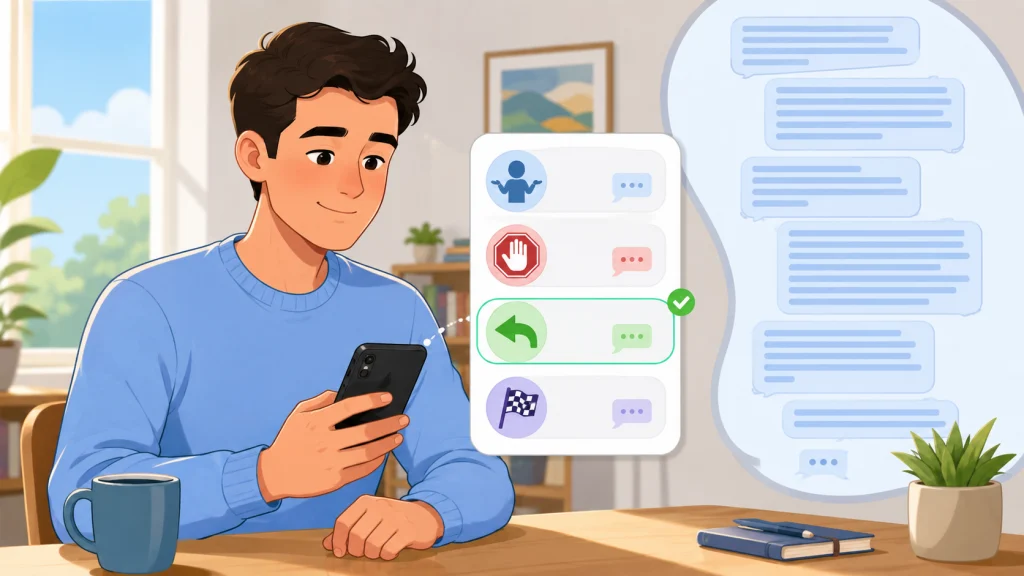
“It was just a joke” can mean a joke missed, a person got defensive, or someone is trying to move attention away from what they said. You do not need to decide which one is universally true before you answer. Look at the timing, the relationship, whether a boundary had already been stated, and whether the other person is willing to move forward normally. Then choose the smallest reply that says what you mean.
If it was harmless, let it be harmless and keep your answer light. If it crossed a clear line, name the line without building a case around it. If the defense is replacing the original comment, return to the original comment once and see whether there is a real conversation to have. And if the whole exchange has become an endless argument about whether you are allowed not to laugh, you are allowed to be done talking.
FAQs
The questions people ask about this line usually come down to the same problem: they want a response that is firm without accidentally creating a much bigger fight. I would start by deciding whether you want to keep the tone playful, make one boundary clear, or end the exchange. That choice matters more than finding the most impressive wording. The answers below keep each situation narrow so you can use what actually fits.
None of these replies requires you to prove what the other person meant. You are responding to the words, the timing, and what you want to happen next. If the relationship or history changes the meaning, adjust the line rather than forcing a stock answer into the wrong situation. A good reply sounds like something you would really say, not something you memorized for an argument.
💬 What do you say when someone says “I was just joking”?
Try “I know. I am still telling you it did not land,” if the problem was the joke itself. If the comment crossed a line, use “I know you were joking. I still do not want jokes about that.”
😐 How do you respond to “learn to take a joke”?
“I can take a joke. I do not have to like every one” is clear without turning it into a bigger insult. If the tone is playful, “I can when you tell one” is sharper.
🎯 What is a good comeback for “can you not take a joke?”
Try “Sure. I just did not think that one was funny.” It answers the question without accepting the idea that you owe every joke a laugh.
🧱 What if I already told them not to joke about that topic?
Keep it about the boundary: “I already asked you not to joke about that.” You do not need to explain the whole reason again unless you genuinely want to.
🚪 Is it okay to say nothing after “it was just a joke”?
Yes. If the exchange is going nowhere, silence can end it more cleanly than another comeback. You are not required to keep supplying material for a conversation you no longer want.