“Don’t take it personally” can be useful clarification when a comment truly was not about you, but it sounds very different after a direct personal jab. The useful move is to look at what was actually said before deciding whether to push back, ask for clearer wording, or simply accept the clarification and move on. I would rather give you a short reply that fits the moment than a speech that turns one awkward sentence into a full argument. The goal is not to prove how you are allowed to feel, only to answer the words that are actually in front of you.
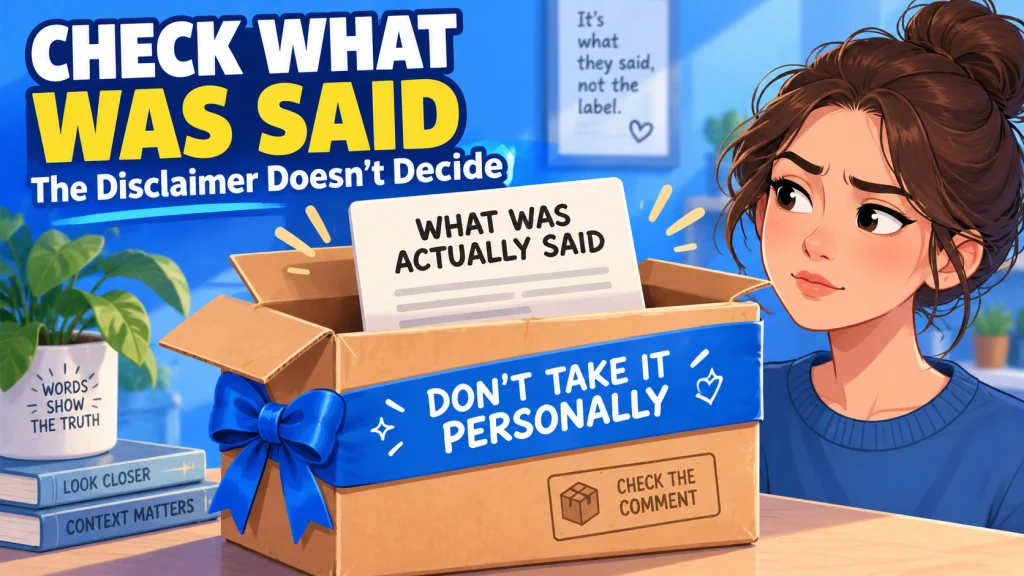
Quick replies when the comment was obviously personal
If you are figuring out how to respond to “don’t take it personally,” start with the sentence that came right before it. Was the speaker talking about a general situation, a choice, or a problem that happened to involve you, or did they make the comment directly about your character, appearance, habits, or competence? That distinction matters more than the phrase itself. A line that makes sense after “I invited fewer people because the room is small” sounds ridiculous after “you are exhausting to be around.”
I have heard people use the exact same phrase for both kinds of moments, which is why I do not treat it as proof of good intent or bad intent. Behind a bar, I once watched someone make a pointed joke about a friend’s clothes, then add “don’t take it personally” as if those four words could turn the joke into weather. The friend did not argue about motives; she just said, “You made it about me, though,” and the conversation got very quiet very fast. That is usually the cleaner test: answer what was said, not the story you are tempted to build around why they said it.
| What came before the phrase | What usually fits next |
|---|---|
| The comment was genuinely impersonal | Acknowledge the clarification, ask one practical question if needed, or move on. |
| The comment directly targeted you | Name that mismatch briefly, ask for different wording, or set a limit if it keeps happening. |
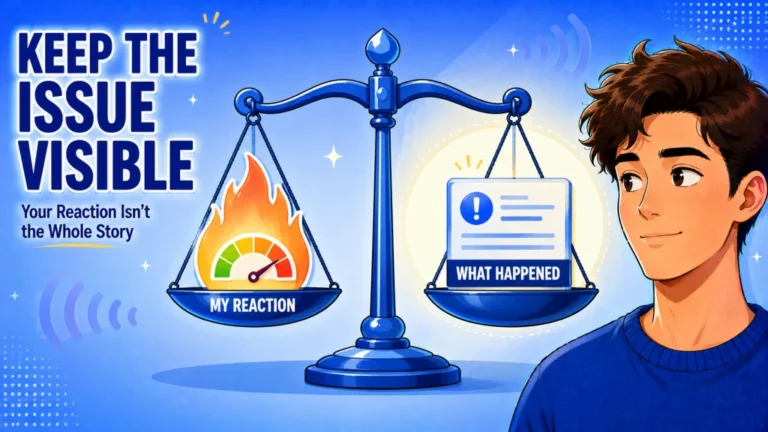
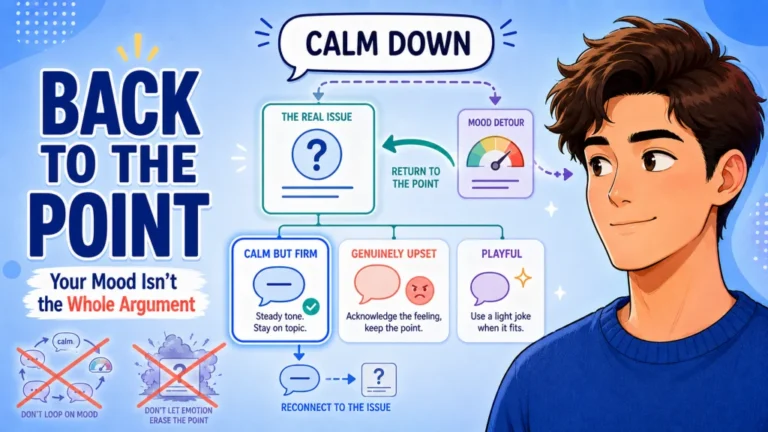
This sounds obvious when you read it slowly, but people skip this step because the phrase itself can become more irritating than the sentence that caused the problem. Once that happens, the conversation turns into a debate about your reaction instead of the remark that started it. Pull the focus back to the original words before you choose a reply. If they were personal, you have something specific to answer; if they were not, the next section is probably the better fit.
When the comment clearly singled you out, the useful move is to name the mismatch rather than defend your whole reaction. “It was about me, so I took it that way” answers the contradiction directly. “Then keep the comment impersonal” is drier and a little firmer. Neither line needs a backstory because the original wording is already the evidence.
People often get stuck trying to prove why the remark bothered them, especially after the speaker shifts attention to whether they took it “too personally.” I understand the impulse, but that gives the conversation a new subject and lets the original comment slide out of view. Keep the first response attached to what was actually said. You can always add context later if the other person asks a real question instead of dodging the point.
- “It was about me, so I took it that way.”
- “That was pretty personal.”
- “Then keep the comment impersonal.”
- “You can clarify what you meant without telling me how to take it.”
- “If you meant something else, say that instead.”
- “You said it directly to me.”
- “Calling it impersonal does not make it impersonal.”
- “Then give me the version that is not personal.”
The best comebacks to “don’t take it personally” are not always the meanest ones. A dry line can be enough because the contradiction is already doing most of the work for you. If someone says, “You’re impossible to deal with, but don’t take it personally,” “You made that personal yourself” is plenty. The point is not to out-insult them; it is to make the mismatch impossible to miss.
When the speaker genuinely means the issue is not about you
Sometimes the phrase is clumsy but accurate. A friend might cancel because they are wiped out, leave a group plan early, or turn down an invitation for reasons that have nothing to do with how much they like you. In that kind of moment, “don’t take it personally” may be an awkward attempt to keep you from reading rejection into something practical. If their explanation matches the situation, you can let the clarification do its job.
A simple “Got it” or “No worries” can be the smartest reply because there is nothing useful to challenge. I have watched people talk themselves into an argument here by demanding repeated reassurance after the other person already gave a clear, ordinary reason. That usually makes a small moment heavier than it needs to be. Accepting an explanation is not the same as pretending every explanation is perfect; it just means the facts in front of you do not require a comeback.
This is also where the broader set of replies to dismissive comments can help you separate a genuinely dismissive line from a plain clarification. Tone matters, but context matters more, especially when the speaker is describing a decision that applies to several people rather than singling you out. If the same rule, limit, or inconvenience would have affected anyone in your place, the comment may truly be impersonal. You can still dislike the wording without turning it into a character judgment.
For example, “I am keeping the trip small, so don’t take it personally” lands differently from “I did not invite you because you always ruin things, don’t take it personally.” The first sentence explains a general limit; the second makes a direct claim about you. Those deserve different replies because they are different conversations. The distinction keeps you from arguing where a simple clarification would have been enough. Treating both as identical only makes your response less accurate.

Ask them to say it differently when the wording did the damage
There are moments when you believe the speaker did not mean a personal jab, but the wording still came out that way. That is a good place for a reset instead of a counterattack. You can ask them to rephrase the point without accusing them of secretly meaning something worse. It gives the conversation a clean second chance and keeps you out of a useless argument about intent.
Try something like, “Okay, then say what you mean without making it about me,” or, “I hear you, but that wording sounded personal.” Both lines leave room for clarification while still making the problem visible. If they meant “I need some space” but said “you are too much for me right now,” asking for different wording is reasonable because the second sentence carries a much broader judgment. You are not asking for perfect phrasing, only a sentence that matches the point they claim they were making. That keeps the correction simple and gives them room to fix it.
What I like about this approach is that it does not require mind reading. You are not saying, “You wanted to hurt me,” because you cannot know that from one line alone. You are saying, “Those words landed as personal, so give me the version you actually meant.” That keeps your reply tied to something concrete and gives the other person a straightforward way to correct it. It also keeps you from escalating a conversation before you know whether a simple rewording solves the problem.
If they do rephrase it clearly, let the new wording count. Do not keep dragging the original sentence back into the conversation after you asked them to fix it and they did. A reset only works if both people are allowed to use it. If the new version is still a direct jab, then you have your answer and can respond to that instead.
Short lines that state the impact without a long defense
You can say a comment landed badly without turning the reply into a courtroom closing statement. In casual conversation, one sentence is often enough: “I know you may not have meant it that way, but it landed personally.” That line does not accuse the speaker of hidden motives, and it does not ask permission to be affected. It simply reports the result and leaves space for whatever comes next. That is usually enough information for the other person to clarify, apologize, or keep arguing.
If you want something firmer, “You can mean it generally and still say it in a personal way” works when the speaker keeps leaning on intention. For a lighter version, “Fair, but the wording did not exactly help” lowers the temperature without pretending the phrasing was fine. Another option is, “I am telling you how it landed, not what you meant.” Each one keeps intent and impact separate instead of turning them into competing verdicts.
I once watched a friend answer a cutting remark with nothing more than, “That sounded personal to me.” She did not explain the entire friendship or drag in three older examples, so the other person had to deal with that sentence as it stood. He rephrased what he meant, and the conversation moved on without anyone pretending the first wording was good. That is what an impact line is for: not proving a case, but making the effect clear enough that the next move belongs to both people.
If you want sharper language without turning the exchange into a speech, sharp comebacks for rude comments are useful when the original line was plainly insulting rather than merely clumsy. Even then, sharper does not have to mean cruel. “Calling it impersonal after making it about me is an interesting choice” can land harder than a string of insults because it stays attached to the actual contradiction. Precision usually beats volume.
When to accept the clarification and move on
Not every awkward phrase needs a second round. If the speaker gives a clear explanation, the original comment was not a personal attack, and there is nothing else you need from them, moving on is often the cleanest choice. You can say, “Okay, I get what you meant,” and let the conversation continue. A reply does not become stronger just because it keeps going.
This is especially useful when the original issue is practical and already settled. Maybe someone chose a different seat, declined an invite, changed a plan, or responded briefly because they were dealing with something unrelated to you. Once they explain that, asking for more reassurance can turn a neutral decision into a personal debate. If the facts support the explanation, you are allowed to believe it and spend your energy somewhere else.
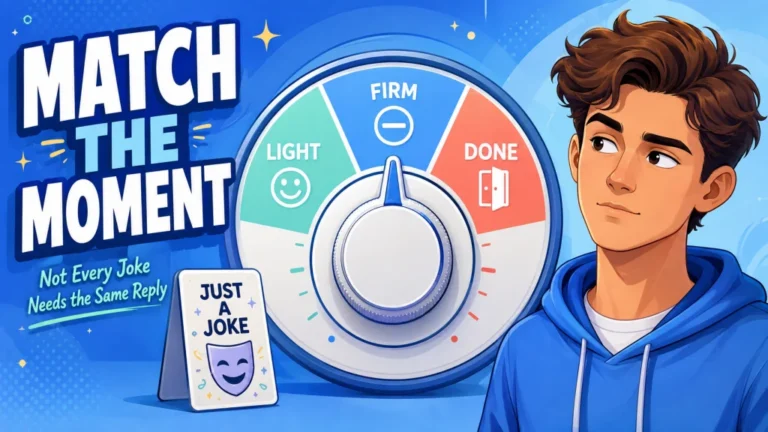
Moving on also works when the comment is mildly annoying but too small to deserve a full confrontation. A dry “Noted” can close the loop without pretending you loved the wording. The point is proportionality: match the response to the actual size of the moment. That is usually more satisfying than performing a comeback just because you came prepared with one.
There is a difference between letting something go and being unable to answer it. You can understand exactly why the wording annoyed you and still decide the exchange has reached its useful end. I have watched more conversations go sour from one unnecessary extra round than from the original awkward sentence. Once the clarification answers the actual issue, you do not owe the irritation a separate debate.

When repeated use becomes a boundary issue
One clumsy “don’t take it personally” can be just that, clumsy. Repetition changes the situation when the same person keeps making personal remarks and then uses the phrase to shut down any response. At that point, answering the latest sentence may be less useful than naming the pattern you are willing to engage with. Keep it specific to the conversation you can actually observe.
You might say, “If you keep making comments about me, I am going to treat them as comments about me,” or, “I am fine with direct feedback, but not personal digs followed by that line.” Both responses set a limit without diagnosing the speaker or turning the exchange into therapy language. You are describing what keeps happening and what kind of conversation you will continue. The limit stays readable because it is about the exchange, not a label you are attaching to the other person. That is enough.
If the same pattern continues, you do not need a more elaborate comeback every time. Repeating one short boundary can be more effective than inventing a fresh speech for each incident. “We already covered this” or “I am not doing this version of the conversation again” closes the door without reopening the whole history. Consistency does more work than cleverness here.
And if the person becomes threatening, abusive, or unsafe, the goal changes completely. This is no longer a moment for finding the perfect line. Stepping away, ending the exchange, or getting support from someone appropriate to the situation can matter more than winning the wording. A comeback is optional; your participation is optional too.
What not to say when the phrase annoys you
The first thing to avoid is pretending you know exactly why the speaker said it. “You are just trying to manipulate me” may feel satisfying, but it moves you from responding to words into declaring motives you cannot prove from one exchange. If the behavior itself is the problem, name the behavior. “That comment was about me” is cleaner than a diagnosis of the person who said it.
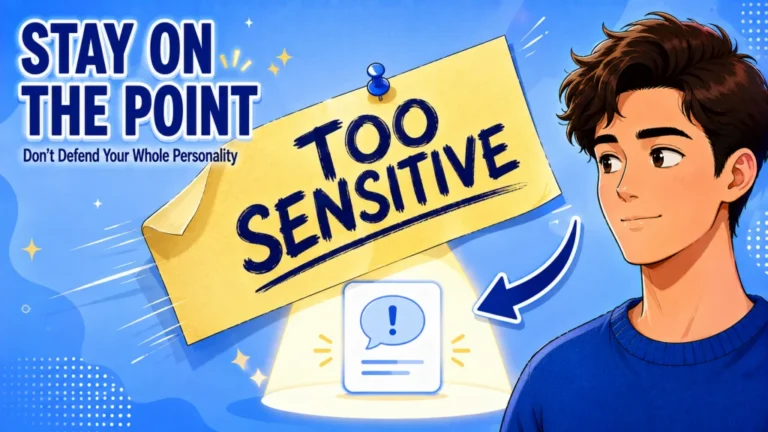
Also skip therapy language in an ordinary social disagreement. You do not need to label every dismissive sentence as gaslighting, trauma, projection, or emotional abuse to explain that it was rude or personal. If the person stops discussing the comment and starts criticizing your reaction instead, these responses to being called too sensitive stay with that narrower problem without inventing a diagnosis. Say what happened in plain English and keep the scope where it belongs.
Do not drag formal workplace disputes, legal threats, or professional performance arguments into a casual comeback either. Those situations have their own stakes and may require a different kind of response entirely. SlyLines is useful when you are deciding what to say back in an everyday conversation, not when the consequences belong with a manager, attorney, counselor, or other professional. Knowing when the setting has changed is part of answering well.
Finally, do not overcorrect with cruelty just because the phrase annoyed you. If someone says, “I could not make it to your party, don’t take it personally,” replying with a vicious attack about their character does not make your point clearer. It just creates a second problem. The sharpest reply is usually the one that stays closest to what actually happened.

Final thoughts: answer the comment, not the disclaimer
“Don’t take it personally” is not the part that tells you what to do next. The sentence before it does. If that sentence was genuinely impersonal, accept the clarification if it makes sense; if it was a direct jab, point out the mismatch, ask for different wording, or state the impact in one clean line. You do not need to settle the speaker’s intent before you can answer their words.
What to say to “don’t take it personally” comes down to accuracy more than attitude. I have seen short, boring replies work better than brilliant comebacks because they kept the conversation on the one thing that mattered. Start there, keep the response proportional, and stop when your point has already landed. You are replying to a moment, not auditioning for the last word.
FAQs
Most questions around this phrase are really questions about context: was the comment personal, was the wording just clumsy, or is the same thing happening again? I would not use one stock reply for all three because they are different situations. The fastest way to choose is to look at the exact sentence that came before the phrase. Then answer only what that sentence actually requires.
Keep the first response shorter than you think you need. If the other person clarifies, you can decide whether that resolves it; if they double down on the personal comment, you can be firmer without rewriting your whole position. These answers stay deliberately practical because that is what helps when you are staring at the message and need a line now. You can always say more later if the conversation genuinely needs more.
💬 What do you say when someone tells you not to take it personally?
Look at what they said first. If it was personal, try, “You made it personal with that comment.” If it was genuinely general, a simple “Okay, I get what you mean” may be enough.
🎯 What is a calm response to “don’t take it personally”?
“I understand what you mean, but the wording landed personally” is calm and specific. It describes the effect without claiming you know the speaker’s intent.
🗣️ What if they say it after insulting me directly?
Bring the conversation back to the insult. “That was a comment about me, so calling it impersonal does not really fit” keeps the focus where it belongs.
🔁 What if they keep saying “don’t take it personally” every time I push back?
Name the repeat pattern instead of inventing a new comeback each time. “If the comments keep being about me, I am going to respond to them as personal comments” is clear enough.
🤝 Should I accept it if they explain what they really meant?
If the clarification fits the situation, yes, you can let it count. Asking someone to rephrase only works if you are willing to hear the clearer version when they give it.