Personal questions are not all the same, even when they touch the same private part of your life. The useful move is to decide how much you want to reveal before you decide how funny, vague, or direct your reply should be. I usually sort the moment by the person asking, the reason they seem to be asking, and what happens after your first answer. That gives you a reply that protects your privacy without turning harmless curiosity into a fight.

Choose a response level: answer, joke, redirect, or boundary
A personal question is not automatically rude, so the first job is not finding the sharpest comeback. Before you try to be clever, decide how much information you actually want to give, then look at the social distance between you and the asker. A close friend, a new acquaintance, and a relative who keeps returning to the same subject can ask identical words and create three different levels of pressure. That is why witty responses to personal questions work better when you match the disclosure level to both the relationship and the persistence. If you want a broader set of funny replies for everyday moments, start there and then narrow the response to the question in front of you.
I learned to watch those two things together across years of conversations behind a bar. With someone close, a joke can work because there is already enough trust for both people to hear the tone correctly. With someone you barely know, a broad real answer or an easy redirect usually creates less friction than a line designed to sting. If the person ignores the first answer and keeps pushing, the important change is not their label, it is the fact that your first level of disclosure was not accepted.
| Social distance | Likely social function | Low disclosure option | When to get firmer |
|---|---|---|---|
| Close friend or familiar relative | Curiosity, teasing, or a real check-in | Short answer or light joke | When the same subject keeps coming back after you have closed it |
| New acquaintance | Getting to know you or filling conversational space | Broad answer or gentle redirect | When they start pressing for details you did not offer |
| Coworker or casual contact | Small talk or social curiosity | Keep the answer general | When the conversation turns into repeated personal probing |
| Anyone asking in front of a group | Curiosity, teasing, or putting you on the spot | Use a short answer that reveals little | When the public pressure continues after you have already answered |
The table is not a personality test for the asker, and you do not need to solve their motive with perfect accuracy. You only need enough context to choose your own disclosure level without getting dragged into an answer you never meant to give. Funny answers to personal questions work best when they leave you an exit instead of creating another question you now have to explain. If your first short answer is respected, the conversation can keep moving without any extra edge.

Why are you single: answer the pressure, not your whole life
“Why are you single?” asks for an explanation, which is different from someone simply checking your relationship status. That extra “why” can make a casual question feel like you have been handed a problem to defend. You do not have to accept that framing just because the asker used it. A light answer such as “The casting process is very selective” can keep a friendly conversation moving without opening your private history.
If the person is genuinely curious and you feel like answering, a plain response can be better than a joke. If they are teasing, one of the funny responses to why are you single can take the pressure out without turning the exchange hostile. If they keep asking after you have already answered, stop improving the joke and make the limit clearer. The mistake I see most often is giving a longer and longer explanation because the first answer did not satisfy someone else.
Why are you so quiet: answer the spotlight, not a diagnosis
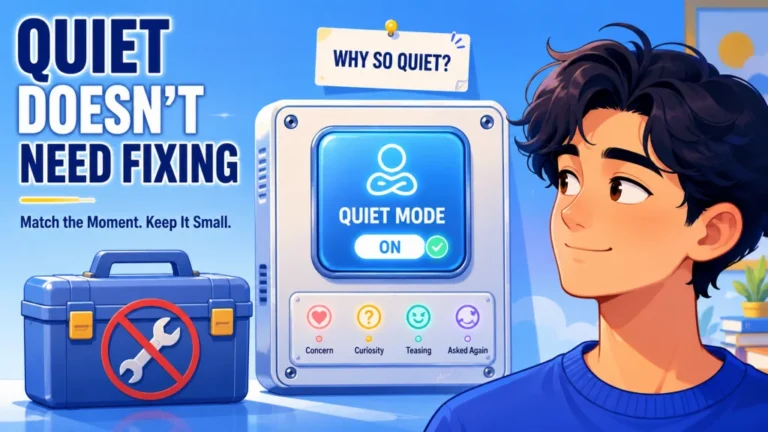
“Why are you so quiet?” can be a clumsy invitation to join the conversation, or it can put you on display in a way you did not ask for. You do not need to explain your personality, mood, childhood, or social habits just because someone noticed you were not talking much. A small answer such as “Just listening” often does more work than a defensive speech. It answers the moment without agreeing that being quiet requires an explanation.
For a friend who is lightly teasing, funny responses to why are you so quiet can turn the spotlight down instead of turning the person into an opponent. With someone who keeps repeating it, a line like “I am fine, I just do not have much to add right now” is clearer and harder to misread. I would rather give a reader one usable sentence than encourage them to prove that quietness is a virtue. You are replying to a question, not presenting a defense of your entire temperament.
How old are you: choose what you want to disclose
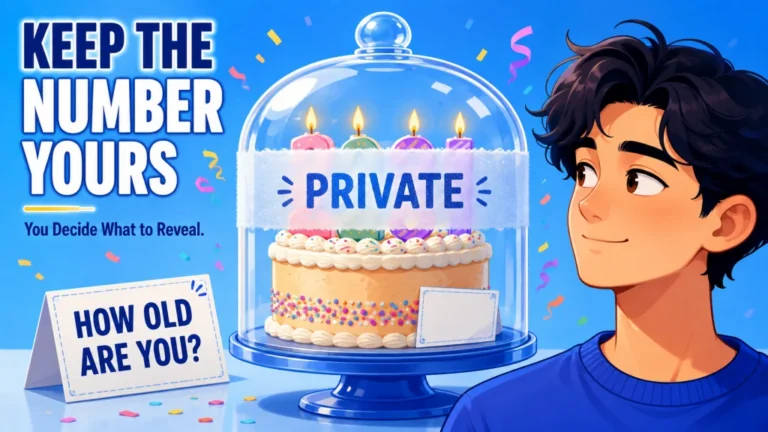
“How old are you?” is one of those questions that can be completely ordinary in one conversation and too personal in another. You can answer directly, give a range, make a joke, or decline, and none of those choices needs a courtroom argument behind it. If you want to keep it light, “Old enough to know when to dodge a question” makes the deflection obvious without pretending the asker committed a crime. The tone tells them you heard the question and chose not to give the number.
The useful part of funny responses to how old are you is having a graceful option when you want privacy but do not want the whole conversation to stop. A playful dodge can be enough when the asker understands it and moves on. You can also give a broad answer such as “somewhere between old enough and none of your paperwork” when the relationship can carry that tone. Clever responses to personal questions are only clever if they still let you control how much of your own information leaves your mouth.

What do you do for a living: keep small talk from becoming an interview
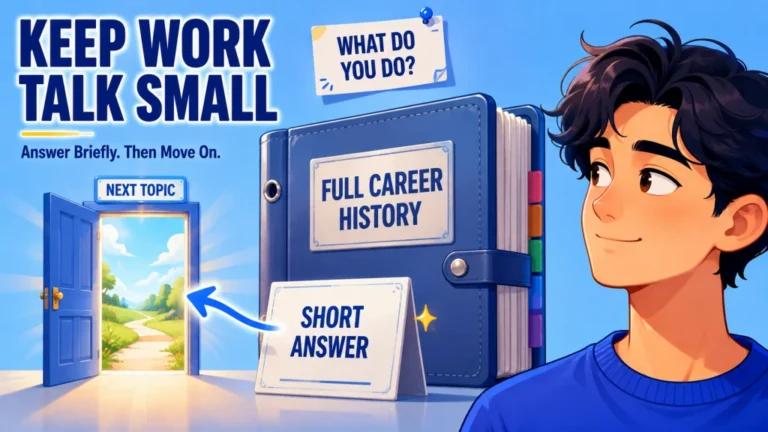
“What do you do for a living?” is common small talk, which is exactly why treating it like an invasion can sound stranger than the question itself. You can answer at the level that fits the relationship, from a broad field to a specific role, without handing over your resume. “I work in writing, mostly” is enough if that is all you want to share. A short answer also leaves room for the conversation to become something other than a sequence of job questions.
If the exchange starts to feel like an interview, funny replies to work questions can help you change the rhythm without insulting someone who may only be making conversation. A line like “I answer fewer questions at work than I do here” works only if the tone is already playful, so do not force it on a new acquaintance who is being perfectly normal. When the question is harmless, your reply can stay harmless too. Witty replies to nosy questions need more edge than ordinary small talk, and knowing the difference saves a lot of unnecessary friction.
When are you getting married: answer the timeline pressure
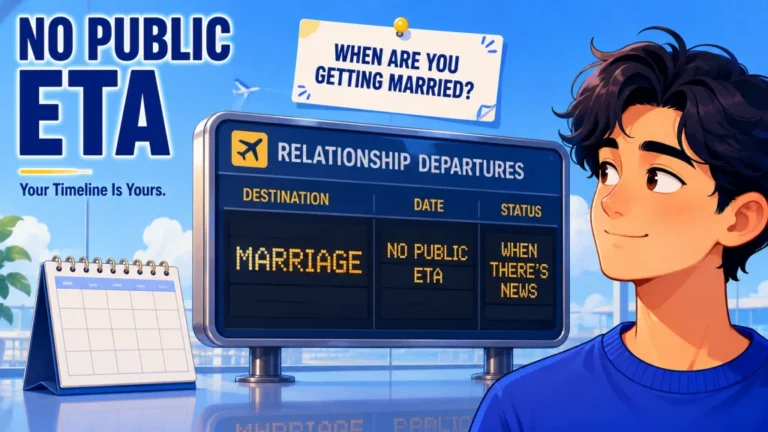
“When are you getting married?” can sound playful when it comes from someone close, but it can also carry an assumption that there should already be a schedule. You do not need to discuss your relationship, future plans, or reasons just to make the asker comfortable. “I will let you know when there is news” is broad enough to close the question without starting a new argument. If the room is light, a joking answer can do the same job with less stiffness.
The funny responses to when are you getting married are most useful when the question is annoying but not serious enough to deserve a speech. With someone close, “You will know when there is cake to eat” can keep the answer light without offering a timeline. With someone less familiar, “No news to report” gives away even less and still lets the conversation move. Funny responses to personal questions should reduce pressure, not trap you in an ongoing performance.
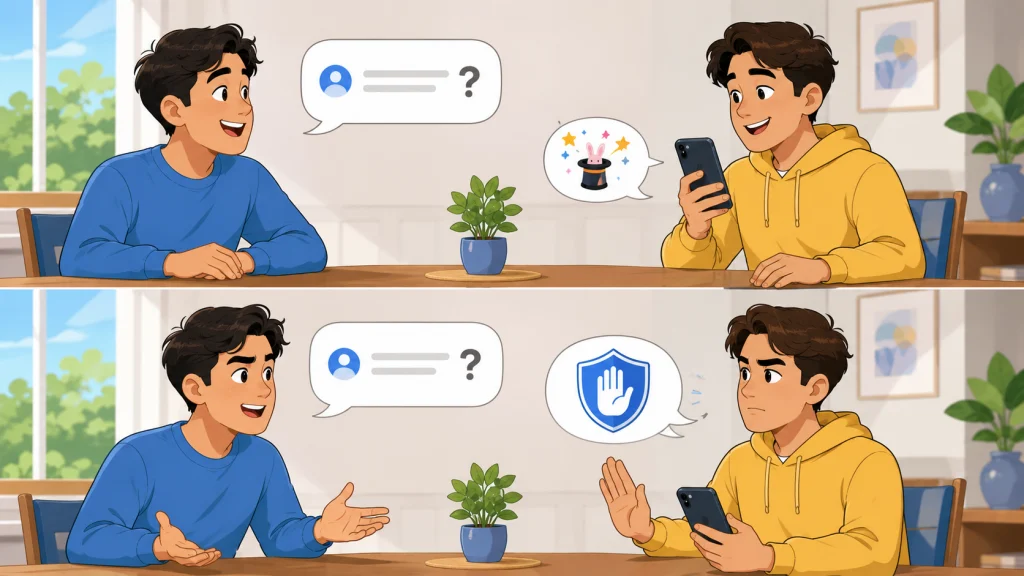
When humor is enough and when a direct boundary is clearer
Humor works best when both people can understand that the subject is being kept light and the asker is willing to move on. A joke can soften a refusal, but it cannot force someone to respect the refusal underneath it. I have watched people keep polishing the comeback when the real problem was that the other person simply kept asking. Once that happens, clarity usually beats creativity.
- Use humor when the question feels friendly and one light deflection is likely to be enough.
- Use a redirect when you want the conversation to continue, just not on that subject.
- Use a direct boundary when the asker ignores your first answer or keeps pushing for details.
- End the exchange when responding would only create another round you do not want.
The cleanest boundary is often shorter than the witty version: “I am keeping that private” or “I am not getting into that.” You do not have to explain why the boundary exists, and you do not need to insult the person to make it count. The point is to close the subject clearly, not to produce a more impressive comeback than the one before it. If someone becomes aggressive, threatening, or makes you feel unsafe, the goal is no longer to land a clever line, and disengaging can be the better move. Privacy is not a contest, so do not keep replying just to win the exchange.
Final thoughts: protect the detail without killing the mood
The best reply starts with one quiet decision: how much of this do I actually want to answer? From there, you can be honest, vague, funny, or direct without treating every personal question like a challenge. That keeps you from oversharing because you froze, but it also keeps you from swinging too hard at someone who was only making conversation. A short reply leaves you more room to adjust if the asker turns out to be kinder or pushier than you first thought.
I would rather have one line that fits the person in front of me than ten brilliant lines built for the wrong situation. Start light when the moment is light, and get clearer only when the pressure actually increases. That is the difference between protecting your privacy and making privacy the center of the room. The line does not need to win anything, it just needs to take the conversation where you want it to go next.

Choose the exact personal question you need
Broad advice only gets you so far because each question carries a different kind of pressure. Being asked why you are single is not the same problem as being asked your age, even if both touch information you may want to keep private. The pages below narrow the situation so you can choose lines that match the question instead of using one generic privacy comeback everywhere. Start with the wording you actually heard, then adjust for the person who said it.
You also do not have to decide in advance that the question was rude. Each page gives room for a light answer when the asker is harmless, a redirect when you want less disclosure, and a firmer response when the person keeps pushing. That keeps the reply proportional to what actually happened. It also makes it easier to stay funny without accidentally inviting another round of questions.
| Exact question | What the page helps you handle |
|---|---|
| Replies to why are you single | Deflect explanation pressure without turning a status question into a life story. |
| Replies to why are you so quiet | Handle being put on the spot without treating quietness as something you must defend. |
| Replies to how old are you | Choose whether to answer, joke, stay vague, or keep your age private. |
| Replies to what do you do for a living | Keep normal small talk from becoming a detailed interview about your work. |
| Replies to when are you getting married | Answer future timeline pressure without opening every detail of your relationship plans. |
Pick the page that matches the actual sentence you are answering, not the one with the sharpest sounding comeback. A line that fits the exact question is easier to say naturally and easier for the other person to understand. If the asker accepts your first answer, you can leave it there. If they do not, move from humor toward clarity instead of stacking more jokes on top of a boundary they are already ignoring.
FAQs
Most questions about personal replies come down to the same decision: how much do you want to reveal, and how much energy does the moment deserve? You can keep a friendly exchange moving without giving a full answer, and you can be direct without making the response cruel. The exact wording matters less than whether it fits the relationship and the pressure you are actually getting. These are the questions I would answer first when someone wants a quick line they can actually use.
Do not treat these as scripts you have to recite perfectly. Shorten them, soften them, or make them more playful if that sounds more like you. If a person accepts the first answer, there is no prize for delivering a second comeback. The useful response is usually the smallest one that gets the conversation where you want it to go.
💬 How do you respond when someone asks a personal question?
Decide first whether you want to answer, joke, redirect, or decline. Then keep the first reply short enough that you can change course if the asker keeps pushing. I would not explain more than you actually want to share just because the question caught you off guard.
😄 What is a funny way to avoid answering a personal question?
Use a joke that clearly signals you are dodging, such as “That information is still under review.” Keep it light with someone who is being light with you. If they ignore the dodge, stop trying to make the boundary funnier and say it plainly.
🛑 What do you say when someone keeps asking after you already answered?
Repeat the limit without adding a new explanation: “I am not getting into that.” The extra detail is usually what gives a persistent person another angle to question. Short and boring can be much more useful than clever at that point.
🎭 Should you use sarcasm when someone asks a nosy question?
Only when the relationship can carry it and you are comfortable with a little edge. Sarcasm with a close friend can feel playful, while the same line with a new acquaintance can sound needlessly hostile. If you are unsure, use a lighter deflection first.
🔄 How do you change the subject without making it awkward?
Give a brief answer or a brief dodge, then offer a real new topic instead of announcing that you are changing the subject. “Nothing exciting there, how did your trip go?” gives the other person somewhere easy to go next. The redirect feels smoother when it is an actual conversation, not an escape hatch with a flashing sign.
🤐 Is it rude to say you do not want to answer?
No line is guaranteed to land well with every person, but a simple “I would rather keep that private” is clear without adding an insult. You do not have to turn the refusal into a long explanation. If the person respects it, move on and let the moment stay small.