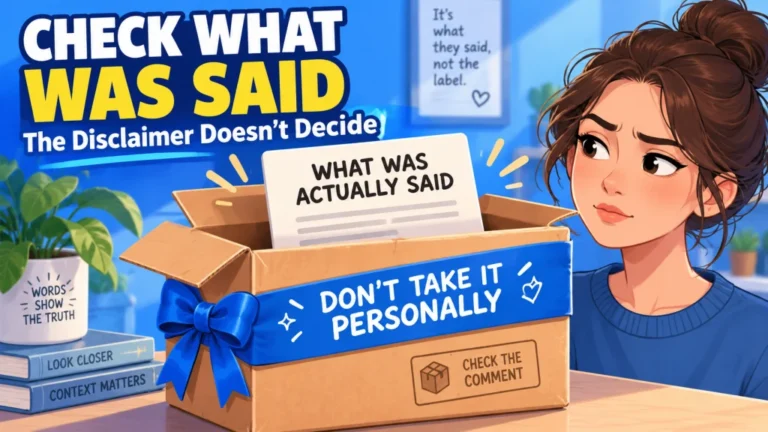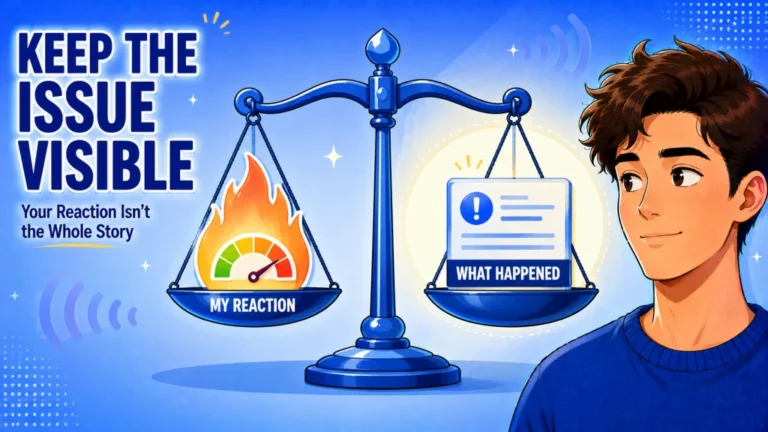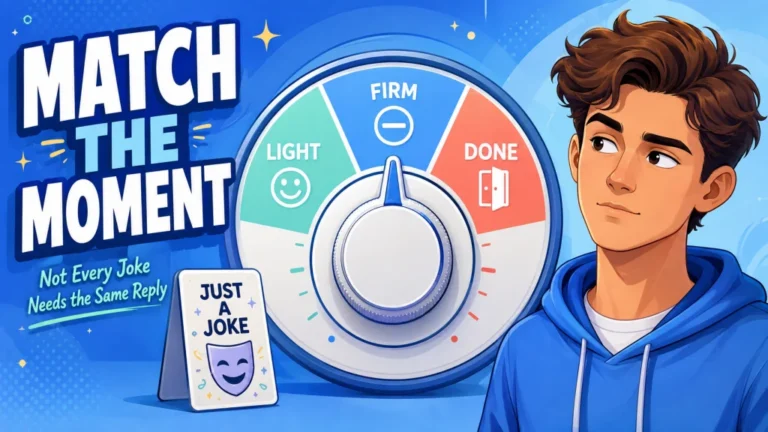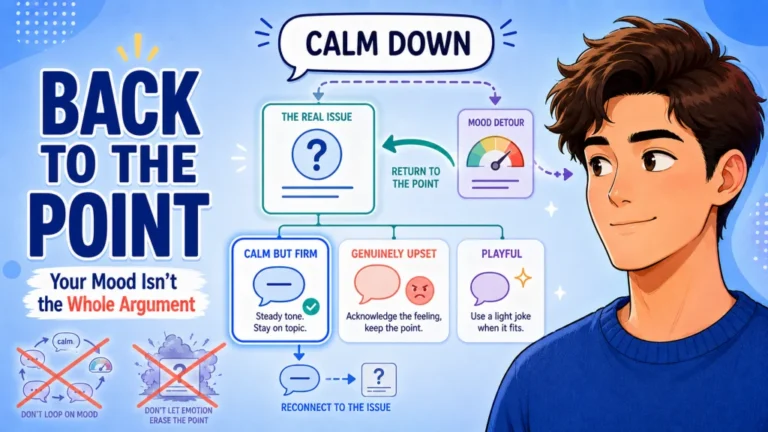
When someone says you’re too sensitive, the easiest mistake is defending your entire personality instead of staying with the thing that actually happened. A better reply keeps the original comment, joke, tone, or behavior in view and asks for something specific if there is something worth fixing. You can redirect, ask for clearer feedback, set a boundary, or use a light comeback without turning the exchange into a trial over whether you feel too much. The goal is not to prove that you are never sensitive, it is to keep one label from swallowing the whole conversation.
Too sensitive changes the subject from what happened to who you are
When someone says you’re too sensitive, the useful first move is to resist the urge to prove the label wrong. Maybe you objected to a joke, asked someone to stop interrupting, or said you did not like the way a comment landed. Then the conversation suddenly becomes about whether you are the sort of person who reacts too much. Bring it back to the actual moment before you spend ten minutes defending a personality trait nobody needed to put on trial.
I notice this shift because conversations can change direction in a single sentence. One person says, “I asked you not to joke about that,” and the answer becomes, “Wow, you’re sensitive,” which leaves the original request sitting untouched. The clean response is usually something like, “Maybe, but I’m still talking about what you just said.” That line does not demand agreement about your feelings, it simply refuses to let the label replace the subject.
Quick replies that do not defend your whole personality
If you are wondering how to respond to “you’re too sensitive,” start shorter than your nerves are telling you to. Most people over-explain here because they want to close every possible loophole, but the extra explanation gives the other person more material to argue with. A quick reply works best when it makes one move and then stops. Pick whether you want to redirect, ask a question, set a limit, or answer with a little bite.
Most comebacks to “you’re too sensitive” get weaker when they try to sound devastating. You do not need a speech about empathy, maturity, or everything the other person has ever done wrong. You need one sentence that matches the actual temperature of the exchange. If you want more examples for situations where someone keeps brushing off the point, my responses to dismissive replies stay focused on that exact problem.
- Redirect: “Maybe. I still want to talk about what you said.”
- Curiosity: “What specifically do you think I reacted too strongly to?”
- Firm boundary: “You can think that. I still do not want you speaking to me that way.”
- Light comeback: “And yet the comment still managed to be rude.”
The redirect is the safest default because it keeps the conversation small. Curiosity fits when you think there may be useful feedback buried under a lazy label, while the boundary fits when the same behavior keeps repeating. The light comeback only works when the relationship can carry a little friction without turning the whole thing into a contest. If what you really want is a much sharper tone, my savage comeback collection is where that kind of line belongs.
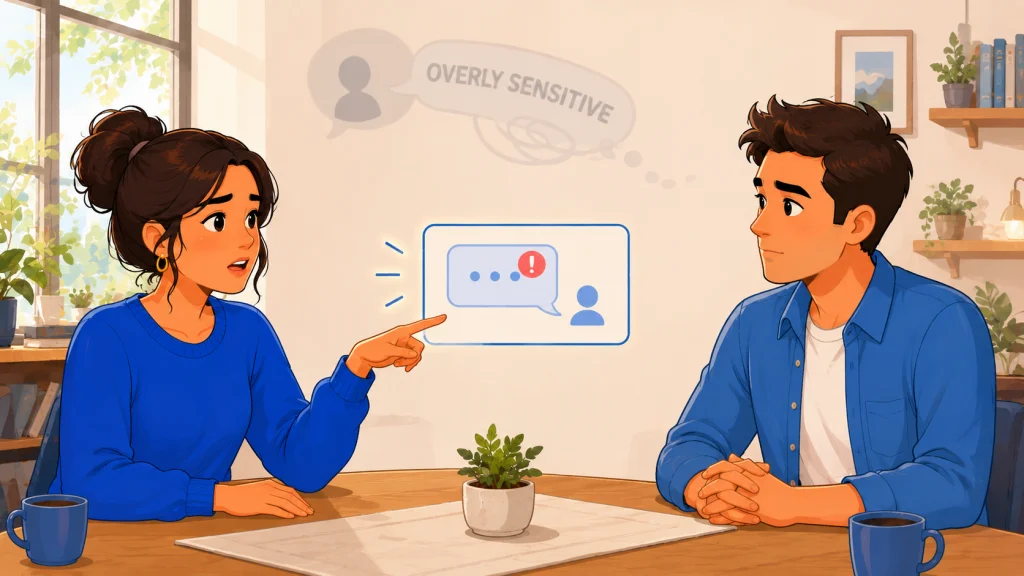
Bring the conversation back to the exact comment or behavior
The phrase “too sensitive” is broad, so your reply should get narrower. Name the specific thing you were reacting to rather than arguing about whether your reaction was reasonable in every possible universe. “I’m talking about the joke you made in front of everyone” is much harder to derail than “I’m not too sensitive and everyone agrees with me.” Specific language gives the other person something concrete to answer instead of inviting another round of personality judgments.
Say a friend brings up something private for a laugh, then tells you not to be so sensitive when you object. A useful response is, “I know you meant it as a joke. I still do not want that shared in front of people.” Notice what is missing: no attempt to prove the friend is cruel, no claim that everybody would have been offended, and no five-minute defense of why you reacted. The line returns to the behavior and makes the request clear enough that the next move belongs to them.
When you are willing to hear specific feedback
Sometimes “you’re too sensitive” is clumsy feedback rather than a deliberate attempt to shut the conversation down. If you trust the person enough to hear them out, ask them to replace the label with an example. “What did I do that felt like too much to you?” turns a vague judgment into something you can actually consider. You can listen to the answer without promising that you will agree with it.
This is where curiosity earns its place, especially with someone who normally speaks to you in good faith. If they can say, “You assumed I was angry when I was only tired,” you now have a specific moment to discuss instead of a verdict on your personality. If they cannot get more specific than “you just always are,” that tells you the label is not doing much useful work. Either way, asking for an example gives the conversation a fair chance without making you defend every feeling you have ever had.
| What they give you | What you can say |
|---|---|
| A specific example | “Okay, that is something I can actually respond to.” |
| A vague personality claim | “Can you give me one example instead of a label?” |
| A point you partly agree with | “I can see that part. I still want to talk about what happened.” |
| A repeated dismissal | “If we cannot discuss the actual issue, I am not going to argue about my personality.” |
The difference is not whether you accept criticism, it is whether there is real criticism to accept. Specific feedback gives you a behavior, a moment, or a misunderstanding you can look at. A label gives you a fog bank and asks you to argue inside it. Ask for the concrete version first, then decide what you think of it.

When the phrase follows a joke you already said you did not like
Jokes create a common trap because the person who made one can treat their intention as the only thing that matters. You say you did not like it, they say they were only joking, and then “don’t be so sensitive” arrives as if that settles the matter. You do not have to prove the joke was objectively terrible to say you want it to stop. Try, “I know it was a joke. I am telling you I do not want that one aimed at me again.”
That wording leaves room for the fact that two people can hear the same joke differently without turning either person into a diagnosis. It also avoids the mistake of demanding that they admit the joke was universally offensive before they respect your request. If the conversation keeps circling around intent, my responses to “it’s just a joke” stay with that exact problem. Here, the cleaner lane is to acknowledge the intended humor, state the effect or boundary, and stop before a debate over whether the joke was funny makes the original request disappear.
Firm boundaries for repeat use
Once the same phrase has shown up several times around the same behavior, you do not need a brand-new explanation every round. A boundary is stronger when it describes what you will engage with rather than trying to control what the other person is allowed to think. “You can think I’m sensitive, and I am still asking you not to make comments about that” is clear without pretending you can force agreement. If the label keeps replacing the conversation, you can also say, “I am not discussing whether I am too sensitive; I am discussing what happened.”
What to say when called too sensitive depends on whether the person is actually willing to stay with the subject. If they keep repeating the label, arguing harder usually rewards the detour by making the detour the entire conversation. State the boundary once more, then decide whether there is anything useful left to answer. Choosing not to keep performing your case is not a clever comeback, but sometimes it is the cleanest ending available.

Non-snarky responses when escalation would be counterproductive
Not every situation improves when you win the line. If the other person is a family member you still have to sit beside at dinner, a friend you genuinely want to understand, or someone you need to finish a practical conversation with, snark can hand them an easy excuse to focus on your tone. A plain response keeps your position visible without giving the exchange a second fight to manage. “You may see it that way, but I still want to finish talking about what bothered me” is boring in the best possible way.
I have watched people reach for the funniest line in the room when what they actually wanted was to be taken seriously. The joke got a laugh, but it also changed the subject again, which was exactly the problem they were trying to solve. If you need the other person to hear the request, choose a sentence that leaves very little to spar with. “I am not asking you to agree with my reaction. I am asking you to hear the specific thing I am bringing up” does that cleanly.
What not to say when the label is already taking over
The fastest way to lose the original point is to answer one personality label with another. Calling the other person manipulative, heartless, narcissistic, toxic, or anything else does not bring the conversation back to the comment that bothered you. It just creates a new argument about who is the worse person. You can reject what they said without pretending one sentence gives you enough information to explain their whole character.
Another common mistake is trying to prove that absolutely everyone would have been hurt by the same thing. You do not need a jury of imaginary reasonable people to make a specific request about how someone talks to you. Counterattacking can feel satisfying for five seconds, but it often replaces one broad label with two. Keep the claim smaller: “Maybe someone else would not care. I do, and I am asking you not to do it again.”

Final thoughts: keep the issue smaller than the label
Being called too sensitive can tempt you into defending every reaction you have ever had, but that is almost never the conversation you started. Go back to the joke, comment, interruption, tone, or behavior that brought you there. Ask for specific feedback if you think there may be something useful in it, or state the boundary if the same issue keeps repeating. You do not need to win a debate about your entire personality to make one clear point.
The best response is usually the one that leaves the least room for the label to become the main event. Sometimes that is a calm redirect, sometimes it is a question, and sometimes it is one firm sentence followed by no more argument. Keep your wording proportional to the relationship and the stakes in front of you. A short line cannot guarantee the other person will listen, but it can keep you from doing all the work of a conversation they already tried to change.
FAQs
The questions people ask around this phrase usually come down to the same decision: do you redirect, ask for specifics, push back, or stop engaging. There is no single line that fits every relationship, because tone changes what the same words do. I would rather give you a short sentence you can actually say than a perfect speech you will never use. Start with the smallest response that keeps the real issue visible.
If the other person gives you something concrete, you can decide whether it is useful feedback. If they keep repeating a label instead of answering the point, you do not have to keep defending yourself. The goal is not to sound unbeatable, it is to stay clear about what you were trying to address. These are the versions I would keep ready because they leave very little extra mess behind.
💬 What do you say when someone calls you too sensitive?
Try, “Maybe you see me that way, but I am still talking about what happened.” It acknowledges their view without letting the label replace the issue. If you need a boundary, add the specific behavior you want to stop.
🎯 How do you respond to you’re too sensitive without arguing?
Keep it narrow: “I am not trying to argue about whether I am sensitive. I am asking you about that comment.” Then stop explaining unless they answer the actual point.
🧩 What if they might have a fair point?
Ask for one specific example. “What did I do that felt like too much to you?” gives you something real to consider without accepting a broad label first.
😐 What is a non-snarky reply to don’t be so sensitive?
Try, “You do not have to agree with my reaction, but I still want you to hear what I am asking.” It stays calm and keeps the request in view.
🛑 What can I say if they keep using the phrase?
Use a repeatable boundary: “I am not discussing whether I am too sensitive. I am discussing what happened.” If they still refuse to stay with the subject, you can stop repeating your case.