“Sure” can be a perfectly complete answer even when it looks dry on your screen. The safest move is to treat it as agreement first, then let the surrounding conversation tell you whether anything else actually needs a reply. I usually keep the response short, confirm what matters, and only ask for clarity when there is a real sign of reluctance beyond one flat word. You will leave with natural, funny, and direct replies that fit the job the message is actually doing.
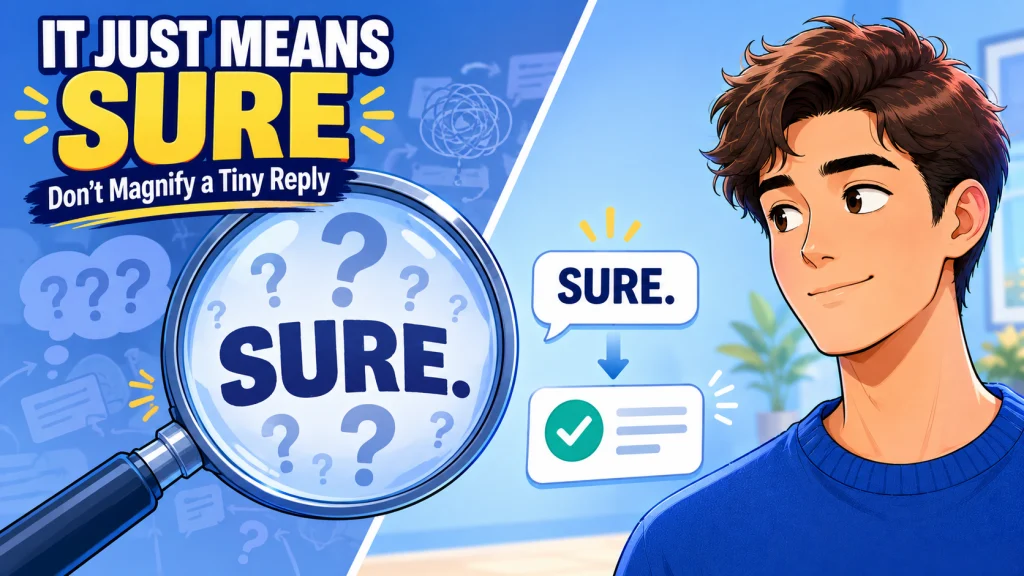
Sometimes sure is dry because the conversation is over
If you are wondering how to respond to sure, start with the boring possibility: they answered you. You suggested a place, asked whether a plan works, or checked one small detail, and “sure” completed the exchange without adding confetti. A short answer can feel colder than the sender intended because you are reading tone into a word that may only be doing a logistical job. I would not make them prove enthusiasm when nothing in the rest of the conversation says they are reluctant.
Nine years behind a bar taught me how often people try to rescue conversations that are not actually in trouble. Regulars used to slide their phones across the bar and ask what they should send back, and the problem was often less about finding a clever line than knowing whether another line was needed at all. “Sure” is one of those messages that makes people want to perform emergency surgery on a perfectly healthy exchange. If the plan is clear, a clean confirmation usually beats a temperature check disguised as a joke.
Quick natural and funny responses to sure
The best quick reply does not punish the other person for being brief. It either confirms the plan, adds one light beat, or gives the conversation an easy place to continue. I keep the humor small because a huge joke after a one-word answer can look like you are trying to drag energy out of them. If you want funny responses to sure, the line should still sound normal if the joke gets only a smile instead of a whole new conversation.
Pick the version that matches what was already happening before “sure” arrived. A practical exchange needs a practical reply, while friendly banter can carry a little more personality. I would rather send four words that fit than twelve words that announce how hard I am trying to be funny. These are short enough to use without turning the message into a performance.
- “Perfect, that works.”
- “Cool, we have a plan.”
- “Done. Nice and easy.”
- “Works for me too.”
- “Great, I will take that as a yes.”
- “Perfect, I will handle the rest.”
- “Dangerously agreeable of you.”
- “I will accept this thrilling enthusiasm.”
- “Excellent, minimal paperwork.”
- “A decisive four letters. I respect it.”
- “Look at us making plans efficiently.”
- “That was almost suspiciously easy.”
- “Perfect. Also, remind me to tell you something later.”
- “Works for me. How is the rest of your day going?”
- “Good. Now I need your opinion on something.”
- “All set. I have one unrelated question for you.”
- “Cool. I am changing the subject before we become too efficient.”
If you are dealing with a lot of short replies, the wider set of funny responses to dry texts can help you match the size of your answer to the size of the message. The useful principle is the same here: do not answer dryness with a speech. Let a small line stay small unless the conversation itself gives you a reason to do more. That restraint usually sounds more confident than trying to squeeze a warmer response out of someone.

Natural replies to sure text when the plan is already clear
When “sure” follows a simple proposal, it can be nothing more than a yes. If you asked, “Want to meet near the theater?” and they answered, “Sure,” the next useful move is to settle whatever detail remains. You do not need to ask whether they are excited, whether something is wrong, or whether the period they did not use somehow means something. I would move the plan forward and save the emotional detective work for a conversation that actually contains evidence.
This is where replies to sure text are easiest because the message has a clear function. Confirm the place, the next step, or whatever you genuinely need to know, then stop. A reply like “Great, I will text when I am heading out” does more work than “Are you sure you want to?” because it respects the answer they already gave you. If they need to change the plan, you have left them room to say so without making them defend a perfectly ordinary yes.
| What “sure” is doing | Reply that fits |
|---|---|
| Confirming a simple plan | “Great, sounds good.” |
| Agreeing to a small request | “Thanks, I appreciate it.” |
| Closing a settled detail | “Perfect, we are set.” |
| Leaving one detail open | “Cool, what works best for you?” |
The table looks almost too simple, which is exactly the point. People often turn a four-letter answer into a test because the screen gives them time to stare at it. I have found that the cleanest reply is usually the one that keeps the original task in view instead of inventing a new emotional task. Agreement does not have to arrive wearing enthusiasm to count as agreement in an ordinary low-stakes exchange.
What to reply to sure when you want to keep the conversation going
If the plan is settled but you still want to talk, change the subject rather than interrogating the tone. Give them something new to answer, preferably something connected to the conversation you were already having. “Sure” does not contain enough material for a fascinating comeback, so trying to squeeze one out of the word itself gets awkward fast. I would open a fresh lane instead of standing over the same four letters asking them to become more interesting.
For example, after “Sure” to a casual hangout, you could send, “Perfect. Also, I need your opinion on something ridiculous.” If you were already joking, “Sure” can take a tiny nudge like, “That sounded legally binding,” followed by the actual next topic. If the other person picks up the new thread, great, and if they do not, you have your answer about how much conversation is happening right now without demanding an explanation. That is much cleaner than sending three increasingly anxious messages because the first reply did not sparkle.
The same restraint matters with funny replies for everyday texts, because a joke works best when it serves the exchange instead of fighting it. I like lines that make room for the other person rather than cornering them into proving they are entertained. A small pivot gives them something real to answer and protects you from overplaying a moment that was never that serious. If the conversation wants to continue, one good opening is enough.
Do not mistake “keep the conversation going” for “keep sending until they respond differently.” One new topic is an invitation, while repeated nudges start to feel like a demand. The distinction is easy to miss when you are staring at a dry message and trying to fix the vibe in real time. I would send one clean next beat, then let the other person decide whether to pick it up.

How to reply to sure when it genuinely seems reluctant
Sometimes the flatness is not imaginary, but the clue is usually bigger than the word itself. Maybe they have already pushed back on the plan, added “if you want,” stopped answering the actual question, or gone from engaged messages to obvious reluctance around this specific idea. In that case, I would not try to joke them into sounding happier. Give them an easy way to be honest without making the conversation into a trial.
You can say, “We can do something else if that is not your thing,” or “No pressure, I am fine changing the plan.” Those replies acknowledge what you noticed without claiming you know what they feel. The difference matters because “You clearly do not want to go” tells them what is in their head, while “We can change it” simply opens a door. I have seen enough conversations get worse from one person insisting on an interpretation that I would rather make space for a correction than demand a confession.
This is also where the stakes of the original question matter. A casual plan, a movie choice, or a small favor can tolerate a light check-in if the context is genuinely off. If the exchange involves sexual activity, safety, money, medical choices, or another high-stakes decision, do not treat a vague “sure” as something to decode with a clever reply. This page is about ordinary conversational assent, not about stretching an ambiguous answer into permission where clear agreement is required.
Once you offer an out, mean it. “We can skip it if you are not feeling it” stops being generous if you follow it with guilt, sulking, or another push immediately afterward. A clean option only works when the other person is actually allowed to choose it. If they say the original plan is fine, accept that answer and move on unless something else concrete changes.
How to clarify without fishing for reassurance
Clarifying is useful when you need information, not when you need the other person to make you feel better about their punctuation. That sounds obvious, but in the moment people often ask a loaded question and call it clarity. “Are you mad at me?” is not neutral if all you have is “sure,” because now they have to manage your worry before they can answer the original point. I prefer questions that stay close to the practical uncertainty you actually need resolved.
If the plan itself feels uncertain, try, “Still good with that plan?” or “Would you rather do something else?” If the conversation got tense before the message, you can say, “I cannot tell if that was a yes or a let’s-drop-it yes, so tell me if I am missing something.” Both versions let the other person correct the reading without forcing them to produce warmth on command. Ask once, listen to the answer, and do not keep reopening the question because the reply was not enthusiastic enough.
A useful test is whether you would still need the answer if the word had arrived with an exclamation point. If yes, you probably have a real clarification to make. If no, you may be trying to get reassurance rather than information. I am not saying you can never ask how someone feels, only that one bland word is weak evidence for launching that conversation by itself.
That distinction keeps the exchange fair to both people. You are allowed to notice tone, and they are allowed to communicate briefly without being cross-examined. The goal is not to pretend every “sure” sounds warm. It is to respond proportionally to what you actually know.

Sure versus okay, cool, and IDK
“Sure,” “okay,” “cool,” and “IDK” can all look dry, but they do not do the same conversational job. “Sure” usually leans toward assent, while “okay” often acknowledges what was said and “cool” can simply mark that the message was received. “IDK” is different because it leaves the decision unresolved instead of accepting it. I would not reply to all four with the same canned comeback just because each one is short.
If you ask, “Want pizza?” and get “Sure,” you can move ahead. If you get “IDK,” you still need a choice, so “Want me to pick?” makes more sense than “Perfect.” If someone says “Cool” after you tell them a fact, there may be nothing left to answer at all. The function matters more than the number of letters, and noticing that saves you from turning every brief text into the same dry-text problem.
“Okay” also changes depending on what came before it. After a practical update, it can simply mean “received,” while after an argument it may feel like someone is closing the door on the topic. “Cool” can be genuinely positive or merely tidy, so the best ways to respond to cool depend on whether it closes the exchange or leaves you something to continue. “Sure” can be enthusiastic, neutral, or reluctant depending on the surrounding exchange, and I pay more attention to what the message accomplishes than to whether it would look lively in a screenshot.
That is why a response bank is useful only if you still use judgment. The line has to fit the job of the message, the relationship, and the tone already on the screen. A clever answer pasted into the wrong moment is still the wrong answer. Short texts are not interchangeable just because they all leave you with very little to read.
What not to send when sure sounds flat
The fastest way to make “sure” feel tense is to demand a warmer version of it. “Wow, try to sound excited,” “Are you mad?” and “Fine, forget it then” all turn a small ambiguity into a bigger social job for the other person. Maybe they were reluctant, but maybe they were busy, distracted, or simply done with the logistical part of the conversation. I would rather respond to evidence than punish a tone I cannot actually hear.
Guilt is especially bad because it makes agreement feel like it came with a hidden fee. If someone says yes to a simple plan and you answer, “You could at least act like you want to see me,” the conversation is no longer about the plan. Now they have to reassure you, defend their texting style, or back away from something they had already accepted. That is a lot to build on top of one word.
- Avoid asking for proof of enthusiasm.
- Avoid sending multiple follow-ups before they answer.
- Avoid declaring what they “really mean.”
- Avoid mirroring the dryness just to punish them.
- Avoid turning a casual yes into a relationship test.
The common mistake is understandable because a flat reply creates an empty space, and your brain wants to fill it. The better move is to fill only the part you actually need: confirm, continue, clarify once, or stop. I have watched people talk themselves into a problem because silence after a settled plan felt too quiet. Sometimes quiet is just what a finished exchange sounds like.

Final thoughts: let sure do the job it was sent to do
“Sure” does not owe you fireworks. If it clearly confirms a low-stakes plan, treat it like confirmation and move forward. If you want more conversation, open a new topic instead of interrogating the word. If the surrounding context genuinely suggests reluctance, offer an easy out or ask one clean question.
The part I would keep is proportionality. A tiny message usually needs a tiny response, and a real concern needs something more direct than a joke about punctuation. You do not have to pretend tone never matters, but you also do not have to turn every flat word into hidden meaning. Respond to what is actually happening, then leave the other person room to show you the rest.
Frequently asked questions
Most questions about “sure” come down to the same tension: the word says yes, while the tone on the screen may feel less enthusiastic. I would start with the function of the message, then look at what came before it instead of treating punctuation as a verdict. If the exchange is ordinary and low stakes, a short reply is usually enough. If the context gives you a real reason to doubt the plan, ask once without making the other person defend their mood.
The answers below stay intentionally simple because this is one of those situations that gets worse when every possibility becomes a theory. You are not trying to decode a secret language. You are deciding whether to confirm, continue, clarify, or stop. That is a much smaller problem, and most of the time it has a much smaller answer.
💬 What do I say back when someone just says sure?
If “sure” answers the question you asked, confirm the next detail or let the exchange end. “Great, sounds good” is enough for most ordinary plans. Add humor only if the conversation was already playful. You do not need to manufacture a second problem after the first one is settled.
🙂 Is sure a rude text reply?
It can sound flat, but flat is not automatically rude. Look at the conversation around it and the person’s usual texting style before assigning a motive. If nothing else is off, I would treat it as a brief yes. Context tells you more than the word by itself.
🧭 What if sure sounds reluctant?
If there are other signs of hesitation, give them room to change the plan. Try, “We can do something else if you would rather.” Do not tell them what they feel before they have said it. One clean option is enough to make space for an honest answer.
😄 Can I make a joke after someone says sure?
Yes, if the conversation already has that tone. Keep the joke small, like “Wild enthusiasm, I see,” and then move on. If the exchange feels tense, skip the joke and use a direct reply instead. Humor should lighten the moment, not force the other person to perform enthusiasm.
🛑 Should I ask are you mad after a dry sure?
Not from that word alone. Ask about a real issue when the surrounding conversation gives you a reason, not because a single reply lacked sparkle. Otherwise you risk creating the tension you were trying to check for. A neutral follow-up is better when you genuinely need clarification.
If none of these fits exactly, go back to the original question you sent. Ask what information you actually need now, not what emotional meaning you can squeeze out of “sure.” That keeps your next text grounded in the real exchange instead of a guess. Most dry-text spirals get much shorter once you stop making the word carry more than it was asked to carry.
And if no information is missing, you are allowed to be done. Not every text needs a final flourish, a comeback, or a second round of reassurance. Sometimes “sure” closes the loop cleanly enough on its own. Knowing when to leave it there is part of having a good reply ready.