Dry texts are frustrating because they give you very little to work with, not because they automatically reveal what the sender thinks. The useful move is to read the pattern, then choose whether to revive the chat, tease lightly, clarify something, or leave the conversation where it is. I use humor as one attempt, not as a rescue mission. By the end, you will know what to do with OK, K, LOL, IDK, sure, and cool without turning one short reply into a full theory about the person who sent it.
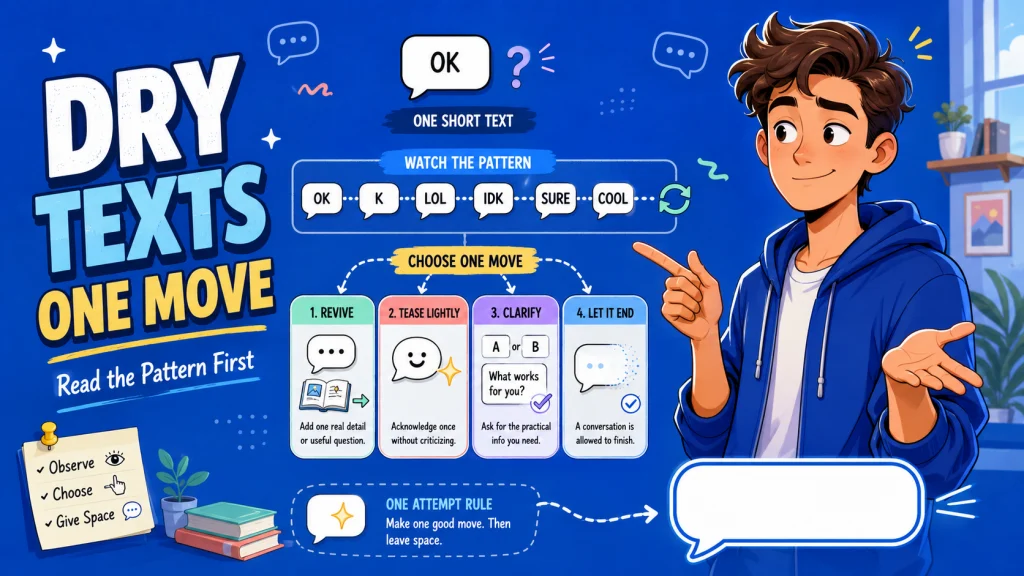
One OK is a text; six low-effort replies in a row are a pattern
Funny responses to dry texts work best when you treat a short reply as a small piece of information, not a verdict. One OK after someone says they are heading into a meeting can be perfectly normal. One LOL after a joke can simply mean the joke landed and the moment is over. The problem starts when every message leaves you doing all the lifting and you keep inventing new material just to keep the chat breathing.
Nine years behind a bar taught me how much easier tone is when you can see a face, hear a pause, and watch what happens next. Texting strips most of that away, so people start assigning motives to punctuation, capitalization, and single words. I have had plenty of people push a phone toward me and ask what an OK or a K “really means,” when the honest answer was that one message did not give us enough to know. I would rather help you choose a useful next move than pretend I can read a stranger’s mind through three letters.
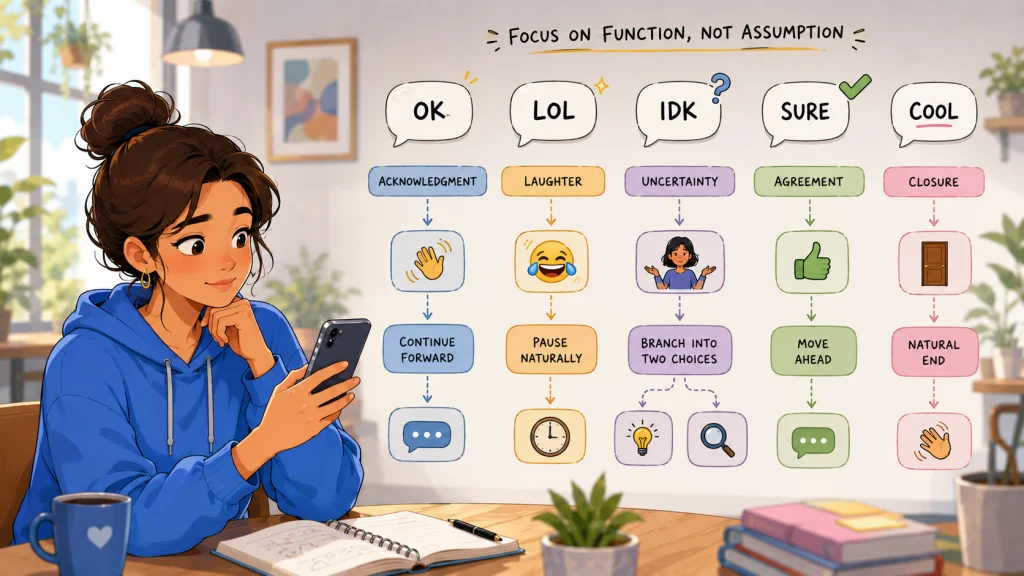
What counts as a dry text without diagnosing the sender
A dry text is useful to think of as a conversational effect. It is short, gives little new information, and often leaves no obvious thread for the other person to pick up. That can happen because someone is busy, naturally brief, unsure what to add, or simply finished with that part of the conversation. None of those possibilities becomes proven just because the message has one word in it.
This is why I care more about what the text does than what you imagine it secretly means. OK acknowledges something, LOL reacts, IDK leaves a decision unresolved, and cool can either approve something or close the exchange naturally. K may feel colder than OK to some people, but perceived temperature is not evidence of intent. If you are learning how to reply to dry texts, start with the job the message is doing in the conversation, then decide whether another message is actually needed.
| Received text | What it does in the conversation | Best next move |
|---|---|---|
| OK | Acknowledges what you said without adding much | Continue only if you have a real next point |
| K | Gives the same basic acknowledgment in a more compressed form | Do not argue with the tone of one letter |
| LOL | Reacts to humor without necessarily creating a new topic | Add one hook if you want to keep talking |
| IDK | Leaves uncertainty or hands the decision back | Narrow the choice or make the call yourself |
| Sure | Agrees without adding much emotional texture | Proceed, or clarify if the decision actually matters |
| Cool | Acknowledges, approves, or naturally closes a thought | Let it end unless there is a genuine next subject |
The table is deliberately boring about motive because that is the point. A useful reply does not require you to solve the sender first. It keeps you focused on whether anything practical is still unfinished, whether a joke would fit, or whether the exchange has already done its job. That is a much cleaner decision than turning a neutral acknowledgment into a tone investigation.
The four choices: revive, tease, clarify, or let the chat end
Most dry replies do not need a brilliant comeback. They need a decision about what you are trying to accomplish next. If the topic still matters, revive or clarify it. If the relationship can carry a little joking, tease once and give the other person room to answer.
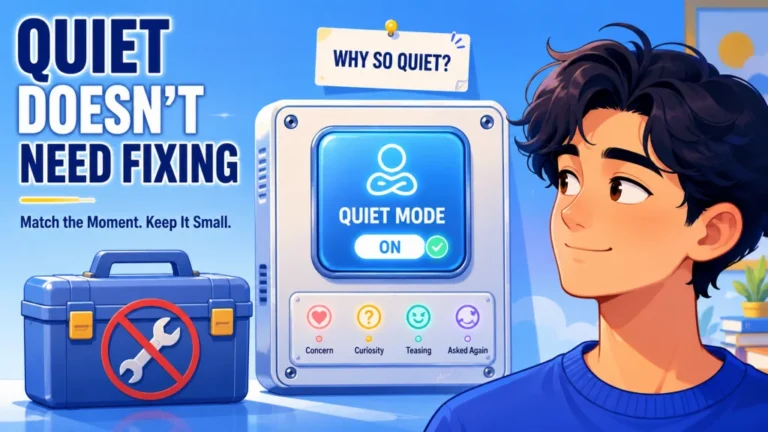
The fourth choice matters just as much: you can stop. I have watched people make themselves miserable because they treated every quiet moment as a problem they were responsible for fixing. A chat is allowed to end without anyone losing, and silence after a natural stopping point is not a social emergency. If you want a wider set of funny replies for awkward texts, use them as options, not obligations.
- Revive: add one specific detail, story, or question that gives the other person something easy to answer.
- Tease: lightly acknowledge the dryness without accusing them of being rude or uninterested.
- Clarify: ask the practical question you actually need answered instead of decoding tone.
- Let it end: stop sending material when there is no real reason to keep the thread alive.
The common mistake is using all four moves at once. Someone sends “K,” then the reply contains a joke, a second question, a tone check, and a new subject because the sender is afraid the conversation will die. That much effort makes the dry text feel bigger than it was. Pick one move, send one message, and let the next turn tell you more.
OK and K: acknowledgment with different perceived temperature
OK is usually easy to leave alone when it follows a statement that did not require more. If you text, “I will be there after lunch,” and get “OK,” the conversation may already have done its job. A joke there can feel like you are trying to restart something that ended cleanly. When OK arrives in the middle of a lively exchange, though, one light nudge can test whether there is still energy without demanding it.
You could send, “That was an aggressively efficient answer,” or, “Full sentence budget gone already?” Both lines point at the shortness without turning it into a character judgment. I like replies like these because they leave the sender an easy choice: play back, explain, or simply not continue, which keeps the joke playful instead of turning it into an accusation. That is much better than “Why are you being dry?” when you do not yet know that anything is wrong.
K tends to attract more interpretation because it feels clipped to many readers. I still would not treat one K as proof of annoyance, especially if the surrounding conversation is practical or rushed. If this person normally texts in short bursts, that history matters more than the letter. A playful option is, “Compact, economical, mysterious,” or, “I see we have entered minimalist mode.” If the next reply is just as flat, you can simply decide whether there is anything useful left to say.
LOL: reaction without a next move
LOL is one of the easiest replies to overwork because it often means the previous joke already succeeded. You made them laugh, they reacted, and there may be nothing else required. If you keep stacking jokes on top of it, you can turn a clean beat into an audition nobody asked for. Sometimes the funniest response is to let your line have the last word.
If you do want to keep the chat moving, attach a new hook instead of demanding more enthusiasm. “I’ll take the laugh and retire undefeated” works when you are happy to let the exchange rest, while “I’ll take the laugh, now answer the important part: fries or dessert?” gives them a simple lane back in. The best responses to one-word texts like LOL create an opening, not a debt. One new thread is plenty.
I have seen people panic after a LOL because they think a reaction without a question means the other person has lost interest. That is too much weight for three letters to carry. A better question is whether this person ever starts topics, adds details, or comes back later with something of their own. Reciprocity tells you more about the actual exchange than squeezing a hidden meaning out of one reaction.
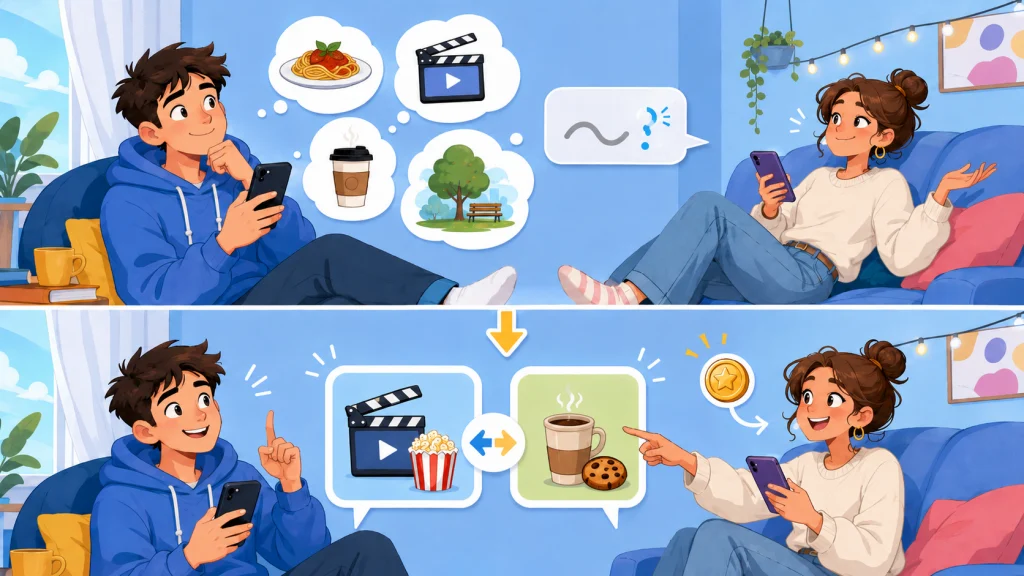
IDK: uncertainty, avoidance, or a decision handoff
IDK is difficult because it can leave you holding a decision you thought you were making together. The cleanest response is often to reduce the size of the question. Instead of asking, “What do you want to do?” again, give two choices or make a reasonable call yourself. That turns a vague loop into something the other person can actually react to.
When the stakes are low, humor can make that handoff feel lighter. “Excellent, we’re both wildly prepared” works when neither of you knows what to pick, while “Pick one: A or B. Democracy is exhausting” gives the conversation somewhere to go. Another useful line is, “Then I am appointing myself temporary decision-maker.” The joke works because it solves the practical problem instead of punishing the person for being unsure.
When the decision matters, skip the bit and clarify. If you need a real yes or no, ask for it directly in ordinary language. I would rather send one plain question than hide a serious need inside three sarcastic lines and hope the other person guesses. Humor is good at loosening a small moment; it is not a substitute for information you genuinely need.
Sure: agreement that may be neutral or reluctant
Sure is a good example of why low-signal texting makes people nervous. It can read as easy agreement in one conversation and reluctant agreement in another, depending on history, punctuation, and what came before it. The word alone does not settle that question. If the choice is trivial, I would usually take the yes and keep moving.
For a playful exchange, you can answer, “That sounded like enthusiasm in business casual,” or, “I’ll take the legally binding sure.” Those lines are mild enough to invite a better reaction without accusing the sender of secretly objecting. The joke stays on the surface, where it belongs. If they laugh and add something, great. If they do not, you have not spent five messages trying to force warmth out of a one-word agreement.
For plans that actually affect both of you, clarity beats comedy. “Are you actually good with that, or should we pick something else?” is better than trying to infer reluctance from a single word. I use jokes when the stakes are social and light, not when a fuzzy answer could create a real misunderstanding. The point is not to win a tone-reading contest; it is to know what happens next.
Cool: approval, acknowledgment, or natural closure
Cool often gets labeled dry even when it has finished the job perfectly well. If you sent a photo, shared a small update, or confirmed a detail, “cool” may be the natural end of that thread. There is nothing wrong with letting the conversation rest there. Not every exchange needs a second act.
If the moment feels playful, “Cool has spoken” or, “Excellent, committee approved,” can give the word a little texture without trying too hard. If you were already hoping to change subjects, add the new subject directly instead of teasing the dryness first. A good answer gives the other person something real to respond to. A weak one merely complains that they did not give you enough material.
When someone asks me what to say to a dry texter, this is usually the distinction I make first. Do you actually have something else to say, or are you sending another text because the quiet feels uncomfortable? If you have a real next thought, send it once. If you do not, cool is allowed to be the last word.

When a funny reply helps and when it turns into chasing
A funny reply helps when it names the low energy lightly and opens one easy door back into the conversation. It turns into chasing when you keep supplying new jokes, new questions, and new subjects after the other person repeatedly gives you nothing to build on. The difference is not whether your line is clever. The difference is whether the exchange becomes shared again after you use it.
I have watched people turn a dead exchange into a five-message performance because they were determined to get a better response. The first joke was fine, the second was understandable, and by the fourth they were essentially entertaining an empty chair. This is one of the most common things people get wrong with funny replies for dry texters: they treat humor as a way to extract effort from someone. Humor can invite effort, but it cannot manufacture it for you.
My rule is simple: make one proportionate attempt if you want to. If the sender starts contributing again, keep going naturally. If the same low-information pattern continues, stop trying to diagnose it and stop trying to rescue it. You do not need to decide whether they are busy, bored, bad at texting, or done with the conversation before you decide not to carry the whole thing yourself.
Final thoughts: read the pattern, then make one clean move
One short reply is not enough evidence to tell you what another person feels. Treat it as the small thing it is, then respond to the actual conversational job in front of you. Revive the topic if you have something real to add, tease lightly if the relationship can carry it, clarify if you need information, or let the chat end. The best move is usually shorter than the speech you are tempted to write.
You also do not need to manufacture a graceful ending every time the energy drops. A conversation can pause, finish, or pick up later without a closing speech from you. If you have already added something worth answering, leave room for the other person to decide whether they want another turn. That keeps your reply proportionate to the moment instead of making the silence bigger than it is.
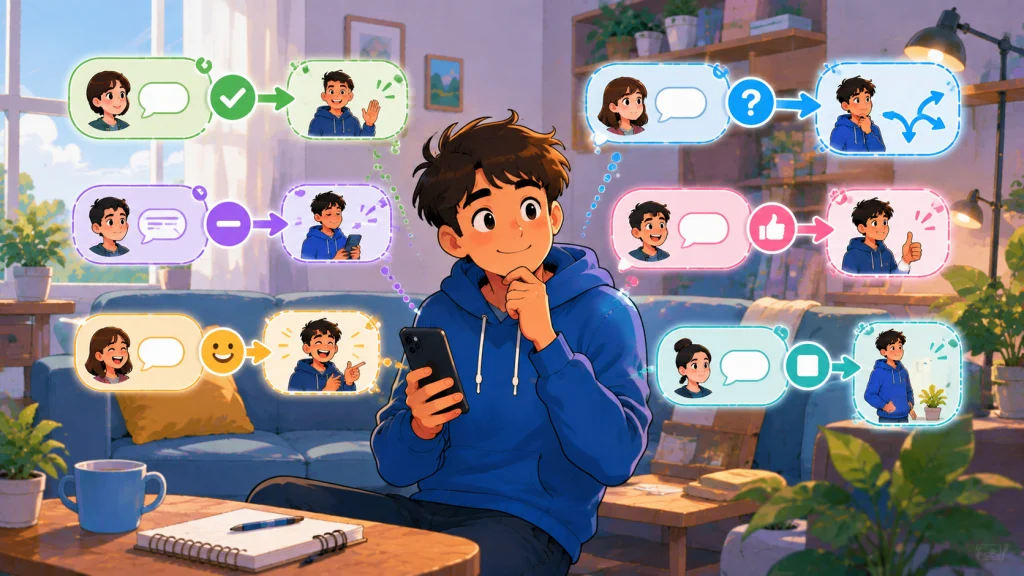
Find the right reply for the exact text
Short replies look similar on the screen, but they do different jobs in a conversation. LOL is a reaction, IDK often leaves a decision open, and sure may simply confirm something without adding warmth. That difference matters because the best next line depends on what the word actually leaves unfinished. Use the exact phrase below when you want more options for that specific moment.
I would not use all of these as a giant comeback menu. Pick the word you actually received and stay inside that situation. The goal is to respond cleanly, not to turn a two-letter message into a research project. Each option below focuses on a single phrase so you can get in, choose a line, and get back to the conversation.
| Exact reply | What you will find |
|---|---|
| Best responses to LOL | Ways to accept the laugh, add a new hook, or let the joke end cleanly. |
| Smart ways to respond to OK | Options for a neutral acknowledgment that gives you very little to build on. |
| How to respond to K | Light replies for the clipped version without assuming one letter proves a mood. |
| Best responses to IDK | Ways to narrow a choice, tease gently, or move a decision forward yourself. |
| How to respond to sure | Replies that separate casual agreement from moments where you genuinely need clarity. |
| Best ways to respond to cool | Lines for approval, acknowledgment, or a natural ending that does not need rescuing. |
Use these pages like tools, not like a script you have to work through. Open the phrase you actually received, choose a line that fits the relationship, and skip anything that sounds more dramatic than the moment deserves. Some exchanges need a playful nudge, while others need a practical question or nothing at all. The narrower page gives you more options without asking you to treat every dry text as the same problem.
Frequently asked questions
Most questions about dry texting sound simple because the messages themselves are tiny. The hard part is choosing a response that fits the actual job of the text without turning the exchange into a courtroom exhibit. I would rather answer the practical version of the question: what can you send next that still sounds like you? The replies below stay focused on that decision.
Sometimes the right answer is a line because there is still a real topic, plan, or joke on the table. Other times the thread has already completed its job and adding more would only make it awkward. Humor is most useful when it improves the next beat, not when it is being used to squeeze extra energy out of someone. Keep that distinction in mind as you scan the quick answers below.
💬 What do I say when someone sends only “OK”?
If the conversation is naturally finished, you do not need to say anything. If you want to keep it going, add one real next point or use a light line like, “That was impressively efficient,” then see whether they pick it up.
🧊 Is “K” always rude over text?
No. K can feel clipped, but one letter does not prove anger, disinterest, or passive aggression. Read the surrounding conversation and the pattern before assigning a motive.
😂 How do I respond when someone just says “LOL”?
You can let the laugh stand, or add one new hook if you actually want another turn. I like, “I’ll take the laugh and retire undefeated,” when the exchange can end there without awkwardness.
🤷 What should I say when someone keeps replying “IDK”?
Narrow the question. Give two choices, make a low-stakes decision yourself, or ask for the one piece of information you actually need instead of repeating the same broad question.
👍 Does “sure” mean someone does not want to talk?
Not by itself. Sure can be neutral agreement, enthusiastic enough agreement, or reluctant agreement depending on context. If the decision matters, ask directly whether they are good with it instead of guessing.
🛑 When should I stop replying to dry texts?
After you have made one reasonable attempt and the conversation still stays entirely one-sided, it is fine to stop carrying it. You do not need a theory about why they are dry before you decide to let the chat rest.