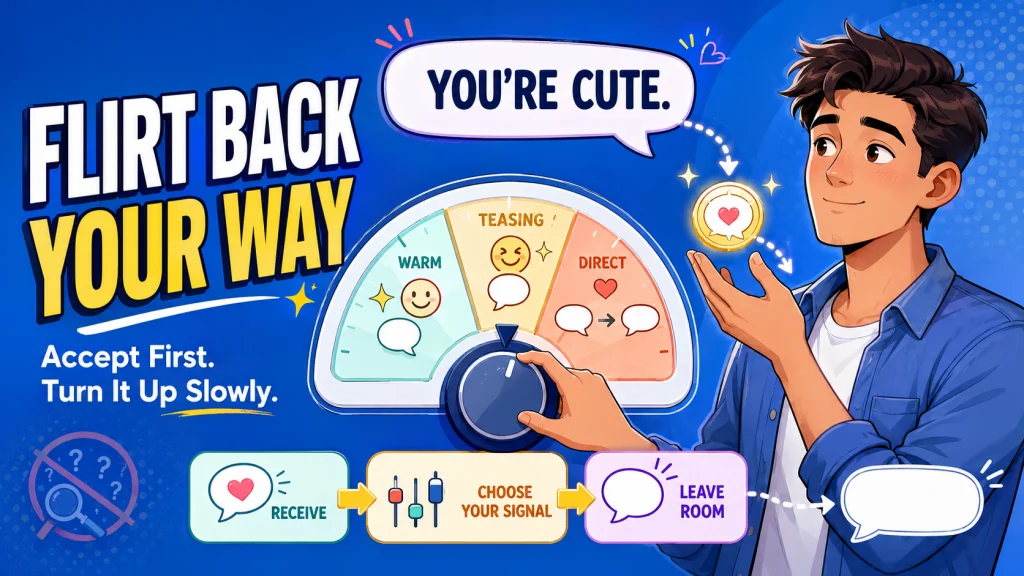
Being called cute gives you room to flirt without making the moment heavier than it needs to be. The best move is to accept the compliment first, then choose how much interest you actually want to show back. A soft reply can keep the door open, while a teasing or direct one can make your attraction easier to read. You do not need to treat one word as proof that the other person is already into you.
When “you’re cute” lands softer than you expected
“You’re cute.” The reply only gets awkward when you start deciding whether cute was a compliment, a flirt, or a performance review, and that is exactly why flirty responses to being called cute work best when they stay proportional. If you like the person, accept the compliment and show some interest instead of trying to decode their entire intention from two words. Cute is soft enough to let you flirt without pretending the moment is already more serious than it is.
I have watched people overthink compliments until the easy reply disappeared under five drafts and a paragraph of explanation. Behind the bar, the same pattern showed up whenever someone wanted to sound interested without looking overeager: the shorter line usually sounded more like them and gave the other person more room to answer. That does not mean short is automatically better, but it keeps you from turning a soft compliment into a declaration. Start by deciding how open you want the door, not by deciding what the other person secretly meant.
Quick flirty replies to “you’re cute” when you like them back
The best quick flirty replies to “you’re cute” do two jobs at once: they let the compliment land and show that you are comfortable returning some energy. You do not need a speech, and you do not need to make the line sound like a rehearsed pickup. A flirty response to being called cute can be as simple as a warm acknowledgment with one small turn toward them. Pick the version that sounds like something you would actually send without staring at it until the line stops sounding like you.
If the conversation already has some chemistry, a short line with a little confidence is usually enough. If the two of you are still feeling each other out, choose something that can be read as interested without forcing them to escalate. I would rather send a clean four-word signal than a line so polished it sounds borrowed. The point is not to win the exchange, it is to make your interest easy enough to notice.
- “Okay, I like hearing that from you.”
- “You make that sound dangerously convincing.”
- “Cute recognizes cute, apparently.”
- “Well, now I’m smiling.”
- “Keep that opinion, I like it.”
- “I was hoping you’d notice.”
- “You’re making it hard to act casual.”
- “That hits different coming from you.”
- “I could say the same about you.”
- “Good. I was trying to charm you a little.”
Notice that none of these lines requires the other person to admit anything bigger than what they already said. They can lead naturally into another compliment, a tease, or a subject change without making anyone explain themselves. That is useful when you want to flirt back while keeping the exchange easy. If a reply needs the other person to rescue it, it is probably doing too much.
Accept the compliment without denying it
The fastest way to make a sincere compliment weird is to argue with it. “No I’m not” may feel humble in your head, but it makes the other person defend something nice they just chose to say. If you want to flirt, acceptance is stronger because it lets the compliment stay in the room long enough for you to build on it. You can be modest without swatting the line away.
Regulars used to hand me their phones after a compliment and ask what they were supposed to say back, and the first thing I usually noticed was how hard they were working to avoid simply receiving it. People often think confidence means replying with something cocky, when sometimes it just means saying thank you without immediately shrinking yourself. A softer version might be, “That’s sweet, especially from you,” while a slightly warmer one is, “Thank you, I was hoping you’d think so.” You could also use, “I’ll happily take that compliment,” or, “Okay, that one made me smile.”
That order matters because it keeps the reply from sounding like a trade. You are not paying them back for saying something nice, and you do not owe an equally strong compliment in return. A comfortable “thanks” with a small flirt attached will usually sound better than false modesty dressed up as banter. Accept what they said, then let your tone do the flirting.

Return the compliment without sounding automatic
Returning the compliment works best when it sounds specific enough to be yours. A flat “you too” can be perfectly fine, but it often reads like reflex because it gives no clue whether you meant it before they complimented you. If you already find them attractive, use one extra detail or a slight turn of phrase that makes the return feel chosen. “I was thinking the same thing about you” lands differently because it tells them the thought existed before the exchange demanded it.
You can also keep the return lighter by aiming at their effect on you instead of ranking their looks. Try, “Coming from you, I’ll take that,” or, “You have a pretty convincing smile yourself.” If the vibe is a little warmer, “You’re not exactly making it easy for me to stay cool either” gives the compliment back without copying their wording. Another easy option is, “Funny, I was just thinking you looked pretty good yourself.”
This is also where people sometimes overcorrect and turn one compliment into a scoreboard. If they said cute, you do not need to answer with a list of everything you find attractive about them. One genuine return is cleaner than trying to outdo them. Save the bigger praise for a moment that has actually earned it.

Teasing replies that keep cute low-pressure
Teasing is useful when you want the reply to feel flirty without suddenly becoming earnest. The trick is to tease the moment, not punish the person for complimenting you. A line like “Only cute? Tough crowd” works because the exaggeration is obvious and the other person has an easy way to play along. A line like “Took you long enough” can work too, but only if your usual banter already supports that kind of mock confidence.
I have seen perfectly good flirtation go flat because someone tried to sound sharper than the room required. If the other person sent one soft compliment, answering with a challenge, a dare, or a line that sounds sexually loaded can make the energy jump three levels at once. Better teasing keeps the stakes where they are: “Careful, I might start enjoying this,” or, “That’s a bold little observation.” Both give them something to return without demanding that they prove the compliment was flirting.
- “Cute? I can work with that.”
- “You seem very sure of yourself.”
- “That sounded suspiciously smooth.”
- “I see what you’re doing.”
- “You say that like you want a reaction.”
- “Dangerous thing to tell me.”
Use teasing when you already know the other person can hear the smile in it. Over text, tone has less help from your face and voice, so a line that feels playful in person can look blunt on a screen. If you are unsure, soften the tease with warmth rather than adding more cleverness. A good tease should invite another beat, not make the other person wonder whether they annoyed you.
Direct replies when you want to make interest clearer
Sometimes you do not want to keep everything under three layers of banter. If you already like each other, or the conversation has been openly flirty, a direct reply can be cleaner than pretending you are still guessing. “Good, because I think you’re cute too” is not dazzling, but it is readable, and readability matters when both people are tired of hinting. You can also say, “I was kind of hoping you’d say that,” “Good, because I’m definitely flirting with you,” or, “Then I guess I can admit I like you a little.”
The important distinction is that direct does not have to mean intense. “Now I know I can flirt with you a little” is more forward than a thank-you, but it still leaves the other person free to match it or keep things light. If you want more ways to handle stronger attraction signals without making every exchange sound the same, the broader set of flirty romantic text replies gives you room to match the actual message instead of forcing this one compliment to carry everything. That is enough to make your side of the conversation readable.
What I would skip here is using the compliment as leverage for an immediate date. “Then take me out” can be fun in an established dynamic, but from a softer or newer exchange it can sound like the other person just accidentally signed a contract. A direct reply should reveal your interest, not convert theirs into an obligation. Make yourself easier to read, then see what they do with that information.
If you are unsure whether they meant it flirtatiously
Do not force a verdict out of the word cute. People use it for attraction, affection, friendly warmth, a funny expression, a photo, an outfit, or something you just did, and the surrounding conversation matters more than the dictionary entry. If you like them but cannot tell what they meant, choose a reply that works under either reading. “That’s sweet, I like hearing that from you,” “Well, I’ll take that,” and, “You just made that conversation more interesting” all show warmth without claiming to know their intent.
You can also nudge the tone slightly and watch whether they meet you there. “Careful, that almost sounded flirty” is useful when your relationship already has room for teasing, because it gives them an easy way to confirm, laugh, or soften the moment. If the line came from someone you barely know, I would use less interpretation and more simple warmth. Ambiguity is not a problem you have to solve in one message.
If you want a wider range of ways to match different levels of flirting, use flirty replies that fit the actual tone instead of treating every compliment as the same signal. One word should not make you skip over the history between you, how often you talk, or whether they usually joke like this. Let the next exchange give you more information. You do not have to settle the meaning of the compliment before you answer it.

Cute versus beautiful versus hot
These words can all express attraction, but they do not always carry the same amount of pressure. Cute often feels softer because it can sit comfortably between friendly affection and romantic interest, while beautiful tends to sound more openly admiring and hot is usually more direct about physical attraction. None of those meanings is guaranteed, because people use compliments differently and relationships change the temperature of the same word. What matters for your reply is how much room the compliment gives you and how much of that room you want to use.
I think of this less as a ranking and more as a volume knob. If someone who rarely compliments you suddenly says you look beautiful, that may feel more loaded than a casual cute after you send a goofy photo. When the wording shifts into that stronger territory, these replies when someone calls you beautiful fit the more openly admiring tone better than forcing a cute-style tease. If someone you are already flirting with says hot, answering with a shy little thank-you may be exactly the contrast you want.
| Compliment | Usual room it leaves | Reply approach |
|---|---|---|
| Cute | Broadest range from friendly to flirty | Accept it, then add a soft signal if you want one |
| Beautiful | More openly admiring | Receive it sincerely before deciding whether to reciprocate |
| Hot | More directly physical | Match only the level of boldness you are comfortable returning |
The table is a shortcut, not a decoding system. Someone can say cute with obvious desire and someone else can say beautiful with completely platonic warmth, so context still wins. Use the word to judge how much pressure your reply might create, then use the relationship to decide whether that pressure belongs there. You are choosing your signal, not translating theirs with perfect certainty.
What not to say when a soft compliment does not need a bigger scene
Most bad replies are not bad because they are rude, they are bad because they make the moment do more work than it can carry. Fishing for more praise turns “you’re cute” into “prove it,” forcing a date turns it into a transaction, and assuming attraction turns it into a confession the other person never made. Those moves can feel tempting when you are excited and want certainty fast. They also remove the low-pressure quality that made cute easy to answer in the first place.
The common mistake I see is adding a demand to a perfectly good flirt. Asking “how cute” makes them grade you, saying “so when are you taking me out” makes them commit, and declaring “I knew you liked me” assigns them a feeling before they have said it. You can still be confident without making the other person defend or escalate what they said.
- Avoid making them repeat or intensify the compliment just to reassure you.
- Avoid treating one appearance compliment as proof of romantic interest.
- Avoid escalating to sexual language when the exchange has stayed soft.
- Avoid using self-insults to make them argue for your attractiveness.
- Avoid turning their compliment into pressure for a date or commitment.
If you catch yourself wanting a line that guarantees the answer you hope for, that is usually the moment to simplify. A reply can show attraction, confidence, humor, or openness, but it cannot make the other person feel a specific way. Say what you actually mean and resist squeezing certainty out of a compliment that was never built to provide it.
Final thoughts: keep the signal proportional
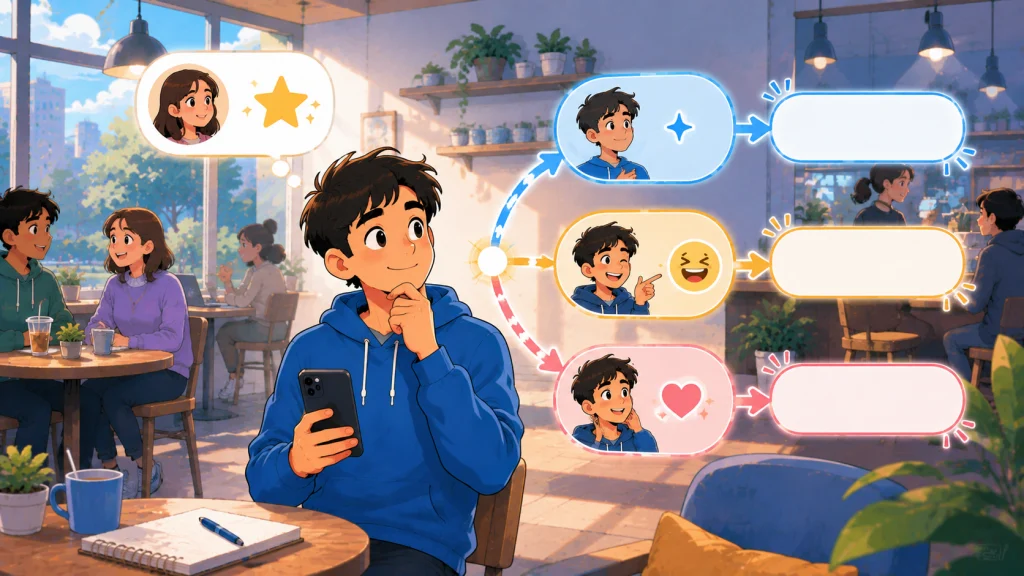
Being called cute is useful precisely because it does not force you into one kind of reply. You can accept it warmly, return it, tease a little, or make your interest clearer depending on what already exists between you. The cleanest choice is usually the one that says one true thing without turning a soft compliment into a bigger story before the conversation has earned it.
If you like them, let that show at the level you can actually stand behind. If you are unsure, keep the flirt light. If the chemistry is already obvious, being direct can be simpler than another round of pretending not to notice it. The line only has to move the conversation one honest step forward.
FAQs
These questions come up because “cute” sits in a gray area that stronger compliments often do not. The same word can feel friendly in one conversation and openly flirty in another, which is why a single stock answer rarely fits everyone. I would choose the reply based on how much interest you want to show, not on a theory about what the sender must mean. That keeps your side of the exchange clear without putting words in theirs.
Short answers are especially useful here because most people are not asking for a complete analysis while staring at a fresh text. They want to know whether to accept, flirt back, tease, or keep things neutral. Use the answer that matches the relationship you actually have, then adjust if the next message changes the tone. One reply does not need to settle the whole situation.
💬 How do you respond to “you’re cute” flirtatiously?
Accept the compliment first, then add one small signal back. “I like hearing that from you” works when you want warmth without going too far. “I was thinking the same thing about you” makes the attraction clearer. Pick the one that matches how openly you already flirt.
😉 What is a good flirty reply when someone calls you cute?
Try something easy to answer, such as “That hits different coming from you.” It receives the compliment and shows that the sender matters. If you want more tease, “Cute? I can work with that” keeps the pressure low. Avoid a line that demands they prove how attracted they are.
🫶 Should I call them cute back?
Yes, if you actually mean it. A specific return often sounds more genuine than an automatic “you too.” You can say, “I was thinking the same about you,” or compliment something else you genuinely noticed. You do not owe a matching compliment just because they gave you one.
🤔 Does being called cute mean they are flirting?
Not necessarily. Cute can be romantic, friendly, affectionate, or simply a reaction to something you did or shared. Look at the surrounding conversation and the relationship instead of treating the word as proof. If you want to flirt back, use a reply that leaves room for either interpretation.
✨ What should I say if I like them but do not want to sound too eager?
Use a warm reply that reveals interest without asking for anything. “Coming from you, I’ll take that” or “Well, now I’m smiling” both work because they show the compliment landed. You are not hiding your interest, but you are not forcing the next step either. Let them decide whether to raise the energy.