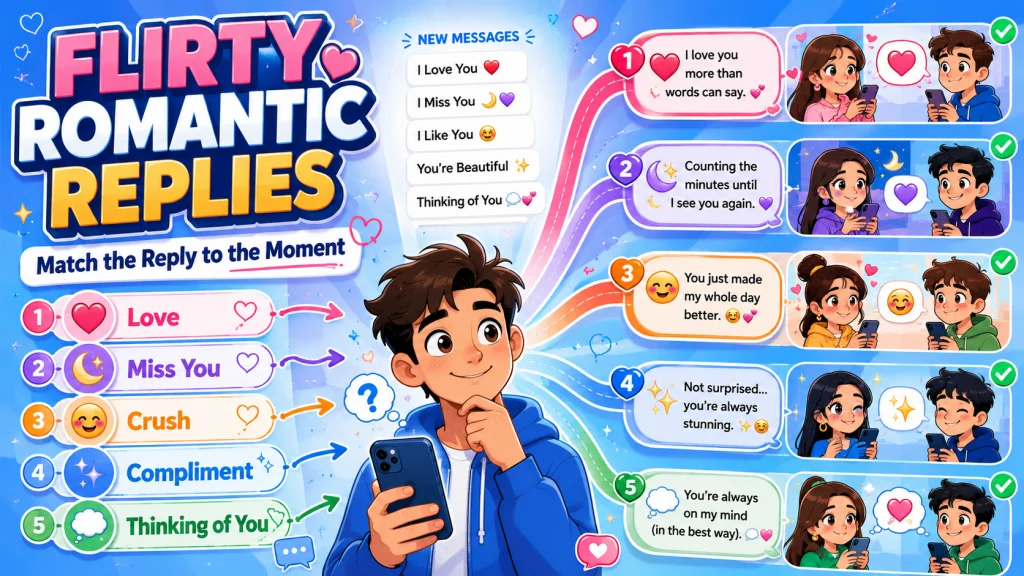
Romantic texts come in more than one mood, and a reply that nails “I miss you” can completely miss the mark on “I love you”. This sorts five of the warmest messages you are likely to get, absence, an early crush, a big declaration, an appearance compliment, and a quiet thinking-of-you text, and shows you how to read which one you are actually holding before you reply. Each mood carries its own tone, its own stakes, and its own place to find the fuller range of lines once you know which lane you are in. Think of this as the sorting step, not the reply itself.
This Isn’t a Reply Dump, It’s a Sorting Step
Flirty romantic text replies are not one thing. The reply that works on a sleepy “thinking of you” text will read completely wrong dropped onto an actual “I love you”, and the line that lands on a crush confessing “I like you” can feel rushed if you use it on someone who just said they miss you. Before any of this gets useful, you have to know which message you actually got, and that is the whole point of giving flirty replies to romantic texts their own breakdown instead of one tone for everything.
That is not about overthinking a text message; it is about not handing someone the wrong tone when the stakes are actually different. Someone confessing a crush for the first time is in a different headspace than someone who has loved you for years and just said it again. Reading that difference for two seconds before you answer saves you from sounding either too casual or too intense for the moment you are actually in.
The Quick Decision Rule Before You Reply
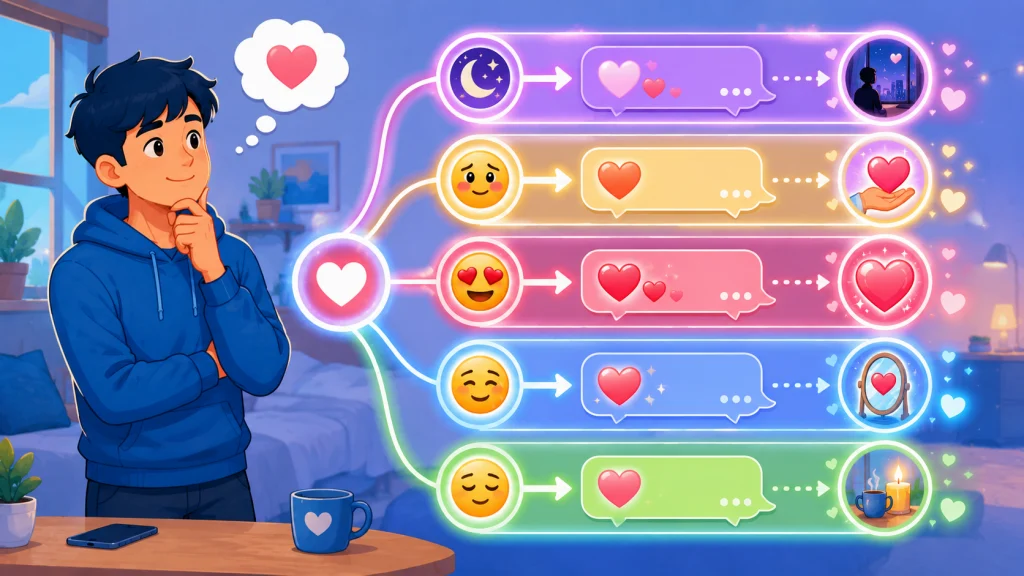
Three things decide which lane a romantic text belongs in: how established the relationship actually is, how much is at stake if your reply lands wrong, and what the message itself is doing. Some romantic texts are opening a conversation, like a first “I like you”. Some are closing one, like an “I love you” that is clearly meant as the last word for the night. Others are checking in, like “thinking of you” sent out of nowhere on a random afternoon. A few are quietly inviting flirtation without asking for anything directly, and on rare occasions one can even read as backhanded or off if the timing or wording feels wrong.
Before sending anything back, run the message through this short list.
- Is this opening something new, or continuing something already established?
- Is the other person expecting a reply right now, or just checking in?
- Does this read as low stakes, like a casual compliment, or high stakes, like a declaration?
- Is there any chance the wording reads as off or backhanded rather than warm?
- Does this invite flirting outright, or just leave the door open for it?
Once you have answered those, the right lane usually becomes obvious. That distinction is what separates a reply that feels natural from one that feels slightly off. Cute flirty responses work fine for some of these, but only once you know which one you are actually answering.
| Message | Usually Means | Tone to Match |
|---|---|---|
| “I miss you” | Absence and affection | Warm, a little wistful |
| “I like you” | Early confession or crush moment | Light, a little nervous excitement |
| “I love you” | High-stakes affection | Direct, sincere, no jokes |
| “Beautiful” | Appearance compliment with attraction | Confident, a little playful |
| “Thinking of you” | Warm interest without a direct question | Easy, low pressure |
The five sections below sort by exactly the message you are most likely holding right now.

“I Miss You”: Absence and Affection
“I miss you” almost always comes from distance, whether that is physical distance, a long week without seeing each other, or just someone missing the version of you they get when you are actually together. The tone underneath it is softer than most romantic texts, closer to longing than to excitement. Matching that tone means leaning into warmth rather than punchlines, since a joke here can read like you are brushing off something genuine.
A reply that works usually mirrors the absence back, something like admitting you were thinking the same thing or that the distance is getting old too. What it should not do is overcorrect into something too intense or too flippant, since either one misses what the other person was actually reaching for.
“I was wondering when you’d say that, because I’ve been thinking it for days.”
That single line does the job because it answers the longing without turning it into a performance. Most of the time, it needs less polish than people think; the honesty already built into “I miss you” barely needs any decoration.
“I Like You”: The Early Confession or Crush Moment
“I like you” usually shows up early, when someone has decided the risk of saying it is worth whatever happens next. That makes the stakes higher than a casual compliment, even though the phrase itself sounds small. The nerves behind it are real, and a flat or sarcastic reply can land harder here than almost anywhere else in romantic texting.
The safest move is matching a little of that nervous excitement rather than playing it cool. A confident, warm answer tells the other person their honesty paid off, which matters more in this moment than being clever.
“Good, because I’ve been hoping you’d say that before I had to.”
Lines like that confirm the feeling without overexplaining it, which is usually exactly what someone needs after putting themselves out there first.

“I Love You”: High-Stakes Affection
“I love you” carries more weight than any other romantic text on this list, and it is the one place where being clever should take a back seat entirely. Whether it is the first time hearing it or the hundredth, the moment calls for sincerity over wit. A flirty reply still belongs here, but it should sit on top of genuine affection, not replace it.
The mistake people make most with this one is trying to be funny to avoid sounding vulnerable. That instinct makes sense because vulnerability is uncomfortable, but deflecting with a joke after someone says “I love you” tends to land as avoidance instead of charm.
“I love you too, and I don’t say that just to say it back.”
A line like that stays flirty in tone without dodging the actual moment, which is the balance every reply in this category needs to hit.
“Beautiful”: The Appearance Compliment With Attraction
Being called beautiful is lower stakes than the first three, but it still deserves more than a flat thank you. The compliment is doing double duty: it names attraction and invites you to acknowledge it without making things too serious. A confident, slightly playful reply usually lands better than a humble deflection, since deflecting can read as fishing for more compliments rather than genuine modesty.
This is one of the few moments in this entire range where teasing actually works well, since the compliment itself is light enough to handle a little back and forth.
“You should probably stop saying things like that if you want me to focus on anything else today.”
That kind of reply accepts the compliment, flirts back, and keeps the exchange moving instead of letting it die on a simple thank you.

“Thinking of You”: Warm Interest Without a Direct Question
“Thinking of you” is the quietest message on this list, mostly because it does not ask for anything. There is no question to answer and no confession to respond to, just someone letting you know you crossed their mind. That openness is exactly what makes it easy to get wrong, since overexplaining a simple thought turns something effortless into something that feels forced.
The best replies keep the same light touch the original message had. Confirming the feeling is mutual, or admitting you were thinking something similar, usually does more work than a long response ever could.
“Funny, you crossed mine too, and I was about to do something about it.”
Short answers like that respect how low pressure the original text actually was, which is the whole point of replying to something this quiet in the first place.
Final Thoughts: Match the Moment, Not Just the Mood
Every one of these five messages is asking for something slightly different, even though they all sit in the same space: affection with a little flirtation. Reading which one you actually received matters more than having a clever line ready, since the wrong tone in the right words still misses. Once you know whether you are dealing with absence, a confession, a declaration, a compliment, or a quiet thought, the actual reply gets a lot easier to find.
If none of these five quite match what you are holding, the wider range of flirty replies for almost any text covers the rest of the territory beyond just romantic messages.
Where Each Mood Has Its Own Lines
Each of the five moods above has a deeper set of lines built specifically for it, since one example is only enough to show the tone, not cover every version of the message you might actually get. Here is where each one leads.
| Mood | What You’ll Find There |
|---|---|
| Flirty replies to “I miss you” | Lines built around absence and affection, from soft to a little bolder. |
| Cute replies to “I like you” | Ways to answer a crush confession without overplaying or underplaying it. |
| Flirty responses to “I love you” | Sincere, flirty ways to answer the highest-stakes text on this list. |
| What to say when someone calls you beautiful | Confident, playful comebacks for an appearance compliment. |
| Flirty replies to “thinking of you” | Light, low-pressure lines for a quiet check-in text. |
Start with whichever mood matches the text sitting in your phone right now. The right tone is already waiting there.
FAQs
💬 What’s a good flirty reply to a romantic text?
It depends entirely on which message you got. A “thinking of you” text wants something light, while “I love you” wants sincerity first and flirtation second. Match the weight of the message before picking the words.
😍 What’s a flirty way to reply to “I love you”?
Say it back honestly first, then let the flirty part sit on top of that. Using a joke to dodge the moment usually reads as avoidance rather than charm.
🥺 What do you say when someone says they miss you?
Mirror the feeling rather than topping it. Admitting you were thinking the same thing, or that the distance is getting old too, almost always lands better than a big gesture in text form.
😳 How do I respond to “I like you” without sounding awkward?
Match a little of their nervous excitement instead of playing it cool. A warm, direct answer tells them the honesty was worth it, which matters more here than sounding smooth.
😘 What’s a flirty response to being called beautiful?
Accept it and flirt back instead of deflecting. A playful line keeps the exchange moving, while a flat thank you tends to end it.
🌙 What does thinking of you usually mean?
It is warm interest without a direct ask. There is no question to answer, so the best replies keep the same light, low-pressure touch the original text had.