“I love you” doesn’t leave a lot of room to improvise, and the wrong joke in that exact second can follow a relationship around for months. I’ve watched someone deflect with a one-liner that felt clever for about four seconds and then spent the rest of the night walking it back. What you say back here depends entirely on where the relationship actually is: established and flirty, playful by nature, overwhelmed in a good way, or simply too soon to say it back honestly. Below are real lines sorted by that, not just by how cute they sound on their own.
I Love You Is Not a Punchline Moment
If you’re looking for flirty responses to “I love you,” it’s probably because the words just landed and your first instinct was to say something clever instead of something true. That instinct isn’t wrong exactly, flirty can absolutely work here, but the version that lands has to actually fit your relationship, not just sound good typed out cold.
What follows covers cute replies to “I love you,” fully flirty ones, romantic ones, short text replies, and playful partner banter, sorted by where you and the other person actually stand. If the message you got was something earlier and lighter than this, say a still-new “I like you” instead, the reply game changes completely, and cute replies to an I like you text covers that earlier stage instead of this one.
It Depends on Where You Already Are
Most lists treat every “I love you” as the same moment requiring the same kind of charm, and that’s exactly how good lines turn into bad ones. I watched a guy crack a joke the second his partner said it for the first time, something about finally getting it on record, and the bit didn’t land at all. He spent the better part of two weeks explaining that he meant it, the joke had just come out faster than the feeling did.
The relationship stage matters more than the wording. What works for two people who’ve said it a hundred times reads completely differently coming from someone hearing it for the first time and not feeling ready yet. So instead of one big pile of replies, what follows is split by stage: established, playful, quick text replies, overwhelmed but happy, and too soon. Pick whichever one is actually true and borrow from there.

If You’re Already Established
A flirty reply to “I love you” between two people who already say it often doesn’t need to prove anything, it just needs to sound like you. The longer two people have been together, the more a reply can lean into shorthand, inside jokes, and the kind of teasing that only works because the love underneath it is obviously secure.
This is also where romantic responses to “I love you” can get a little bigger without sounding forced, since the relationship already has the history to back it up. Say whichever version sounds like something you’d actually say out loud at home, not something written for an audience.
- I love you too, and I’m still not used to how good that feels to hear.
- Love you more, and I will absolutely fight you about that later.
- I love you too. Now come here and let me prove it.
- I love you back, in case six years wasn’t a long enough hint already.
- I love you too. You’re stuck with me now, officially.
- Same here. I’ve just been saying it with my face this whole time.
- I love you too. I was hoping you’d say it first tonight.
- Love you back. Now stop being cute before I get distracted.
- I love you too, more than I’m willing to admit in front of other people.
- I love you back. You already knew that, but I’ll keep saying it.
- I love you too. That’s never going to stop being my favorite thing to hear.
- Same. I just like making you say it first.
- I love you too, and I’m choosing to be smug about it tonight.
- Love you back. Come closer, I want to say it properly.
- I love you too. I’m still convinced I got the better deal here.
- I love you back, every single time, no exceptions.
- I love you too. You’re the only person I’d admit that to this fast.
- Same. I love you, and I’m not even a little embarrassed saying it twice today.
None of these need extra explanation tacked on after. If you’re the type who texts in between these bigger conversations too, flirty replies to a thinking of you text covers that smaller, in-between kind of message.
If Your Relationship Runs on Teasing
Some couples show love by teasing it, and that’s not the same as cheapening it. If your relationship already runs on banter, a straight, serious reply can actually feel more out of place than a playful one. The trick is keeping the tease aimed at the moment, not at the feeling itself.
There’s a real difference between a joke that lands because the love is obvious and a joke that reads like deflection. The first one is charming. The second one is the kind of thing that needs a follow-up text to clean up.
- I love you too. Took you long enough to admit it first.
- Love you back. I’m choosing to take full credit for this relationship working.
- I love you too, obviously. Did you really need confirmation?
- Love you back. I’m definitely bringing this up the next time I need a favor.
- I love you too. I’ll allow you to be smug about it for an hour.
- Same. I’ve got a whole speech ready, you just unlocked it.
- I love you too. This is the best text I’ve gotten all week, and that includes the one about pizza.
- Love you back. I expect better behavior now that it’s official.
- I love you too, and I’m filing this text away for future arguments.
- Same here. I was three weeks from saying it myself.
- I love you too. Don’t let it go to your head, even though you’ve earned it.
- Love you back. I’m framing this conversation.
- I love you too. I’ll deny saying that if you bring it up later.
- Same. I love you, now let’s go celebrate with something terrible for us.
- I love you too, and I’m only telling you once tonight, savor it.
- Love you back. Try not to look too pleased with yourself.
Save the bigger tease for after you’ve actually said it back. Leading with a joke before the love is confirmed tends to land as avoidance, even when that’s not what you meant.
If You Just Need a Short Reply
Sometimes the moment calls for something quick rather than clever, especially mid-conversation or over a quick text. Short doesn’t have to mean flat. A few words said with intention carry just as much weight as a longer message, sometimes more.
These work well when you’re already mid-text, or when the longer replies above feel like more than the moment needs. Keep it short, keep it true, and let that be enough.
- Love you too. Always.
- I love you back, all of it.
- Love you more, easily.
- I love you too, so much.
- Same. I love you too.
- Love you back, no contest.
- I love you too, every time.
- Love you more than you know.
- I love you back, fully.
- Same here. Love you too.
- I love you too, completely.
- Love you back, always will.
- I love you too. Truly.
- Love you more, for the record.
A short reply only works if it’s actually true, not just convenient. If four words don’t feel like enough, that’s worth noticing too.

If You’re Happy and a Little Overwhelmed
Sometimes the words land harder than expected, even in a relationship that was already heading there. Hearing it can hit differently than thinking it, and there’s nothing wrong with letting that show instead of performing a smooth response you don’t actually feel yet.
Honest, slightly overwhelmed replies tend to land better than composed ones in this exact moment. The other person just said something big. It’s allowed to visibly mean something back.
- I love you too. That just hit me harder than I expected, in the best way.
- Love you back. I think I need a second, that landed somewhere deep.
- I love you too, and I’m a little overwhelmed in the best possible way right now.
- Same. I wasn’t ready for how much that would mean to hear out loud.
- I love you too. I might need a minute, that was a lot in the best way.
- Love you back. I’m genuinely a little emotional right now, just so you know.
- I love you too. I didn’t expect to feel this much from four words.
- Same here. That’s bigger than I thought it would feel, and I mean that as a compliment.
- I love you too. I’m smiling so hard right now it’s a little embarrassing.
- Love you back. I think you just made my whole week with that.
- I love you too, and I’m letting myself feel all of this instead of brushing it off.
- Same. I’m overwhelmed, happily, and I needed you to know that.
Give yourself the extra sentence if you need it. Nobody’s grading the delivery here, they just said something real and want to know it landed.
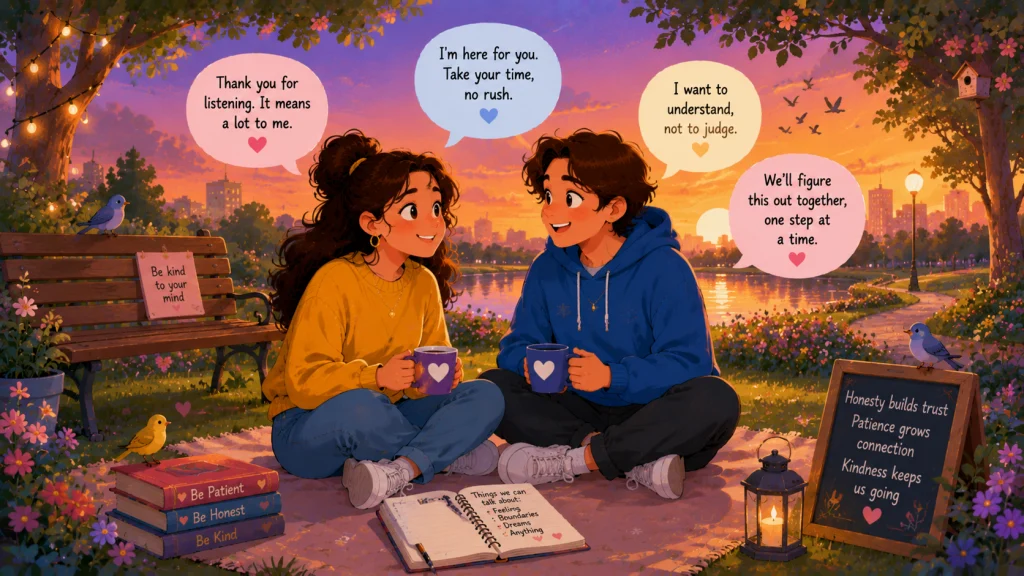
If It’s Genuinely Too Soon
This is the one moment on this list where the kindest reply isn’t flirty at all. If you’re not there yet, saying it back anyway just to avoid an awkward few seconds tends to cause more damage later than an honest, kind non-reciprocation does right now. I’ve watched someone go quiet for an entire minute after hearing it too soon, clearly afraid that anything they said would either lie or hurt. The honest version they eventually sent worked better than the silence had.
What to say when someone says “I love you” before you’re ready isn’t about softening a rejection, it’s about being honest without being cold. None of these say no. They just don’t pretend to be further along than you actually are.
- That means a lot to me, and I want to be honest that I’m not there yet.
- Thank you for telling me. I care about you a lot, I just need more time before I say it back.
- I hear you, and I don’t want to say it back until I mean it the same way.
- That’s really sweet to hear. I’m not ready to say it yet, but I’m glad you told me.
- I really care about you. I just don’t want to say those words before they’re fully true.
- Thank you for saying that. I’m not in the same place yet, and I didn’t want to fake it.
- I appreciate you telling me. I need a little more time before I can say it back honestly.
- That matters to me, genuinely. I’m just not ready to say it back yet.
- I’m really glad you told me. I want to be honest instead of saying something I don’t fully feel yet.
- Thank you for trusting me with that. I’m not there yet, but I care about you a lot.
A kind, honest non-reciprocation respects both people a lot more than a borrowed yes does. If you don’t mean it yet, don’t say it yet.
What Not to Say Back
A handful of replies make a sincere “I love you” worse no matter what stage the relationship is actually at. Sarcasm that reads as rejection, saying it back without meaning it, and turning a serious moment into a sexual joke all do the same kind of damage. They take a moment that needed honesty and turn it into something the other person has to recover from.
None of these usually come from cruelty. They come from nerves, or from not knowing what else to do with a moment that suddenly got serious. The safer move is almost always the plainer one, even when plain feels less impressive in the moment.
| Situation | What Works | What to Avoid |
|---|---|---|
| Not ready yet | An honest, kind non-reciprocation | A fake I love you said just to avoid an awkward pause |
| Caught off guard | A short, true reply, even an imperfect one | Sarcasm that could be read as rejection |
| Already established | Warm, flirty, or playful | A joke that deflects instead of confirming the feeling |
| Sincere moment | A direct reply that matches the tone | Turning it into a sexual joke when they meant it seriously |
If you’re not sure whether a line crosses into one of these, picture how it would read texted back to you in the same moment. That’s usually a fast way to tell. For everything outside this exact scenario, the wider set of flirty and romantic text replies covers a lot more relationship territory than just this one moment does.
Final: Match the Reply to the Relationship, Not the Moment
None of this works as a script memorized ahead of time. These flirty responses to “I love you” exist as a starting point, not a stand-in for actually knowing how you feel before you respond. The right one matches your relationship as it actually is right now, established, playful, overwhelmed, or simply not there yet, said in words that sound like you instead of a performance.
Texting moments like this rarely stay contained to one big confession either. If wording keeps failing you past this exact conversation, the broader set of flirty replies for nearly any message is worth a look the next time the right words don’t come easily.
FAQs
💬 What’s a flirty response to “I love you” if you feel the same way?
Keep it short and let a little personality in. A line like love you back, always works better than three sentences explaining your feelings on the spot.
😏 What’s a playful reply to “I love you” without making it sound fake?
Confirm the feeling first, then add the tease. The joke should sit on top of the love, not replace it, or it reads as deflection instead of charm.
😳 What do you say when someone says “I love you” but it’s too soon for you?
Thank them and be honest that you’re not there yet. A kind non-reciprocation is a complete answer. A fake yes almost always causes more damage later.
💛 What’s a short text reply to “I love you” that doesn’t feel flat?
A few intentional words beat a longer message. Love you too, always carries more weight than it looks like on the page, especially mid-conversation.
🙃 How do you respond to “I love you” without panicking?
Pick the line that matches your actual relationship stage instead of grabbing the first clever thing that comes to mind. Honest beats impressive almost every time.
🚫 What should you never say back to “I love you”?
Skip sarcasm that could read as rejection, a fake yes you don’t mean, and turning it into a sexual joke when the other person was being sincere.