“What’s new” is the question that punishes a normal week the hardest, because it sounds like it wants a headline and most weeks do not have one. You do not need an actual headline. You need a reply that treats an ordinary stretch of life as material instead of a failure to report something. Below are replies for genuinely nothing, for the tiny things that technically count, for turning laundry into a press release, for work and school check-ins, and for old friends who actually want the real update. None of it requires your life to have plot.
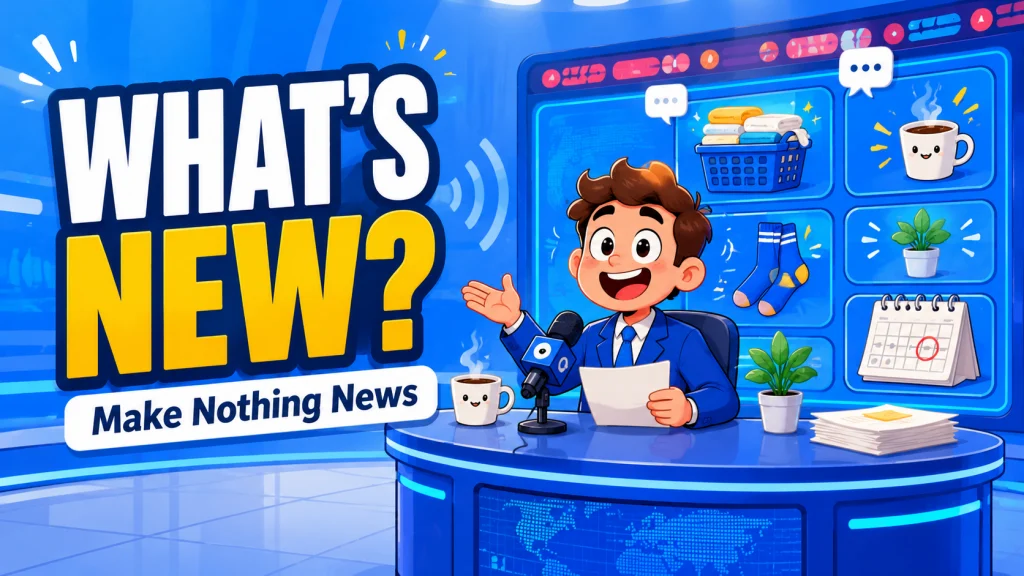
Nothing New Is Still an Answer, You Just Have to Sell It
A regular at the bar used to ask me “what’s new” every single week like he expected a different answer each time, and most weeks I had nothing. No story, no event, nothing worth repeating. What I learned from answering him over and over is that funny ways to answer what’s new do not require an actual update. They require you to commit to the boring truth with a little bit of style instead of apologizing for it.
That is the whole approach here. “What’s new” is a different question from “what’s up,” which is asking what is happening right now, and it is a different question from “how have you been,” which is asking about your overall state. “What’s new” wants a development, a change, something that moved. If you genuinely got asked the in-the-moment version instead, I cover that separately in clever replies to what’s up. This one stays with the version where someone wants to know what changed, even when the honest answer is nothing did.
Replies for When Genuinely Nothing Happened
There is a specific kind of week where nothing went wrong, nothing went right, and nothing happened at all. These weeks are the hardest to report on, because there is no event to lean on, only the absence of one. The move here is to make the nothing sound deliberate, like you chose a quiet stretch on purpose instead of just drifting through it.
Funny responses to what’s new in this category work best when they treat boredom as a lifestyle choice rather than something to explain away. Say it with confidence and the line does the rest of the work for you.
- Nothing. I am living the same day on purpose at this point.
- Nothing new. I have achieved total stability, which is a kind of news.
- Same as last week. I am consistent if nothing else.
- Nothing’s new. I am protecting my peace by being extremely boring.
- Not much. I peaked in a previous month and have not topped it since.
- Nothing. My life is currently in reruns.
- Same old. I am loyal to my routine, apparently.
- Nothing happened, and I would like a medal for that.
- Not a thing. I have hit a personal record for uneventful.
- Nothing new, just the same plot with no new characters.
- Same as always. I am basically a rerun of myself.
- Nothing. I have officially run out of updates to give you.
- Not much new. I am on a streak of nothing happening, and honestly, it’s nice.
None of these are dodges. They are an honest report delivered with a little personality, which is the entire difference between a flat answer and a funny one.

Tiny Updates That Still Count as News
Not every week is a total blank. Sometimes there is one small thing, a new snack, a finished chore, a weather complaint, a minor win nobody else would care about. The trick is treating that one small thing like it actually matters, because to you, in that moment, it kind of does.
This is where witty responses to what’s new earn their laugh, by zooming in on something almost nobody would think to mention and reporting it like real news. The smaller the detail, the funnier the commitment to it reads.
- New snack in the pantry. I consider that breaking news.
- I finally folded the laundry that has been sitting there for a week. Big stuff.
- It rained, and I had opinions about it. That’s the update.
- I found five dollars in an old jacket. Economy is recovering.
- I switched my coffee order. Wild week over here.
- I cleaned one drawer. Just the one. Do not push it.
- New phone case. I am a changed person now.
- I beat my own record for dishes left in the sink. Negative record, but still.
- I tried a new route to work. Groundbreaking, I know.
- My plant is still alive. Major personal achievement.
- I rearranged three things on my desk. Total transformation.
- New playlist. Same life, slightly better soundtrack.
- I returned a text within an hour. Unprecedented behavior from me.
Send one of these instead of “nothing much” and the conversation usually keeps going, because you gave the other person something small to react to instead of a dead end.
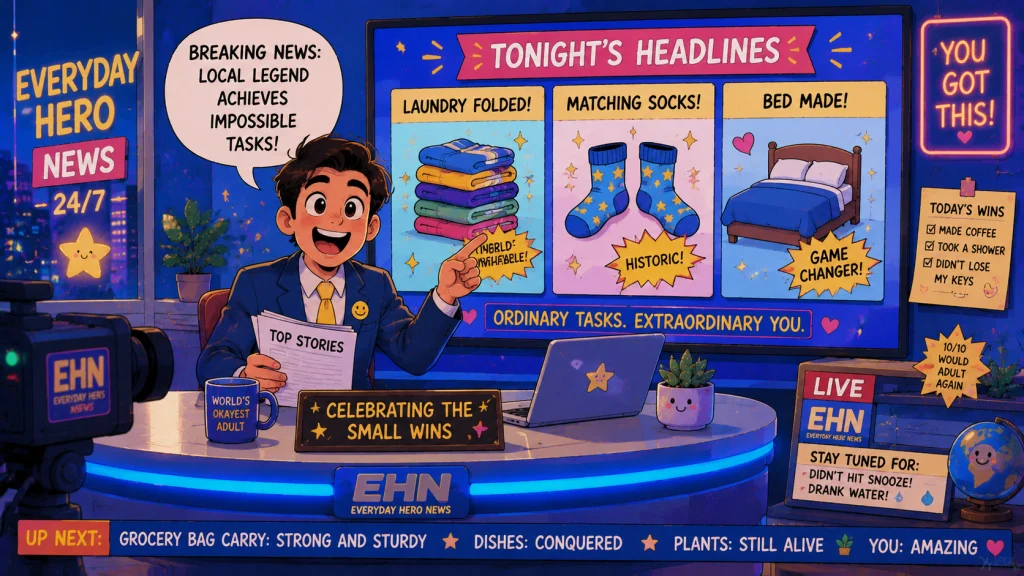
Turning Laundry Day Into a Press Release
Some replies work best when you go all the way the other direction and treat a completely normal moment like it deserves a headline. This is the most performative category on this list, and it should be, because the joke is the gap between how small the event actually is and how seriously you are reporting it.
The format matters more than the content. Open like a headline, follow with one dry detail, and stop before it turns into an actual story. Here is what that looks like in practice.
“BREAKING: Local adult reorganizes sock drawer, claims victory, returns to bed.”
That format scales to almost anything ordinary. A few more in the same shape:
- BREAKING: Subject made coffee correctly on the first try, witnesses stunned.
- URGENT: Local resident finds matching socks, experts call it a fluke.
- DEVELOPING: Dishes washed same day they were dirtied. Unconfirmed if it will continue.
- ALERT: Grocery list followed exactly, no impulse snacks purchased.
- BREAKING: Bed made before noon, neighbors in disbelief.
- REPORT: Inbox reached zero, briefly, before collapsing again within the hour.
- UPDATE: Subject survived Monday with minimal casualties.
- BREAKING: Local resident remembers where they put their keys, first time in weeks.
- DEVELOPING: Plant watered on schedule, plant reportedly pleased.
- ALERT: Leftovers eaten before they expired, a rare and beautiful event.
- BREAKING: Subject answered “what’s new” with an actual paragraph for once.
- URGENT: Nothing is on fire, literally or otherwise, as of press time.
- REPORT: Week ends exactly as uneventfully as it began, sources confirm.
This style works best with people who already know your sense of humor. Send it to a stranger and the bit lands flat, because half the joke depends on them knowing how unremarkable your actual life is.
What’s New at Work or School, Without Oversharing
Work and school versions of this question come with an invisible filter. People asking usually want something light enough to respond to in passing, not a full update on how you actually feel about your job or your classes. A funny reply to what’s new in this setting works best when it stays human without turning into a complaint session.
Keep the detail small and the tone easy. You are allowed to be a little tired in these replies. You are not obligated to be inspiring.
- Same projects, new deadlines. The cycle continues.
- Nothing new, just slowly becoming one with this chair.
- New coworker started. Jury’s still out.
- Same classes, slightly more behind than last week.
- Switched up my lunch order. Living dangerously over here.
- New group project. Already have a feeling about it.
- Nothing major, just surviving syllabus season.
- Got assigned a new task. Pretending I know what I’m doing.
- Same grind, slightly better playlist for it.
- New software update broke three things. Living the dream.
- Finals are close. I have made peace with that.
- Same desk, same chaos, new week.
- Nothing new, just refreshing my email like it owes me something.
If the person asking is someone you actually report to, drop the chaos and keep the line closer to “same priorities, just moving through them.” Light still works there, it just needs to sound steady instead of barely managed.

Catching Up With Someone Who Actually Wants the Details
Old friends ask “what’s new” differently. They are not making small talk, they are opening a door, and a one-line dodge wastes that. I had a friend who would text me “what’s new” maybe twice a year, and every time I gave her the lazy answer, she would just ask again until I gave her the real one. Eventually I learned to skip straight to the version with actual texture.
These replies are built to invite a real conversation, not end one. Leave a thread the other person can pull, and the catch-up writes itself from there.
- Honestly, a lot and not enough at the same time. Tell me about you first.
- Nothing huge, but I have a few things I have been meaning to tell you.
- Same chaos, different season. I missed catching you up on it.
- A few small things changed. None of it makes sense over text, though.
- Not much, but I thought about reaching out like three times this month.
- Same job, new opinions about it. Long story.
- Nothing dramatic, just a few updates I have been saving for you specifically.
- Honestly, kind of a lot. Where do you want me to start?
- Same general mess, with a few new plot points.
- Not a ton, but enough that I should not text the whole thing.
- A few things shifted. I will actually tell you properly, not in a text.
- Nothing huge happened, I just missed talking to you.
- Same me, slightly more tired, lots to catch you up on.
That last kind of honesty is what makes someone actually pick up the phone. A clever line can open the door, but it is the willingness to keep talking that turns “what’s new” into an actual conversation instead of a formality.
What Not to Say, and Why It Backfires
A few instincts feel safe in the moment but make the reply worse. The first is inventing excitement that is not there, dressing up a normal week as something it was not, which usually falls apart the second someone asks a follow-up question you cannot actually answer. The second is the opposite problem, dumping a long, heavy update on someone who only asked in passing and was not braced for it. The third is shutting the question down so hard that it reads as annoyed, even when that is not how you meant it.
Each of these has a simple fix once you see the pattern behind it.
| Instinct | Why It Backfires | Try This Instead |
|---|---|---|
| Inventing excitement | Falls apart at the first follow-up question | Make the boring truth sound intentional instead |
| Oversharing | Heavier than the moment was asking for | Give a light line, save the real talk for later |
| Shutting it down | Reads as annoyed even when you are not | One small, real detail keeps it warm |
None of these mistakes are about being a bad conversationalist. They are usually just the wrong tool for the moment, and once you see which one you are reaching for, swapping it out gets easy.
Final Thoughts: Boring Weeks Still Deserve a Good Line
None of these sixty-five replies need a genuinely interesting life behind them. That is the entire point. A funny reply to “what’s new” works because it commits to the truth instead of dressing it up, whether the truth is total silence, one tiny detail, or a story that only makes sense to someone who already knows you.
If “what’s new” is not quite the shape of the question you got asked, there are nearby versions worth checking. I keep a wider set of funny reply ideas for everyday conversations if you want more than this one phrase covers, and a closer look at funny replies when someone asks how you are if the question was really about your mood. And if someone follows up later with “how have you been,” I have that covered too, with witty responses to how have you been.
FAQs
🤷 What’s a funny way to answer what’s new when nothing is new?
Treat the nothing like a choice instead of a gap, something like “nothing new, total stability achieved.” Confidence sells a boring answer better than an apology ever does.
📰 What’s a witty response to what’s new?
Try the fake headline format, opening like a news report for something completely ordinary, like “BREAKING: laundry finally folded.” It works because the gap between the tone and the event is the whole joke.
🧺 Is there a difference between what’s new and what’s up?
Yes. “What’s up” usually wants to know what is happening right now, while “what’s new” wants to know what has changed. Answering with an update instead of your current activity fits the question better.
💬 What do I text an old friend who asks what’s new?
Give them one real thread instead of a flat “nothing much,” even something small like “a few things changed, I’ll actually tell you properly.” It signals there is more to talk about, which is usually what they wanted anyway.
🙂 How do I answer what’s new at work without complaining?
Keep it light and specific instead of venting, something like “same projects, new deadlines.” It reads as human without turning into a full status report on how you actually feel about the job.