Being talked down to is harder to handle than a direct insult because the condescension is usually wrapped inside something neutral: an explanation, a clarifying question, a helpful suggestion. The content might even be accurate. What is wrong is the assumption behind it. These 60 responses are organized by situation and by how deliberate the condescension seems, from the comment that might have been accidental to the person who has made it clear they see you as a step below them. The angle across all of them is the same: address the tone, not the subject matter. You are not there to prove you understood. You are there to make clear how you expect to be spoken to.
Why Being Talked Down to Is Harder to Handle Than Being Insulted
A direct insult gives you something to respond to. Being talked down to does not work that way. The person has not called you anything. They have explained something you already knew, in a tone that assumed you did not, and now you are standing there trying to figure out whether you imagined it, whether calling it out will make you look oversensitive, and whether you are about to prove their point by getting visibly rattled. That is the mechanism. It does not even need to be intentional to work.
I watched this play out behind a bar for nearly a decade. Regulars who had been coming in long enough to feel like they owned the place would talk to staff, especially new ones, in a tone they would never use with someone they considered an equal. Not rude exactly. Just a notch lower than normal. The bartender would either over-explain in response, listing their experience unprompted, or go quiet and let the conversation keep going on the other person’s terms. Both responses gave the regular exactly what they came in for, which was to feel like the authority in the room.
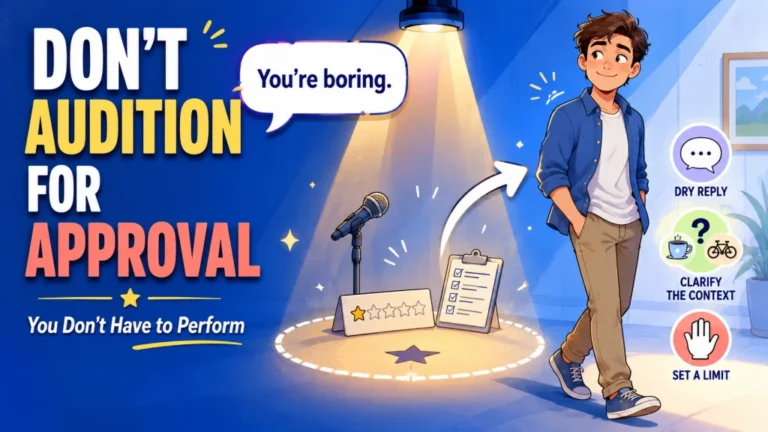
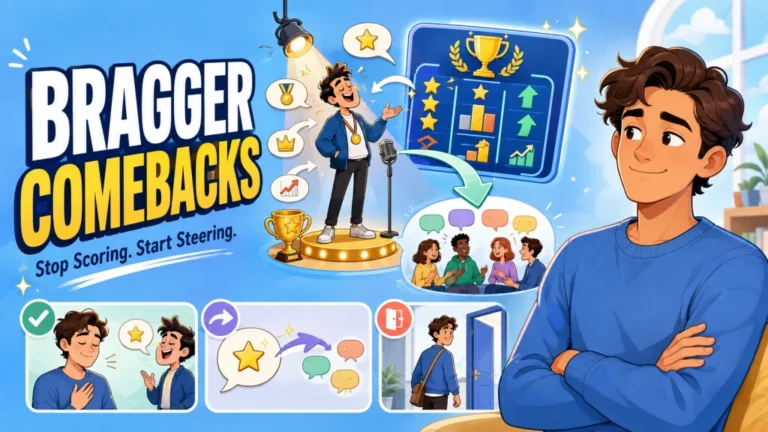
Those are the two failure modes. Overproving is when you respond by reciting your credentials, demonstrating your knowledge, or defending your competence. It accepts the framing that your competence was in question and tries to win from inside that framing. Disappearing is when you let it happen without naming it, because naming it feels like too much. Both reward the wrong person.
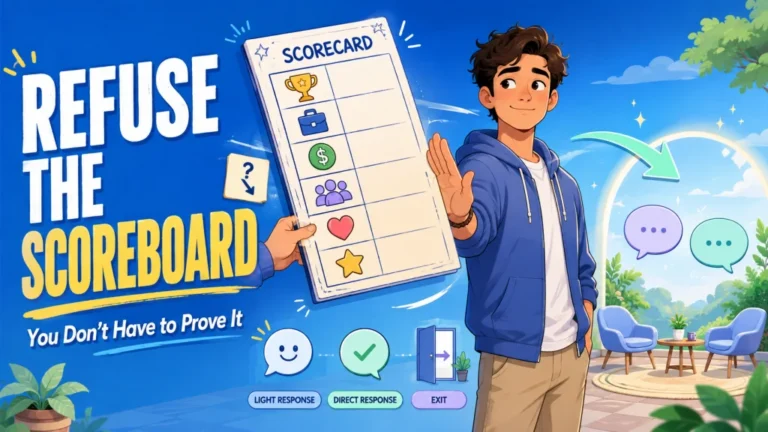
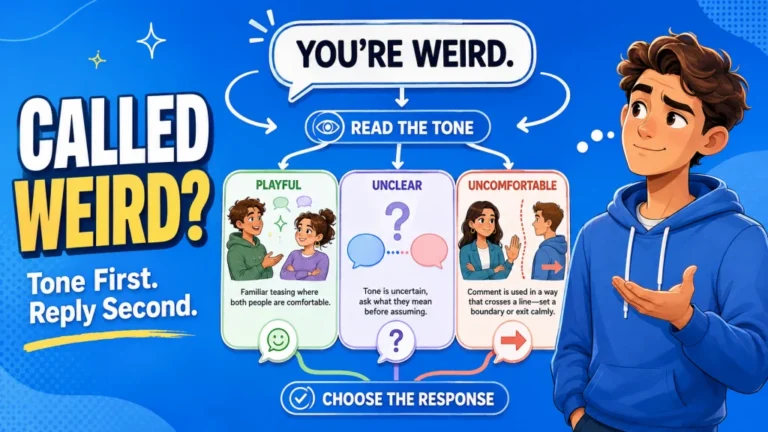
The responses here are built around a different approach: naming the tone, not the content. You are not there to prove you understood. You are there to address how the conversation is being conducted. That is a much shorter conversation, and it puts you in a better position to have it. If what you are dealing with has crossed from condescension into direct insults, what to say when someone insults you covers that territory differently. Condescension has its own shape, and it calls for a different kind of response.

Soft Correction Lines for When It Might Have Been Accidental
Some people talk down to others out of habit rather than intent. They explain things automatically, simplify without thinking, or default to a teaching tone in situations that do not call for it. With those people, a soft correction is usually enough. It names what happened without treating it as an attack, which gives the person a clean way to adjust without either of you having to make it into something bigger than it is.
The key is to be matter-of-fact about it. The goal is not to make them feel bad. It is to redirect the tone of the conversation before it gets further down the road.
- “Just to check, are you explaining this because you think I am not up to speed on it, or is there a new piece I am missing?”
- “I might be reading your tone wrong. Were you checking in or correcting me?”
- “I am familiar with this. Was there a specific part you wanted to add to?”
- “That came across as more instructional than I think you meant it to.”
- “I have been working on this for a while. Can you say what you meant a different way?”
- “I might be taking that differently than you intended. Can we rewind?”
- “I notice you tend to explain things I already know. I am not sure if you are aware of that.”
- “You may not have meant it this way, but that felt a little like a lecture.”
- “I would appreciate it if we could talk about this at the same level.”
- “Before we go further, can we reset how this conversation is going?”
- “I think we got our wires crossed. I am not looking for a walkthrough, just a conversation.”
- “That landed a little different than I think you meant. Want to try again?”
These lines work because they leave the door open. You are not accusing the person of anything, and you are not making them wrong for the whole conversation. You are flagging one moment and giving them the chance to shift. If they take it, the problem is solved. If they do not, that tells you something too, and you move to something more direct.
Direct Lines That Name the Tone Without Sounding Wounded
When the condescension is clearly deliberate, or when the soft version has already been ignored, you need something more direct. The challenge here is delivering it without sounding defensive. The moment you sound like the comment got to you, the other person has won a point they were trying to score.
The lines that work best at this level are flat and specific. They do not explain why you found it condescending. They do not invite the person to argue about whether it was. They name what happened and make clear it needs to change.
- “You are talking to me like I am not in the room.”
- “I am going to need you to adjust your tone.”
- “That is not how I expect to be spoken to.”
- “I am not sure what gave you the impression I needed that explained.”
- “You do not need to explain that to me.”
- “I understand the content. It is the delivery I have a problem with.”
- “I am going to stop you there. The tone is the issue, not the information.”
- “You are treating me like I am three steps behind you. I am not.”
- “I can follow the conversation fine. What I cannot follow is why you are talking to me like this.”
- “I do not need the simplified version. I need you to talk to me like an adult.”
- “That is condescending. I am naming it in case you did not notice.”
- “I noticed the way you said that. I would like you to say it again, differently.”
“I am going to stop you there” is worth knowing cold. It interrupts before the explanation goes further, which matters because the longer the condescension runs, the more awkward it becomes to address mid-sentence. The earlier you name it, the less ground the other person has covered on those terms. If you want lines with more edge for situations that have gone past a simple tone correction, savage comebacks goes further, but most condescending behavior responds better to calm and direct than to anything sharper.
Work-Safe Replies That Are Professional but Not Submissive
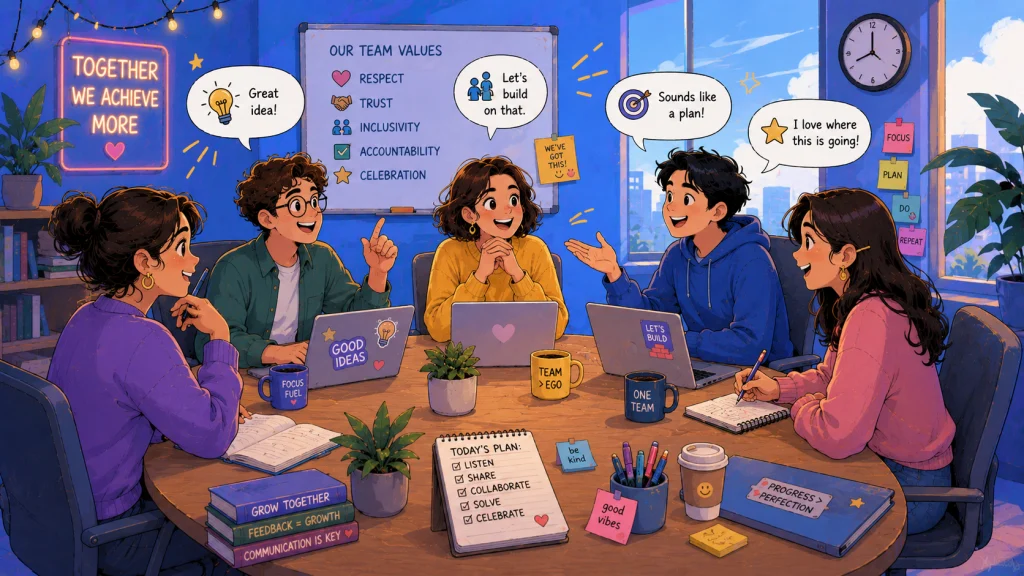
Condescension at work is its own problem because the setting limits what you can say back. You cannot call someone out the same way you would a friend. At the same time, saying nothing is not neutral. It sets a precedent for how you will be spoken to in every meeting, every project, every hallway conversation after that.
The goal in a work setting is to correct the dynamic without turning the moment into a formal problem. These lines are professional enough to use in a meeting room and clear enough to actually do something.
- “I appreciate the context, but I am up to speed on this.”
- “I would prefer if we could discuss this as equals.”
- “Could you walk me through what makes you think I need this explained?”
- “I am going to push back on how that was framed.”
- “I think this conversation would go better if we start from the assumption that we both know what we are doing.”
- “I have reviewed the brief. I do not need a summary.”
- “I am comfortable with where I stand on this. The tone is the part I want to flag.”
- “I am not sure that framing is accurate. Can we revisit the approach?”
- “I would appreciate being brought into this conversation rather than talked through it.”
- “That felt like it came from a different assumption about what I do and do not know.”
- “Before we continue, I want to make sure we are on the same page about how we are talking to each other.”
- “I do not think that level of detail was necessary, but noted.”
“I would prefer if we could discuss this as equals” works well because it is hard to argue with professionally. The other person cannot reasonably say no without making themselves look worse. It also does not require you to escalate or involve anyone else. You are simply stating a preference for how the conversation should run, which is a reasonable thing to do.
| Situation | Line type to reach for |
|---|---|
| First time it has happened, unclear if deliberate | Soft correction |
| Pattern over time, or clearly intentional | Direct |
| Professional or work setting | Work-safe |
| Friend or family member | Familiar but firm |
| Person has shown they want the hierarchy, not the conversation | Exit |
The table above is a starting point, not a rigid rule. Situations overlap, and a line from one category will sometimes fit better in another. The deciding factor is usually how much the relationship matters and how deliberate the condescension seems.
With Friends and Family: Familiar but Firm
Condescension from someone you actually care about is harder to address because the relationship is in the room too. You do not want to damage it over one comment. At the same time, letting it keep happening is its own kind of damage, slower and quieter but just as real.
With people you are close to, the lines can be more direct about the pattern itself, not just the single instance. A stranger gets one comment named. A friend or family member who keeps doing it needs to understand that the pattern is the problem, not just that particular moment.
- “You do this sometimes and I do not think you notice it.”
- “I know more about this than you are giving me credit for.”
- “You are explaining something I already know, and it is getting old.”
- “I love you but this is not how I want to be talked to.”
- “You are not my teacher. I do not need the lesson.”
- “That tone is not okay with me, even from you.”
- “We have been through this. I know what I am doing.”
- “You are being condescending right now. I am telling you so you can stop.”
- “I need you to check your tone before we keep going.”
- “I do not want to fight about this. I just need you to stop talking to me like that.”
- “I hear what you are saying. The way you are delivering it is what I have a problem with.”
- “I need you to talk to me like a person, not like a project.”
“You do this sometimes and I do not think you notice it” is one of the more useful lines in this section because it gives the other person somewhere to go that is not immediately defensive. They can say “I did not realize,” and the conversation can move from there. It is not a pass. It is just a more efficient way into the real conversation than one that starts with both people digging in.
Exit Lines for When the Person Wants a Hierarchy, Not a Conversation
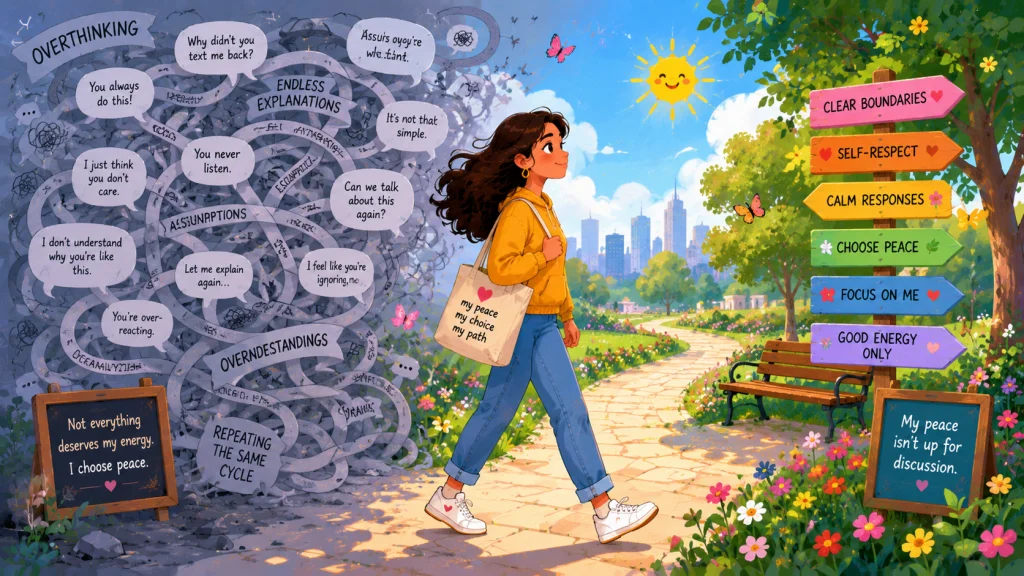
Some people are not going to stop. The condescension is not a habit or an accident. It is how they relate to you, specifically, and no single line is going to change that. For those situations, the most useful response is not a better comeback. It is making clear that the conversation is over and following through on that.
These lines are not designed to win anything. They are designed to exit without letting the person reframe your leaving as their victory.
- “I am not going to keep having this conversation on these terms.”
- “This is not going anywhere I want to go.”
- “I do not think we can have this discussion right now.”
- “I am going to step back from this.”
- “When you are ready to talk to me like a person, I am here.”
- “I have heard what you are saying. I am done with how you are saying it.”
- “This is where I stop engaging.”
- “I do not need to keep explaining myself to someone who has already decided I am beneath them.”
- “We are not doing this.”
- “I am not interested in a conversation where one person is above the other.”
- “I will come back to this when the dynamic is different.”
- “I am done for now.”
“When you are ready to talk to me like a person, I am here” is worth remembering because it exits without closing everything permanently. It gives the other person a clear condition for re-engaging, which leaves the door open if they choose to walk back through it. Not every exit has to be final. Sometimes you just need to leave the room until the terms of the conversation change.
What Not to Say Back
The most common trap is the long defense. Someone talks to you like you do not understand something, and you respond by listing your credentials, explaining your experience, or walking through everything that proves you are competent. The problem is that this accepts the framing entirely. You have confirmed that the question was whether you understood, and you have answered it on their terms. Even if you win the argument, you have lost the dynamic.
The second trap is insulting their intelligence back. “Well, you would know about talking down to people” or “I did not realize I was being tutored by someone who barely passed their own course.” These lines feel satisfying for about three seconds, then they move the whole thing somewhere messier. Now it is a fight about who is smarter, and that is a game nobody wins cleanly.
The third trap is sarcasm so thick it loses its point. There is a version of “Oh, thank you SO much for explaining that to me” that lands well if the delivery is exact. But most of the time, when someone is already rattled, the sarcasm comes out too heavy and the other person genuinely cannot tell if you are being serious or not. The comment lands as confusion instead of wit, and the moment is gone.
| What to avoid | Why it works against you |
|---|---|
| Defending your competence at length | Confirms the question was about your competence. Plays on their terms. |
| Insulting their intelligence back | Turns a tone correction into a personal fight. Harder to walk back. |
| Sarcasm that is too heavy | Often reads as confusion rather than wit when you are already rattled. |
| Asking if they meant to be rude | Lets them reframe the whole thing as a misunderstanding and deny it easily. |
| Lengthy explanations of why it hurt | Shows that it landed. Gives the other person information they can use again. |
The common thread in all of these is that they give the other person something to work with. A long defense gives them room to keep questioning. An insult gives them a reason to escalate. Heavy sarcasm gives them the option to claim they did not understand. The lines that actually work tend to be shorter, flatter, and harder to argue with precisely because they do not offer much surface area.
Final Thoughts: The Tone Is the Point
Condescension is worth naming because it does not go away on its own. People who talk down to you in one conversation will do it in the next one, and the one after that, until something makes it not worth doing anymore. That something is usually a response that makes clear you noticed, without giving them the reaction they were after.
None of the lines in here require you to prove anything about yourself. That is on purpose. The moment you start demonstrating your competence in response to someone who implied you lacked it, you have accepted their framing, and the conversation is already running on their terms. The angle is simpler: the way someone speaks to you is a separate matter from whatever they are saying, and it is worth addressing on its own.
Some of these conversations will not resolve the way you want. The person may not change. The exit lines exist for that reason. Knowing when to stop engaging is not the same as losing. It is recognizing that not every dynamic is worth correcting, and some people have already decided what they think of you before they opened their mouths.
FAQs
💬 What do you say when someone talks down to you?
Address the tone, not the content. Something like “I am going to need you to adjust your tone” or “That is not how I expect to be spoken to” names the problem directly without turning it into a long argument about who knows more. Short and flat tends to work better than anything elaborate.
🤔 How do you know if someone is being condescending or just explaining something?
The clearest signal is whether they checked what you already know before starting. Someone sharing information asks first. Someone being condescending assumes you do not have it and proceeds. If they would have explained it the same way to anyone in the room, including people they clearly respect, it is probably not condescension. If you are getting a version they would not give a peer, that is a different thing.
😤 How do you respond to condescension at work without causing problems?
Keep it professional and specific. “I would prefer if we could discuss this as equals” or “I think this goes better if we start from the assumption we both know what we are doing” are hard to argue with in a work setting and do not require anyone to escalate. You are stating a preference, not making an accusation.
👨👩👧 What do you say when a family member is condescending?
Name the pattern, not just the single comment. “You do this sometimes and I do not think you notice it” gives them somewhere to go that is not immediately defensive. If it keeps happening after that, “That tone is not okay with me, even from you” makes clear this is not something you are going to keep absorbing.
🙄 What is the worst thing to say back to someone who talks down to you?
A long defense of your own competence. It confirms that the question was whether you were competent, and you have now answered it on their terms. Even if everything you say is correct, you have let them run the framing. Short and direct does more than anything that sounds like a resume.
🚪 Is it okay to just stop engaging with someone who constantly talks down to you?
Yes. Not every dynamic is worth correcting, and some people are not going to change regardless of what you say. The exit lines in this piece exist for that reason. “When you are ready to talk to me like a person, I am here” leaves the door open without keeping you in a conversation that is not working. Walking away is not the same as losing.