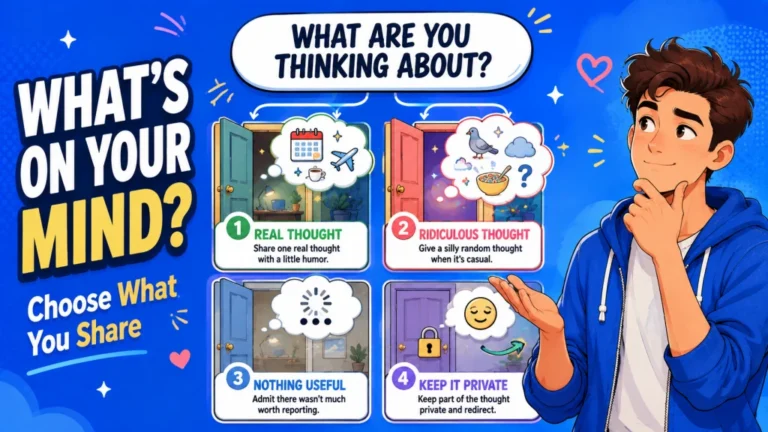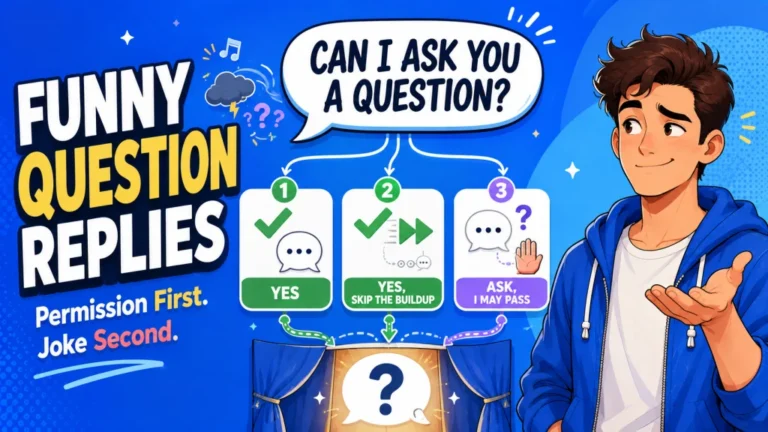
“I’m fine” is not always a lie. Sometimes it is just a sentence with nowhere left to go. After nine years of watching people answer that question on autopilot, usually behind a bar where the real answer came out twenty minutes later anyway, I started keeping track of what people actually meant when they said it. This piece breaks down what to say instead of I’m fine depending on how much truth you actually want to hand over, from genuinely fine to quietly not okay, with real lines you can use without sounding like you rehearsed them. Pick the version that matches your day, not the one that sounds the most impressive.

Why “I’m Fine” Stops a Conversation Cold
“I’m fine” is not always a lie. Most days it is just a dead end with shoes on, three words that close a door before the other person gets a real chance to walk through it. That’s why people go looking for what to say instead of I’m fine the second the word leaves their mouth, not because it is false, but because it says almost nothing at all.
I’ve watched this happen across a bar top more nights than I can count. Someone gets asked how they’re doing, says fine, and then spends the next twenty minutes telling their friend the real story anyway, just one drink later than it should have come out. The word was never the whole problem. The timing was, and so was the fact that “fine” doesn’t leave anywhere else for the sentence to go.
The lines below aren’t sorted by how clever they sound. They’re sorted by how much truth you’re willing to hand over in that exact moment, because that’s the real decision happening underneath “I’m fine.” Some days you’re genuinely okay and just want a reply that sounds like a person instead of a form letter. Other days you’re running on fumes, or you’re not ready to explain anything yet, or you’d actually like the conversation to keep going instead of stopping dead at one word.
This isn’t about the bigger question either. If it’s not just the word “fine” you’re stuck on but the whole “how are you” on the other end of it, that’s a different problem with a different shape, and I’ve laid out funny answers to how are you separately for exactly that situation. Here, the focus stays narrow: you’ve already been asked, you’ve already felt “fine” sitting wrong in your mouth, and you want something better to put there instead.
| Honesty Level | Sounds Like | Example Reply |
|---|---|---|
| Actually okay | Warm, simple, no hidden agenda | “Good, actually.” |
| Tired but functional | Honest, no request for rescue | “Tired, but I’m getting through it.” |
| Chaotic but fine | Funny, a little self-aware | “Surviving on caffeine and spite.” |
| Not ready to talk | Small limit, still warm | “Rough one. I’ll tell you about it later.” |
| Want to keep talking | Adds a detail, asks back | “Long day, work meeting ran over. How was yours?” |
That’s the shape of it. None of these lanes are better than the others. They just answer different questions, and the rest of this comes down to picking the one that actually matches where you are today instead of defaulting to whichever one is easiest to type without thinking.

Actually Okay Replies, When Fine Just Needs a Pulse
Sometimes “fine” is the truth, and the only thing wrong with it is that it sounds like it was read off a form. If your day has actually been decent, you don’t need a paragraph explaining yourself. You need a version of fine that still sounds like a person typed it instead of defaulting to autopilot. The goal here isn’t honesty. You’re already being honest. It’s just sounding like you meant it.
- “Good, actually.”
- “Better than I expected today.”
- “I’m alright, just been a normal kind of day.”
- “Solid day so far.”
- “Honestly doing fine, no complaints.”
- “Good. Nothing to report.”
- “I’m okay, just keeping busy.”
- “Pretty decent, thanks for asking.”
- “All good on my end.”
- “Doing well, just an ordinary one.”
- “I’m good, just coasting through it.”
- “Fine in the good way, not the flat way.”
- “Holding steady, nothing dramatic.”
- “I’m okay, genuinely.”
- “Doing fine, just low-key today.”
None of these are trying to upgrade fine into something impressive. They’re just making it sound like it came from you instead of a script. If you want more alternatives to I’m fine in this same lane, warm but uncomplicated, that table above is your starting point, and from there it is mostly a matter of adjusting the wording to however you actually talk to the person on the other end.
Tired But Functional Replies, Honest Without Asking to Be Rescued
Tired is not the same thing as not okay, even though the two get lumped together constantly. You can be running on fumes and still not need anyone to drop what they’re doing and check on you. You just need the other person to know the tank is a little lower than usual without turning it into an event. This is the kind of reply people skip past most often, jumping straight from “fine” to something heavier because they assume honesty has to sound urgent to count.
- “Tired, but I’m getting through it.”
- “Running on low battery, still upright.”
- “A little worn down, nothing serious.”
- “Tired today, should even out by tomorrow.”
- “Dragging a bit, but functioning.”
- “Low energy, otherwise fine.”
- “Tired in the normal way, not the worried way.”
- “Worn out, but it’ll pass.”
- “A bit fried today, nothing to fix.”
- “Running slow today, that’s all.”
- “Tired, but nothing’s actually wrong.”
- “Just low on sleep, not low on anything else.”
- “A little flat today, should bounce back.”
- “Tired but stable.”
- “Today’s been a slow burn, but I’m okay.”
That’s the mistake worth naming directly: treating tired like it needs a bigger reaction than it does. I’ve seen people talk themselves into a whole explanation about why they’re exhausted when “tired, but I’m getting through it” would have landed exactly the same honesty with none of the weight. Save the longer version for when you actually want to talk about it. Most of the time, tired just wants to be acknowledged, not solved.
Chaotic Life Replies, Funny Enough to Earn a Laugh
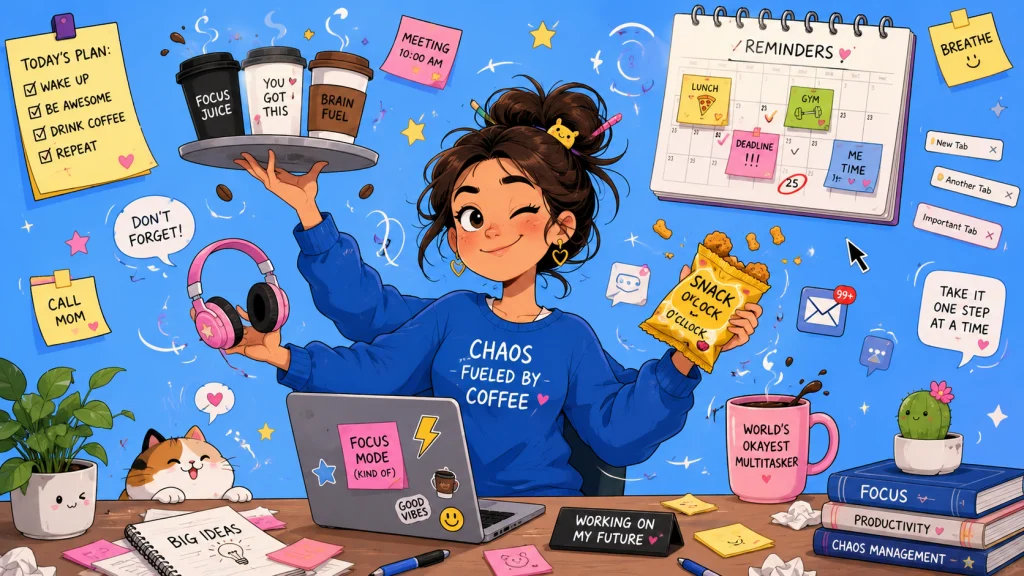
This is where most people actually want to live when they’re hunting for funny things to say instead of I’m fine. Your day wasn’t a crisis. It just refused to behave, and the honest version of that is funnier than fine could ever be. The trick is keeping it short. A long joke reads like effort, and effort is the one thing that kills a bit before it lands.
“I’m fine in the way a haunted house is fine. Technically structurally sound, definitely something going on inside.”
- “Surviving on caffeine and spite.”
- “Held together by one good podcast and bad decisions.”
- “Living like a raccoon in a trench coat today.”
- “Chaos, but make it cute.”
- “I’m a mess, but a charming one.”
- “Running on three hours of sleep and pure delusion.”
- “It’s a lot, but so am I.”
- “Barely vertical, fully sarcastic.”
- “Today’s a circus and I forgot my ringmaster hat.”
- “Vibes are unstable, snacks are stable.”
- “Functioning at forty percent and proud of it.”
- “It’s giving Monday energy on a random Wednesday.”
- “I’m doing great if you don’t ask follow-up questions.”
- “Held together with tape and good intentions.”
- “Five tabs open in my brain and three of them are frozen.”
If you’re after funny ways to say I’m fine that don’t sound like a try-hard bit, keep it specific to your actual day rather than reaching for a generic joke. The specific ones land because they sound true, and the generic ones land flat because anyone could have sent them. For more of this exact lane, I keep a wider set of funny replies for situations like this one, in case today calls for more than just the “fine” replacement.
Not Fine, But Not Ready to Explain Replies
Some days the honest answer is genuinely not fine, and you still don’t owe anyone the full story on the spot. This kind of reply exists for that exact gap: telling the truth without opening a conversation you’re not ready to have yet. It is not shutting the door. It is just asking for a minute before walking through it.
- “Not my best day, but I don’t want to get into it right now.”
- “Rough one. I’ll tell you about it later.”
- “Not great today, but I’m okay for now.”
- “It’s been a hard one. Can we talk about it another time?”
- “Honestly struggling a bit, not ready to explain it yet.”
- “Not fine, but I don’t need to talk about it right now.”
- “Today’s heavy. I’ll fill you in when I’m ready.”
- “It’s a lot right now. Give me a minute before I explain.”
- “Not okay, but I’m handling it.”
- “Rough day, I just don’t have the words for it yet.”
- “I’m not great, but I’ll get there.”
- “It’s been hard. I just need some space before I get into it.”
- “Not fine, but I appreciate you asking.”
- “Today’s tough, I’m working through it.”
- “Not okay yet, just not ready to say why.”
A friend texted me one of these almost word for word a while back, “rough one, I’ll tell you about it later,” and I remember being grateful she said anything at all instead of just going quiet. It told me enough to know not to push, and enough to know she’d circle back when she was ready. That’s the whole job of this kind of reply: giving the other person something true to hold onto without handing them the entire weight at once. If the question that actually triggered this was someone asking if you’re okay rather than how you’re doing, the tone shifts slightly, and I’ve covered funny replies to an are you okay text for when that’s the version you’re facing.

Replies That Keep the Conversation Moving
This is the lane most people skip entirely, even though it solves the actual problem with “fine” better than anything funnier or heavier could. The issue with “fine” was never that it is dishonest. It is that it gives the conversation nowhere to go. Add one small, true detail and ask a real question back, and suddenly there’s somewhere for it to go.
- “Long day, work meeting ran over. How was yours?”
- “Decent, finally finished that thing I was stressing about. You?”
- “Okay, mostly just tired from the commute. What about you?”
- “Good, got some sun today for once. How’s your week going?”
- “Alright, dealing with a slow morning. What’s going on with you?”
- “Fine, just buried in emails. Anything good happening on your end?”
- “Pretty good, finally slept properly. How are you doing?”
- “Okay, busier than usual. What’s new with you?”
- “Decent day, small wins here and there. You good?”
- “Good, just running errands all day. How’s everything with you?”
- “Fine, nothing exciting, but nothing bad either. What about your day?”
- “Okay, trying to catch up on sleep. How’s life treating you?”
- “Pretty solid, finally got some quiet time. What’s up with you?”
- “Good, slow start but picked up. How’s your day looking?”
- “Alright, a little scattered today. What’s going on in your world?”
The detail doesn’t have to be interesting. It just has to be real, and the question at the end is what actually keeps the thread alive instead of leaving “fine” to die on its own. If you want a broader set of these for the original question itself rather than just the fine replacement, I’ve put together funny things to say when someone asks how you are, which covers the same idea from a wider angle.
What Not to Say Instead of Fine
Most of these mistakes come from the same place: trying too hard to control how the other person reacts. Fake positivity, alarming jokes, and oversharing all share one root, a fear that the honest, plain version of your day isn’t enough on its own, so it gets dressed up or armored over instead. It usually backfires, because people can feel the effort underneath it.
- Forced positivity like “everything happens for a reason,” which reads as a deflection rather than an answer.
- Alarming jokes like “living the dream, send help,” which sound funny to you and genuinely worrying to whoever reads it without context.
- Long paragraphs that turn a casual check-in into a confession the other person didn’t ask for and isn’t prepared to carry.
- Guilt-tripping replies like “must be nice that you’re fine,” which punish the other person for asking a normal question.
- Sarcasm sharp enough to read as anger instead of humor, especially over text where tone doesn’t travel well.
- Vague dread bombs like “we need to talk” dropped with zero context, which create panic instead of clarity.
The common thread is that all of these create work for the other person, a weight they didn’t sign up for when they asked a simple question. It’s not that you’re not allowed to be dramatic or funny or honest. It’s that the reply should land where you intended it to, not somewhere heavier or stranger than you meant. If a reply makes you wonder afterward whether you need to send a follow-up text explaining the first one, that’s usually the sign to simplify it.
Final Thoughts: Fine Doesn’t Have to Be the Whole Sentence
None of this is about fixing how you feel or making sure you say the perfect thing every time someone checks in. Some days the honest answer really is just fine, said plainly, and that’s not a failure to be more interesting. This is just about having a few more doors available besides the one that closes the conversation before it starts.
I’m not here to tell you which version of honest you owe anyone. That’s not my call to make, and it depends entirely on the relationship, the day, and how much you actually want to get into it right now. What I can tell you, after seeing this same little pause play out again and again, is that most people would rather hear something true and small than something polished and empty. Pick the line that matches today. Tomorrow you’ll probably need a different one anyway.
FAQs
😅 What’s a funny thing to say instead of “I’m fine”?
Keep it short and specific to your actual day instead of a generic joke. Something like “surviving on caffeine and spite” works because it sounds true, not because it is clever.
🙂 What should I say if I’m not fine but don’t want to explain?
Name the truth in one line and leave yourself a little space around it, like “rough one, I’ll tell you about it later.” That’s honest without opening a conversation you’re not ready for yet.
💬 How do I answer “are you okay” without lying?
You don’t have to say fine if it isn’t true. A line like “not great today, but I’m okay for now” is honest and still leaves the conversation in your hands.
😴 What can I say when I’m just tired, not actually upset?
Tired doesn’t need to sound urgent. “Running on low battery, still upright” says exactly what’s true without inviting a bigger reaction than the moment calls for.
🤝 How do I keep a conversation going instead of shutting it down with fine?
Add one small true detail and ask a real question back, like “long day, meeting ran over, how was yours?” The detail gives the other person something to respond to.
🚩 Is it okay to keep saying “I’m fine” even if it’s not true?
Sometimes, yes. Not every moment is the right one for honesty, and you don’t owe a full answer to every person who asks. Just notice if it’s becoming the only thing you ever say.