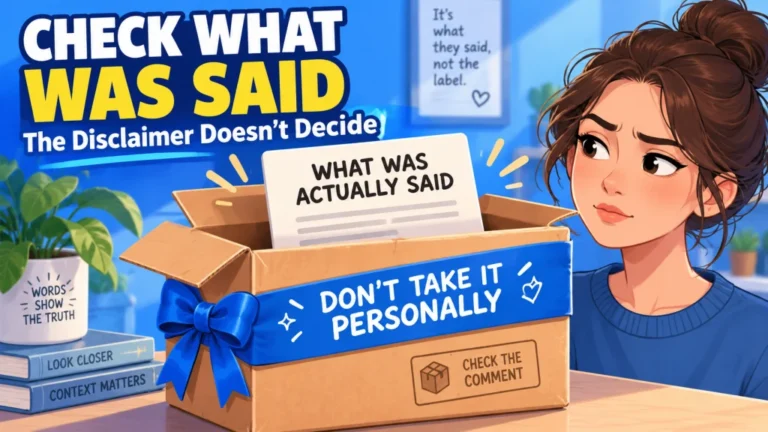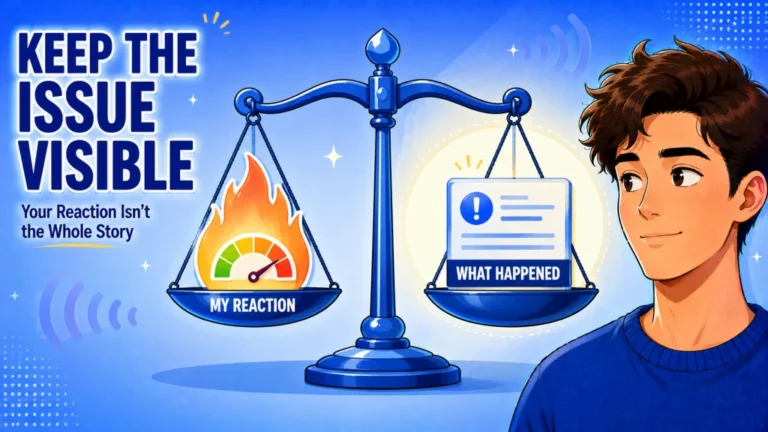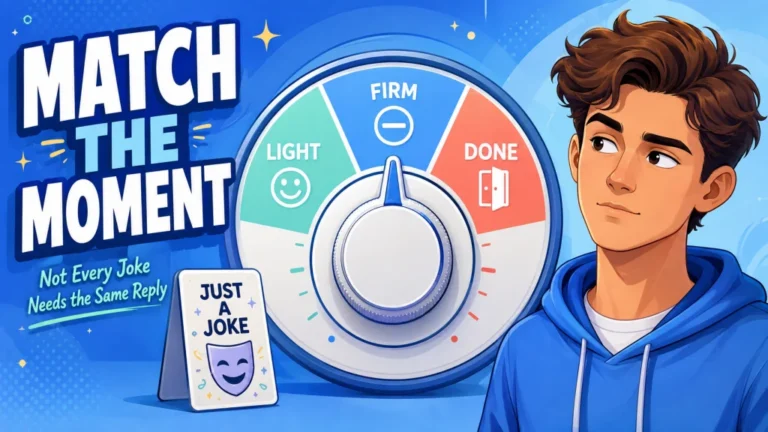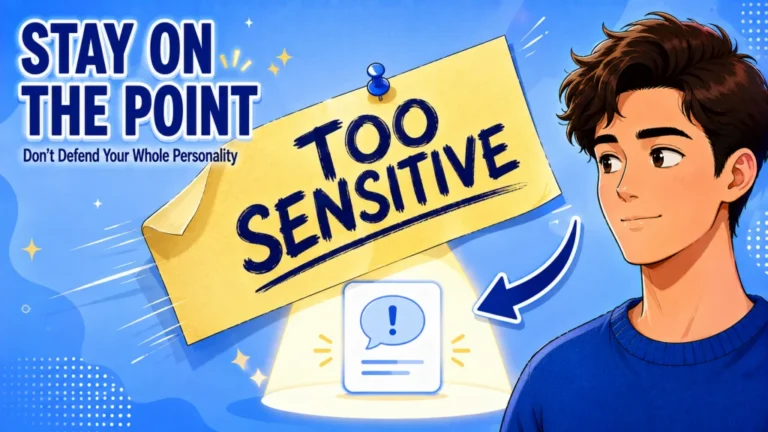
When someone calls you a joke, the useful question is not how hard you can hit back. It is whether they are laughing with you or trying to make you the thing everyone else laughs at. I sort the reply by that difference first, then choose humor, a calm boundary, or an exit. If you are stuck on what to say when called a joke, the shortest line that fits the room usually does more than a long speech.
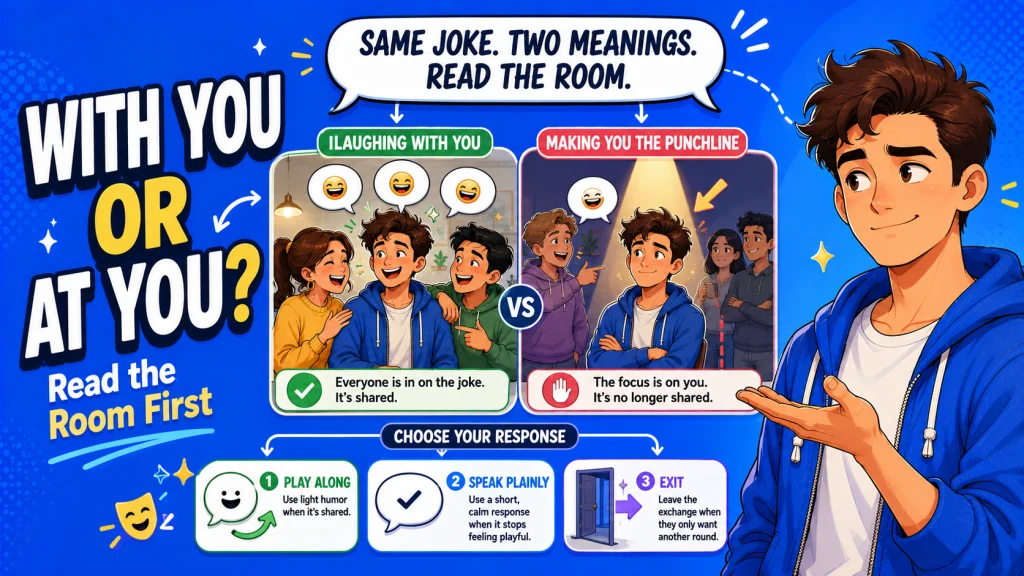
Being called a joke is not really about humor
If you are trying to figure out how to respond when someone calls you a joke, start with the room, not the wording. People laugh with someone and laugh at someone very differently, even when the sentence sounds identical on paper. The cleanest clue is whether you still feel included in the exchange or suddenly turned into its target. A good “you’re a joke” comeback should match that difference instead of treating every version as an invitation to roast back.
With a close friend, “you’re a joke” can land like “you are ridiculous,” and everyone moves on because the teasing already goes both ways. In a colder argument, the same words can mean “I do not take you seriously,” which is not really comedy at all. A common mistake is answering the second version as though it were friendly banter, then getting dragged into three more rounds you never wanted. Read whether the person is sharing the laugh with you, trying to collect a laugh from the room, or simply trying to reduce you to one cheap label.
Quick replies to a clearly insulting “you’re a joke”
When the insult is obvious, speed matters more than cleverness. The best comebacks when someone calls you a joke do not need a second paragraph, because the longer you defend yourself, the more attention you hand to a line that did not deserve much in the first place. One clean sentence makes the other person decide whether they actually have a point to make. That keeps you answering the insult without auditioning for a roast battle.
- “Then stop giving me an audience.”
- “That was your whole point?”
- “You can do better than that.”
- “If you have something to say, say it.”
- “Cheap line. Anything else?”
- “I heard you the first time.”
- “You seem very invested in this joke.”
- “Noted. Moving on.”
The first four lines leave a little room for the other person to speak plainly, while the last four are better when you already know they are fishing for a reaction. Notice that none of them require you to prove that you are impressive, respected, successful, funny, or anything else. That is deliberate, because a broad insult gets stronger when you start treating it like a serious evaluation of your life. If the line was meant to shrink you, do not reward it with a résumé.

Comedy-flip lines that stay light
Sometimes the easiest answer is to steal the comedy metaphor and make it harmless. This works best when the speaker is being annoying rather than genuinely vicious, or when you want to show that the insult did not earn a serious reply. The trick is to flip the word “joke” without turning the other person into a new target. Once the comeback starts attacking their looks, intelligence, family, or status, you are no longer flipping the joke, you are starting another fight.
- “At least somebody brought entertainment.”
- “Tough crowd.”
- “I’ll be here all week.”
- “Glad you caught the theme.”
- “And yet you stayed for the whole set.”
- “No refunds on this performance.”
- “You keep showing up for the punchline.”
- “I should start charging admission.”
Delivery is doing half the work here. “Tough crowd” with a small shrug can close the moment, while the same words delivered like a challenge can invite another round. The lines that make the insult feel smaller rather than the speaker feel smaller work better here, because they leave you somewhere to go afterward. A comedy flip should create an exit ramp, not a stage you now have to keep performing on.
Friend-roast responses when nobody is trying to hurt anyone
Friendly roasting has its own rhythm, and you usually know it because the teasing is mutual long before this one line appears. A friend who calls you a joke after you tell a terrible story, miss an obvious clue, or make a ridiculous choice may be inviting you to keep the bit going. In that room, a formal boundary can sound stranger than the original comment. The safer move is a light return that keeps both of you inside the joke.
- “And you keep renewing your subscription.”
- “Big words from my biggest fan.”
- “You laughed, so I did my job.”
- “Please hold your applause.”
- “I prefer limited-edition nonsense.”
- “You knew what you signed up for.”
- “I am carrying this friendship comedically.”
This is one of those places where relationship history matters more than the literal words. If you both roast each other constantly and nobody is being singled out, a playful answer can feel completely normal. If the room changes, the joke keeps landing only on you, or the friend suddenly sounds contemptuous, you do not have to keep using the friend-roast script just because that is how the exchange started. Mutual teasing stops being mutual the second one person is expected to keep smiling so everyone else can stay comfortable.
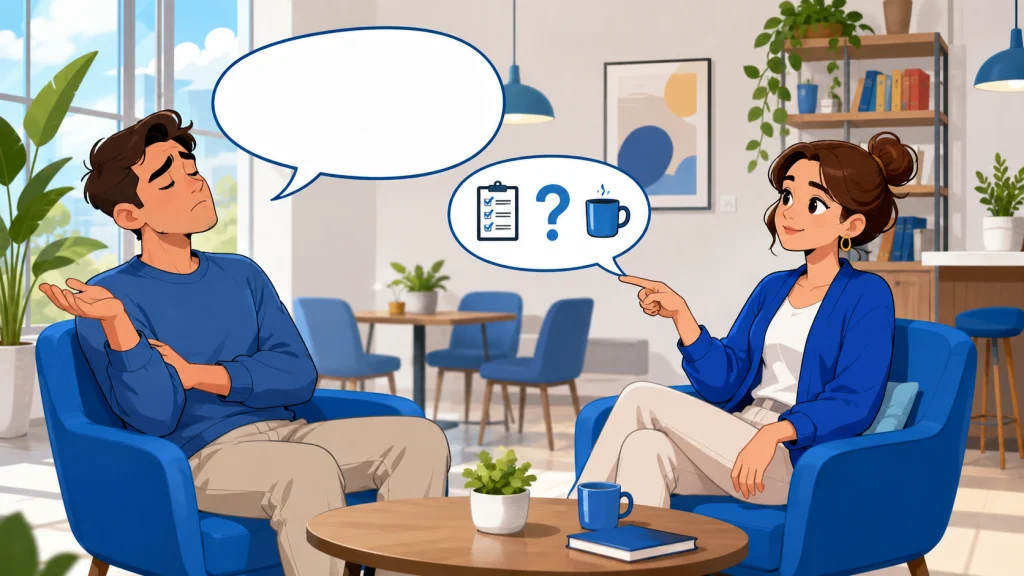
Calm replies when the point is to belittle you
When “you’re a joke” really means “I do not think you deserve to be taken seriously,” the cleanest responses when someone calls you a joke are usually plain. You do not have to out-funny someone who is not actually joking. A calm line makes them either state the real criticism or sit with the fact that they chose a vague insult instead. That is often a better use of your next sentence than trying to win the room.
- “If you have a real criticism, say it.”
- “You do not have to respect me, but speak plainly.”
- “That is an insult, not an argument.”
- “If there is a point behind that, make it.”
- “I am not continuing this as name-calling.”
- “You can disagree without reducing me to a label.”
These work because they do not pretend the insult was secretly clever. They also fit the same basic approach I use for what to say when someone insults you: answer the behavior you are actually dealing with, not the dramatic meaning you could attach to it. If the speaker has a concrete complaint, they now have room to make it. If all they wanted was the cheap shot, there is not much left for you to do except stop feeding it.
Public-room lines that return attention to the cheap insult
Being called a joke in front of other people can make you feel like you have to perform a bigger answer because the audience is suddenly part of the moment. That pressure is exactly why people overdo it. A four-word insult can produce a long defense, and by the end nobody even remembers what started the exchange. In a public room, the strongest move is often to make the cheapness of the line visible and then stop.
- “That is what you chose to add?”
- “We can all hear the insult.”
- “If there is a point, make the point.”
- “You wanted an audience for that?”
- “That sounded better in your head, huh?”
- “Anyway, back to the actual conversation.”
The last one is especially useful when the room was discussing something else before the insult arrived. It tells everyone that the conversation does not have to reorganize itself around one person’s attempt to embarrass you. If you want sharper material for a moment that genuinely calls for more bite, keep it separate from this situation and look at savage comebacks for rude people instead. Here, the point is not maximum damage, it is refusing to let the insult become the main event.
Exit lines when they want a roast battle
Some people do not want an answer, they want a sequence. You respond, they escalate, you respond again, and suddenly the entire exchange is about who can land the nastier line. If that is not the game you wanted to play, stop treating every new insult like a fresh question. An exit line gives you a final sentence without pretending you owe them unlimited rounds.
- “I am not doing this all night.”
- “You can keep going without me.”
- “I said what I needed to say.”
- “Find another audience.”
- “I am done with the roast routine.”
- “You clearly want a fight. I do not.”
- “That is enough attention for one insult.”
This is also where silence becomes a real option instead of a failed comeback. The person who keeps baiting you may treat any sentence as proof that the game is still on, so the cleanest ending can be no next line at all. When the insult shifts into status language about whether you are a “winner” or “loser,” the same refusal still applies, but that is a different kind of label with its own conversation around it. If that is the line you are dealing with, these responses when someone calls you a loser stay focused on that status insult instead. You do not have to finish every exchange with the best punchline in the room.

“You are a joke” and “it was just a joke” are different problems
These two phrases sound related because they share the same word, but they ask for different replies. “You are a joke” labels you, while “it was just a joke” usually comments on something the other person already said or did. If you mix them together, your answer can miss the actual problem and sound strangely off-target. Keep the first focused on whether you want to flip, reject, or leave the insult.
| What they said | What is happening | Useful direction |
|---|---|---|
| “You are a joke.” | They are turning you into the target. | Use a comedy flip, a plain boundary, or an exit. |
| “It was just a joke.” | They are defending or reframing something they said. | Respond to whether the original comment worked for you, not to your worth as a person. |
A common mistake is answering “it was just a joke” with a comeback about being the punchline, or answering “you are a joke” by demanding an explanation of the original joke when there was no original joke to explain. The words overlap, but the conversational job is different. For this page, stay with the direct label aimed at you. That keeps the reply short, relevant, and much easier to deliver without wandering into a different argument.
What not to say: threats, humiliation, or a ten-line routine
The easiest way to lose control of this moment is to decide that one cheap insult now justifies anything. Threats turn a verbal jab into something more serious, while deeply personal humiliation can create a new problem that has nothing to do with the original line. A ten-line comedy routine is safer, but it still makes you work far too hard for someone who gave you three words. If the response needs a setup, two callbacks, and a closing monologue, it probably belongs in your notes, not in the conversation.
- Do not threaten violence or consequences you do not intend to carry out.
- Do not reach for family, appearance, money, health, or other personal vulnerabilities just to make the comeback sting.
- Do not explain your entire character to prove that you are not a joke.
- Do not keep sending new lines after the other person has stopped engaging.
- Do not force playful humor when the tone is clearly contemptuous.
People often over-explain because being dismissed as a joke feels broad enough to demand a broad defense. I get the impulse, but the label is still just a label, and you do not have to answer every possible thing it could imply. One sentence that fits the tone is enough. The goal is to leave the exchange sounding like yourself, not like someone who spent the next hour trying to reverse-engineer the perfect humiliation.
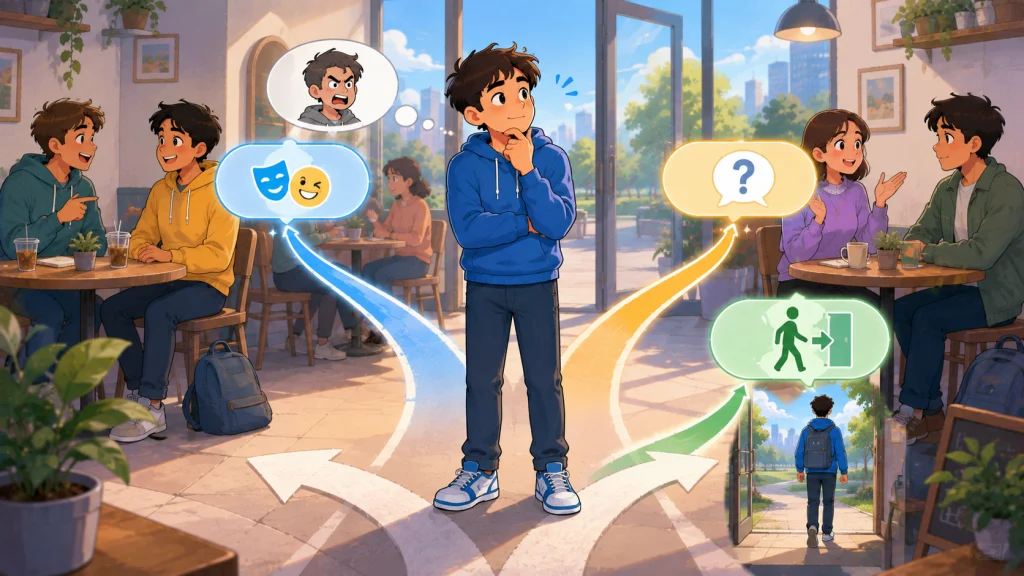
Final thoughts: keep the joke from choosing the whole conversation
When someone calls you a joke, the best response starts with one distinction: are they joking with you, or trying to make you the joke? If it is friendly, flip the comedy and keep moving. If it is belittling, ask for the real point, name the insult plainly, or end the exchange. You do not need the harshest line available just because the other person chose a harsh label.
I would rather see someone use a simple “Anything else?” at the right moment than unload a brilliant paragraph after the conversation has already turned ugly. The line matters, but timing and tone matter more. Choose something short enough to sound natural coming out of your mouth or appearing in your text bubble. Then let the next move belong to them instead of volunteering for another round.
Frequently asked questions
The questions below are the ones people tend to ask once they stop looking for one universal comeback and start thinking about the actual situation. Most of them come down to tone, relationship, and whether the other person is trying to continue a real conversation or just provoke one. The answers stay short because these are moments where a usable sentence matters more than a theory. Pick the answer that matches what is in front of you, not the version that sounds toughest on a screen.
If you are still unsure, default to the reply that gives you the most room to leave. You can always get sharper later, but you cannot unsend a line that turns a stupid insult into a much bigger fight. That is especially true in group chats and public rooms where other people can keep the exchange alive long after you were ready to stop. A restrained first response is not weakness, it is simply easier to control.
💬 What do you say when someone calls you a joke?
Try something short like “If you have a point, make it” or “That was your whole point?” If the tone is playful, a lighter reply such as “Tough crowd” can work better.
🎭 Is being called a joke always an insult?
No. Close friends can use it as mutual teasing, but in a hostile argument it can be a way of saying they do not take you seriously. Your relationship and the room tell you more than the words alone.
⚡ What is a good quick comeback for “you’re a joke”?
“Then stop giving me an audience” is playful without getting personal. For a colder exchange, “If you have a real criticism, say it” is cleaner.
🧊 Should I ignore someone who calls me a joke?
You can, especially if they are clearly trying to keep a roast battle going. Silence is often the simplest exit when any new reply would only become material for another round.
👥 What should I say if someone calls me a joke in front of other people?
Keep it brief and return attention to the conversation: “That is what you chose to add?” or “Anyway, back to the point.” A public insult does not require a public speech in response.