Dismissive replies do not all shut down the same thing, and that is why one comeback does not fit all of them. The cleanest response starts by noticing whether the other person is trying to stop you from speaking, erase your contribution, mock your reaction, or dodge the effect of what they said. From there, you can answer the exact move instead of swinging at the whole person. Sometimes that means one sharp line, sometimes it means returning to the original point, and sometimes the strongest move is giving them nothing else to work with.
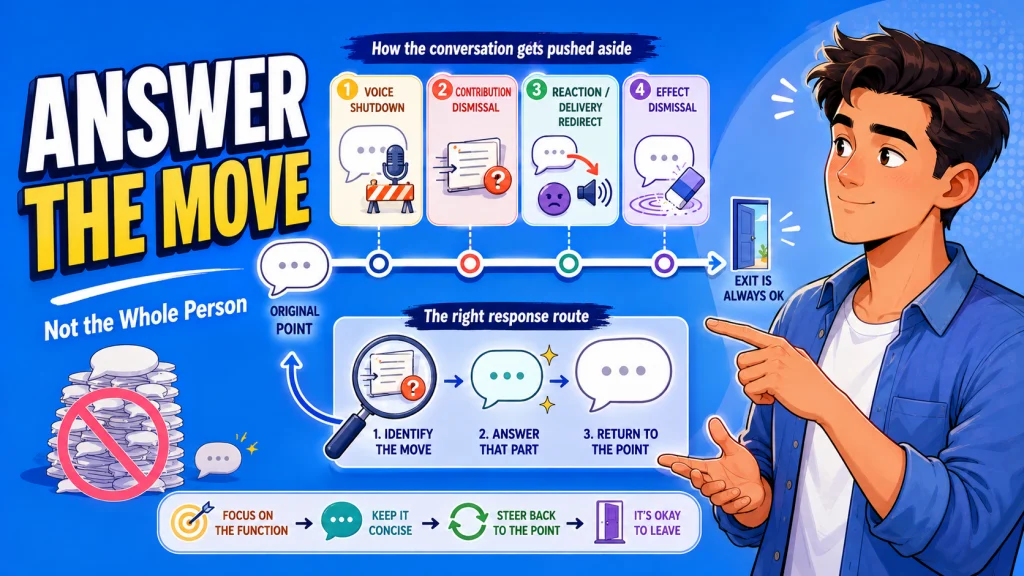
What makes a reply dismissive instead of merely short
The hardest rude lines are not always insults. Some are tiny phrases that try to end the conversation before your point gets a hearing, which is why knowing what to say to dismissive replies matters more than memorizing a harsher insult. A short reply like “okay” can be flat without trying to erase anything, while “who asked?” directly challenges whether you had any place speaking at all. I look first at what the line does to the conversation, not at a motive I cannot prove.
Behind the bar, I saw plenty of conversations turn on this distinction. Someone could be clipped because the room was loud, they were busy, or they simply had nothing else to add, and treating every short answer like a personal attack only made things messier. The dismissive lines were different because they moved the focus away from the point and toward whether the other person was allowed to keep making it. That is the pattern I use here: name the conversational move, then choose the smallest reply that answers it.
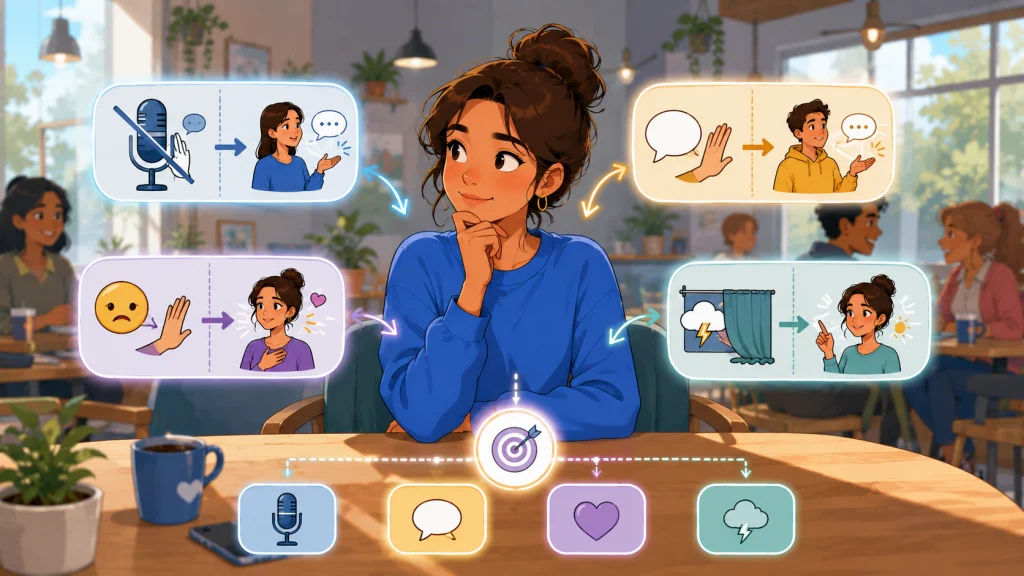
Decide what is being shut down: your voice, your contribution, your reaction, or the consequence
Most responses to dismissive comments get easier once you stop treating every phrase as the same problem. “Shut up” targets your voice, “who asked?” targets your contribution, and “cry about it” mocks the fact that you reacted at all. “Calm down,” “you’re overreacting,” and “you’re too sensitive” can redirect the conversation from the issue to your delivery or reaction instead. “It’s just a joke” and “don’t take it personally” often try to close the discussion by deciding what the words were supposed to mean for you.
The practical difference matters because the best next move changes with the target. If someone is trying to stop you from speaking, you may need to hold the floor; if they are mocking your reaction, you may need to refuse the bait and return to the point. If they are reframing your tone, a short reset works better than a long defense of your emotional state. The table below is the fast routing version I would want in front of me when the line lands.
| Phrase | What it attempts to dismiss | Best next move | Where to go deeper |
|---|---|---|---|
| “Shut up” | Your right to keep speaking | Hold the floor or end the exchange on your terms | Comebacks for shut up |
| “Who asked?” | Your contribution | Reject the permission frame and continue only if your point still matters | Comebacks for who asked |
| “Cry about it” | Your reaction | Do not reward the mockery; answer the point or disengage | Comebacks for cry about it |
| “Calm down” | Your delivery | Lower the temperature without surrendering the issue | How to respond to calm down |
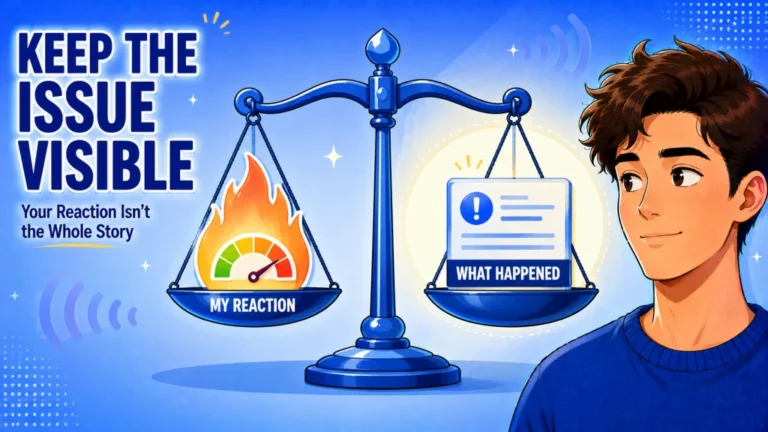
| “You’re overreacting” | The scale of your response | Return to the specific issue instead of debating your personality | How to respond to you’re overreacting |
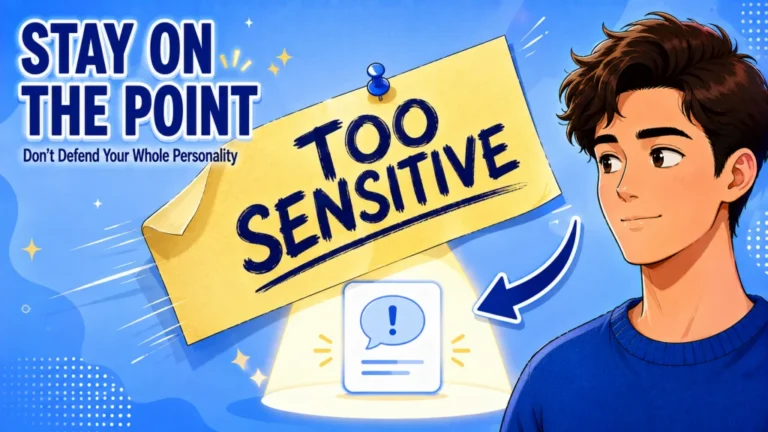
| “You’re too sensitive” | Your threshold for reacting | Keep the focus on the words or behavior being discussed | Responses when someone says you’re too sensitive |
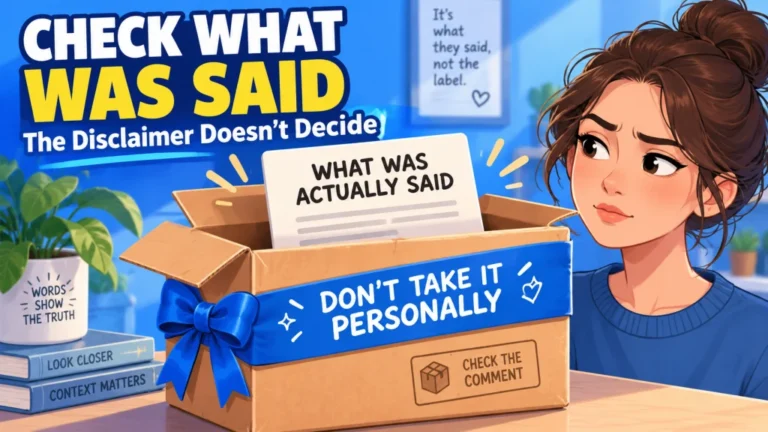
| “Don’t take it personally” | The consequence of what was said | Separate intent from impact and state what you are addressing | How to respond to don’t take it personally |
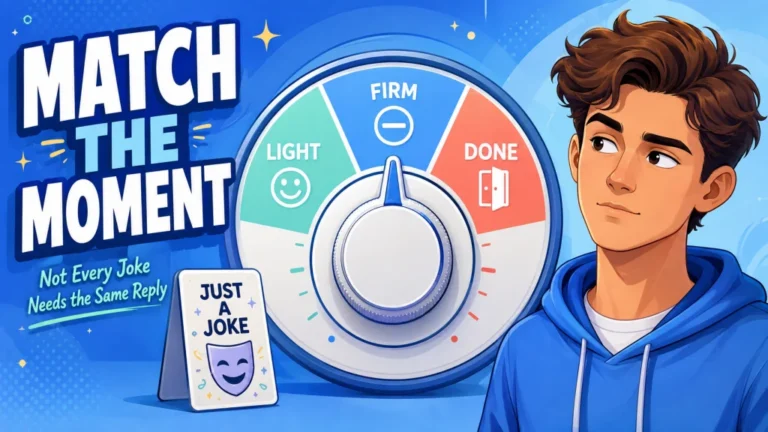
| “It’s just a joke” | Your objection to the remark | Refuse to let the joke label end the conversation by itself | How to respond to it’s just a joke |
Notice that none of those routes requires diagnosing the speaker. I do not need to decide whether someone is manipulative, insecure, cruel, or merely clumsy to know that “who asked?” is trying to make permission the topic. That keeps the response cleaner and usually shorter. It also stops you from turning one rude sentence into a theory about the entire person.
Shut up: a direct command to stop speaking
“Shut up” is blunt because there is very little to decode. The useful question is whether the line is friendly banter you recognize or a real attempt to take the floor away from you. That distinction decides how much force the reply needs. If it is playful, you can keep the rhythm light with something like, “You first,” or, “That sounded ambitious.” If it is not playful, a cleaner answer is, “I’m finishing my point,” because it addresses the command without turning the exchange into a name-calling contest.
People often make this one longer than it needs to be because the command itself feels so disrespectful. I have watched someone answer a two-word shutdown with a full speech, only to lose the room because the response gave the rude line far more weight than it deserved. A short boundary works better when your actual goal is to keep speaking or end the exchange cleanly. If you want more variations for different tones, the dedicated comebacks for shut up page goes deeper without mixing this move with the others.
Who asked: dismissal of your contribution
“Who asked?” tries to turn a conversation into a permission slip. In a joking group chat, that can be harmless enough, especially if everyone is trading the same kind of jab and nobody is being singled out. In a sharper moment, though, the useful answer is not proving that someone technically invited your opinion. You can simply refuse the premise with, “I didn’t need an invitation,” or keep it even flatter with, “I said it anyway.”
The mistake I see most is trying to win by insulting the other person harder. That can feel satisfying for one beat, but it changes the subject from whether your contribution mattered to who can be meaner fastest. If your point is worth keeping, return to it after the line instead of letting “who asked?” become the entire conversation. For more tone-specific options, see the page on comebacks for who asked.
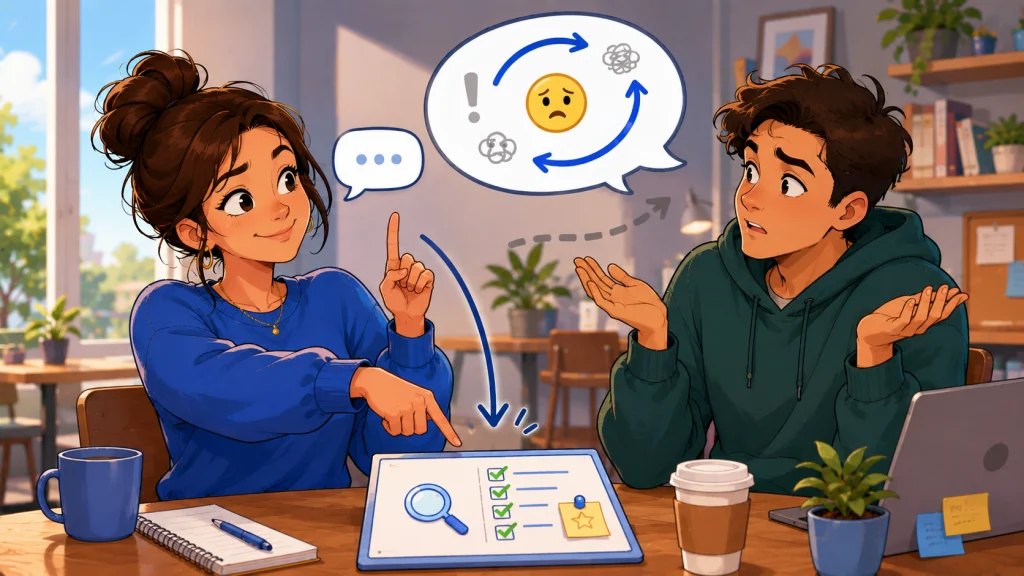
Cry about it: mocking the reaction
“Cry about it” is usually less interested in your point than in getting a reaction to your reaction. That is why the loudest comeback is often the worst bargain here, especially online where the other person can repeat the same phrase forever and pretend repetition counts as winning. A dry “That all you’ve got?” can work if you want one return shot. An even cleaner move is to answer the original issue once and leave the mockery sitting there unanswered.
It is easy to get stuck trying to defeat “cry about it” with increasingly elaborate replies. The problem is not always the comeback itself; the other person may simply have found a loop that takes almost no effort to continue. Once you see the loop, you do not have to keep feeding it. The phrase-specific page on comebacks for cry about it separates playful returns from the moments where silence is the sharper answer.
Calm down and you’re overreacting: reframing your delivery instead of the issue
“Calm down” and “you’re overreacting” can pull you into defending how calm you are instead of talking about what happened. Even if your voice is controlled, arguing “I am calm” keeps the detour alive. A steadier response is, “I’m talking about what happened, not whether you like my tone.” That puts the subject back where it started. Another is, “We can keep this calm and still deal with the issue.”
Behind a bar, I watched versions of this pivot happen often enough to recognize how fast it steals the floor. One person would raise a concrete complaint, the other would comment on the delivery, and suddenly everybody was debating volume. You only need to put the subject back on track. The separate pages on how to respond to calm down and how to respond to you’re overreacting give more precise options for each phrase.
You’re too sensitive and don’t take it personally: shifting the argument onto your reaction
“You’re too sensitive” makes your threshold the subject, while “don’t take it personally” tells you how much weight you are supposed to give the remark. Neither phrase automatically proves bad intent, so I would not turn either one into a diagnosis. Keep your answer attached to the specific words or behavior already being discussed. “You can think that, but I’m still telling you what I objected to” is firm without turning your reaction into a courtroom case.
This is also where over-explaining sneaks in. People start listing every reason they are not sensitive and every person who agrees with them, which deepens the detour. A shorter answer works better: “I heard you. I still didn’t like it,” or, “Intent aside, I’m telling you how that landed with me.” The more specific pages on responses to you’re too sensitive and how to respond to don’t take it personally help you choose the tone without turning the reply into a speech.
It’s just a joke: using humor as the exit door
“It’s just a joke” can be perfectly ordinary when there has been a genuine misunderstanding, so I do not treat the phrase itself as proof of anything darker. The question is whether calling it a joke actually resolves the moment or simply tries to make your objection disappear. If you want to stay light, “Then the punchline missed me” keeps the focus on the joke without starting a bigger fight. If the remark matters, “Calling it a joke doesn’t answer what I said” is cleaner and harder to derail.
The common mistake is getting trapped in a debate over whether the remark officially qualifies as funny. You do not need a jury or a definition of comedy to decide whether you want to keep engaging. I have found that short replies work best here because they do not invite another long argument about intent. For more options, the dedicated page on how to respond to it’s just a joke keeps the answers focused on that exact escape hatch.

When no comeback is cleaner than another round
Not every dismissive reply deserves a counterpunch. Some people are not trying to have a conversation anymore, and once that becomes obvious, another clever line mostly gives them fresh material. Silence can be useful when the other person is repeating the same phrase, baiting you for a reaction, or refusing to return to the original point. Walking away is not a failed comeback; it is a decision that the exchange has stopped earning your effort.
- The same shutdown is being repeated instead of answered.
- Your reply would only reopen a loop you already closed.
- The conversation is turning threatening, abusive, or unsafe.
- You no longer care whether the other person understands your point.
If you do want one closing line, make it final enough that you are not secretly inviting round twelve. “We’re not getting anywhere,” “I’ve said what I needed to say,” or “I’m done with this conversation” all work because they describe your next move rather than diagnosing theirs. For broader sharp-response options that are not limited to dismissal phrases, savage comebacks for rude moments is the better place to branch out. The key is knowing when you are still replying to a point and when you are only feeding a pattern.
Final thoughts: answer the shutdown, not the whole person
The strongest replies here are usually smaller than the moment makes you want them to be. Identify what is being pushed aside: your voice, your contribution, your reaction, your delivery, or the effect of what was said. Answer that move directly, then decide whether the original point still deserves another sentence. You do not need a theory about the other person to answer what happened in the conversation.
When I do not have enough context to know what someone meant, I keep the reply attached to the words in front of me. That is the part I can actually answer. A sharp line can buy back a beat of confidence, but it cannot guarantee a better conversation or force someone to listen. If the exchange keeps collapsing into the same shutdown, leaving it there is often the cleanest ending available.

Choose the exact phrase page
Dismissive comments sound similar because they all shorten the room you have to respond, but the exact wording still matters. A command to stop talking calls for a different kind of answer than a joke defense or a comment about your sensitivity. Use the page that matches the phrase you actually received instead of grabbing a random comeback from a giant list. That keeps the response connected to the moment instead of making it louder than necessary.
I would rather have eight precise drawers than one junk drawer full of sharp lines. The pages below separate playful banter from firmer boundaries, and they keep each response tied to what that specific phrase is doing. If the first line you try does not move the conversation anywhere useful, you do not owe the situation a second performance. Pick the closest phrase, choose the tone that fits your relationship, and keep the reply as short as the moment allows.
| Phrase page | Use it when |
|---|---|
| Comebacks for shut up | You need to answer a direct command to stop speaking without turning it into a bigger fight. |
| Comebacks for who asked | You want to respond when someone treats your contribution like it required their permission. |
| Comebacks for cry about it | You are dealing with a line that mocks the fact that you reacted in the first place. |
| How to respond to calm down | The conversation is being redirected from the issue to your tone or delivery. |
| Responses to you’re too sensitive | You need to keep the focus on the remark instead of debating whether your reaction is acceptable. |
| How to respond to it’s just a joke | Humor is being used to close the conversation before your objection gets addressed. |
| How to respond to you’re overreacting | You want to return from a judgment about your reaction to the specific issue at hand. |
| How to respond to don’t take it personally | You need to separate the speaker’s stated intent from the consequence you are actually discussing. |
The point of choosing the exact phrase is not to find a magical sentence that wins every room. It is to remove one layer of guesswork so you can respond to what was actually said. Context still decides whether you go playful, calm, firm, or silent. The better the match, the less you have to over-explain.
Frequently asked questions
The questions below come up because dismissive lines are short, but the situations around them are not. Most people are not really asking for the cleverest sentence in isolation; they are asking how to answer without sounding rattled or making the exchange worse. My default is to keep the response tied to the exact move and leave motive out of it unless the context makes that clear. That gives you something usable whether the line came through text, a group chat, or a face-to-face conversation.
There is no single tone that works with friends, strangers, coworkers, and people who are already being hostile. Friendly banter can carry more teasing, while a tense exchange usually benefits from fewer words and less performance. If a reply crosses into harassment, threats, abuse, or anything that makes you feel unsafe, the comeback is no longer the important part. Step away from the exchange and use whatever real-world support makes sense for your situation.
💬 How do you respond to a dismissive comment without sounding defensive?
Name the point you are keeping and leave your personality out of the defense. “I’m still talking about what happened” is often stronger than a paragraph proving you are calm, reasonable, or not offended.
🧊 What is a calm response when someone says you’re overreacting?
Try, “You can see it differently, but I’m still addressing the issue.” It keeps the temperature down without accepting their judgment as the new topic.
🎭 What do you say when someone says it was just a joke?
If you want light, “Then the punchline missed me” works. If the moment is more serious, “Calling it a joke doesn’t answer what I said” keeps the conversation on the actual remark.
🚪 Is ignoring a dismissive reply better than answering it?
Sometimes, yes. If the person is repeating the same shutdown or obviously fishing for another reaction, silence can end the loop faster than a better comeback.
🗣️ What should I say if someone keeps telling me to calm down?
Return to the point instead of arguing about whether you are calm. “We can keep this calm and still deal with what happened” gives you a clear lane back to the issue.
🎯 How do I know whether a short reply is actually dismissive?
Look at what happens to the conversation after it. A merely short reply may add little, while a dismissive one tries to erase your contribution, reaction, or right to continue speaking.