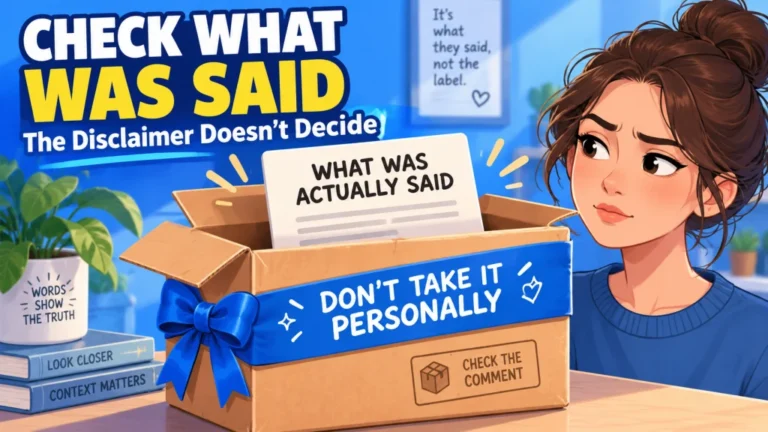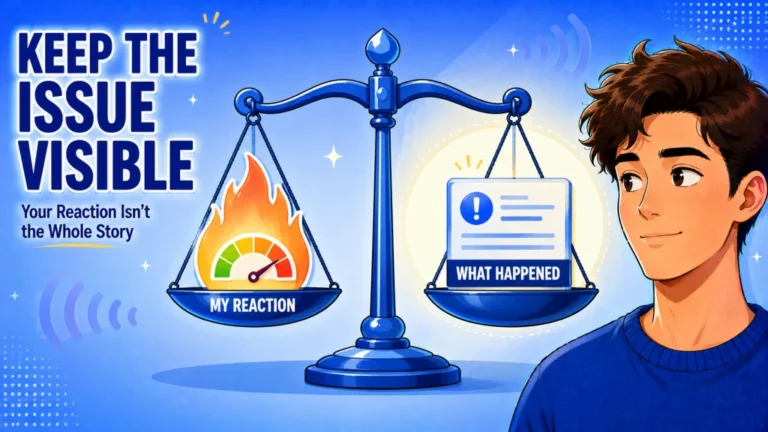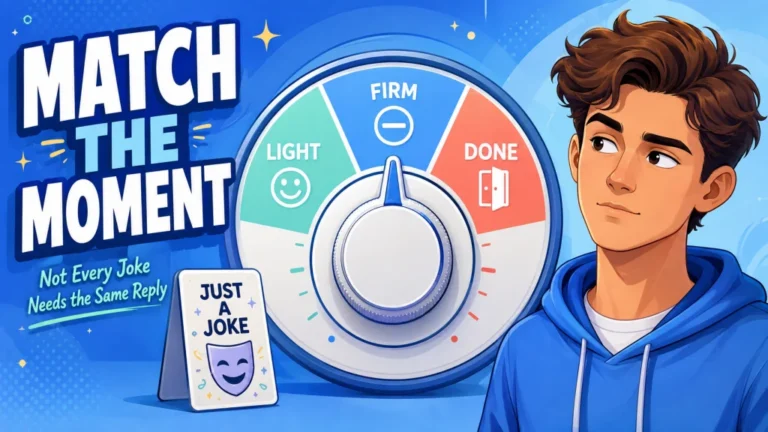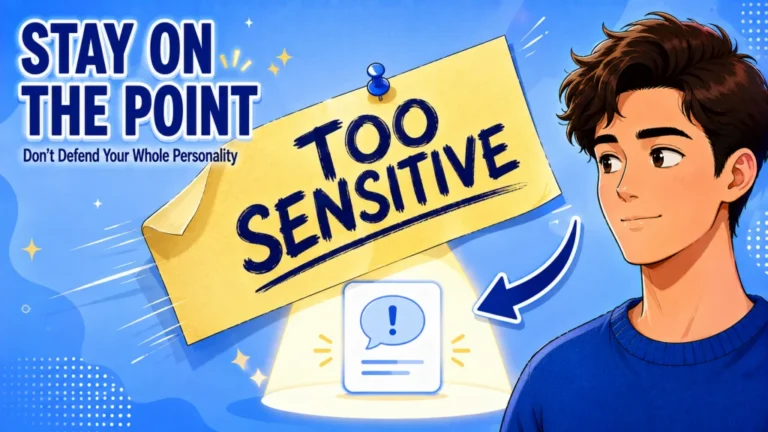
Being told to shut up does not automatically call for a bigger insult. The strongest reply is usually the one that lets you keep your voice, keep the tone where you want it, and decide whether the conversation deserves another minute. You can answer with a quick refusal, a playful line, a firm boundary, or no reply at all. The point is not to win a volume contest, it is to choose what happens to your side of the conversation next.
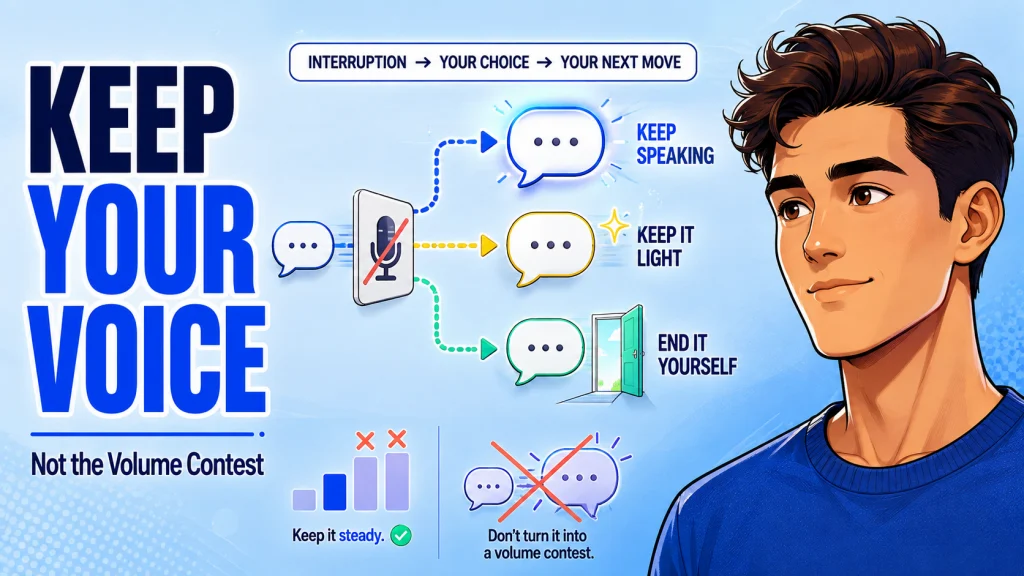
Comebacks for shut up work best when they protect your next move
Shut up is only two words, but answering it badly can turn one interruption into a whole shouting match. Good comebacks for shut up do not have to be cruel, complicated, or louder than the person who said it. If you are trying to work out what to say when someone says shut up, start with the job you want the reply to do. Most of the time, you need to decide whether you want to keep talking, make the disrespect visible, lighten the moment, or leave it alone. Once you know that, the actual line gets much easier.
My room-control rule is simple: being louder is not the same as being in control. The person who stays clear about what they are doing usually looks steadier than the person scrambling for the biggest reaction. That matters here because a long speech after “shut up” can hand the other person exactly what they wanted, a new argument about your reaction instead of the thing you were saying. A short line lets you keep the floor without turning the interruption into the main event.
Quick comebacks when you need one line
If you have half a second to answer, shorter is usually better. The cleanest responses to shut up tell the other person that you heard them without acting as though they now control the conversation. You do not need a perfect punchline, and you definitely do not need a paragraph. Pick a line that matches the temperature already in the room.
These work because each one does a different job instead of trying to sound universally clever. Some refuse the command, some expose the interruption, and some simply move the conversation forward. That difference matters more than whether the wording sounds savage on a screen. Use the lightest line that still does what you need.
| Moment | Reply | What it does |
|---|---|---|
| Playful friend banter | “That sounds optimistic.” | Keeps the joke moving without surrendering the floor. |
| Blunt interruption | “No, I’m finishing this.” | Refuses the command and returns to the point. |
| Rude tone | “You can disagree without ordering me quiet.” | Names the behavior without starting a roast battle. |
| Conversation is already pointless | “All right, I’m done here.” | Ends your participation instead of competing for control. |
If none of those sound like you, strip the idea down even further. “No,” “I’m not done,” and “Anyway” can all work because they are easy to remember when your brain is still catching up with the moment. A comeback only helps if you can actually say it without sounding like you memorized it in a mirror. The line should fit your mouth before it tries to impress anyone else.

Simple refusals that do not sound rattled
A simple refusal is useful when the problem is the command itself. You are not trying to insult the person back, you are making it clear that “shut up” is not an automatic stop button. The calmer the delivery, the less material you give them to fight with. That is why “No, I’m still talking” often lands better than a line with six clever moving parts.
The common mistake is over-explaining why you have a right to speak. People do that because the interruption feels unfair, so they start building a case for themselves in real time. You usually do not need the case. The refusal is enough, and then you can return to what you were saying.
- “No, I’m finishing my point.”
- “I heard you. I’m still talking.”
- “You can wait a second.”
- “I’m not done yet.”
- “No thanks.”
Mini-dialogue: “Shut up” / “No, I’m finishing my point” / “Whatever” / “Anyway, what I was saying was…” The reply does not try to defeat the other person. It simply keeps the speaker from being knocked off course. Nothing extra is added for the other person to argue with. That is the useful part of a refusal this short.
Friend banter when shut up is not actually hostile
Sometimes “shut up” is basically punctuation between friends. Someone says it while laughing, reacting to a story, or pretending they cannot believe what you just told them. In that version, a hard boundary line can sound stranger than the original comment. You are better off answering the playfulness instead of treating the words as a courtroom exhibit.
This is where witty replies to shut up can stay light without becoming flirty or sexual. The safest humor is usually about the conversation itself, not the other person’s looks, intelligence, family, or insecurities. I keep the joke close to the moment because a comeback that is much sharper than the room requires can change harmless teasing into a different conversation entirely. Matching the actual tone is more skillful than trying to top it.
- “You’d miss the commentary.”
- “Absolutely not, this story has a second act.”
- “That is a bold request.”
- “You know you want the rest.”
- “Fine, but only after the punchline.”
Mini-dialogue: “Shut up, no way” / “Way, and it gets worse” / “You’re kidding” / “I wish I were.” The exchange stays playful because both people are already treating the phrase as part of the joke. Nobody has to manufacture offense to make the reply work. The tone remains exactly where the conversation started.
Firm responses when someone is trying to silence you
When the tone is clearly rude, you can stop being cute about it. A firm response does not need to be nasty, but it should make the boundary easy to understand. The goal is to separate disagreement from the attempt to shut you down. Someone can disagree with you without deciding you no longer get to speak.
Good comebacks for shut up in this situation are usually plain English. “Do not talk to me like that” is not flashy, but it leaves very little room for confusion. “If you disagree, say what you disagree with” pushes the conversation back toward the actual issue. If the dismissal shifts from telling you to stop speaking to questioning why you spoke at all, these comebacks for who asked fit that different move better.
- “Do not talk to me like that.”
- “You can disagree without telling me to shut up.”
- “If you have a point, make it.”
- “I’ll listen when you speak to me normally.”
- “You do not get to end my sentence for me.”
Mini-dialogue: “Shut up, nobody wants to hear this” / “If you disagree, say why, but do not tell me to shut up” / “I said what I said” / “Then I have heard you, and I’m still finishing.” The exchange stays firm because the speaker never accepts the invitation to trade insults. The boundary is clear without turning into a threat. That leaves the original point available to finish.

Public-room lines that reclaim the floor
Being cut off in front of other people adds a second pressure: now there is an audience. That can make you reach for a bigger line because you do not want to look embarrassed. The problem is that performing for the room can pull you even farther from whatever you were trying to say. A better move is to reclaim the floor in a sentence the whole room can understand.
The room-control detail I care about most here is pace. If you rush, shout, or stack three comebacks together, the interruption becomes the show. If you slow down and say one clear line, people can follow what happened without needing a referee. Then you either continue or stop by your own choice.
- “I’m going to finish, then you can respond.”
- “Give me ten seconds and you can have the floor.”
- “I was still speaking.”
- “Let me finish the sentence.”
- “You will get a turn.”
These lines are not about dominating a room. They work because they make the sequence clear: one person finishes, then the other person can answer. That keeps you from surrendering your place while also avoiding the ridiculous contest of talking over each other. If the room refuses even that basic sequence, the problem has moved beyond finding a clever one-liner.
When to stop talking because the situation itself is not worth it
Not every “shut up” deserves resistance. Sometimes the other person is already yelling, baiting you, repeating the same insult, or looking for a scene rather than a conversation. In that moment, continuing to prove that nobody can silence you may still leave them controlling how long you stay engaged. Walking away can be the clearest way to choose your own ending.
This is not about pretending the comment was fine. It is about noticing when another sentence has no useful destination. You can say “I’m done with this,” “We can talk later,” or nothing at all. Silence means something very different when you choose it for yourself.
If the situation feels threatening or someone is getting physically aggressive, skip the comeback entirely and move toward safety. A sharp line is not worth staying in a dangerous interaction for an extra beat. SlyLines is about words for ordinary social moments, not about proving courage in a situation that has already crossed that line. Leaving is allowed to be the whole response.

Shut up versus repeated interruption
A single “shut up” and a pattern of being interrupted are related, but they are not the same problem. One calls for an answer to a blunt command, while the other may require you to deal with a conversation that never gives you space to finish anything. If the line is part of a wider pattern of dismissal, my breakdown of what to say to dismissive replies gives you more ways to answer the move without turning it into a judgment of the whole person. That distinction keeps you from using the same line for every kind of shutdown.
Repeated interruption also changes what success looks like. After the third or fourth cutoff, another witty comeback may only create a new interruption for them to answer. You may need a direct process line such as “Let me finish before you respond” or “If we keep talking over each other, I’m stepping out.” That kind of line changes the rule of the exchange instead of adding another joke to it. The goal becomes protecting an actual turn to speak, not collecting points for the funniest reply.
Mini-dialogue: “Shut up” / “I’m not done” / “Whatever, shut up” / “If you will not let me finish a sentence, I’m leaving this conversation.” The last line is not a retreat. It sets a condition for continuing instead of chasing another comeback. That makes the speaker’s next move clear.
What not to say: threats, sexual escalation, slurs, or shouting louder
The easiest bad comeback is one that raises the stakes far beyond the original line. Threats can turn a rude exchange into a safety problem, sexual challenges can create a tone you never wanted, and slurs only give you a worse thing to defend. Shouting louder is not much better because now the conversation has become a contest about who can make the most noise. None of those moves helps you keep control of your own side.
The phrase “make me” is a good example of why context matters. Between close friends it may be obvious joking, but with an angry stranger it can sound like a challenge to escalate physically. If you want sharper language without crossing into threats, keep it verbal and targeted at the behavior. The broader collection of savage comebacks is useful when you want more bite, but the same rule still applies: a line should not create a problem bigger than the one you started with.
Another mistake is reaching for a cruel personal detail because you know it will hurt. That can feel powerful for a second, especially when you were embarrassed first. Then the entire argument moves from “you told me to shut up” to the thing you said about their body, family, intelligence, or private life. If your goal was to keep your voice, you have now handed the conversation somewhere else.

Final thoughts: keep your voice without fighting for volume
The best comeback to “shut up” is not automatically the rudest one you can remember. Sometimes it is “No, I’m finishing,” sometimes it is a joke between friends, and sometimes it is deciding the conversation has already used up its value. What matters is that you choose the response instead of letting the command choose your behavior for you. That is a much steadier kind of control than winning a shouting match.
If you tend to freeze, keep two lines ready rather than twenty. Pick one light refusal and one firm boundary, then let the situation tell you which one belongs. You can always say less, and you can always leave. A comeback is useful when it gives you your next move back, not when it traps you in another round.
Frequently asked questions
Most questions about this phrase come down to tone, relationship, and how much energy you want to spend. There is no single line that works equally well with a joking friend, an irritated sibling, a rude classmate, and an aggressive stranger. The useful part is knowing what job you want the reply to do before you say it. These answers keep that choice simple.
I would rather give you a short answer you can actually use than a perfect-sounding line that needs a rehearsal. If the moment is playful, stay playful. If it is disrespectful, get plain. If it is unsafe, forget the comeback and leave.
💬 What is a good comeback when someone says shut up?
Try “No, I’m finishing my point” if you want to keep speaking without escalating. If the tone is playful, use something lighter like “That sounds optimistic.”
🧊 How do you respond to shut up without sounding angry?
Keep the line short and lower the performance. “I’m not done yet” or “You can disagree without telling me to shut up” makes the point without adding heat.
😄 What should I say if a friend jokingly tells me to shut up?
Match the joke instead of turning serious. “You’d miss the commentary” or “Fine, after the punchline” keeps the banter where it already was.
🛑 What do I say when someone keeps telling me to shut up?
Stop searching for a new comeback each time and set a condition. “If you will not let me finish a sentence, I’m done with this conversation” is clearer than trading the same insult back and forth.
🚪 Is saying nothing a good response to shut up?
Yes, when you are choosing to disengage rather than freezing under the command. Silence can be a strong answer when another round would only keep you in a pointless or unsafe exchange.