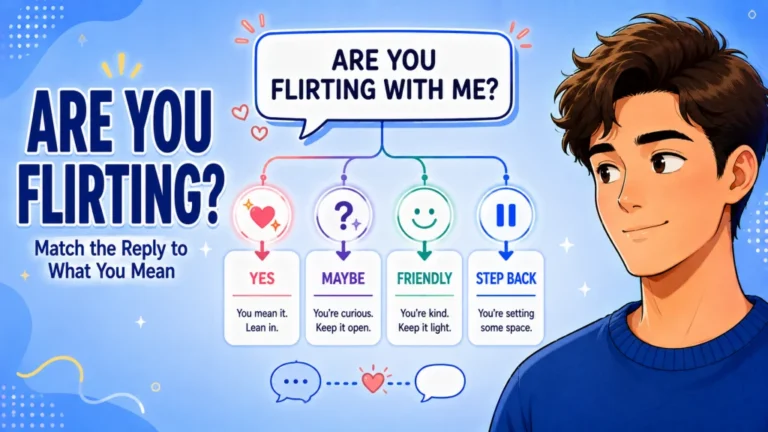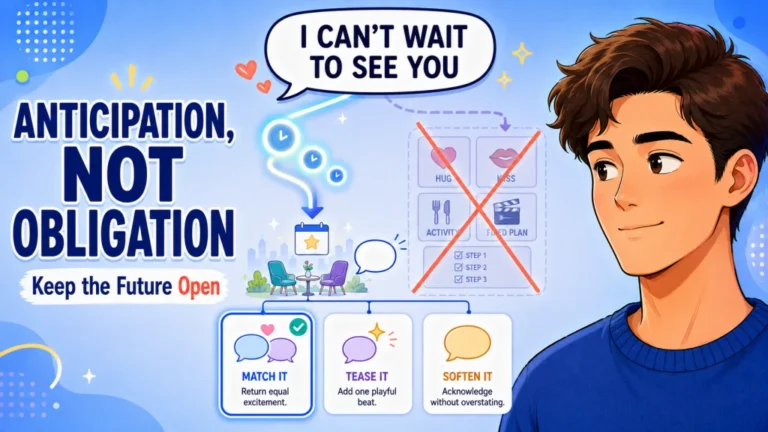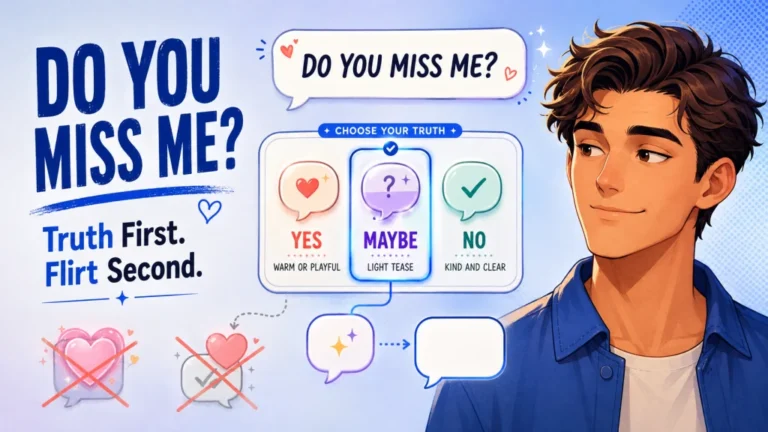
When someone says “you’re making me blush,” the best move is not to treat the reaction like a trophy. Keep the flirt alive by acknowledging what landed, then match the other person’s comfort instead of automatically turning the intensity up. A light tease can work when they sound pleased, while a softer reply is better when they seem shy or uncertain. The point is to keep the chemistry easy enough that both people still have room to choose what happens next.
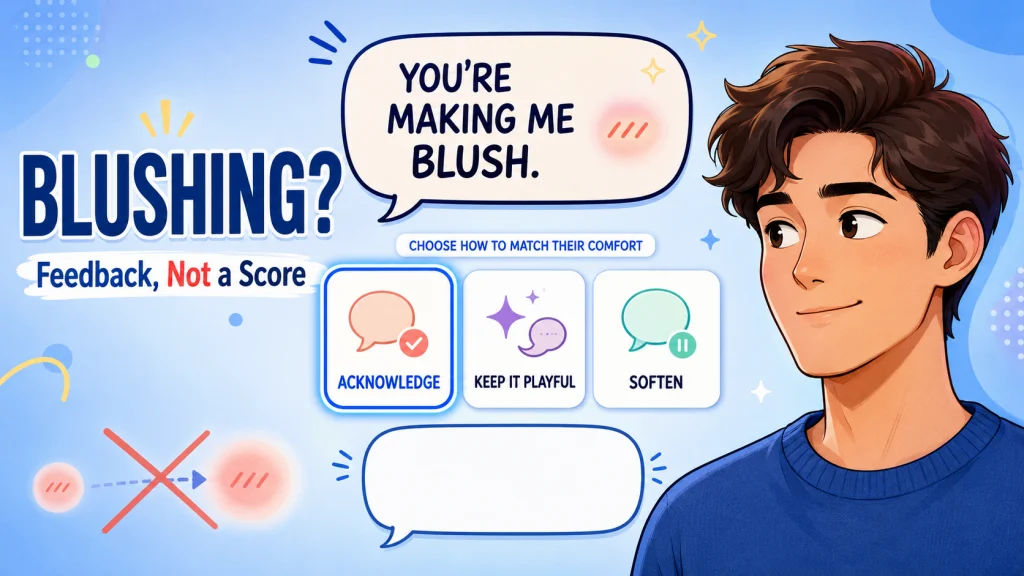
The blush is feedback, not a score
Good flirty replies to “you’re making me blush” notice the reaction without trying to win it. The tempting mistake is to hear that line and immediately think, great, now I should make them blush harder. That turns a shared moment into a little performance where you are measuring your effect on the other person. I would rather keep the moment mutual, because a reaction tells you something landed, not what you have permission to do next.
Nine years behind a bar taught me that the second move often matters more than the first one. I watched plenty of good banter lose its footing because somebody got a laugh, a blush, or a surprised look and decided they had to top themselves immediately. The smoother move was usually smaller: acknowledge it, enjoy it, and leave the other person enough space to answer. That is especially true over text, where you cannot see whether “you’re making me blush” came with a grin, a nervous pause, or a genuine wish to slow down.
You: “You looked unfairly good tonight.”
Them: “Stop, you’re making me blush.”
You: “I can live with being a little responsible for that.”
That reply keeps the flirt present without treating their reaction like a challenge. It owns the compliment, but it does not claim that the blush proves attraction, desire, or anything else they have not actually said. Most people overthink this part because they are afraid a small answer will waste the momentum. In practice, a small answer often protects the momentum better than a dramatic one.
Quick flirty responses to “you’re making me blush”
If you want a fast response, match the amount of energy already in the conversation. Someone who has been openly flirting can usually handle a more playful line than someone who has only just started warming up. The useful part of flirty and romantic text replies is learning to notice that difference before you send something bigger than the moment needs. I usually prefer one clean sentence that gives the other person an easy way to flirt back, laugh, or simply let the compliment sit.
If you are wondering what to say when someone says “you’re making me blush,” start with the least complicated version that still sounds like you. You do not need to prove you are smooth, and you definitely do not need to stack three compliments in a row. If the exchange started with them calling you cute, these flirty responses to being called cute fit that earlier beat without forcing the same line into a different moment. A good reply leaves the door open without dragging the other person through it, so these options move from light acknowledgment to a little more confidence without making the blush itself the goal.
| Comfort level | Reply style | Example |
|---|---|---|
| Very light | Simple acknowledgment | “I’m just being honest.” |
| Warm | Return a little sweetness | “Now you’re making me smile.” |
| Playful | Tease the moment gently | “That was a pretty cute confession.” |
| Confident | Own the compliment | “I meant every word.” |
The safest choice is not always the least flirty one. It is the line that fits the amount of mutual play already happening, which can be different with a new crush, a partner, or someone you barely know. A flirty reply to “making me blush” should still sound like a response to them, not a speech about how charming you are. Once you get that right, the conversation has somewhere natural to go.

Gentle teasing when they sound pleased
Teasing works best when you tease the moment, not the person for being embarrassed. There is a real difference between “caught you smiling” and “look how easy you are to fluster,” even if both are supposed to be playful. The first keeps you on the same side of the joke, while the second can make them feel like their reaction is being put on display. I have always found that the lighter line gives you more room because it can land as flirtation without demanding that they perform shyness for you.
Keep the tease short enough that they can answer it without having to defend themselves. A small line like “I’ll take that as a successful compliment” is confident, but it still keeps the focus on what you said rather than what their body is doing. “You’re cute when you admit it” can work in an established playful dynamic, but it is more personal and needs more familiarity. When the relationship is newer, I would stay closer to the compliment itself.
- “I was hoping that would make you smile.”
- “I’ll admit, that reaction is pretty cute.”
- “Okay, I may have enjoyed that a little.”
- “I knew that compliment had a chance.”
- “I’ll try not to look too pleased with myself.”
Notice that none of those lines says the other person has secretly confessed anything. They let you be playful without turning their blush into evidence that they want more. That restraint matters because chemistry feels better when both people can keep adding to it voluntarily. A tease should create another opening, not close the conversation around an assumption.
- “That might be my favorite reaction so far.”
- “I was wondering if that one would land.”
- “You are making this compliment dangerously satisfying.”
- “I promise I’m only a little proud of myself.”
You: “That color looks ridiculously good on you.”
Them: “You’re making me blush.”
You: “Then I’m calling that a well-aimed compliment.”
This version has enough confidence to keep the flirt alive, but the joke stays on your compliment rather than their embarrassment. It also gives them several easy next moves, from teasing you back to changing the subject without friction. That flexibility is what I look for in a line that has to work in real time. If they want more flirt, they can meet you there instead of being pushed there.
Soft replies that let the moment breathe
Not every good flirt needs a punchline after it. Sometimes the strongest response is simply “I meant it” or “you deserve the compliment,” especially when the other person sounds touched more than mischievous. Soft replies work because they stop trying to squeeze extra momentum out of a moment that is already doing fine. I have seen people talk themselves out of a perfectly good exchange by adding one more line after the conversation had already landed where it needed to land.
Knowing how to respond to “you’re making me blush” flirtatiously is mostly about restraint. You can keep a romantic edge without turning every reply into a dare, a wink, or a bigger compliment. Try “then I’m glad I said it,” “I was only telling the truth,” or “good, because I wanted you to know.” Those lines hold eye contact, so to speak, without leaning across the whole table.
- “Then I’m glad I said it out loud.”
- “No teasing, I really meant that.”
- “You can keep the blush, I’ll keep the compliment.”
- “I just wanted you to know what I was thinking.”
You: “I like the way your brain works.”
Them: “Wow, you’re making me blush.”
You: “Good. I wanted you to know I notice that about you.”
That exchange stays intimate because the second compliment is not bigger, just clearer. It tells them why you said the first thing and then leaves room for the reaction to settle. If they respond warmly, you can keep going from there without pretending the blush made the decision for them. If they do not, the line still stands on its own and does not create awkward pressure.

Confident replies without boasting about your effect
Confidence is attractive when it sounds like you trust your own words, not when it sounds like you are collecting proof that you can affect someone. “I meant what I said” is confident because it owns the compliment. “I knew I could make you blush” shifts the whole scene toward your supposed power over them. That difference looks small on a screen, but it changes who the moment is about.
I would rather sound certain about the compliment than certain about the other person’s feelings. That is why lines like “I stand by it,” “I’m not taking it back,” and “I said what I said” tend to travel well across different levels of flirtation. They have a little nerve without claiming too much. They also fit naturally beside broader flirty replies for different situations because the same rule keeps showing up: own your line, then let the other person own their reaction.
- “I’m comfortable standing by that compliment.”
- “I could pretend I didn’t mean it, but I’d be lying.”
- “No regrets over here.”
- “I said it because I wanted you to hear it.”
The boastier versions often sound tempting because they seem bolder on paper. In an actual conversation, they can accidentally turn a mutual flirt into a demonstration of how impressed you are with yourself. If the other person is already teasing you about being smooth, a little mock arrogance can work because they started that frame. Otherwise, confidence lands cleaner when it stays attached to what you genuinely meant.
Ask whether to keep going when the tone is unclear
Sometimes “you’re making me blush” is obviously playful, and sometimes it is doing two jobs at once. They may like the compliment and still want the intensity to come down a notch. Text strips out the pause, the smile, the eye contact, and the little shift in posture that would normally tell you which version you are hearing. When you cannot tell, a brief check-in is smoother than guessing aggressively.
You do not have to turn the conversation into a formal consent questionnaire to check the temperature. “Too much, or can I keep being nice to you?” is playful enough for a flirty exchange while still giving them a clear way to slow it down. “I can behave if you want me to” works only if you actually mean the second half and will respect a yes. The point of the question is not to get permission for a bigger line, but to make it easy for them to choose the pace.
- “Should I behave, or are we still having fun?”
- “Tell me if I’m laying it on too thick.”
- “I can dial it back if you want.”
- “One more compliment, or should I quit while I’m ahead?”
You: “You have no business looking that good in a random photo.”
Them: “Stop, you’re making me blush.”
You: “Too much, or am I allowed one more compliment?”
Them: “One more.”
That is the clean version because the answer actually changes what you do next. If they say “one more,” you have something explicit to work with. If they say “behave,” laugh and behave instead of treating it like a challenge. A check-in only counts if the other person can give an answer you are willing to hear.

If they sound embarrassed rather than playful
There are times when the blush line sounds less like a flirt back and more like someone trying to handle attention they are not used to receiving. You may see a sudden subject change, a string of nervous qualifiers, or a plain “stop” that does not feel playful in context. Do not make them prove they are uncomfortable before you ease off. The easiest move is to soften the reply and let the conversation return to normal ground.
Something like “fair, I’ll stop embarrassing you” can work if your tone is already warm, but even that may be more teasing than they want. A cleaner option is “I meant it, but I won’t make a big thing of it,” followed by a normal topic change. That keeps your compliment sincere without demanding another reaction. I like this approach because it protects the good part of what you said instead of making the other person manage your disappointment.
- “Fair, I’ll let that compliment sit.”
- “No pressure, I just wanted to say it.”
- “I meant it, and we can leave it there.”
If they keep flirting later, you have not lost anything by giving them space now. If they do not, you also have not turned a slightly awkward moment into a bigger one. The common mistake is assuming that backing off means you failed to keep the chemistry alive. Sometimes the most confident thing you can do is stop pushing and let the other person decide whether they want to bring the flirt back.
What not to send when someone says you’re making them blush
The replies I would skip are the ones that turn embarrassment into a target. “Wait until I really try,” “I’m going to make you blush harder,” and anything that suggests their reaction proves they want you all push past what was actually said. Those lines are often sold as bold, but bold is not the same thing as presumptuous. You can keep the flirt confident without making claims about what their face, body, or words supposedly reveal.
I would also avoid treating “stop” as automatically playful just because the rest of the exchange has been flirty. Sometimes it is playful, and sometimes it is the most direct word in the sentence. The context matters, but the safer response is easy: if there is any real doubt, slow down and let them restart the flirt if they want to. That does not kill chemistry. It keeps chemistry from becoming a one-person project.
| Skip this move | Why it misses | Better direction |
|---|---|---|
| “Wait until I really try.” | Turns their reaction into a challenge. | Own the compliment without escalating. |
| “You obviously want me.” | Claims more than they actually said. | Let them state their own interest. |
| “I love making you embarrassed.” | Centers your effect instead of their comfort. | Tease the moment lightly, if at all. |
| Ignoring a clear “stop.” | Removes their ability to set the pace. | Back off and let them reopen the flirt. |
This is where the difference between chemistry and pressure gets very simple. Chemistry gives the other person something they can freely pick up, change, or leave alone. Pressure keeps trying to turn the same reaction into more material after the person has stopped adding to it. If your line leaves them room, you are much more likely to keep the exchange feeling mutual.

Final thoughts: keep the moment mutual
“You’re making me blush” can be a lovely reaction to get, but you do not need to squeeze a bigger reaction out of it. Acknowledge what landed, tease gently if the tone supports it, and soften when the other person sounds less certain. The best reply is not the one that proves you are the smoothest person in the conversation. It is the one that keeps both people comfortable enough to keep choosing the flirt.
I have spent enough time watching people recover from awkward lines to know that restraint rarely gets the credit it deserves. You can be confident without boasting, playful without making embarrassment the joke, and interested without treating a reaction as permission. If the moment wants another line, it will usually give you one. If it does not, letting a good compliment stand is still a perfectly good ending.
FAQs
The exact words matter less than the tone around them, so there is no single reply that fits every “you’re making me blush.” A new flirt, a close friend, and a long-term partner can use the same phrase with very different meanings. I would start with the lightest response that still feels natural to you, then watch what the other person actually does next. If they keep adding energy, you can add some too.
These questions come up because people want to know whether the line itself carries a hidden answer. It does not give you a reliable verdict about attraction, comfort, or what should happen next. What it gives you is a reaction worth noticing. Your job is simply to reply in a way that leaves the next move open.
😊 What do you say when someone says “you’re making me blush”?
Try something simple like “I’m just being honest,” “then I’m glad I said it,” or “now you’re making me smile.” Match the amount of flirt they are already giving you instead of jumping several levels higher.
😉 Is “you’re making me blush” always flirting?
No. People can say it when they are flirting, joking with a friend, feeling genuinely shy, or simply reacting to a compliment. Use the surrounding conversation instead of treating the phrase as proof of attraction.
💬 Should I keep complimenting them after they say they are blushing?
Only if the tone still feels mutual. One more light compliment can work when they are clearly playing along, but if they sound uncertain or tell you to stop, ease off and let them set the pace.
🫶 What is a soft response if I do not want to tease them?
“I meant it” is hard to beat. You can also say “you deserve the compliment” or “I’m glad it made you smile,” then let the moment breathe.
😏 What is a confident flirty reply without sounding full of myself?
Try “I stand by what I said” or “I’m not taking the compliment back.” Both sound sure of your words without claiming you know exactly what the other person feels.