“Who asked?” works by making ordinary participation sound like something you needed permission to do. The cleanest answer is usually short enough that you can say it once, keep your footing, and move on without turning a two-word dismissal into a full debate. I prefer replies that either lightly return the pressure, continue the original point, or let the comment die when answering would only feed it. You do not need a speech, a family insult, or a courtroom defense.
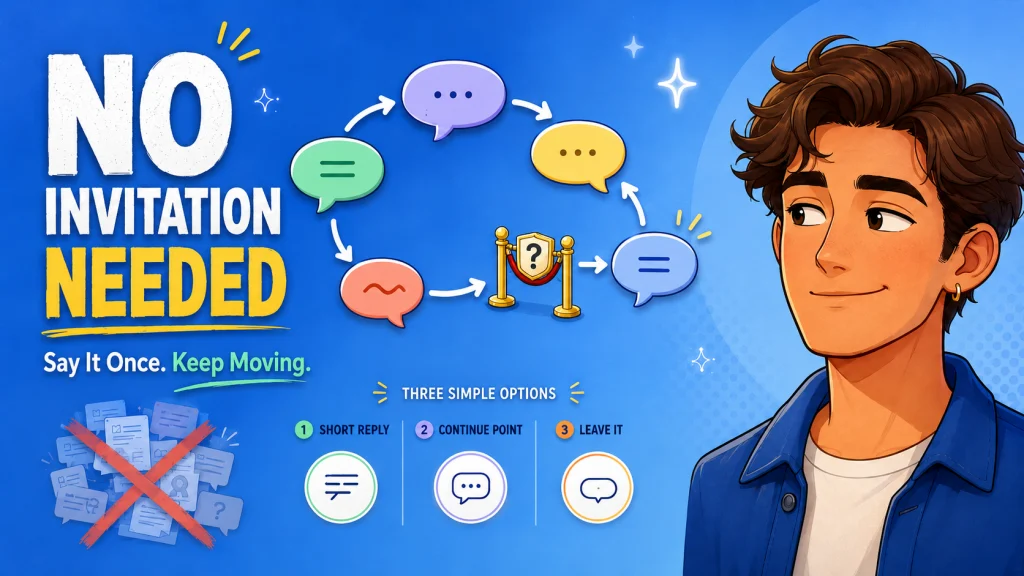
Best short replies to “who asked?”
The best comebacks for who asked do not argue that you were technically allowed to speak. “Who asked?” works because it tries to make participation itself look embarrassing, so a long defense gives the line more importance than it earned. I have watched people lose the room by explaining themselves after a throwaway jab that would have died on its own. The shorter answer usually sounds more settled because it does not ask the other person to approve of your place in the conversation.
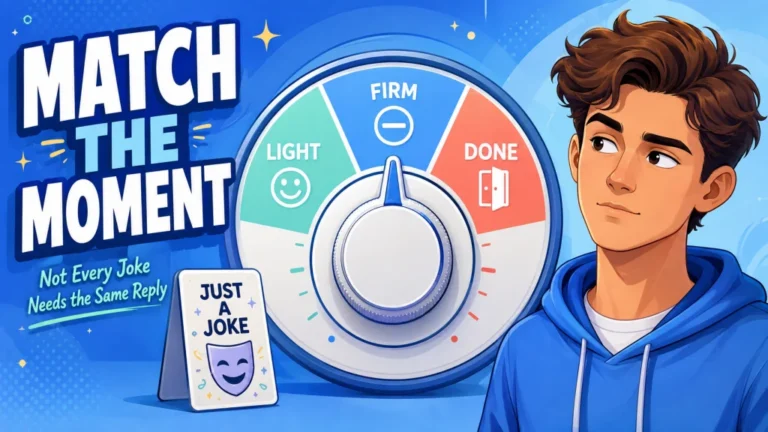
I sort these replies by what you want to do next rather than by how “savage” they sound. If you want to stay light, return the pressure without making the room tense. If you want to hold your ground, make it clear you were speaking because you chose to speak. If you are done with the exchange, close it instead of handing the other person another setup.
| Approach | Replies | Best when |
|---|---|---|
| Keep it light | “Nobody had to.” “I brought bonus content.” “You’re listening anyway.” “You’re welcome.” “I’m generous like that.” | The tone is playful and you want the conversation to keep moving. |
| Hold your ground | “Still said it.” “I didn’t need an invitation.” “Still relevant.” “I was sharing, not applying.” “Cool. My point was…” | You want to stay on your original point without starting a second argument. |
| Close the exchange | “Then this wasn’t for you.” “Keep scrolling.” “Noted. Anyway…” “I know.” “You just did.” | The other person is fishing for a reaction or the exchange has stopped being useful. |
The most useful responses to who asked are the ones you can actually use in the moment. You do not need to remember fifteen categories or search for the single cleverest line while everybody is waiting. Pick the tone first, then pick one sentence and leave it there. One clean reply is usually stronger than three increasingly angry ones.
Comebacks for “nobody asked,” “no one asked,” and “did I ask?” belong to the same reply family
“Nobody asked,” “no one asked,” “I did not ask,” and “did I ask?” sound slightly different, but they are doing the same conversational job. Each one shifts attention away from what you said and toward whether you were supposedly invited to say it. That same move shows up in other dismissive replies, even when the wording changes. If the move is the same, your answer can stay simple too.
The only adjustment I make is tone. “Did I ask?” aimed directly at you can feel more pointed than a lazy “nobody asked” dropped into a comment thread, while “no one asked” among friends may be pure banter. Context decides whether the line deserves humor, a flat answer, or nothing. The table below keeps the phrase family together without pretending every delivery means the same thing.
| Phrase | What it is doing | Short response |
|---|---|---|
| “Who asked?” | Questions your permission to join in | “Nobody had to.” |
| “Nobody asked.” | Frames your contribution as unwanted | “Still said it.” |
| “No one asked.” | Uses the group as imaginary backup | “You can speak for yourself.” |
| “I didn’t ask.” | Makes the exchange about their approval | “I know.” |
| “Did I ask?” | Tries to force a yes-or-no defense | “You just did.” |
I would resist the urge to build a different comeback library for every synonym. The more categories you create in your head, the slower you get when the moment actually happens. Recognize the move, pick a tone, and use the shortest line that fits.

Friend-group banter
With friends, “who asked?” is often less about silencing you and more about keeping the bit moving. That does not mean you have to laugh if it is getting old, but it does mean a scorched-earth reply can sound wildly out of proportion. I usually reach for something dry enough to bounce the joke back without turning one cheap line into a personal attack. The best friend-group answer leaves room for everybody to keep talking afterward.
Example: You tell the group you finally finished a game, and a friend says, “Who asked?” A clean answer is, “Nobody, I brought bonus content,” then you keep going or laugh and drop it. Another friend might get a flatter “You’re welcome” if that is already your normal rhythm together. The difference is not the wording. It is whether the line sounds like you are still playing or suddenly keeping score. If everyone can move on without a weird silence, the reply did enough.
“Nobody asked. I’m generous like that.”
I like this kind of line because it does not require the other person to lose for you to recover. It lets you stay in the conversation without proving that their joke bothered you more than it did. If they repeat the same dismissal every time you speak, the pattern has changed and you can stop treating it like playful banter. A joke that only works by making one person shut up gets stale fast.
Online comment replies that do not start a 40-message argument
Online, the biggest trap is answering a tiny dismissal with a paragraph. You type more because you want to make the logic airtight, but the extra length gives the other person five new sentences to quote, twist, and answer separately. I have seen people spend far more effort defending their right to comment than they spent making the original point. If the reply box starts turning into an essay, that is usually your cue to cut it back.
Example: You leave an opinion under a video and somebody replies, “Nobody asked.” “Then keep scrolling” does the job because it returns control to them without inviting a debate about free speech, manners, or who belongs in the comments. In a game chat, “Cool, queue up” can work even better because it redirects everyone toward what they were doing before the interruption. The goal is not to produce a legendary screenshot. It is to stop donating attention to a lazy line. Nothing else needs explaining.
- Use “Keep scrolling” when the comment is from a stranger and the exchange has no value.
- Use “Still my opinion” when you want to stand by the point without expanding it.
- Use “Anyway…” when the conversation is already moving and you want to move with it.
- Use no reply when the person is clearly waiting for another round.
Notice that none of these lines tries to diagnose the person or explain why they are being rude. You do not know enough from two words to decide what is happening in their head, and you do not need that answer anyway. You only need to decide whether the comment deserves another sentence from you. Often, it does not.

Calm lines that simply continue the original point
Sometimes the strongest move is not a comeback at all. It is refusing to let the interruption become the new topic. “Cool. My point was…” is useful because it answers the dismissal and redirects in the same breath. You are not pretending you did not hear them, but you are also not letting them choose what everyone talks about next. I use this when the original point still matters more than the side comment.
Example: You are explaining why a plan will not work, someone throws in “Did I ask?” and you answer, “No. My point is we still need a ride home.” That is not flashy, but it keeps the useful part of the conversation alive. If the situation calls for a sharper edge, you can find broader savage comebacks without turning every dismissive phrase into a personal insult. Here, calm continuation is usually cleaner because it denies the interruption the spotlight.
“Noted. Back to what I was saying…”
This sounds almost boring on the page, which is part of why it works in real life. Most people expect either silence or a bigger fight after they toss out a dismissal. Continuing calmly gives them neither reward. You keep your place without auditioning for the last word.
When no reply is stronger
Not every “who asked?” deserves a comeback, especially when the person is repeating it because they know it gets a reaction. Silence is not losing the exchange, and I would not treat it as a failure just because you had a line ready. Sometimes the cleanest response is to continue talking to the people who were actually engaged, mute the thread, leave the chat, or let the comment sit unanswered. A comeback is useful only when using it improves the moment for you.
I especially skip the reply when a stranger is clearly fishing for escalation or when the conversation has already stopped being enjoyable. If somebody is threatening, harassing, or making you feel unsafe, this is no longer a comeback problem and I would step away rather than trying to outwit them. Words are not magic, and a good line does not make a bad situation safe. The option to disengage should stay on the table every time.
Example: A stranger drops “who asked?” under three different comments you make, then starts replying faster every time you answer. At that point, the pattern matters more than the perfect wording. I would stop feeding the loop instead of trying to invent a fourth response. You do not owe repeated entertainment to somebody who only wants another round.
What not to say: family insults, paragraph defenses, or permission-begging
The easiest way to make a small dismissal look powerful is to answer it with something enormous. Family insults are the obvious example because they drag in people who were never part of the exchange and make you look more invested than the original line deserved. Paragraph defenses create the same problem in a different form, especially when you start explaining why everyone has a right to speak. You may be correct, but now you are giving a throwaway jab the dignity of a formal argument.
Permission-begging is quieter but just as awkward. “Sorry, I just thought I could say something” tells the other person that their fake rule about who gets to speak has become the rule of the room. A steadier answer is “I know” or “Nobody had to,” followed by whatever you were doing next. The same restraint applies to comebacks for shut up, where one clean line usually does more than a longer counterattack.
Example: Someone says “No one asked” after you add a quick opinion, and your first impulse is to list every reason your opinion was relevant. Cut that entire defense and try “Still relevant” if you want to stay on the point. Most people over-explain here because they are trying not to sound rude, which is understandable, but the explanation makes the exchange heavier. The shorter line usually protects the exact tone you were trying to save.

Final thoughts: answer the move, not the invitation question
“Who asked?” tries to turn ordinary conversation into an invitation-only room, and you do not have to accept that frame. Pick one short line, keep the original point moving if it still matters, or leave the comment unanswered when engagement would only create another round. I would rather see you use four calm words you can actually deliver than a brilliant paragraph you will regret sending. The line should serve the moment, not become the moment.
That is also why “nobody asked,” “no one asked,” “I didn’t ask,” and “did I ask?” do not need separate playbooks. They are variations of the same move, and the same small set of replies can handle them. Keep your answer proportional to the relationship, the setting, and how much energy you actually want to spend. Then get back to the conversation that mattered before the interruption.
FAQs
The questions below are the ones that tend to come up after people realize the actual problem is not finding a harsher insult. Most readers want to know which line is short enough to remember, what works with friends, and when silence is better. I keep the answers simple because this is the kind of thing you usually need while the conversation is still happening. You should be able to read one answer and know what to do next.
There is no universal best line because delivery and relationship change how the same words land. A dry “You just did” can be playful with a friend and needlessly sharp with somebody you barely know. I would rather give you a few reliable choices than pretend one comeback works everywhere. Pick the version that matches the room you are actually in.
💬 What is the best “who asked” comeback if I want to stay calm?
“Nobody had to” is one of the cleanest options because it does not sound defensive and does not invite a long argument. Say it once, then continue your point or move on.
😏 What are good comebacks for “nobody asked” between friends?
Try “I’m generous like that,” “You’re welcome,” or “Still telling you.” Keep the delivery light so the reply stays inside the banter instead of turning personal.
🧊 What are good comebacks for “did I ask?” when I do not want a fight?
“No, and that’s fine” or “You just did” can close the loop without building a second argument. If your original point matters, follow with “Anyway…” and continue it.
📱 Should I respond when someone comments “who asked?” online?
Only if replying gives you something useful. “Keep scrolling” is enough for a stranger, and no response is often better when they are clearly trying to start a loop.
🚪 Is ignoring “nobody asked” a weak response?
No. Ignoring it can be the cleaner move when the person wants attention more than a conversation. A comeback is an option, not an obligation.