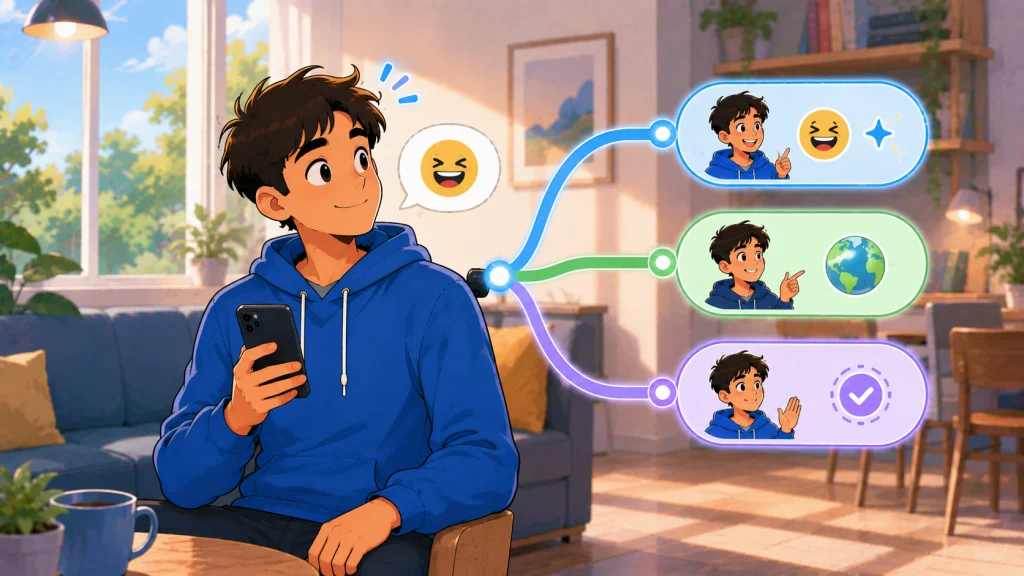
A standalone LOL gives you one useful fact: they reacted. It does not tell you whether they want another joke, a new topic, or a clean ending. The best move is usually small, either acknowledge the laugh, add one fresh hook, pivot once, or let the exchange rest. Below are 75 replies built around those choices, so you can answer the moment without turning three letters into a personality test.
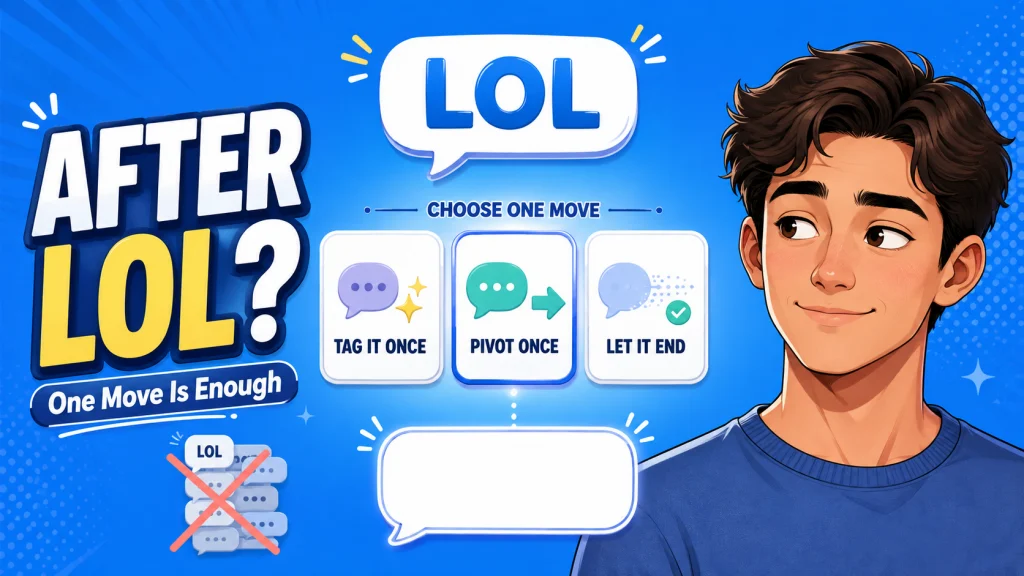
LOL gives you a reaction, not a job
The best responses to LOL do not begin with trying to decode somebody’s entire mood from three letters. LOL tells you they reacted to what you sent, but it does not automatically tell you what they want next. If you’re figuring out how to respond to LOL, start with the message that came before it and the rhythm of the conversation. A joke that genuinely landed needs a different follow-up from a tired exchange that has already been running on fumes.
I learned to pay attention to that rhythm long before I started writing about replies. During nine years behind a bar across three cities, regulars would hand me their phones after a conversation suddenly went flat, and the mistake I saw most was trying to rescue every quiet beat. If your problem is a whole run of low-effort messages, the broader breakdown of funny responses to dry texts matters more than obsessing over one reaction. For one LOL, choose the smaller job: acknowledge it, add one useful hook, change direction, or let the exchange end.
Quick funny replies when you want to keep it light
Quick funny replies to LOL work best when the conversation already has a playful tone and you do not need to force a new subject yet. The point is not to prove you can be funnier than the first joke. You are just catching the laugh and tossing it back with a little shape. Short wins here because it leaves the other person room to do something with the moment.
Most people overthink this part because a bare LOL can feel like an empty stage. Then they write a whole second routine to fill it, which makes the reply feel more nervous than funny. I would rather send one compact line that sounds like something a person would actually type. These are the best replies to LOL when you want that kind of easy continuation.
- I’ll take the win.
- Thank you, tough crowd.
- I knew that one had legs.
- My work here is done.
- Okay, that bought me another minute.
- Good, the timing wasn’t completely wasted.
- Good, I was worried for a second.
- I’ll pretend I planned that.
- See? I have my moments.
- That one escaped quality control.
- That’s going on my record.
- Excellent, we’re speaking the same nonsense.
- That landed cleaner than expected.
- That was the intended effect.
- Not bad for a weekday brain.
- And scene.
- I heard that laugh from here.
- Saving this tiny victory for later.
- Perfect, no notes.
- Against all odds, that worked.
Pick the line that sounds closest to your normal voice, not the one that looks cleverest on a list. A dry person sending “And scene” can be funny, while the same line from someone who never jokes can sound oddly rehearsed. That difference matters more than squeezing extra wit out of the reply. You want the other person to recognize you in the message.
If they actually laughed at your joke
When the setup clearly landed, you do not need to abandon it immediately. A real laugh can support one extra beat, especially if the joke came from something both of you just experienced or already understand. The safest follow-up is usually an extension, not a completely new performance. Give them a little more of the same energy and see whether they add something back.
This is where timing does more work than wording. If you send three joke tags in a row before they answer, you turn a shared laugh into your solo set. I have watched people do that with a perfectly good moment because silence for ten seconds felt unbearable. One extra line is enough to find out whether the joke still has room.
- You know I’m right.
- It gets worse the longer I think about it.
- I left out the most ridiculous part.
- That’s not even the best bit.
- Wait until you hear what happened next.
- I wish I were exaggerating.
- There was no graceful recovery.
- I somehow made it worse afterward.
- The confidence was completely undeserved.
- I still stand by my decision.
- In my defense, it seemed smart at the time.
- You would have laughed harder in person.
The useful part of these lines is that most of them contain a tiny opening for the other person to respond. They can ask what happened next, agree, tease you, or add their own version. That is different from firing off another unrelated joke and hoping it carries the whole exchange. If they only send another LOL after the extra beat, you have new information about the conversation’s momentum without pretending you know why.
If LOL feels more like filler
Sometimes LOL arrives where there was barely a joke to begin with. That does not prove the other person is bored, annoyed, distracted, or secretly trying to end things. It only means the reaction itself gives you very little to work with. When that happens, I would not reward a thin message with a thick reply.
A filler-looking LOL is a good place to lower your effort and keep your dignity intact. You can acknowledge it with something light, make one tiny nudge, or leave space. The goal is not to punish them for being brief. It is to stop carrying both sides of the conversation before you even know whether that is necessary.
- Fair enough.
- I’ll allow it.
- Strong contribution.
- Very detailed response.
- Concise. I respect it.
- Message received.
- That’s one way to put it.
- Noted with great seriousness.
- I’ll take that as your official statement.
- Efficient. Almost suspiciously efficient.
Use the drier options only with someone who already understands your tone. “Very detailed response” can sound playful between friends and needlessly pointed with somebody you barely know. If you are unsure, choose the neutral version or skip the response. A joke that requires a defense afterward was not the efficient choice you were looking for.
One clean pivot gives them something new to answer
If you want to keep talking but the LOL itself gives you nowhere to go, pivot once. I mean once, not a pile of questions that reads like you are interviewing someone for continued attention. A good pivot picks up something already nearby in the conversation and gives it a fresh handle. That is usually more natural than trying to squeeze another response out of the laugh itself.
This is the move I use when somebody clearly reacted but the original subject has run out of road. It keeps you from getting trapped in a LOL, haha, LOL loop while still showing that you are open to continuing. The best pivot has enough specificity to answer without requiring an essay. If they engage with it, great; if they do not, you have done your share.
- Anyway, how did that thing go?
- Speaking of chaos, how’s your day going?
- Okay, your turn. Tell me something ridiculous.
- That reminds me, did you ever finish that project?
- Enough about my disaster. What are you up to?
- Random pivot, what are you watching lately?
- Before I forget, how did your meeting go?
- Different subject, but I need your opinion on something.
- All right, what’s the best thing you’ve heard today?
- Now I’m curious, what would you have done?
| What came before LOL | Clean next move | Why it works |
|---|---|---|
| You told an embarrassing story. | “What would you have done?” | It stays connected while handing them an easy role. |
| You joked about a rough workday. | “How did your day go?” | It moves from your story to theirs without a hard subject change. |
| A shared topic has clearly run out. | “Random pivot, what are you watching lately?” | It openly changes direction instead of pretending the old topic still has life. |
| They reacted to a small mishap. | “Okay, your turn. Tell me something ridiculous.” | It invites a matching story instead of another reaction word. |
If you are still wondering what to say after LOL, start with the nearest unfinished thread rather than inventing a brand-new performance. One specific question or fresh angle is enough to show that you are open to continuing. Make it easy to answer, then leave room for the other person to add something of their own. If they do, you have a conversation again instead of a reaction loop.
When the conversation can end at LOL
Not every laugh needs a reply, and that is not a failure of timing. If you sent the final punch line, they laughed, and nothing else is hanging open, the exchange may already have landed exactly where it should. Texting gets awkward when people treat every natural stopping point like an emergency. Sometimes the cleanest response is letting the laugh be the last sound in the room.
If you still want a tiny sign-off, keep it light enough that it does not restart the whole exchange by accident. These work when the conversation already feels complete, not when somebody has asked you a question or left something unfinished. They are closer to a soft landing than a new opening. Send one and put the phone down.
- Glad that landed.
- I’ll leave on a high note.
- That’s enough nonsense from me.
- Okay, I’m done causing problems.
- I can live with that ending.
- Perfect place to stop.
- I’ll take my bow now.
- Goodnight to my comedy career.
You can also send nothing. I know that sounds almost too obvious for a page full of replies, but choosing not to answer is still a conversational choice. If the exchange has reached a natural end, silence does not need to be turned into strategy. It can simply mean the moment is finished.
Friend and group-chat versions can carry more chaos
Friends and group chats usually give you more room to be ridiculous because the tone has history behind it. A line that would sound strange in a new one-on-one chat can work perfectly when everyone already knows who is teasing whom. You can exaggerate, act mock-offended, or turn the LOL into part of the joke. The only real rule is that the humor should fit the group you actually have, not an imaginary audience you are performing for.
I have seen good group-chat jokes die because someone tried to top every reaction instead of letting the room add its own noise. The fun version is collaborative, not one person demanding another laugh. These options are a little louder, but they still leave space for someone else to grab the thread. That is what keeps a group exchange moving instead of turning it into a monologue.
- Thank you, I’ll be here against everyone’s wishes.
- One LOL from the council. Motion passes.
- Screenshotting this rare moment of support.
- Please, contain yourselves.
- This chat has terrible judgment and I support it.
- Adding this to the evidence folder.
- Democracy has failed beautifully.
- Pinning this before standards recover.
- I expect the rest of you to catch up.
- Great, now nobody encourage me further.
- This is why I can’t behave in here.
- I’m taking that LOL as legal clearance.
- Excellent, chaos confirmed.
- We have one witness on record.
- And that is exactly why this chat cannot be trusted.
With friends, “haha” and “LMAO” can sit in the same general lane without needing a whole new rulebook. The intensity may look different, but the choice is still about whether to tag the joke, pivot, or stop. If everyone is piling on with actual comments, follow the comments rather than replying mechanically to the laugh word. The conversation is bigger than the acronym once other people start adding substance.
What not to send after a bare LOL
The first thing I would avoid is another empty LOL sent only because you do not know what else to do. It can work as a deliberately silly loop with a close friend, but outside that context it gives neither person much to grab. The second mistake is stacking several follow-ups before the other person has answered the first. That turns a small pause into visible effort very quickly.
I would also avoid pretending you know what the LOL secretly means. A three-letter reaction is not enough evidence to announce that somebody is bored, interested, annoyed, flirting, or trying to reject you. That kind of fake certainty makes ordinary texting feel like a personality test, which is exactly where useful reply advice goes off the rails. Respond to what is on the screen, then let the next message give you more information.
The last trap is turning mild uncertainty into confrontation. “Why are you being dry?” may be accurate in some conversations, but a single LOL is a flimsy case for it. If short replies keep stacking up, compare the whole pattern instead of prosecuting one message; the broader approach to funny replies for awkward moments gives you more room to choose tone without overreading one word. One reaction deserves proportion, and proportion is usually what keeps a small texting moment small.
If the exact issue is a string of “OK,” “K,” or similarly thin answers, that is a different texture from a laugh reaction. A response like LOL at least tells you the previous message registered as funny or laugh-adjacent, while an acknowledgment can function very differently. I separate those because the next move should match what the message actually does, not just how short it is, and these smart ways to respond to OK texts handle that narrower problem. Keeping those distinctions straight makes your reply sound more natural and less like a canned comeback.
Final thoughts: answer the beat, not the mystery
A standalone LOL is small, so your response should usually stay small too. Match the moment instead of trying to manufacture momentum. A laugh can earn a tag, a tired topic can earn a turn, and a finished exchange can simply finish. None of those choices requires a theory about what the sender secretly meant.
The strongest habit is choosing your job before choosing your line. Maybe you are extending a joke, opening a nearby subject, or closing the exchange without fuss. The wording gets easier once that decision is made. What matters is that the reply fits the actual beat and still sounds like you.
Frequently asked questions
Most questions about LOL are really questions about whether a conversation is still moving. The word itself cannot answer that for you, because the message before it and the pattern around it matter more. I would look for whether the other person adds ideas, asks anything back, or responds when you offer one clean hook. That gives you something concrete to work with instead of guessing at motive.
The short answers below keep that same rule. They do not treat LOL as a secret code, and they do not assume you have to keep the chat alive at any cost. Use the option that matches the exchange you are actually having. If the conversation keeps shrinking after your one reasonable attempt, you can stop carrying it.
💬 What do you say when someone only replies LOL?
Either tag the laugh with one short line, pivot to something easy to answer, or leave it there. Choose based on what came before, not on a guess about their hidden mood.
😂 Is LOL a dry text?
It can feel dry when it is the only thing they keep sending, but one LOL is still just one reaction. Look at the pattern before deciding the conversation has gone flat.
🔄 Should I reply LOL back to LOL?
You can if the repetition itself is the joke, especially with a friend. Otherwise, another LOL usually gives the conversation exactly as much material as the first one did.
🧭 How do I keep a conversation going after LOL?
Use one clean pivot tied to something nearby in the conversation. Ask one specific question or offer one fresh subject, then let them decide whether to pick it up.
🛑 Is it okay not to answer LOL?
Yes. If the exchange has reached a natural ending and nothing is left hanging, you do not owe the reaction another message.
📝 Are haha and LMAO different from LOL?
They can carry different energy, but the practical choice is similar. Decide whether the laugh deserves a tag, a pivot, or no follow-up based on the surrounding conversation.