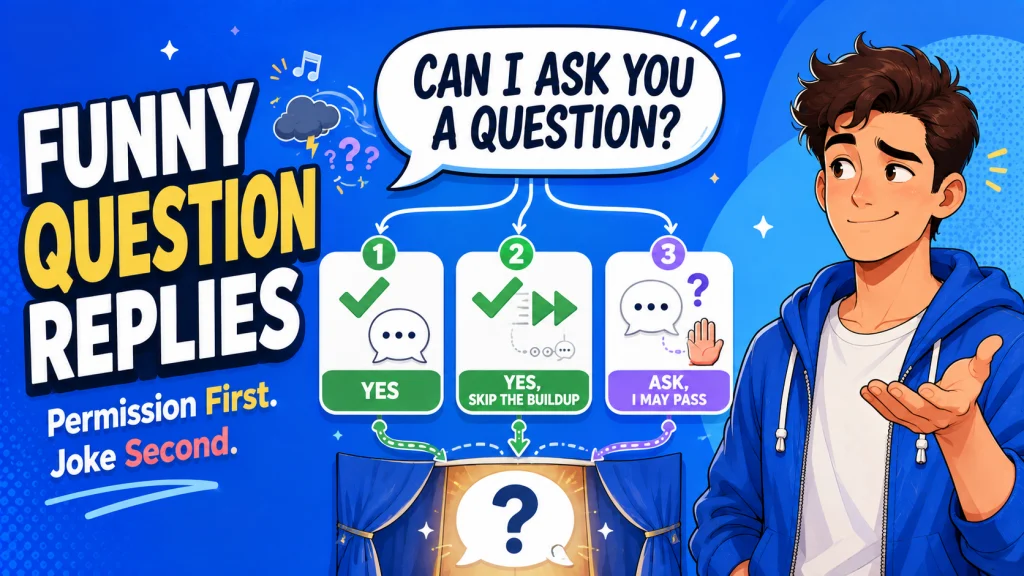
“Can I ask you a question?” has a talent for sounding far more serious than the question that follows. The best funny response gives the other person permission to continue without feeding the suspense, unless you actually want a boundary first. Below are 65 lines split by mood, from easy yeses to dry suspicion and polite limits. The trick is simple: decide what you mean first, then make the wording funny.
Quick funny replies when you are happy to hear it
The phrase “Can I ask you a question?” creates more suspense than the question usually deserves. If you want a funny response, decide first whether you mean yes, maybe, or “ask, but I may pass.” When your answer is yes, a quick joke can puncture the dramatic pause and get the real question moving. When your answer is conditional, the humor should leave that condition easy to understand.
I have watched this opener change the mood of a conversation before anyone knew what the actual topic was. Someone hears it and suddenly sits up straighter, checks the sender’s tone, and starts inventing possibilities. That is why I prefer replies that answer the permission part cleanly instead of adding another layer of mystery. You can be funny without making the sender work out whether they are actually allowed to continue.
| If you mean | The reply should sound like |
|---|---|
| Yes, go ahead | Open, quick, lightly playful |
| Yes, but stop the buildup | Dry, direct, still welcoming |
| I am suspicious, but curious | Teasing, best for people who know your humor |
| Ask, but I may not answer | Calm, clear, lightly funny if the moment allows it |
The wording matters less than the permission underneath it. A deadpan line can be perfect with a close friend and oddly cold with someone who barely knows you. If you want a wider bank for ordinary chats, these funny text replies cover more openers without pretending every message needs the same tone. Here, the whole job is to get past the pre-question and let the real question arrive.
When you genuinely do not mind the question, keep the door open. This is the easiest version of the moment because you are not protecting a boundary or making the sender earn permission twice. A short answer also leaves room for the actual question instead of turning the setup into its own conversation. Keep the energy light and let the sender move on.
These work best with a friend, sibling, date, or anyone else whose question you are comfortable hearing. They are playful without pretending the message is dangerous, scandalous, or life-changing. If you were searching for what to say when someone asks “Can I ask you a question?”, this is the safest place to start. The reply gives them a clear green light and still sounds like a person rather than a permission form.
- “Absolutely. I am already curious.”
- “Go for it. My ears are open.”
- “Sure, but make it a good one.”
- “Yes. The floor is yours.”
- “Proceed with your mystery.”
- “You may. I have cleared the schedule in my head.”
- “Of course. Hit me.”
- “Ask away. I promise a normal amount of judgment.”
- “Sure. I was getting too peaceful anyway.”
- “Yes, and now I am invested.”
- “Permission enthusiastically granted.”
- “Go ahead. I have prepared absolutely nothing.”
- “Ask it before my imagination gets involved.”
- “Yes. Please rescue me from the suspense.”
- “You can, and I would love it if you did.”
The cleanest replies are the ones that still work if the other person reads them without hearing your voice. “Ask it before my imagination gets involved” is playful, but it is still unmistakably a yes. That makes the line easy to read and easy to answer. Once the sender knows you are open to the question, the conversation can finally get to the interesting part.
The classic “you just did” replies without repeating the same joke
“You just did” survives because the logic is annoyingly perfect. The opener is already a question, so the reply lands before the sender has even reached the thing they meant to ask. The problem is that repeating the exact same wording every time can make a good little joke feel automatic. A better version keeps the same idea but gives it a slightly different shape.
I like these most when the relationship can handle dry literalism. With a friend who knows your timing, one clipped sentence can be funnier than anything elaborate. With someone more formal or uncertain, the same line can sound like you are shutting them down, so add a clear invitation to continue. A witty response to “Can I ask you a question?” should not make the sender wonder whether they are allowed to ask the second one.
- “Technically, that was one.”
- “You can, and apparently you already have.”
- “Question one has been accepted.”
- “Congratulations, your first question worked.”
- “That counts, but I will allow a bonus round.”
- “You have successfully asked a question.”
- “One down. What is the real one?”
- “I believe you just demonstrated that you can.”
- “The evidence says yes.”
- “Apparently so. Try another.”
- “That was the trial version. Go ahead with the full question.”
- “Yes, and your practice question went beautifully.”
The important little addition is permission to keep going. “Technically, that was one” can end on a wall, while “One down. What is the real one?” keeps the joke and opens the next beat. That distinction is tiny on the page, but it changes the whole tone of the exchange. Dry humor works best when the other person does not have to guess whether the door is still open.
Playful suspicious replies for friends
Suspicion is fun when both people know it is pretend. A close friend can send “Can I ask you a question?” and immediately earn a tiny interrogation because your history already tells both of you that the drama is part of the bit. That same energy is much riskier with someone who is already nervous, embarrassed, or unsure how you will react. Use these when the friendship has enough room for fake alarm without creating real alarm.
This is also where a “Can I ask you a question?” funny response can get more theatrical without losing the plot. You can act as though legal counsel, snacks, or protective equipment might be necessary, as long as your actual message is still “yes, ask.” I have seen people ruin this kind of joke by stretching it through several messages before letting the sender continue. One line is usually enough, because suspense stops being funny when you become the person extending it.
- “That depends. Should I sit down first?”
- “Yes, but your wording has made me suspicious.”
- “Go ahead. I have alerted no one yet.”
- “Sure. Do I need snacks for this?”
- “Ask away, mysterious stranger I definitely know.”
- “Yes. Why do I suddenly feel like I need a lawyer?”
- “Proceed, but I am watching you.”
- “Fine, but I reserve the right to gasp.”
- “You can. Should I brace for impact?”
- “Ask it. I have already imagined three worse versions.”
- “Sure. Is this a normal question or a plot twist?”
- “Yes, but that opener just raised my eyebrows.”
- “Go on. I am choosing to trust you for no clear reason.”
- “Ask. I have put my imaginary helmet on.”
Keep the fake suspicion aimed at the dramatic opener, not at the sender’s character. “Is this a normal question or a plot twist?” teases the setup, while accusing someone of lying, trapping you, or hiding something adds baggage before you know what they want. If the sender instead opens with “guess what,” the rhythm is different, and these funny replies to “guess what?” fit that kind of suspense better. Matching the joke to the opener keeps the reply from feeling recycled.
Replies that say yes but stop the dramatic buildup
Sometimes the joke you want is not “I am scared,” but “please just ask me.” That can be useful with people who tend to send the permission question, wait for your answer, then add another warning, then another disclaimer, and only eventually arrive at the point. You can still be friendly while nudging the conversation forward. The best line gives a yes and gently removes the runway for another round of buildup.
I have watched people become more nervous because the preamble kept getting longer, even when the eventual question was completely ordinary. The longer the setup, the more space your brain has to invent a problem. A funny reply can interrupt that pattern without scolding the sender for how they text. Think brisk, amused, and open rather than impatient.
- “Yes. Skip the trailer and give me the movie.”
- “Absolutely. Straight to the question, please.”
- “Go ahead. No additional suspense required.”
- “Yes, and you can skip the ominous music.”
- “Ask it. The buildup has done enough work.”
- “Sure. Fast-forward to the actual question.”
- “Yep. We can go directly to the interesting part.”
- “Please do. My imagination is freelancing.”
- “Yes. No need for a second warning label.”
- “Go for it. I accept the question without a preview.”
- “Ask away. Let us not make the suspense unionize.”
- “Yes. Land the plane.”
These work because the invitation is already baked into the line. If you reverse that order, the sender may read the impatience before they notice the invitation. The broader collection of funny replies can help when the opener is something else, but this particular phrase rewards a very simple structure. Keep it brisk enough that the sender can finally get to the point.
Light boundaries when you do not want a personal question
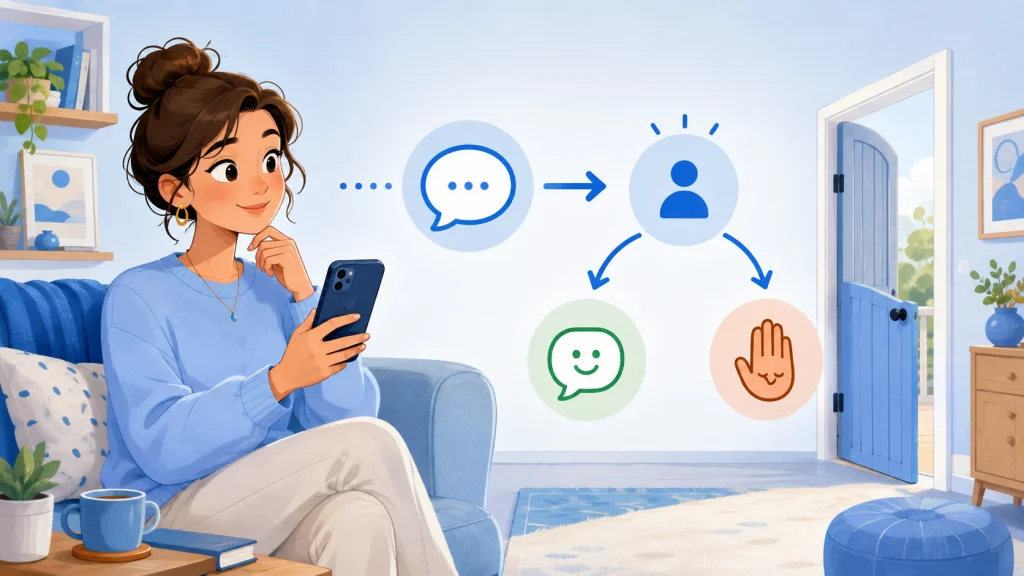
You do not have to agree to answer something just because you agreed to hear it. That distinction matters when the sender sounds like they may be heading toward a personal topic, a favor, or something you would rather decide on after you know what it is. A light boundary keeps you from making a promise before you have the information. It can still be funny, but the meaning has to survive the joke.
This is where people sometimes get too cute and accidentally say yes to more than they intended. If you mean “you can ask, but I may pass,” say exactly that in some form. You do not need a speech, and you do not need to apologize for leaving yourself room to answer later. The following lines keep the door cracked without handing over the key.
- “You can ask. I reserve the right to become mysteriously unavailable.”
- “Sure. Asking and answering are separate subscriptions.”
- “You may ask. My answer is still in negotiations.”
- “Go ahead. No promises on the response.”
- “Ask it, and I will decide whether my business is your business.”
- “You can ask. I can also say ‘pass.’ Beautiful system.”
- “Sure. Curiosity is free, answers vary.”
- “Ask away. I am not pre-approving the answer.”
- “You may. I am keeping one veto in my pocket.”
- “Go on. I will meet the question before I commit.”
- “Yes, with the tiny footnote that I may not answer.”
- “Ask it. I promise only to hear you out.”
A limit should still be easy to recognize after the joke lands. If the topic turns out to be harmless, you can answer normally and move on without making the setup a bigger event. If it is too personal, you already made room to decline without having to reverse an unconditional yes. That is cleaner than agreeing first and trying to renegotiate after the question lands.
Once the real question arrives, answer that question instead of staying in the bit
The joke has a very short job. It gets you through the permission question, maybe earns a laugh, and then gets out of the way. Once the actual question appears, the conversation has changed, and repeating the same bit can make you sound like you are avoiding the answer. The funniest handoff is often no handoff at all, just a normal response to what the person finally asked.
This sounds obvious, but in the moment people sometimes get attached to the joke because it worked once. They keep teasing the setup even after the sender has moved on to something sincere, practical, or vulnerable. I would rather lose a second laugh than make someone drag a real answer out of me. These four exchanges show the turn clearly.
“Can I ask you a question?”
“Sure. Skip the ominous music.”
“Do you want to come with us?”
“Yeah, I’m in.”
“Can I ask you a question?”
“Technically, that was one. Bonus round approved.”
“Did you borrow my charger?”
“I did. It’s on my desk.”
“Can I ask you a question?”
“You can ask. I may still say pass.”
“How much did that cost?”
“I’d rather keep that one private.”
“Can I ask you a question?”
“Go ahead. My imagination is already being unhelpful.”
“Which restaurant do you like better?”
“The smaller one near your place.”
Notice that none of the second replies tries to win another round of banter. The real question gets a real answer, or a real boundary, because that is now the useful thing to send. Humor works best when it knows when to leave. Staying in the bit after the context changes is how a playful reply starts feeling like avoidance.

What not to send before you know the question
The biggest mistake is acting as though something terrible has already happened. Fake panic can be funny with the right friend, but there is a difference between a quick “Should I brace myself?” and sending several messages about emergencies, breakups, secrets, or disasters before the person has said anything. You are working with almost no information at this point. Do not turn that blank space into a story and then react to the story you invented.
Hostility has the same problem. A sharp “What do you want?” may be deserved in some relationships, but the opener alone does not tell you enough to assume bad intent. If you are already irritated with the person, you can answer plainly or not engage, rather than hiding the irritation inside a joke that lands meaner than you planned. If the joke muddies your meaning, skip the joke.
- Do not invent an emergency and make the sender reassure you before they can speak.
- Do not promise to answer anything before you know whether the question is personal.
- Do not drag the “you just did” joke through multiple messages after it has landed.
- Do not use mock hostility with someone who has no reason to know you are joking.
If you are unsure, “Sure, what’s up?” beats a complicated performance. It is not the funniest line on the page, but it is hard to misunderstand and easy to build from once you know the topic. The pre-question is a doorway, not the whole conversation. Get through it cleanly and save your energy for the message that actually matters.
Final thoughts: let the real question arrive
“Can I ask you a question?” invites more overthinking than it deserves, which is exactly why a small joke can help. If you are happy to hear the question, say yes in a way that keeps the conversation moving. If you want a limit, make the limit clear before you decorate it with humor. The line only has to handle this one small moment.
The part I would remember is not any single comeback from the list. It is the order: decide whether the answer is yes, maybe, or “ask, but I may pass,” then choose wording that sounds like you. That keeps the reply from becoming a second source of suspense. Once the real question arrives, stop answering the setup and answer the person.
FAQs
Most questions around this phrase are really about tone, not vocabulary. People want to know whether “you just did” sounds rude, how to keep a reply funny without sounding nervous, and what to do when the sender hints that the next question is personal. The answer changes with the relationship, but the same rule keeps showing up: make your permission level easy to understand. A joke should sharpen that message, not hide it.
I also would not treat every “Can I ask you a question?” as a warning sign. Sometimes it is just a habit, sometimes the sender is trying to be polite, and sometimes they genuinely want to check whether you are open to a more personal topic. You do not need to guess which one before they ask. Give the amount of permission you actually mean, then let the conversation reveal the rest.
😏 Is “you just did” a rude reply?
It can be playful with someone who knows your dry humor, but it can sound dismissive on its own. Add “What’s the real question?” if you want to make the invitation clear.
😂 What is a funny response if I actually want them to ask?
Use a line that clearly means yes, such as “Ask it before my imagination gets involved.” The joke lowers the suspense without making the sender earn permission twice.
🛑 What can I say if I do not want to answer something personal?
Try “You can ask, but I may pass.” It lets the person speak without promising access to information you may want to keep private.
🤔 Should I ask what the question is before saying yes?
You can, especially if the opener feels loaded. “What kind of question?” is plain and useful when you want more context before agreeing.
💬 How do I keep the reply funny without making them more nervous?
Make the yes obvious and keep the joke short. Tease the suspense itself, not the person’s motives or whatever serious thing you imagine they might say.