Cringe over text is almost never about what you said. It is about the gap between the energy you sent and what the moment actually called for. This covers why that mismatch happens, how to tell the difference between showing interest and creating pressure, and what it looks like when flirty texting actually works. No scripts, no guarantees. Just a clearer way of thinking about what you are actually doing every time you type something and hit send.
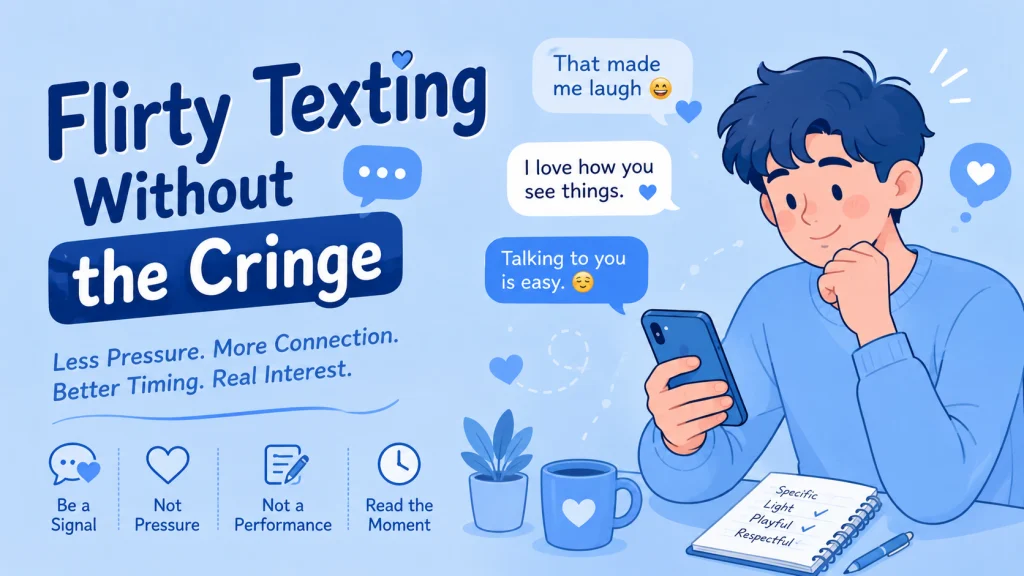
The Smoothest People I Watched Usually Did Less
Nine years behind a bar, and I can tell you with some confidence: the people who were good at this were not doing what everyone else assumed they were doing. They were not opening with a great line. They were not performing confidence. They were not even working that hard. What they were doing, consistently, was less. Less volume. Less obvious intent. Less of the “I am flirting with you right now, please notice” energy that makes the other person feel like they have to respond to a presentation instead of a person.
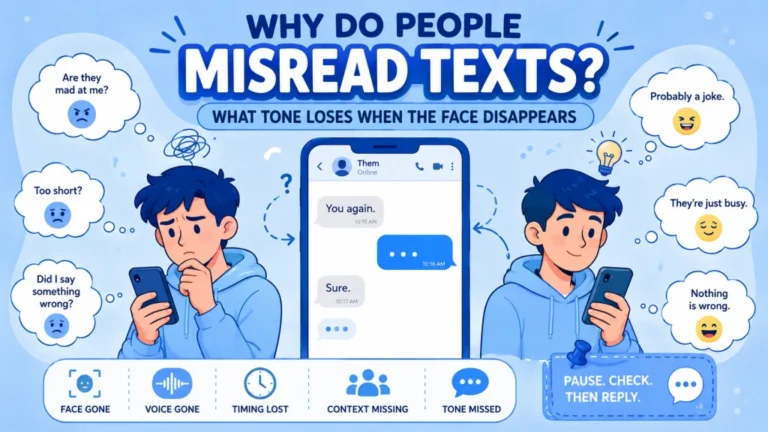
Flirting over text is harder than in person for one clear reason: you lose everything that happens between the words. You lose the pause, the look, the slight shift in how someone holds their shoulders when they are genuinely amused versus being polite. What you have left is the message itself, sitting there on a screen, with no body language to soften it or sharpen it. Research comparing in-person flirting to its online equivalent backs this up directly: people who study how flirting changes when the body disappears from the conversation have found that without those physical cues, people end up leaning on substitutes for them, and a lot gets lost in that translation. That is why tone becomes so much harder to land, and why the gap between showing interest and sounding desperate can come down to a single word choice.
Most people, when they try to flirt over text without being cringe, are thinking about the line. The right opener. The clever reply. What I watched for nine years tells me the line is usually not the problem. The problem is almost always the energy behind it, how much of it, and whether the moment called for that much at all.

Four Patterns That Make Flirty Texts Land Wrong
I have watched these patterns play out enough times that I can usually spot them before the conversation even finishes. Cringe texting follows a short list of roads, and they are all predictable once you know where to look.
The first is too much intensity too early. A first message that signals way more investment than the situation has earned yet reads as pressure before it reads as interest. “I cannot stop thinking about you” might work after three good dates. It does not work after one conversation at a party where you maybe had a moment. The other person has nothing to match that energy to, so the safest response is to either match it awkwardly or step back. Most people step back, and they step back fast.
The second is generic. A compliment that could have been sent to literally anyone is not a compliment about the person, it is a compliment about the fact that they exist. “Hey beautiful” tells someone you noticed them. A message that references something specific they said, did, or mentioned tells them you were actually paying attention. The difference in how those land is not small. Research on flirting styles points in the same direction: sincerity and context almost always matter more than volume or flattery. A well-known breakdown of how people actually signal romantic interest, the Flirting Styles Inventory, found that the sincere approach, the one built on making someone feel genuinely seen rather than complimented in general, was one of the styles most consistently linked to real dating success. Saying something real about a real person beats saying something smooth about whoever happens to be reading.
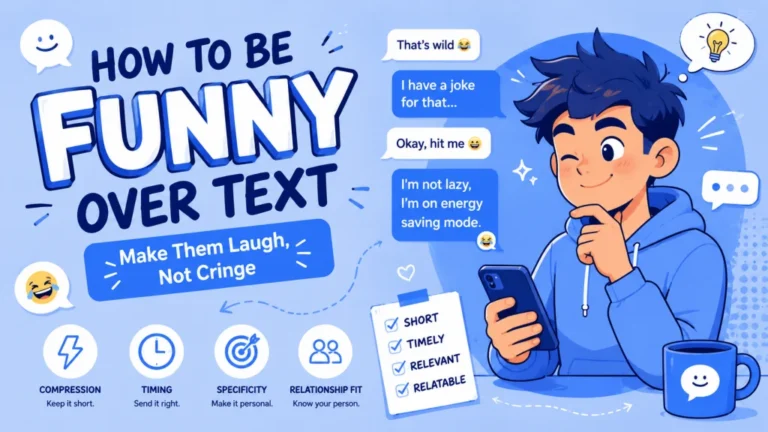
The third is sounding obviously rehearsed. There is a texture to a message someone spent twenty minutes crafting that is different from one they just typed. Overwritten flirting has a kind of polish to it, like something that was sanded down too many times. The person reading it feels the effort behind it, and that makes the whole thing slightly uncomfortable, because now they know exactly what is happening and the naturalness is gone. The funniest, sharpest replies I have ever seen were almost all typed fast. Not carelessly, but without the weight of performance behind them.
The fourth, and the one I think gets overlooked most, is flirting without reading the room. Someone sends a playful line into a conversation that was not playful. The other person was venting about a hard week, giving short replies, or clearly distracted. The flirty message lands awkward not because it was a bad message, but because the moment was wrong. Good timing is not a hack. It is the whole thing.
Signal, Pressure, and Performance: Three Ways a Message Can Land
When I try to put into words why some flirty texts work and others do not, it usually comes back to which of three modes the message is actually operating in.
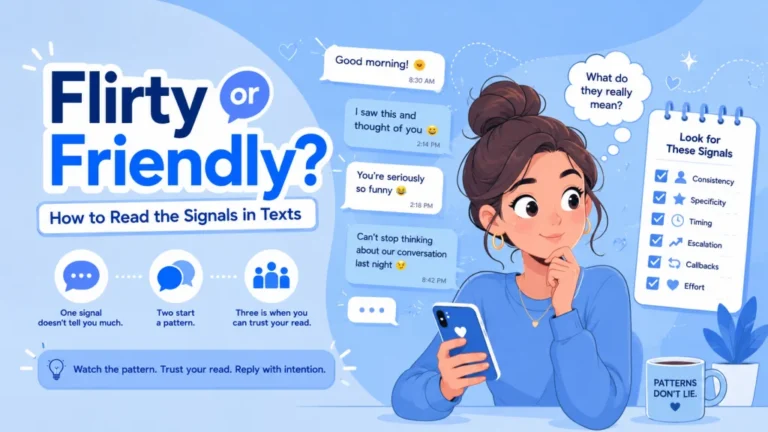
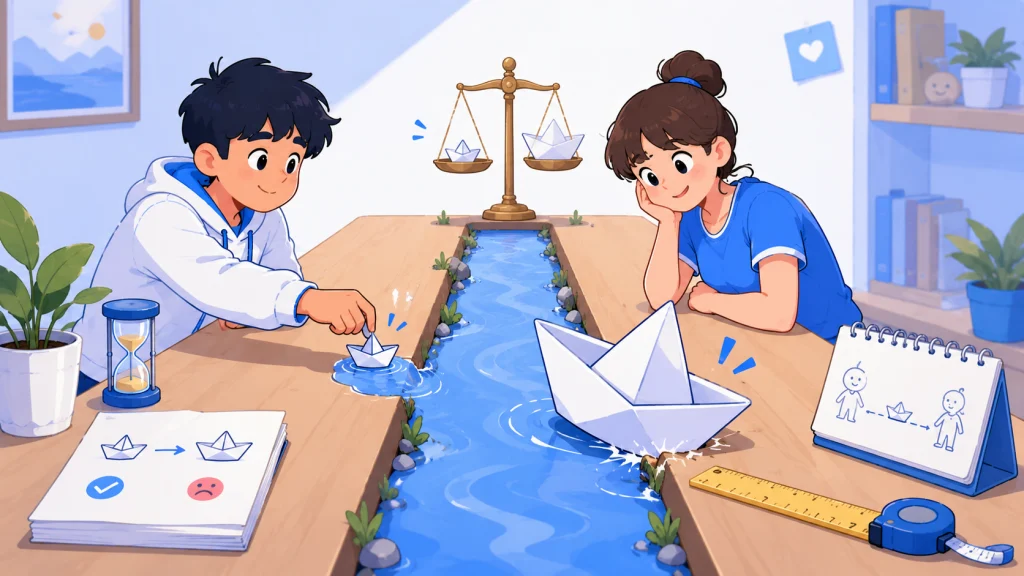
A signal is something that shows interest without requiring a response that matches it. It is light enough that the other person can pick it up or let it sit, and neither choice feels like a rejection. “That actually made me laugh” is a signal. “You have no idea how much I needed to hear that right now” is closer to pressure. The difference between them is not the level of warmth. It is whether the message creates space or starts to close it off.
Pressure is what happens when a message puts the other person in a position where any response feels like a commitment. Over-the-top compliments do this. Asking where things are going before either of you has a clear read on it does this. So does following up three times without a reply, or adding a question mark to something that did not need one. Pressure closes the door. The person on the other end starts managing you instead of enjoying the conversation, and once that shift happens, it is very hard to reverse.
Performance is what cringe usually actually is. It is flirting that is designed to look like good flirting rather than to create a real moment. It is funny without being genuinely funny. It is confident-sounding without being grounded in anything real. The reason performance reads as cringe is that it asks the other person to respond to a character rather than a person, and most people do not want to do that. They would rather talk to someone who said something a little clumsy and meant it than to someone who said something smooth and clearly practiced.
| Mode | What it feels like to receive | What it tends to create |
|---|---|---|
| Signal | Light, optional, easy to respond to | Opens space for the other person |
| Pressure | Heavy, like something needs to be resolved now | Closes space; person starts managing you |
| Performance | Polished but slightly hollow | Awkwardness, the feeling of watching someone try |
The goal, when it works, is to stay in signal mode and let the other person move toward you at their own pace. That requires something that feels counterintuitive when you like someone: you have to be genuinely willing to let the conversation go nowhere. If you can only show interest when you are certain it will be returned, what you are doing is not flirting. It is auditing. Those are very different things to be on the receiving end of.
What This Looks Like When It Actually Comes Up
One of the situations I get asked about more than almost any other is the reply to a completely mundane opener. Someone sends “hey” and the person on the other end freezes. The instinct is to either reply flatly and miss the moment, or to try to do something clever and overshoot entirely. The thing is, “hey” does not need a spectacular reply. It needs something that picks up the thread and makes the other person glad they sent it. If you want a sense of what that actually looks like in practice, the options around flirty ways to reply to hey get into the specific range of choices and what each one signals.
Another pattern I watched play out regularly at the bar was the opener that comes in too loaded. “You looked amazing last night” to someone you barely know creates a small but real problem: it is a compliment with no easy landing. What does the other person say? “Thank you” feels flat. Anything warmer feels like they are already agreeing to something. A lighter version of the same thought, something that references a specific moment rather than just their appearance, leaves more room. “That thing you said about [whatever it was] has been living in my head” does more with less, because it tells the person you actually listened instead of just looked.
The most common mistake I have seen, and I watched this play out hundreds of times, is the long reply to a short one. Someone sends a three-word message. The other person sends back a paragraph. The paragraph might be warm. It might even be funny. It does not matter. The gap between the size of those two messages communicates something the words cannot undo. Matching the energy in a conversation is not about playing it cool. It is about making the other person feel like the exchange is easy rather than like they are being pursued.
A useful test is to look at the size of the door your message leaves open. If someone texts “I survived work today,” pressure sounds like “I was honestly waiting all day to hear from you.” Performance sounds like “Well well well, look who finally escaped capitalism.” A signal sounds like “Proud of you. Barely, but still.” The last one leaves them somewhere easy to go: laugh, reply, or keep it light. That difference is small on the screen and very large on the receiving end.
What most people get wrong is that they think the problem is not having the right line ready. The actual problem, almost every time, is sending a line at the wrong size for the moment. If you are starting from the opener side and want to understand what tends to land versus what tends to fall flat from the beginning of a conversation, the thinking behind flirty text openers that do not sound like a template covers the same principle from a different angle and is worth reading alongside this.
Reading Mutual Interest and Knowing When to Stop
This is the part most people skip, and it is the part that matters most. Flirting is not a one-way broadcast. It is a back-and-forth that only works when both people are choosing to participate. Research tracking how relationships actually develop through platforms like Facebook points to the same thing people learn the hard way: a study on how digital messaging maps onto relationship escalation found that mutual interest shows up through reciprocity over time, not just through someone replying once.
The signals that the door is not open are just as clear as the ones that say it is. Short replies that do not invite more. Long gaps that were not there before. Answers that close off topics instead of opening new ones. Those are not mixed signals. They are signals, and reading them honestly is the difference between flirting and pushing. I have watched people explain away every single one of those signs and keep going. It rarely ends the way they hoped.
- They ask questions back without you having to prompt it
- They bring up something you mentioned in a previous conversation
- They match your reply length roughly, or exceed it
- They initiate contact first, at least occasionally
- Their energy shifts when the topic moves toward something more personal
None of those are definitive on their own. But if most of them are absent over several conversations, that is information worth taking seriously. The best flirty texting in the world does not create interest that is not there. What it can do is make space for interest to show itself. If someone is consistently not taking that space, respect that. How you handle the moments when interest is not returned says at least as much about you as how you handle the moments when it is.

Final Thoughts: Flirting Should Open a Door, Not Block One
The cleanest way I know to think about all of this is: a good flirty text creates room. It gives the other person somewhere to go if they want to go there, and an easy out if they do not. That is it. That is the whole standard.
Cringe is what happens when a message removes that choice, when the energy is so strong or the intent so obvious that the other person feels cornered into a response they did not choose. You can be interested. You can be funny. You can be forward. You just cannot be all of those things at full volume before the other person has had any chance to show you whether they even want to be in this conversation at all.
The people who are genuinely good at this are not running better lines. They are just more comfortable with the idea that interest goes both ways, and that showing yours is enough. The rest is not yours to control. That is not a disappointing conclusion. It is the only honest one.
FAQs
😬 Why does my flirting always come across as cringe even when I try not to?
Usually it is a mismatch problem, not a wording problem. The energy you sent did not match what the conversation called for in that moment. Try matching the length and tone of what you received before adding anything extra to it.
📱 How do I flirt over text without being too obvious?
Show interest in something specific they actually said, not something general about them. “That is honestly a great take” lands differently than “you are so interesting.” One is about them in that moment. The other could have been sent to anyone.
💬 What is the difference between flirting and being pushy over text?
Flirting gives the other person somewhere to go if they want. Pushing closes off their options. If your message puts them in a position where any reply feels like a commitment, that is pressure, not a signal. A good signal is one they can pick up or leave without it becoming a thing.
🤔 How do I know if someone is actually interested or just being polite over text?
Look at whether they ask questions back without you prompting them, whether they bring up things you mentioned before, and whether they initiate occasionally. Polite replies close topics. Interested replies open new ones. That difference is usually pretty clear across a few conversations.
✋ When should I stop flirting with someone over text?
When the replies are consistently short, do not invite more, and they are not initiating. That is not a mixed signal. It is a signal. One or two more messages is fine. Ten more is not, and it rarely ends where you want it to.
🪞 Is it bad to spend a long time writing a flirty text?
Not always, but it often shows. Overworked messages have a polish to them that reads as performance. The sharpest replies I have seen were almost always written quickly. If you have been staring at it for ten minutes, that is usually a sign it needs to be shorter, not better.
Sources and References
The research below informed how I think about the patterns covered here, particularly around how flirting shifts in digital contexts and what reciprocity actually looks like in early-stage romantic communication.
- Whitty, M. T. (2004). Cyber-flirting: An examination of men’s and women’s flirting behaviour both offline and on the Internet. Behaviour Change, 21(2), 115–126. On how the absence of nonverbal cues in digital spaces changes the way intent is read and signaled.
- Hall, J. A., Carter, S., Cody, M. J., & Albright, J. M. (2010). Individual differences in the communication of romantic interest: Development of the Flirting Styles Inventory. Communication Quarterly, 58(4), 365–393. A framework for understanding how different approaches to showing interest land differently depending on the person, the style, and the context.
- Fox, J., Warber, K. M., & Makstaller, D. C. (2013). The role of Facebook in romantic relationship development: An exploration of Knapp’s relational stage model. Journal of Social and Personal Relationships, 30(6), 771–794. On how digital communication maps onto relational escalation stages and what mutual signaling looks like across those stages.