Most people think a sharp comeback is what saves them when someone is rude, but nine years behind a bar taught me it is the half second before that actually decides how the moment goes. This piece breaks down the pause that separates a clean exit from a fight nobody needed, the bait cycle that rude people are counting on, and why staying calm when someone is rude to you is not the same as letting them win. You will walk away with a simple rule I used behind the bar more times than I can count, and a clearer sense of when calm is the right move and when it genuinely is not.
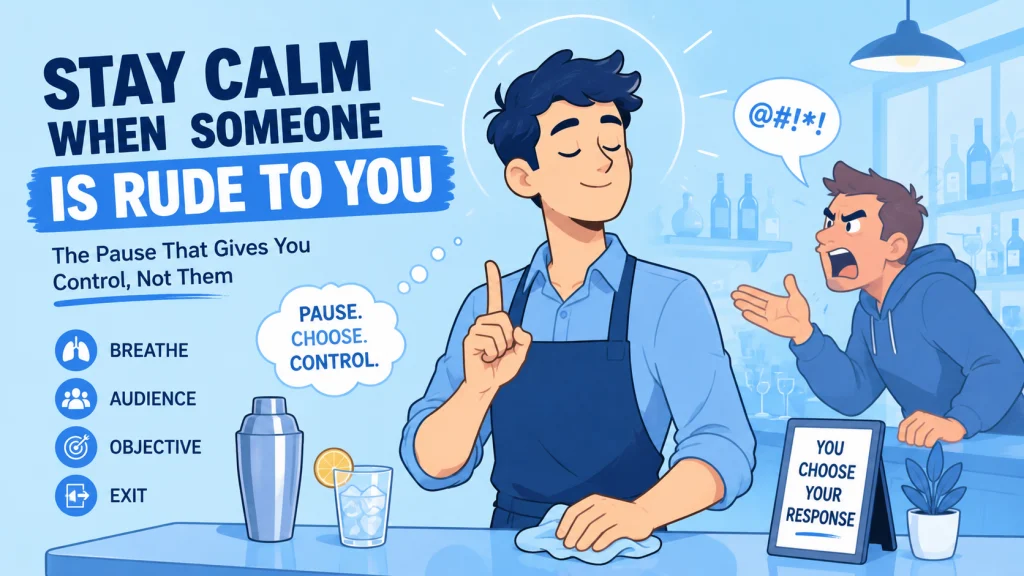
The customer who almost got the worst version of me
There was a guy at the end of the bar one Friday who decided my pour was an insult worth announcing to the whole room. Loud, sneering, the kind of rude that is really just bored and looking for a reaction. The room went quiet enough that I could feel people deciding whether this was going to turn into a show. I had a line ready, a good one. I did not say it. I poured his replacement drink, set it down without a word, and walked to the other end of the bar. He apologized twenty minutes later, unprompted, because nobody fed the moment he was trying to start.
That is the part nobody tells you about staying calm when someone is rude to you. It is not about being the bigger person in some noble sense. It is about understanding that a rude person has already decided how the scene is supposed to go, and your job, if you want to control anything at all, is to refuse to read the line they wrote for you. I have watched that play out for nine years, and the pattern barely changes whether it is a stranger, a coworker, or someone in a group chat typing in all caps.
Why the bait works even when you can see it coming
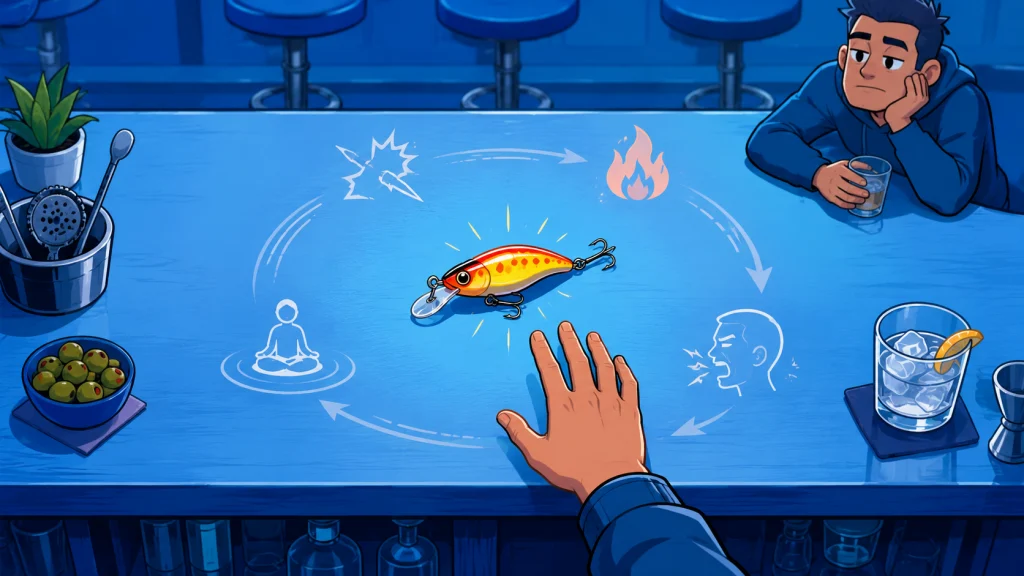
Rude behavior almost always has a shape, and once you see it, it gets harder to fall for. Someone pushes, usually with a comment just personal enough to sting. You feel the heat rise and react, maybe with a sharp word back, maybe with a flustered explanation nobody asked for. The second you react, they get exactly what they came for, control of your tone, your face, your next five minutes. It does not matter if your reaction was justified. The cycle only needs your reaction, not your reasoning.
I have seen this happen to people who are normally sharp, never at a loss for words. Put them across from someone determined to be rude and the whole toolkit disappears, because the bait is not really aimed at your wit. It is aimed at your nervous system. What usually goes wrong is that people try to out-clever the moment instead of out-calm it, and a clever line delivered with shaking hands reads as exactly what it is, a person who got got.
There was a regular who used to test new bartenders just to see who would flinch. Most snapped back within the first week, which is exactly what he wanted. The ones who lasted treated his comments like weather, present, occasionally unpleasant, not worth arguing with.

The bar-tested pause that actually buys you control
I did not learn this from a book. I learned it from getting it wrong enough times to build a habit out of getting it right. There are four things I run through, fast, almost without noticing anymore.
- Breath. One real breath, not a performative sigh. It slows the part of you that wants to answer before you have decided what you actually want to say.
- Audience. Who else is in this moment, and does this need to be settled in front of them, or would it land better somewhere quieter? A comment from a coworker in a meeting full of people calls for something different than the same comment said one-on-one.
- Objective. What do you actually want out of the next ten seconds: to be left alone, to shut the comment down, or to protect someone else nearby. If a friend is the one catching the rudeness, the objective shifts from defending yourself to closing the moment down for both of you.
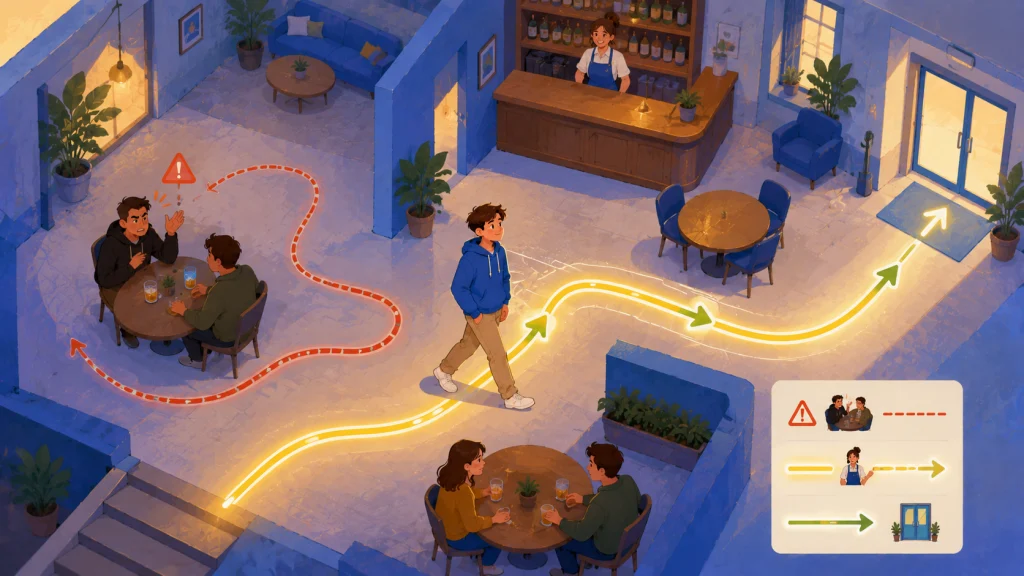
- Exit. If the objective is simply to end the interaction, the calmest move often requires no clever line at all, just a clean way out.
None of this requires you to feel calm. I rarely felt calm doing it. It just gives you four seconds of structure to move through instead of one raw second of reaction, and four seconds is usually enough for the heat to drop below the level where it controls what you say next.
What comes out of your mouth after that pause does not need to be clever. Most of the time it barely needs to be more than a boundary, said flat and without heat. “I’m not doing this here.” “Say that again calmly and I’ll answer.” “I’m going to step away.” None of those land like a comeback, and that is exactly the point. They are not trying to win the exchange, they are trying to end it on your terms instead of the other person’s.
Where this meets the sharper replies, without becoming them
Once the pause has done its job, sometimes the right move really is a sharp answer, and that is its own skill with its own timing. If you have already decided the moment calls for something with more edge, there is a separate piece built around savage comebacks for rude people that goes into the lines themselves rather than the decision behind them. The two are not in competition. One is the four seconds before you speak, the other is what you actually say once you have decided speaking is the move.
I have seen perfectly good comebacks ruined by bad timing more often than weak ones saved by good delivery. A sharp line said from a place of actual control reads as confidence. The exact same line said while your hands are shaking reads as defensiveness wearing a costume.
When staying calm is not actually the goal
I want to be honest about something most advice on this topic skips. Sometimes the smartest, calmest thing you can do has nothing to do with a clever response at all. If someone’s rudeness tips into something that feels unsafe, threatening, or like harassment rather than ordinary friction, the pause rule is not the tool you need. Walking away, removing yourself from the situation, or involving someone who can actually intervene matters more than sounding composed.
That line is not always obvious in the moment, and I am not going to pretend there is a clean formula for spotting it every time. What I can say is that if any part of you is reading a situation as genuinely dangerous rather than just irritating, trust that read over any advice about staying composed.
| What is happening | What actually helps |
|---|---|
| Someone being rude out of boredom or habit | The pause, then a calm or sharp reply, your choice |
| A one-off rude comment from a stranger | Usually safe to ignore entirely, no reply needed |
| Rudeness from someone whose opinion matters to you | Pause first, then decide if the relationship needs a real conversation, not just a line |
| Anything that feels threatening or unsafe | Leave or get help, calm composure is not the priority here |
This is also the line I keep in mind whenever I am putting together the sharper material on the site, including the broader collection of replies for handling rude people without losing your composure, because none of it is meant to push someone toward engaging when disengaging is the better call.
Final thoughts: calm is leverage, not softness
The biggest misread I see, over and over, is treating calm as the absence of a reaction, like you are just swallowing it and moving on. That is not what is happening when it is done right. Calm is the thing that lets you choose your reaction instead of having one handed to you by someone who was hoping you would not think that far ahead. The guy at the end of the bar did not get a comeback that night because he did not earn one. He got silence and a fresh drink, and that told him more than any line could have.
I still freeze sometimes. Nine years in, three cities, and there are still moments where someone catches me off guard and the four seconds feel like a lot longer than four seconds. The difference is just that I know what to reach for now, even when reaching for it feels slow.
For a few more places this shows up, there is a related piece built around replying to rude texts without escalating things, which works well alongside the pause rule once you are texting rather than standing face to face with someone.
FAQs
😮💨 How do you stay calm when someone is rude to you in the moment?
Take one real breath before you respond at all, then quickly check who is watching and what you actually want from the next ten seconds. That short pause is usually enough to keep you from reacting on autopilot.
🧊 Why does staying calm work better than snapping back?
A rude comment is often designed to get a reaction, and reacting hands over control of the moment. Staying calm denies that reaction, which tends to deflate the situation faster than arguing ever does.
🚪 Is it ever okay to just walk away instead of responding?
Yes, and sometimes it is the better move entirely. If a comment is minor or the person is a stranger you will never see again, there is rarely anything to gain from engaging at all.
🗣️ What if staying calm makes it look like I am letting them get away with it?
Calm is not the same as agreeing or excusing the comment. You can stay composed and still address it directly once you have decided that is the right move, just without the shaking-hands version of a response.
⚠️ What if the rude behavior starts to feel unsafe rather than just annoying?
That is a different situation entirely, and composure stops being the goal. Removing yourself from the situation or getting someone else involved matters more than handling it gracefully.