I have watched a joke that killed at the bar die instantly the second someone tried to send the same energy through a text. This is about why that happens and how to be funny over text without sounding like you copied a line off a forum. The short version is that texting humor runs on compression, timing, and knowing exactly who is on the other end, not on having a clever line ready. I will show you what usually goes wrong, the failures I see over and over, and what tends to work instead. None of it requires being naturally quick. It requires noticing more than you are currently noticing.
Why the Same Joke Dies in a Text
I used to have a regular who could make an entire end of the bar laugh with nothing but a raised eyebrow and four words. I watched him try the same line in a group chat once, word for word, and it sat there. Nobody reacted. He asked me later what happened, genuinely confused, and the honest answer is that the joke was never just the words. It was the eyebrow, the pause before he said it, the fact that everyone could see his face land on the punchline at the same moment they heard it. None of that survives a screen. Learning how to be funny over text means accepting that you lost three of your best tools and have to do the whole job with the one that is left.
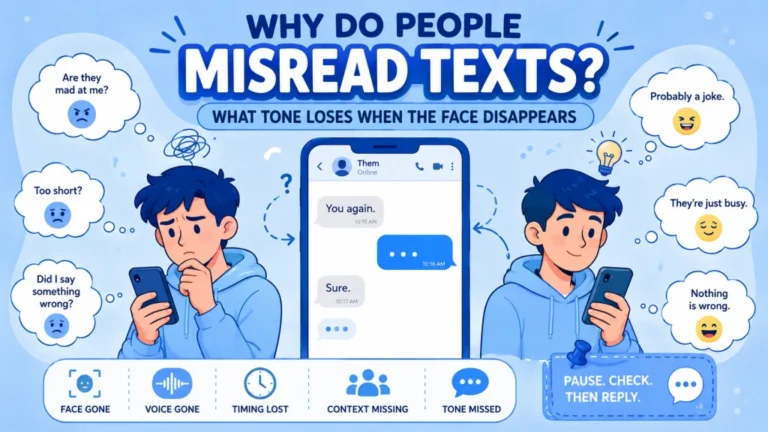
That is the actual problem behind every “why did that not land” moment people bring me. Tone, face, and timing disappear the instant a thought becomes typed text, and most people do not adjust for the loss. They write the joke they would have said out loud and assume the words alone will carry it. Sometimes they do. Mostly they do not, because a text has to do alone what a room used to do for free.
What Actually Makes a Text Funny
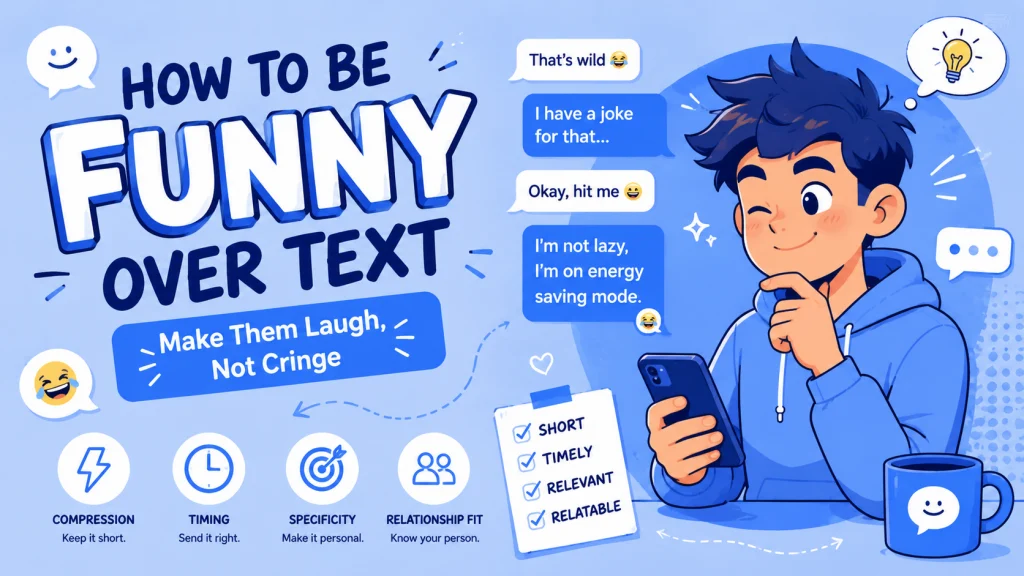
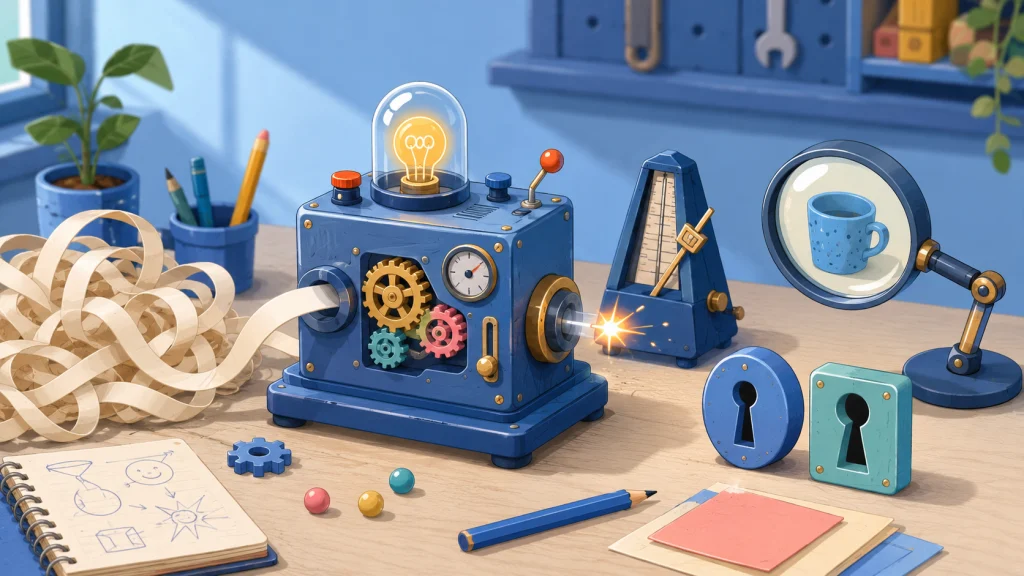
Strip away the wordplay and the personality, and texting humor runs on a small number of mechanics doing all the real work. Compression is the first one. A joke that needs three sentences of setup before the payoff has already lost, because the reader’s eyes are moving faster than your typing. The shortest version of a thought is almost always the funnier one, and I have lost count of how many times someone has read me a long version of a line and asked what was wrong with it, only for the answer to be the same four words buried in the middle.
Timing is the second, and it works differently in text than in a room. You cannot pause mid-sentence for effect, but you can control when the message arrives. A reply sent the second the other text lands reads as eager or anxious, even if the words are funny. A reply that takes four hours reads as indifferent, even if it is the perfect line. There is a window in between where the joke actually has room to breathe, and most people either rush it out of nervousness or let it go stale by overthinking.
Specificity is the third, and it is the one people skip most. A generic joke could be sent to anyone, about anything, and that is exactly why it falls flat. The replies that actually get a laugh almost always reference something only the two of you would catch: a phrase from an earlier conversation, an inside detail, something specific to this exact exchange. That specificity does double duty. It makes the line funnier, and it proves you were actually paying attention rather than reaching for a stock response.
Relationship fit ties the other three together. The same line that gets a laugh from someone who already expects sharp humor from you can land as confusing or even rude from someone who has only ever seen you reply politely. I have watched two people send the exact same comeback to two different friends and get completely opposite reactions, and the line itself was only part of it. What changes is what the other person was braced for.
The Four Ways Funny Texts Usually Fail
Most failed attempts at texting humor fall into one of a small set of patterns, and once you can name the pattern, it gets a lot easier to catch yourself doing it. This is the part people get wrong the most, and almost none of it comes from a lack of wit. It comes from not noticing which failure mode they just walked into.
- Too clever: the line is built to be admired rather than felt, full of a setup so layered the other person has to work to find the joke. By the time they figure it out, the moment that made it funny has already passed.
- Too long: three sentences where four words would have done the job. The extra length usually comes from nerves, the writer padding the joke because they are not confident it will land on its own.
- Too mean: a line that crosses from playful into something that actually stings, sent to someone who was not braced for it. This is the one people regret fastest, usually right after hitting send.
- Too random: a joke with no connection to anything in the actual conversation, which reads as trying too hard rather than as funny.
That last one, too random, might be the most common mistake I see, and it happens for a reason that has nothing to do with effort. People panic at the blank reply box, reach for whatever joke comes to mind first, and send it before checking if it actually fits the moment. The fix is not a better joke. It is pausing one extra beat to ask whether the line connects to anything the other person actually said.
What This Looks Like in Practice
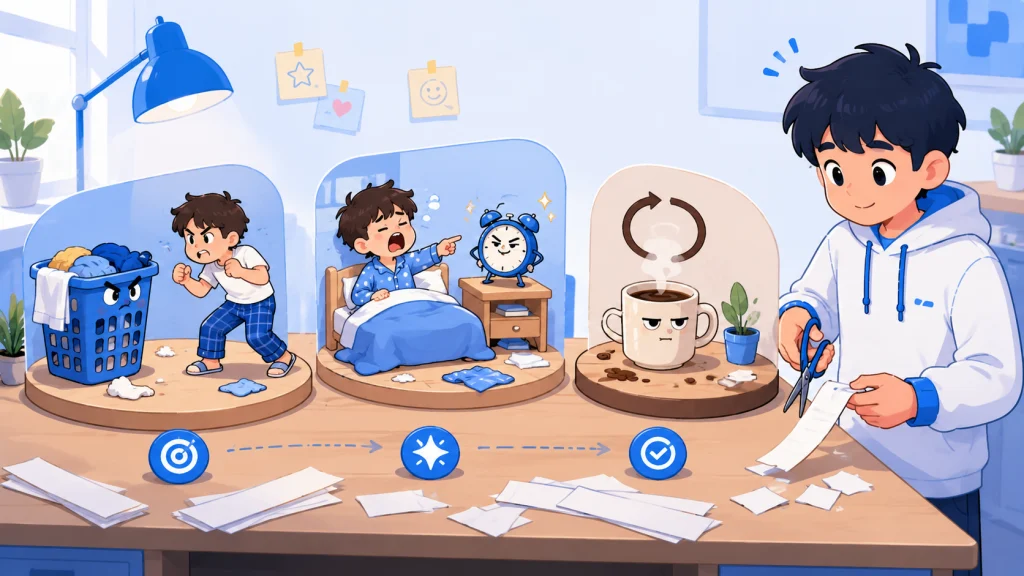
A plain “what’s up” text is a good stress test, because there is nothing to react to and nothing to riff on. The easy move is silence or a flat “nothing much,” and both are fine answers. But this is also where compression earns its keep, since the joke has to come from somewhere, and the only thing actually in front of you is the blankness of the question itself.
“Nothing much.” versus “Currently losing a staring contest with my laundry.”
The second one is not clever in any complicated way. It is short, it is specific to an ordinary moment the other person has lived through themselves, and it turns the emptiness of the original question into the whole joke instead of fighting against it. Clever replies to a plain what’s up text tend to work for exactly this reason, not because they are witty, but because they hand the other person something small and real to picture.
A rude or backhanded text is the opposite problem. There is plenty to react to, almost too much, and the instinct is to match the energy with something sharp. The mechanics still apply here exactly the same way.
A paragraph defending yourself point by point versus “Bold of you to type that with a straight face.”
I have watched someone spend ten minutes composing the long version of that defense, only to delete the whole thing and send the short line instead. The short line did more damage than the paragraph ever would have, because it landed on the specific thing they said and stopped talking. A long reply gives the other person more to argue with. A short one does not give them anywhere to go.
Good morning texts sit at the gentler end of this, where the humor is less about sharpness and more about not being boring.
“Good morning back.” versus “Morning. Already regretting every decision that led to this alarm.”
Same compression, same specificity, just aimed at warmth instead of edge. That dial shift is its own kind of restraint that people underestimate, because the urge with a good morning text is usually to either say nothing interesting or to overdo the cheerfulness, and the actual sweet spot sits quietly in between.
There is a comeback I almost did not pass along to someone because it felt slightly too clever for what she was dealing with: a coworker who kept making the same tired joke about her coffee order every single morning. I told her to just repeat the joke back to him in the exact same flat tone he used, word for word, like she had not noticed it was supposed to be funny. She texted me a week later laughing, saying he stopped making the joke entirely because hearing it repeated back made him realize how stale it had gotten. That line worked because it was specific to the joke itself, not because it was clever in the abstract.
The Bar Lens: Why People Laugh at All
Nine years behind a bar taught me something most people never get a chance to notice, because they are usually the one trying to be funny rather than the one watching a whole room react. People do not laugh because they admire the wording of a joke. They laugh because they recognize themselves, or someone they know, in the situation being described. The funniest moments at that bar were almost never wordplay. They came from someone naming, out loud, the exact thing everyone at the bar had already been thinking but had not said yet.
Funny text replies for everyday conversations tend to work for this same reason. The strongest ones describe something the reader has lived through themselves, in a way they had not quite put into words yet, rather than something built purely to sound impressive on its own.
This sounds obvious once it is said out loud, but in the moment, almost nobody thinks about it that way. Most people are so focused on sounding witty that they skip past the much simpler move of just describing what is actually happening, accurately and a little absurdly. The accuracy is the joke.
Final Thoughts
Funny texting is mostly observation plus restraint, and almost nobody believes that until they have watched it work a few times. The observation is noticing the specific detail worth naming. The restraint is not saying more than that detail needs. Every failure mode above, too clever, too long, too mean, too random, comes from skipping one of those two things, usually because nerves are pushing for more rather than less.
I still freeze sometimes too, staring at a reply box with nothing coming to mind, and that is not a sign anything is wrong. It just means the moment has not handed you the detail yet. Wait one more beat, read the message again, and the joke is usually sitting right there in something they already said.
FAQs
😅 Why is it harder to be funny over text than in person?
Because text strips out tone, facial expression, and pacing, the three things that usually carry a joke. The words have to do the entire job alone, which is why a line that works perfectly out loud can read flat on a screen.
⏱️ How long should I wait before sending a funny reply?
Long enough that it does not read as anxious, short enough that the moment is still alive. There is no exact number. A reply sent instantly often reads as overeager, and one sent many hours later usually misses the window entirely.
🤐 Why do my funny texts feel like they are trying too hard?
Usually because the joke is generic enough that it could be sent to anyone. The fix is specificity: reference something only this conversation would contain, rather than reaching for a line that works in general.
📏 Should a funny text be short or long?
Short, almost every time. A three-sentence joke usually contains a four-word joke hiding inside it. Say the four words.
😬 What if the same joke works with one friend and falls flat with another?
That is relationship fit, not a bad joke. The same line can read as playful to someone who expects sharp humor from you and as confusing or even rude to someone who does not. Know who you are texting before you know what to send.