Banter and bullying can look almost identical from across a room, both loud, both full of laughing faces, which is exactly why so many people misjudge the moment that actually matters. I have spent years working behind a bar, watching that line move in real time, and there is a simple test that works better than anything about tone or wording. This piece walks through that test, the signals that tell you which side of it you are standing on, and what that distinction changes about the reply you actually send back. By the end, you will know how to read the room before deciding whether to laugh along, joke back, or step in.
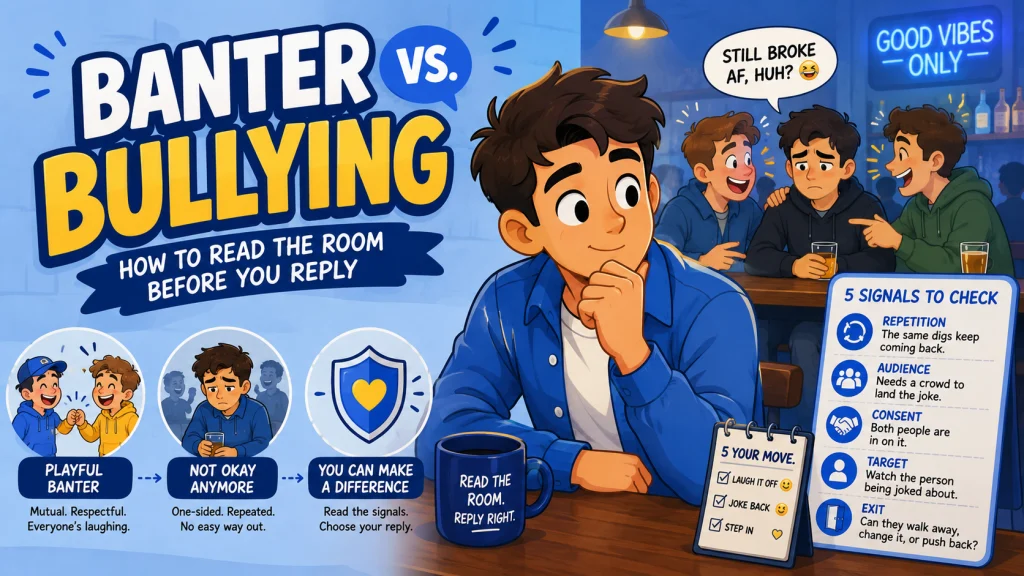
The Bar Test for Banter vs Bullying
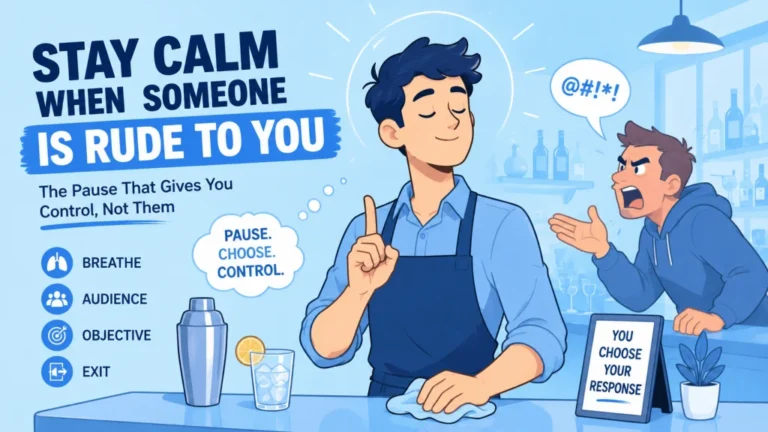
The fastest way I know to settle an argument about banter vs bullying is to stop listening to the joke and start watching the table. There was a regular who had a running bit about a friend’s terrible math with money, recycled most Thursdays because it always got a laugh. It got one for two rounds. By the third, with the table thinner and the drinks heavier, the same line landed on a guy who had stopped laughing and was just staring at his glass. Nobody else at that table noticed he had gone quiet. I did, because catching that shift is most of what nine years and three different cities behind a bar trained me to do.
Here is the test I actually trust: if the only person still laughing is the one holding the power in that exchange, whatever this is, it stopped being banter a while ago. Power can be obvious, like a boss riffing on someone’s mistake in front of the whole team, or it can be quieter, like the one person in a friend group everyone already defers to without thinking about it. The joke itself does not have to change for the dynamic underneath it to shift. What changes is whether the other person still has room to push back, laugh it off, or walk away without paying a social cost for any of it.

The Signals Worth Reading Before You React
Once I stop focusing on the joke itself and start watching the table, a handful of signals tend to tell me everything I need to know, whether the question on the table is playful teasing vs bullying among friends or something with sharper stakes at work. None of them require reading anyone’s mind. People who study bullying for a living keep landing on two basic ingredients, a real or perceived power imbalance and behavior that is repeated or likely to repeat, a framework laid out clearly in StopBullying.gov’s definition of what counts as bullying. That definition was built with school hallways in mind, but it holds up just as well for a group chat or a bar booth, because power and repetition are exactly what turn one rough joke into something closer to a pattern.
- Repetition. One joke is just a joke. The same dig coming back after it has already landed once is doing something different the second time around.
- Audience. A line that only works because three other people are watching and laughing is leaning on the crowd to do work the joke cannot do by itself.
- Consent. Real banter is something both people opted into, even silently, by joining in and keeping it going.
- Target. Watch the person the joke is actually about, not the table around them. Their face is the only reaction that matters here.
- Exit. Can the other person change the subject, push back, or walk away without it costing them something socially? If not, the joke is carrying more leverage than either side probably wants to admit.
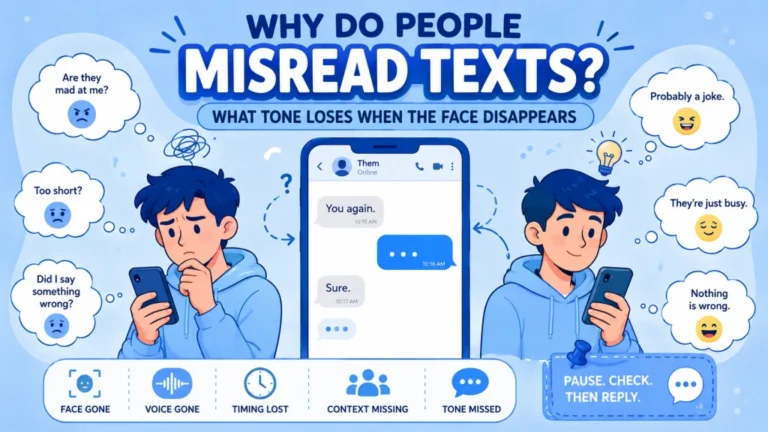
It also explains why two people who would both call themselves friends can walk away from the same exchange with two completely different verdicts. studies on how teasing gets perceived keep finding that identical words can land as playful for one person and hostile for another, depending entirely on the relationship carrying them. Tone of voice and timing matter, but so does history, the kind that never makes it into the actual sentence.
Even people who study where banter turns into bullying point to the same thing I have watched happen from behind a bar: it survives on both people being able to walk away from it the same way they walked into it. The second that stops being true for one side, the label on what is happening changes, whether or not the wording of the joke does.

Why This Changes What You Say Back
Knowing which side of that line you are on changes everything about what you send back, because the three kinds of replies people ask me for are not interchangeable. A funny reply works when the exchange is still mutual and you are matching energy instead of escalating past it. A line built to actually sting only belongs in a moment where someone has already shown they are using power instead of humor, which is a very different situation from a friend group ribbing each other on a slow Tuesday night. For that harder end of the range, a sharper set of comeback lines exists for exactly the moment banter has already curdled into something meant to needle you on purpose.
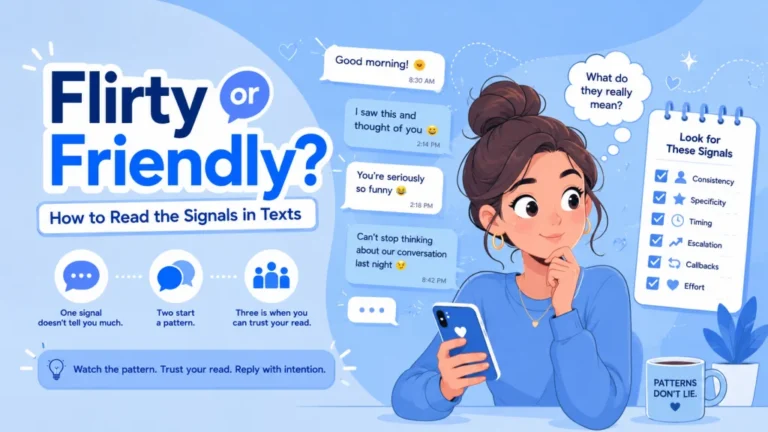
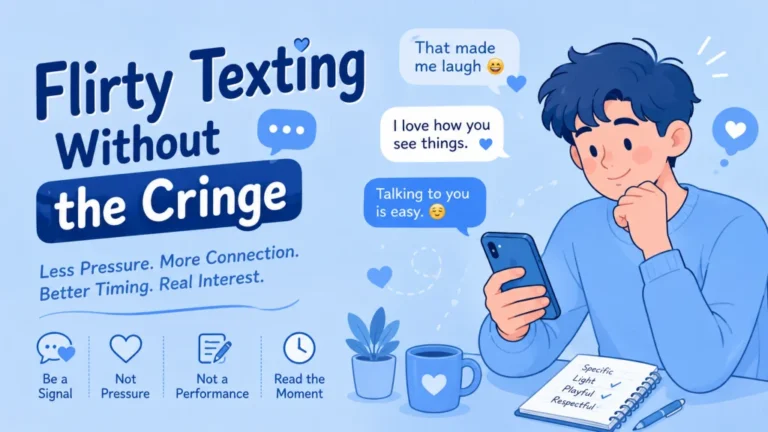
Flirty teasing sits closer to banter than either of the other two, because the entire appeal depends on both people wanting to keep volleying. The moment one side stops playing along and the other keeps pushing anyway, it stops being flirtation and starts looking like the same power problem wearing a different outfit. The kind of playful flirty reply that actually works reads as an invitation, never as something that boxes the other person in.
| What’s Actually Happening | What the Moment Calls For |
|---|---|
| Both people are landing jokes and taking them the same way | Match the energy and keep it moving |
| One person keeps going after the other has clearly stopped enjoying it | A flat, direct redirect, not a funnier comeback |
| A tease gets a tease back, both sides leaning in | Keep it playful and let the volley continue |
| The same dig returns after someone has already asked for it to stop | Address it plainly, this is no longer a joke worth playing along with |
That last row is the one people get wrong most often, because by the time a joke has already been asked to stop once, answering with something cleverer just proves nobody at the table was actually listening. The instinct to win the moment with a better line is understandable, since that is usually what gets the laugh. But landing a joke and landing a point are different goals, and only one of them actually needs the other person to walk away feeling okay.
Where Good Judgment Actually Comes From
The mistake I see most, by a wide margin, is people trusting the table instead of trusting the target. If four out of five people are laughing, it feels unanimous, like a verdict has already been reached and the fifth person just has not caught up yet. It happens at work just as often as anywhere else, because research on power imbalance at work points toward the same problem I see behind a bar: the person with less power often carries more of the cost of deciding whether something was actually a joke.
I almost made that exact mistake once, with a regular who kept ribbing a coworker about a mistake from months earlier, every single time the two of them came in together. The table always laughed, including, for a while, the guy it was aimed at. Then one night his laugh got thinner, more automatic, the kind people fake when they have run out of better options. I almost poured the next round and moved on, because the room had not changed even though he clearly had. What stopped me was something smaller: he had started ordering separately instead of splitting the tab with the guy across from him, a tell that had nothing to do with jokes and everything to do with not wanting to owe that friendship anything else that night.
If that kind of dynamic sounds familiar from your own group chat or office, the shift in what to say back is usually smaller than people expect, less about a perfect line and more about refusing to play the bit anymore. There is a whole approach built around exactly that situation in what to say when someone won’t drop a joke, for whenever the signals above have already told you which one you are dealing with. None of it requires winning the exchange. It just requires being the first person at the table to say out loud what everyone else already noticed and decided not to mention.

Final Thoughts: A Good Line Should Make the Room Lighter, Not Smaller
None of this requires a perfect read every single time, and I still get it wrong occasionally, usually by giving a joke one extra round it did not deserve before I noticed the shift. What I trust now is the test itself more than the tone of anything being said: who still has room to laugh, push back, or walk away clean, and who does not. That is the whole shortcut I have for banter vs bullying, no fancier than that. Banter, even the loud, sharp-elbowed kind, should leave both people standing a little taller afterward. The moment it only works because one person cannot get up from the table without losing something, it has already stopped being a joke, whatever anyone wants to call it on the way out.
FAQs
🤔 What’s the real difference between banter and bullying?
Banter is something both people can walk away from the same way they walked into it. Bullying keeps going after one side has already shown they want out, whether that’s said outright or just written all over their face. The wording can look identical. The difference is in who still has a say in how long it continues.
😬 How do you know when a joke has gone too far?
Watch the person it’s aimed at, not the table around them. If their laugh has gone thin, automatic, or stopped entirely while everyone else keeps going, the joke crossed a line a while ago even if nobody said so out loud.
🙅 Is it still banter if the other person stops laughing?
No. The second one person stops enjoying it and the other keeps going anyway, it has already shifted into something one-sided. Calling it banter at that point is doing the talking for someone who has already gone quiet.
💬 What do you do when banter turns into bullying in a group chat?
Say something plain and direct instead of trying to out-joke it, since a clever reply at that point just adds another layer to the pile-on. A flat line that names what’s happening usually lands harder than anything funnier would.
🧐 Can banter turn into bullying without anyone meaning it to?
Easily, and it happens more from carelessness than cruelty. A joke that used to land fine can stop working the moment the context around it changes, like after a bad week, a public mistake, or a shift in who’s actually in the room.
🚫 Should you always call it out the moment banter goes too far?
Not always, and not if doing so puts you in a worse spot with someone who has shown real intent to hurt rather than just misjudge a joke. For ordinary banter that’s drifted off course, a direct redirect usually works. For anything closer to actual harassment or abuse, that’s a different conversation entirely, and not one a comeback line is built for.