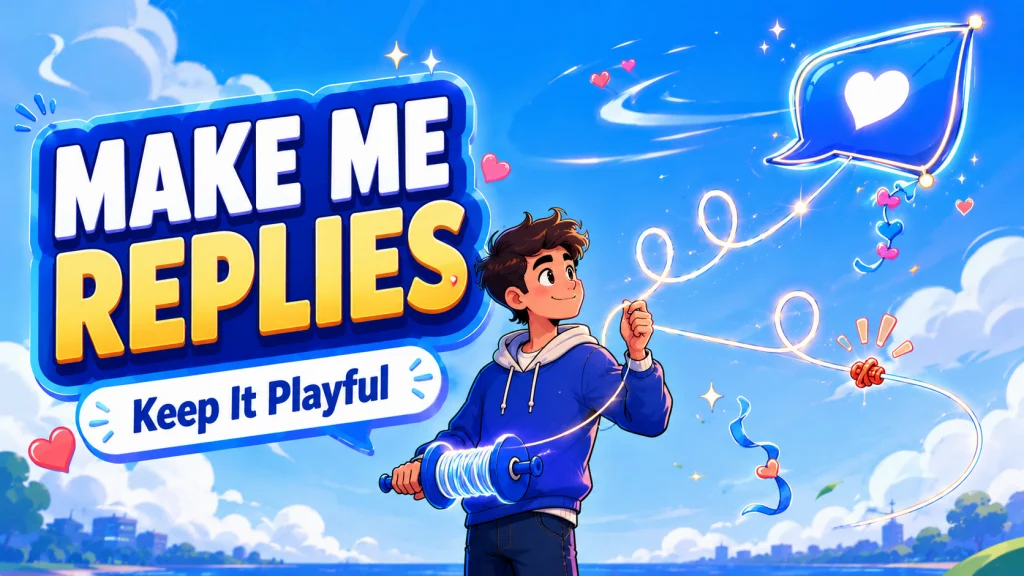
“Make me” can be a flirt, a dare, or a warning sign, and the comeback only works if you know which room you are actually standing in. I have seen the same three words land as a playful invitation one night and as something a lot less fun the next, and the difference is never in the text itself. This is a set of flirty comebacks for when someone says “make me,” sorted by how far the moment actually calls for: soft, teasing, bold, or a short text-only line that does not overdo it. I will also cover what to do when the challenge stops feeling playful, because that matters as much as the comebacks do. By the end you will know which version fits the exact “make me” you got, not just a clever line to copy blind.
Three Words, Three Very Different Situations
“Make me” is short enough that it can mean almost anything, and that is exactly the problem. The same line can show up as a light tease from someone you have been going back and forth with for a week, a genuine dare from someone testing whether you will play along, or, less often, something pushier dressed up as a joke. Good comebacks to “make me” start with reading which of those three rooms you are actually in, not with picking the wittiest line you can think of.
The fastest way to tell the difference is to notice what came before it. A “make me” that follows banter, compliments, or back-and-forth teasing is almost always playful. A “make me” that shows up out of nowhere, attached to something you clearly said no to, or repeated after you already deflected once, is a different animal entirely. The comeback you reach for should match that read, not just the three words sitting on their own.

Soft Replies: Playful Without Pressure
Some situations call for keeping things light without pushing anything further, especially early on or with someone you are still feeling out. A soft comeback here lets the tease land without escalating it, and without making either of you commit to more than a text deserves. This register works well for new matches, early flirting, or anyone you want to keep things easy with.
- “I don’t take orders that easily.”
- “You’ll have to work a little harder than that.”
- “Not falling for that one.”
- “Cute attempt, try again.”
- “I’m not that easy to convince.”
- “You wish it worked like that.”
- “Nice try, but no.”
- “I’ll need a better offer than that.”
- “That’s not how this works.”
- “You’re going to have to earn that.”
- “I don’t move that fast for anyone.”
- “Good attempt, still a no.”
- “You’ll have to be more convincing.”
- “That line needs some work.”
- “Not today.”
- “I don’t get talked into things that easily.”
None of these close the door, but none of them hand anything over either. They let the other person know the tease landed without making it feel like a yes to whatever comes next.
Teasing Replies: Keep the Ball Moving
Once there is already some flirting on the table, a teasing comeback keeps the exchange going instead of shutting it down. This is the register for when you are enjoying the back and forth and want to volley it back rather than end the point. The goal is momentum, not resolution, since the fun is usually in stretching the moment out a little longer.
- “Careful what you wish for.”
- “I might, if you ask nicely.”
- “You’re playing a dangerous game right now.”
- “Keep talking like that and see what happens.”
- “That’s a bold thing to say to me.”
- “You really want to test that theory?”
- “I like that you think that’s going to work.”
- “Bold of you to assume I will.”
- “You’re enjoying this a little too much.”
- “Tempting, but I’m not telling you yet.”
- “Watch it, I might actually consider it.”
- “You’re lucky I find that charming.”
- “Keep that energy up and we’ll see.”
- “I’ll think about it, no promises.”
- “You’re really pushing your luck right now.”
- “That confidence is doing a lot of work for you.”
These keep both people leaning in without anyone having to commit to an outcome. They work especially well in a thread that has already had some back and forth, where the comeback is just the next volley, not a decision point.

Confident Replies: Bolder When the Vibe Is Mutual
When the flirting is clearly mutual and the energy has already built up over a few exchanges, a bolder comeback can match that without feeling like it came out of nowhere. This register works best once you already know the interest is going both ways, since a confident line that lands too early can read differently than the same line landing after real back and forth.
- “Careful, I actually might.”
- “Keep talking and you’ll find out.”
- “You clearly don’t know what you’re asking for.”
- “That’s exactly the kind of trouble I like.”
- “You should know by now I don’t back down from that.”
- “Say that again and mean it.”
- “I was hoping you’d say that.”
- “You’re about to find out what happens when you say that.”
- “I don’t usually need convincing, but go on.”
- “You’re playing with fire and I like it.”
- “Careful, that’s an invitation I’ll actually take.”
- “You already know I will.”
- “That’s not a dare, that’s a promise.”
- “I was waiting for you to say that.”
- “Go ahead, try me.”
- “You’re more trouble than you think you are.”
The confidence here only works because the context already supports it. The same line dropped on someone you barely know reads as presumptuous instead of charming, so save this register for when the mutual interest is already established, not as a way to manufacture it.
Text-Only Replies: Short and Not Creepy
Texting strips out tone of voice and facial expression, so a line that would read as obviously playful out loud can land differently typed out cold. The safest move over text is keeping it short, since long replies tend to read as either trying too hard or taking the dare more seriously than it was meant. These work well when you are not sure how the other person will read a longer, bolder line.
- “Lol no.”
- “Try harder.”
- “Cute, but no.”
- “Not happening.”
- “We’ll see.”
- “You first.”
- “Ask better.”
- “Convince me.”
- “Good luck with that.”
- “I’ll consider it.”
- “Nice attempt.”
- “You’re funny.”
- “Bold move.”
- “Keep dreaming.”
- “Maybe later.”
- “Doubt it.”
- “Sure, you first.”
Short replies like these also leave room to escalate later if the conversation actually calls for it, instead of putting all your cards down in the first text back.

When It Stops Feeling Playful
Not every “make me” stays in the room it started in. If the line shows up after you already said no to something, gets repeated when you tried to change the subject, or comes with pressure attached instead of playfulness, that is not a flirt anymore, and it does not need a clever comeback. Coercive lines, veiled threats, or sexual pressure dressed up as banter do not deserve a witty answer, they deserve a clear deflection or a flat exit from the conversation.
- “Not interested, and I mean that.”
- “That’s not something I’m going to do.”
- “I already said no.”
- “I’m going to stop responding if this keeps up.”
- “This isn’t landing the way you think it is.”
You do not owe anyone charm once a line crosses from playful into pressure. Disengaging, blocking, or simply not replying is a complete answer on its own, and it does not need to be funny to be right.
Reading the Room Before You Reply
The line “make me” is not the thing you are actually responding to, the context around it is. Soft, teasing, confident, and short text-only comebacks all exist for the version of this challenge that stays playful, and each one earns its place depending on how established the flirting already is. The one thing none of them are built for is pressure, and that situation calls for a clear boundary instead of a punchline.
If “make me” is the version of the dare you got, the broader range of playful flirty comebacks covers how this challenge compares to similar ones like “prove it” or “you can’t handle me,” in case the conversation shifts into one of those next. For a wider look at matching interest and intensity, the flirty replies guide gives you the bigger picture. And if the back and forth has already built up some confidence on your end, the flirty replies to a “prove it” text pick up almost exactly where this challenge tends to lead.
FAQs
💬 What’s a flirty comeback to “make me”?
Something that matches the dare without overcommitting, like “you’ll have to work a little harder than that.” Keep it playful and let the context decide how bold to go.
😏 How do you respond to “make me” over text?
Keep it short. A long reply over text tends to read as more serious than it was meant, so a quick line like “convince me” does more work than a paragraph.
🙂 Is “make me” always flirting?
Usually, if it follows banter or compliments. It is worth a second look if it shows up after you already said no to something or feels repeated and pushy.
😬 What if “make me” feels aggressive instead of playful?
Skip the clever comeback. A flat line like “I already said no” or simply not replying is a complete answer, and you do not owe charm to a line that crossed into pressure.
😎 How bold can I be when replying to “make me”?
Match the energy that is already there. Bold works once the flirting is clearly mutual, but it can read as presumptuous if you reach for it too early.