Every rude text comeback you send is a screenshot waiting to happen. That changes which one you should pick. I sorted 70 rude text comebacks by how much heat you can actually afford in writing: cool one-liners that say nothing and imply everything, direct callouts that name the tone without starting a war, friend-level replies that can be blunter, work-safe versions that stay clean, and final-message exits that close the thread on your terms. The replies that hold up longest are rarely the ones that said the most.
A Rude Text Is Not Just a Message
A rude text is evidence. The moment it lands on your phone, it becomes a record. Someone is going to screenshot it, read it out loud to a friend, or pull it up in a completely different conversation three weeks from now. That is true for what they sent. It is equally true for what you send back.
I spent nine years behind a bar watching people text in real time, and the ones who came to me with regrets almost never regretted saying too little. The message that caused problems later was almost always the reply, the one typed fast and sent before thinking it through, that looked completely different in someone else’s hands. The goal here is not to make you swallow anything. It is to help you say exactly what you mean in a way that still holds up when someone else reads it over their friend’s shoulder.
The sorting principle I used for this list is simple: how much heat can you actually afford in writing? That depends on who sent it, what you want out of the situation, and what you are willing to have attributed to you later. Here is how the list breaks down before you get into it.
| What you need the reply to do | Reply type to use |
|---|---|
| Make their text look loud by saying almost nothing back | Cool and short |
| Name the tone without turning it into a confrontation | Direct callout |
| Be honest with someone who actually knows you | Friend replies |
| Stay professional and completely screenshot-proof | Work or group-chat safe |
| End the conversation on your terms | Final-message replies |
Every reply on this list is written to be readable twice. Because it will be.
Cool and Short Replies
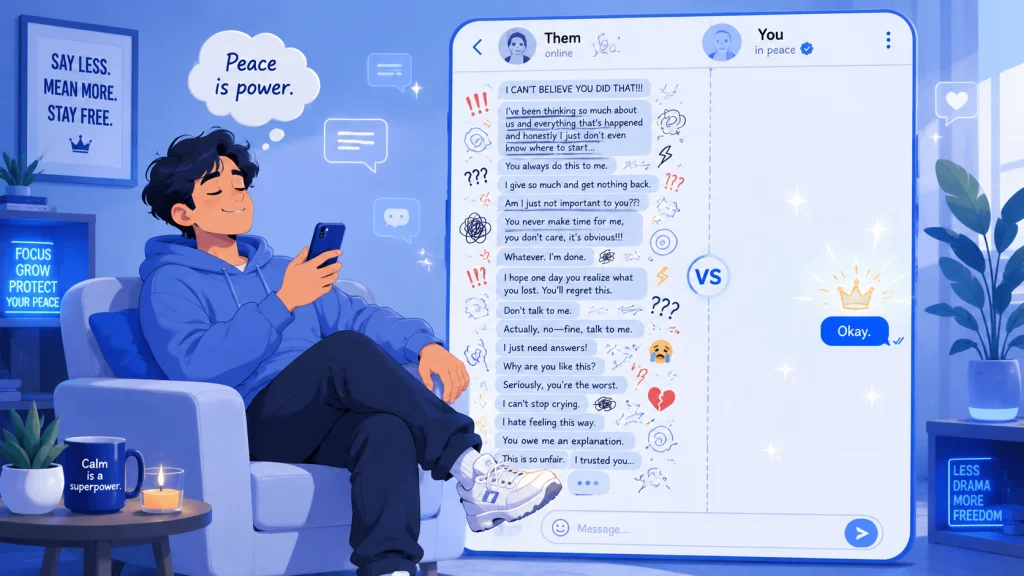
The quietest comeback is usually the sharpest. When someone sends you something rude, the instinct is to match the energy, to fire back with something just as pointed or longer or louder. But the shorter your reply, the louder their message sounds by comparison. “Okay.” sent with nothing else forces the other person to sit with what they just texted. It does not give them anything to argue with. It just leaves them there.
I have been asked more than once whether these even count as comebacks. They count. Cool and short rude text replies work because they make the other person’s words stand alone in the thread, unmatched, which is often more effective than anything you could add. The disrespect is right there in what they sent. You do not need to point at it.
- Okay.
- Noted.
- Interesting choice.
- Good to know.
- That’s a lot of words.
- I read it.
- Cool.
- Mm.
- Sure.
- Alright.
- Take your time.
- That landed differently than you intended.
- I’ll think about that.
- Bless.
- Okay then.
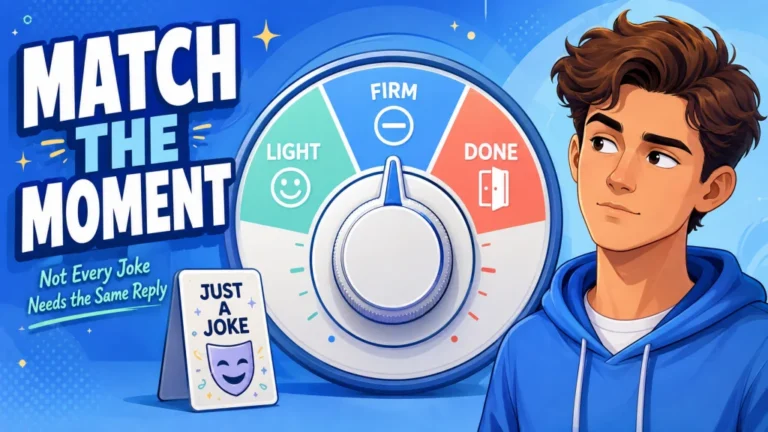
A few of these run on their own as complete replies. Others work best as openers, giving the other person a beat to come back differently before you decide whether the conversation is worth continuing. “Noted.” into silence is a full reply. “Noted. Let me know when you want to try that differently.” is a different kind of move, and which one you use is entirely yours to decide.
Direct Callout Replies
Sometimes the moment calls for naming what just happened, clearly, without turning it into a whole confrontation. Direct callout replies do exactly that: they acknowledge the tone, they decline to absorb it, and they leave the door open or close it depending on which version you pick. These are not apologies and they are not accusations. They are observations. Flat, short, and hard to argue with.
The version people get wrong most often is the one that starts with an explanation. “I just want you to know that I felt really disrespected when you said…” is a therapy session, not a reply to a rude text. The direct callout works when it is short and stated plainly, one sentence, no softening, no apology for how their words landed. If you are dealing with a pattern of this across multiple conversations rather than a single exchange, the savage replies to text messages covers more of that ground.
- That was rude and I’m going to need you to try again.
- You can say what you mean without the attitude.
- That’s not how you talk to me.
- I don’t know what happened in your day, but that text isn’t okay.
- I’m going to pretend that one didn’t send.
- That came out sharper than the situation needed.
- You clearly have something to say. When you figure out how to say it, I’m here.
- I’d appreciate a different tone if we’re going to keep talking.
- Take a breath and send a better version of that.
- If you meant to be rude, you succeeded. If not, try again.
- I’m not responding to that version. Send the one without the edge.
- That text tells me more about your day than your actual point.
- I don’t know what I’m supposed to do with that.
- Try again. That one wasn’t it.
- I’ll be here when you figure out what you actually want to say.
What makes these land is the tone, not the phrasing. “That’s not how you talk to me.” is a statement. There is no question mark, no invitation to debate whether the text was actually rude. It says the thing and stops. That is the part people most often over-explain, and the over-explaining is what dilutes the whole thing. Say it once. Leave it there.
Friend Replies
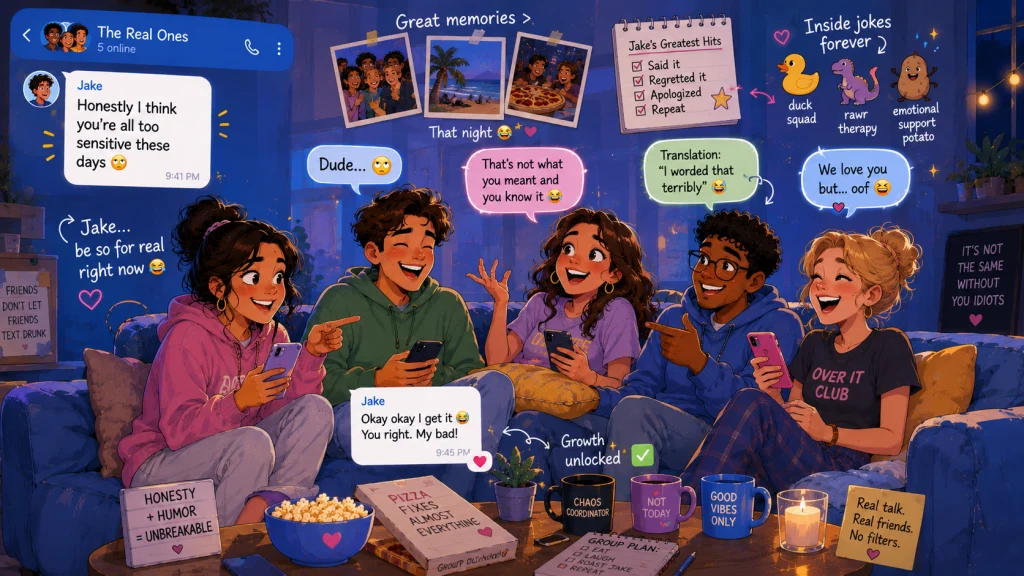
Friends get sharper comebacks because the relationship can take it, and because being vague with someone who actually knows you rarely lands the way you hope. A cool one-word reply to a close friend can feel passive-aggressive in a way it would not from a stranger. The formal callout sounds strange coming from someone they have known for years and texted a thousand times before. Friend-level replies are blunter because they have to be.
Some of them are also a little funny, because that is how real friendships de-escalate without turning a bad text into a bad week. There is a version of “Babe. No.” that ends something before it becomes a whole thing. I have handed that one out in more group chats than I can count, and it works almost every time, because it gives the other person a way to laugh at themselves and step back instead of doubling down.
- Okay, who hurt you and what do they owe you.
- That was unnecessarily sharp and you know it.
- We’re not doing that. Rewrite it.
- I love you, but that text was genuinely rude.
- Babe. No.
- Try that again with human words.
- I’m ignoring that version. Let me know when you’re back.
- I didn’t sign up for this energy today.
- You’re not wrong, but you could have said it so differently.
- I know you’re stressed, but this text is not it.
- Whatever’s going on, you don’t get to take it out on me over text.
- Hard pass on that tone. Talk to me like a person.
- I’ll wait. Whenever you’re ready to not be like that.
- That’s not a you problem, that’s a reword-your-message problem.
- This is why people don’t text you back.
These are not meant to damage anything. They are meant to make it clear, quickly, that the text was not okay, and give the other person a real chance to correct course before the conversation becomes something neither of you wants to sit with later. The friend versions work because they skip the formal register and just say what someone who actually cares about you would say out loud.
Work or Group-Chat Safe Replies
These are the replies that have to survive the forward to a manager, the screenshot in the wrong thread, and the overly technical reading later in a meeting. The goal is not to roll over. The goal is to be completely unimpeachable while still making it clear you are not quietly absorbing it.
Work-safe replies operate on a different logic than personal ones. The phrasing is measured. The tone is calm. The effect is that your reply looks like the composed one in the thread, which carries its own weight without needing to say anything pointed. What I noticed after watching a lot of professional exchanges go sideways is that the person who keeps their language clean in writing almost always comes out ahead when someone else reviews the thread later. Your reply being the reasonable one is its own kind of win.
- I think there may have been a miscommunication here.
- I’d prefer to discuss this a different way if possible.
- That’s noted, though I’d appreciate a different approach going forward.
- Let’s revisit this when things are calmer.
- I don’t think that message came across the way you intended.
- I’m happy to talk through this, but not with that tone.
- I’ll follow up separately when we can have a cleaner conversation.
- I think we’re misreading each other. Let’s reset.
- That message caught me off guard. I’d like to come back to this.
- I’ll need a moment before I respond to this one.
Read those out loud. Not one of them sounds aggressive. Not one of them could be screenshotted and used against you. But every single one says, clearly, that you noticed and you are not pretending the message was fine. That is the actual goal here: not winning, not escalating, just making it plain that you are not participating in it.

Final-Message Replies
These are not meant to get a response. A final-message reply exists to close the thread on your terms, which means the last word in the conversation is yours, and it is not feeding anything. It is not an invitation. It is not a setup for a comeback from them. It just ends it.
The most common mistake I see with closers is the one that keeps opening a door. “I’m not going to respond to this because of how you’re speaking to me” is a sentence that ends the conversation while also re-opening it, because now there is a reason on the table and reasons invite arguments. The cleaner version drops the because entirely and just says the thing.
- We’re done here.
- I’m done with this conversation.
- Take care.
- That’s enough for me.
- I don’t have anything to add.
- I won’t be responding further.
- Thanks for clarifying where you stand.
- I’ve heard enough.
- Noted. Goodbye.
- I’m not continuing this.
- We’ll talk when the tone changes.
- I’ll be here if you decide to come back differently.
- I have nothing more to say about this.
- This is where I step out.
- Okay. We’re done.
Some of these are permanent exits. “I won’t be responding further.” is a closed door. Others are conditional. “We’ll talk when the tone changes.” leaves something open, which is a choice, not a weakness. The right one depends entirely on what you want the next chapter of this to look like. If what arrived was not a single direct rude message but a pattern of loaded comments and indirect digs, that is a different situation entirely, and passive-aggressive text comebacks handles it differently.
What Not to Text Back
The reply that costs you something later is almost never the one that said too little. It is almost always one of these four, and the reason they cause problems is not that they said the wrong thing. It is that they said the right thing in a way that looks completely different on someone else’s screen.
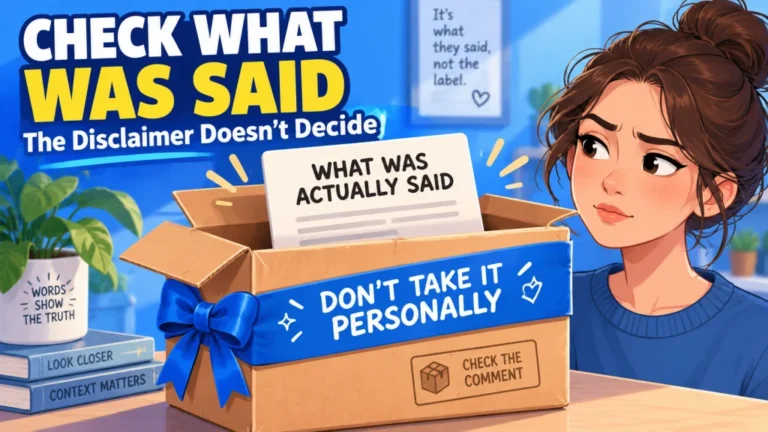
The essay reply is the most common. Someone sends you something rude and you draft three paragraphs explaining why they are wrong, what your actual feelings are, and what you need from them going forward. In your head it is thorough. In a screenshot it looks defensive, and whoever is reading it does not need to add a single word. The length does the work for them. If what you want to say genuinely needs more than four sentences, it belongs in a phone call, not a text thread.
Insults that can be reversed are a close second. Calling someone names in writing hands them material. Whatever they said first stops mattering because now there is something to point at. The comebacks on this list are sharp without being name-calling, which is exactly why they hold up under a second read.
“You are such an idiot.”
That is the version that can get forwarded. Not theirs. Yours. Whatever started the whole thing, that is the text that may define the exchange when someone else sees it.
Threats are third, and this one matters. Even vague ones. Even the kind that start with “I swear to God” or end with “you’ll regret that.” However briefly satisfying they feel to type, they are the ones that can turn a rude text exchange into something with very different implications. This is one of the places where SlyLines steps back and says plainly: if something crosses into harassment or feels unsafe, a better comeback is not the right answer. That belongs with a different kind of response entirely.
The drunk reply is last, and it is the simplest to fix. Send it in the morning. Or not at all. Whatever feels obvious at midnight has a way of reading very differently at 9am when you scroll back through the thread. None of the replies on this list were written for 2am. They were written for the calmer version of you who has had a minute to breathe and knows exactly what they actually want to say.
Final Thoughts: The Reply That Holds Up
A rude text is an invitation to engage at that level or not. Every reply on this list is written with the same question in mind: would you flinch if this showed up in someone else’s phone? The ones that work best are the ones where the answer is no, where your reply is the composed one, the measured one, the one that does not need context to look reasonable.
Savage responses to rude texts land hardest when they do not look like effort. Short, flat, and clean is almost always the right direction, regardless of which category fits your situation. For everything beyond a single exchange, the full range of what sharp replies can look like across different situations and dynamics is at savage comebacks. The version that holds up in a screenshot is the one worth sending.
FAQs
💬 What is a good comeback for a rude text?
The best comebacks for rude text messages are short, calm, and unambiguous. “That’s not how you talk to me.” and “I’m not responding to that version.” both work because they name what happened without escalating into a whole thing. The length of your reply is part of the message, and shorter almost always lands harder.
📸 What should I text back if I know it’s going to get screenshotted?
Write the reply you would be fine with anyone seeing. Short, direct, no insults, no threats, no essays. The cool and short options on this list were built for exactly that situation. If your reply sounds composed and theirs sounds aggressive, the screenshot ends up working in your favor.
🤐 Is it better to just not respond to a rude text at all?
Sometimes. If the person is looking for a reaction, not replying is the sharpest thing you can do. This list exists for people who have decided they want to say something back, and not responding is always on the table. Silence is not a failure. It is a choice.
😤 How do I respond to a rude text without looking petty?
Stay short and stay flat. Pettiness usually comes from length, from matching their energy, or from dragging in things that belong to a different conversation. A one-line reply that names the tone without spiraling reads as confident, not petty. The direct callout options here do that without crossing into it.
🛑 What should I never text back when someone is rude to me?
Avoid insults that give them something to screenshot, essays that look defensive in a thread, threats of any kind, and anything typed at midnight without rereading in the morning. Those are the four that cause the most problems later, regardless of how justified they felt in the moment they were sent.
💼 What is a professional way to respond to a rude text from a coworker?
Keep it clean and measured. “I’d prefer to discuss this a different way if possible.” or “I think there may have been a miscommunication here.” Both say you noticed without giving anyone anything to use against you. The goal is to be the composed one in the thread, which is its own kind of win.