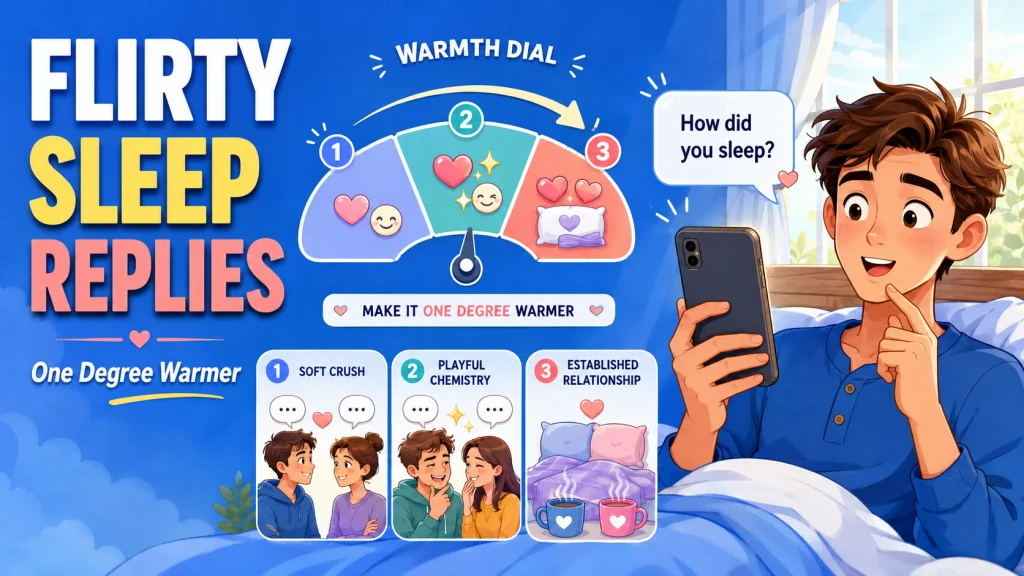
“How did you sleep?” is one of those harmless-looking texts that can either die in one line or become a very easy little flirt. The best flirty responses to how did you sleep do not suddenly turn the morning intimate, they answer the question and add one degree of warmth. If you are still getting to know each other, keep it light; if the chemistry is already obvious, you can be more direct. The goal is not to sound irresistible, it is to give the other person something easy to pick up and send back.
Why this morning question can feel more personal than it looks
“How did you sleep?” looks harmless until you realize the answer can sound either like a weather report or an invitation to keep talking. A plain “fine, you?” works, but it leaves almost nothing on the table, while a small playful detail gives the other person a thread to pull. That is the useful middle ground when you want to answer flirtatiously without acting as though the two of you already share a level of intimacy you have not earned yet. I have watched people overcorrect this exact kind of moment for years, and the jump from routine to overly personal is usually where the line starts feeling rehearsed.
The easiest move is to answer honestly first, then tilt the answer toward them. “Pretty well, but your text improved the morning” is warmer than a sleep report without pretending you spent the night dreaming about them. “I survived, now tell me how you did” keeps it playful and gives them a clear way back into the conversation. If you want more ways to create that light first spark without making the message heavy, the same restraint shows up in flirty text openers too.
| Where you are | Best direction |
|---|---|
| New crush or early talking stage | Keep it soft and lightly warm. |
| Mutual interest is obvious | Be more direct and confident. |
| Established relationship | Use warmer affection or shared teasing. |
That progression matters more than finding the cleverest line in the list. If you are unsure which row fits, choose the softer one and let the next reply tell you whether there is room to turn the warmth up. If what you really want is a joke-first answer, keep the exchange funny rather than trying to disguise a punchline as flirtation. The sections below make each level easier to use without asking you to guess at hidden romantic intent.
Quick flirty replies when you need one text now
If you are staring at the screen and do not need a philosophy lesson, keep the reply short enough to sound like something you actually typed half-awake. The strongest quick lines answer the question, add a little warmth, and leave room for the other person to do something with it. They do not need a setup, a punchline, and a second sentence explaining the punchline. Most people overthink this part because they are trying to prove they can flirt instead of simply flirting.
- “Pretty well. Waking up to you helped.”
- “Good, but I think this conversation might improve things.”
- “Better than expected. How about you, trouble?”
- “I slept fine. You are a suspiciously good first message, though.”
- “Not bad. I am accepting better morning entertainment now.”
- “Good enough to be charming before coffee.”
Pick the line that is closest to the tone you already use with them, not the one that sounds boldest in isolation. If you have been gentle and a little shy, “waking up to you helped” fits better than suddenly calling them trouble. If your texts already have a teasing rhythm, the more playful options have somewhere to land. A reply works because it sounds like you in that conversation, not because it would look impressive in a screenshot.

Soft replies for a new crush or early talking stage
Early on, the best flirt is usually a small signal rather than a declaration. You want the other person to notice that your answer is warmer than polite, but you do not need to make them decode a dramatic dream story or a fake confession. What I have noticed in early-stage flirting is that people often want to show interest without making the whole exchange depend on the other person matching it immediately. A soft line handles that well because it leaves the conversation comfortable whether the other person flirts back or simply keeps talking.
- “Pretty good. Nice message to wake up to.”
- “I slept well. You are making the morning more interesting.”
- “Not bad at all. I could get used to this check-in.”
- “Good, actually. How did you sleep?”
- “Fine until I had to decide how charming to be in this reply.”
The mistake here is trying to sound intimate before the relationship is intimate. “I wish you were beside me” can be sweet between people who already talk that way, but from someone you have barely started texting it can feel like the conversation skipped three scenes. A softer line does not mean you are hiding your interest, it means you are giving that interest the right size. That is often more attractive than forcing a moment that was still perfectly good at a lower volume.
Playful morning teasing without making the night sound more intimate than it was
Teasing works best when the joke is about the conversation happening now, not a made-up version of what happened while you were asleep. You can be a little smug, a little difficult, or a little suspicious of why they are checking in without claiming anything that did not happen. That keeps the flirt grounded in the actual exchange, which is where chemistry has a chance to build instead of being announced. It also gives them an easy choice: tease you back, answer normally, or turn the flirt up themselves.
- “Why, are you checking whether I dreamed about you?”
- “Pretty well. Is this concern or are you collecting data on me?”
- “Fine, but I am curious why you sound so invested.”
- “Good. You asking this sweetly on purpose?”
A short exchange can carry more chemistry than a big one-liner because both people get to contribute. Them: “How did you sleep?” You: “Pretty well. Are you always this attentive?” Them: “Only when I like someone.” That reply does not force the confession, it simply creates enough space for the other person to decide whether they want to step into it.

Confident replies when the interest is already obvious
Once you both know there is something going on, you can stop hiding every signal behind a joke. Confidence here does not mean turning the message sexual, it means letting the warmth be unmistakable. “Good, but I like waking up to your name” says more than a complicated line because there is no nervous little escape hatch built into it. When the interest is already obvious, pretending you are not flirting can actually sound stranger than simply admitting you enjoy the attention.
- “Good. Seeing your name made it better.”
- “I slept well, but this is my favorite part of the morning.”
- “Pretty well. I was hoping I would hear from you.”
- “Good enough, but I like where this conversation is going.”
This is also where a broader set of flirty replies becomes useful, because the same principle carries across compliments, check-ins, and casual little openings. Match the confidence that already exists between you instead of trying to create it out of nowhere. Them: “How did you sleep?” You: “Well, but I was hoping you would be my first distraction.” Them: “Happy to help.” Nothing in that exchange needs to be louder than it is.
Established-relationship replies that can be warmer
When you already have history, affection, and a clear shared tone, the reply can carry more closeness because the context is doing half the work. A line that would feel presumptuous from a new match can feel ordinary and sweet from a partner. This is where cute flirty responses to how did you sleep can be more direct about missing them, wanting a hug, or liking the ritual of hearing from them. The difference is not that the words became magically safer, it is that the relationship has already given them meaning.
- “Good, but I still prefer waking up next to you.”
- “I slept fine. The bed was missing its better half.”
- “Pretty well, but I am collecting a hug later.”
- “Good. I like that you still ask me this.”
Warm does not have to mean syrupy. The same is true with flirty good morning replies, where an established rhythm can carry more affection than a brand-new conversation can. I have noticed that a four-word tease often lands better than a whole paragraph when the joke already belongs to both people. Them: “How did you sleep?” You: “Fine, blanket thief.” Them: “No evidence.” That kind of line works because it pulls on shared history instead of borrowing a generic romance script.

If you slept badly, be honest without turning the flirt into a complaint dump
You do not need to pretend you slept beautifully just because you want the conversation to stay light. A good answer can tell the truth and still keep the door open: “Honestly, not great, but your timing is helping” is enough. The common mistake is either faking enthusiasm or unloading every miserable detail when the other person asked a simple morning question. You can give them the real headline without handing them a full report they now have to manage.
- “Not my best night, but this message helps.”
- “A little rough, so I am accepting charming distractions.”
- “Could have been better. You can improve the morning, though.”
- “Barely, but I am awake enough to flirt apparently.”
The trick is proportion. Them: “How did you sleep?” You: “Pretty badly, honestly, but I am in a much better mood seeing you here.” Them: “Then I picked a good moment.” You have not hidden how you feel, but you also have not made the other person responsible for fixing it.
How did you sleep versus how was your night
The two questions overlap, but they do not always invite the same answer. “How did you sleep?” points more naturally toward rest, waking up, and the start of the conversation, so the easiest flirt is usually a small twist on that literal answer. “How was your night?” is broader and can invite what you did, where you went, or what was on your mind, which gives you more conversational routes. Neither question is automatically romantic, so the safest read is still the tone and history you already have with the person asking.
| Question | Easy flirty direction | Better to avoid |
|---|---|---|
| How did you sleep? | Answer honestly, then add warmth about seeing their message. | Inventing intimate dreams just to make the reply sound bold. |
| How was your night? | Share one real detail, then bounce the attention back with a playful question. | Assuming the question itself proves romantic interest. |
If someone asks, “How was your night?” you can say, “Quiet, but you are making the follow-up better,” which feels natural because it answers the broader question before flirting. If they ask, “How did you sleep?” the cleaner version is, “Pretty well, especially now that you are here.” The distinction is small, but small distinctions are what keep a reply from sounding copied. Read the actual question before reaching for the clever line.
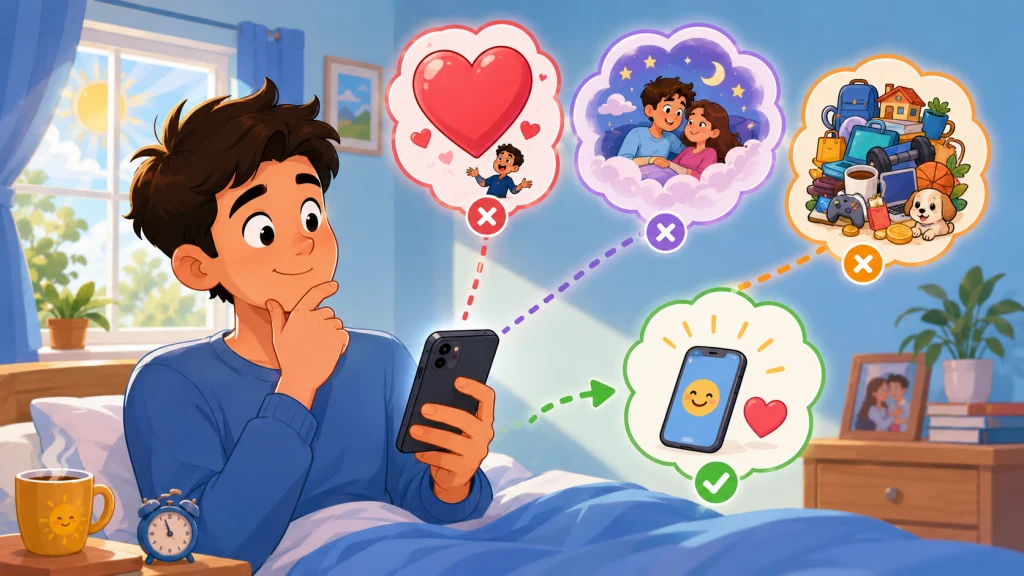
What not to send: sexual jumps, fake dream stories, or medical oversharing
A flirty answer can go wrong when it asks the other person to accept a level of closeness they never established. The obvious example is jumping straight to something sexual because the conversation happened around sleep, as though mentioning a bed automatically changed the tone. Another is inventing a dream about them because you think flirtation needs a dramatic hook. If it did not happen, you are building the moment on a performance, and performances are hard to keep natural once the other person replies.
The other direction is oversharing personal sleep details that turn a light check-in into a conversation the sender may not know how to hold. You can simply say you slept badly or had a rough night without turning the exchange into medical territory. If the person keeps the message casual, keep your answer proportionate; if they invite a more serious conversation later, that is a different moment. Flirting is not about squeezing maximum intensity out of every opening, it is about noticing how much room the opening actually gives you.
Final thoughts: make it one degree warmer
The cleanest answer to “How did you sleep?” is usually the true answer plus one small reason to keep talking. New crushes need softness, obvious mutual interest can handle confidence, and established relationships can carry warmer jokes. You do not need to manufacture a dream, write a miniature romance scene, or guess what the sender secretly meant. Pick the level that fits, then leave enough room for the next message to move things forward.
What I keep noticing in these tiny conversational moments is that timing beats cleverness more often than people want to admit. The line that lands is usually the one that feels easy enough for the other person to answer without wondering what just happened. If they warm the conversation up, you can meet them there; if they keep it casual, you have not made things awkward. That is a good flirt, not a grand performance, just a small opening that both people can choose to keep using.
FAQs
💬 How do you answer “How did you sleep?” in a flirty way?
Answer the question first, then add a small playful or warm detail. “Pretty well, and your message improved the morning” works because it does both jobs without forcing intimacy. If you already flirt openly, you can be more direct. Match the relationship you have, not the one you hope the text creates.
🌤️ What is a cute flirty reply if you just started talking?
Keep it soft enough that the other person can flirt back without pressure. “I slept well, nice message to wake up to” is clear but not heavy. Early chemistry usually benefits from a little room instead of a big declaration. Save the warmer lines for when the conversation has earned them.
😏 Can I tease someone who asks how I slept?
Yes, if teasing already fits the way you talk to each other. Try something like, “Why, were you hoping I dreamed about you?” because it is playful without claiming anything happened. If your conversation has been mostly polite, use a softer line first. The tease should feel like the next beat, not a personality transplant.
☕ What do I say if I slept badly but still want to flirt?
Tell the truth briefly, then turn the conversation back toward the present. “Not great, but your timing is helping” keeps the answer honest without turning it into a complaint dump. You do not need to fake a perfect night to sound attractive. A little honesty often sounds more natural than forced cheerfulness.
🌙 Is “How was your night?” more flirty than “How did you sleep?”
Not by itself. “How was your night?” is broader, while “How did you sleep?” points more directly to rest and waking up. Either can be casual, caring, or flirty depending on the history and tone between you. Read the conversation around the question instead of treating the wording as proof of interest.