“How did you sleep?” looks like a one-word question, but “good” can feel flat and a whole recap can feel like homework. The easiest funny answer is one that still tells the truth about your sleep, then adds one small twist. I sort these by what actually happened first, because a joke about sleeping brilliantly lands very differently when you clearly look wrecked. Below, you can grab a line that fits a good night, a bad one, almost no sleep, or a relationship where you want the joke to stay safely non-flirty.
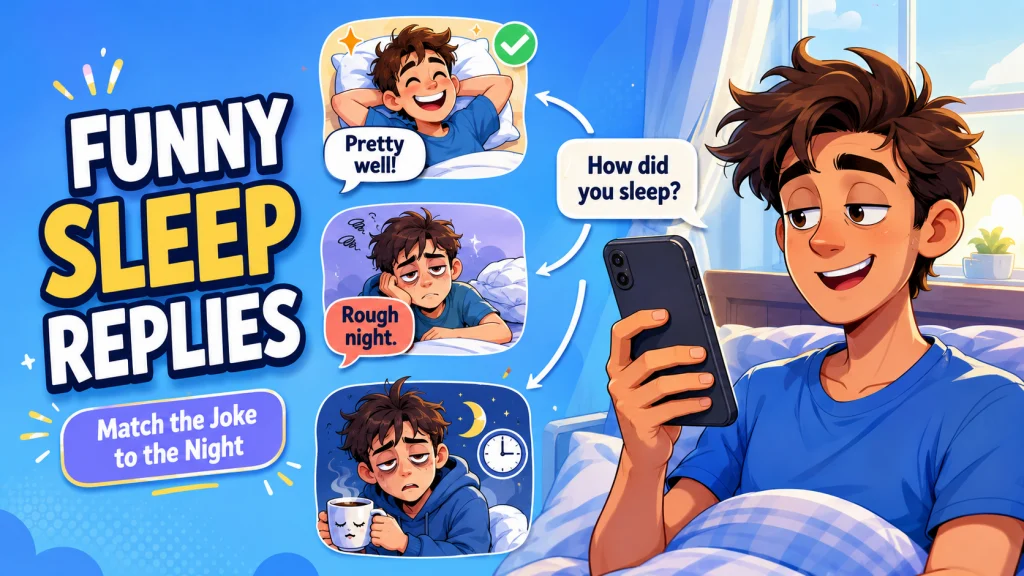
The question is simple, but the answer does not have to be boring
If you are looking for funny responses to “How did you sleep?”, start with the real answer and make the joke the second beat. If you slept well, say that and make it playful. If you slept badly, you can admit it without turning the message into a dramatic report. The person asking usually needs just enough truth to understand the tone, and then the joke can do the rest.
I have watched this exact kind of tiny question stall people harder than much bigger conversations. Behind the bar, regulars would hold up a phone and ask what to send, and the first draft was often either painfully literal or three sentences too long. The cleaner answer nearly always sounded more like something a person would actually say out loud. That is the standard I use here, answer the sleep question first, then let the joke earn its place.
Quick funny replies when you just need one line
If you came looking for funny replies to “How did you sleep?”, this is the fastest place to start. You need one line that feels awake enough to send and loose enough to invite a laugh. These work best when the question is casual and there is no serious concern hiding behind it. Pick the one that sounds closest to your normal voice, because a great joke in somebody else’s voice is still a bad text.
- “I slept horizontally, so I think I nailed the basics.”
- “Pretty well. My alarm and I are no longer speaking.”
- “Like a professional, if sleeping had performance reviews.”
- “I was unconscious for most of it, which felt efficient.”
- “Better than my phone battery, worse than my blanket.”
- “I slept. My hair has filed a different report.”
- “Honestly, the bed did most of the work.”
- “Solid effort. Questionable finish.”
- “I gave sleep my full attention for once.”
- “Enough to be legally considered awake now.”
- “My pillow says we had a productive meeting.”
- “Like I had nowhere important to be in my dreams.”
- “I survived the night shift my brain assigned me.”
- “Better than expected, which feels suspicious.”
- Sender: “How did you sleep?” Reply: “Like my alarm personally betrayed me.”
The mistake people make with a quick funny answer is adding a second joke because the first one feels too small. Do not. A short morning question does not need a routine, and the extra sentence is often where the line starts sounding rehearsed. Send the clean version and let the other person decide whether the conversation grows from there.
If you actually slept well, let the joke sound pleased with itself
A good night gives you the easiest material when you want a funny answer to “How did you sleep?” because you do not need to hide anything behind the humor. The funniest version is usually a tiny exaggeration about how successful the sleep was, not a fake story about dreams or snoring. You can sound smug, surprised, or mildly suspicious of your own good fortune. That keeps the answer grounded while still giving the other person something better than “fine.”
- “Suspiciously well. I am waiting for the catch.”
- “Great. Apparently I am excellent at being unconscious.”
- “So well I almost respect mornings now.”
- “Like I had a sponsorship deal with my mattress.”
- “Very well. I would like to thank the blanket.”
- “I crushed it. Strong showing from Team Bed.”
- “Better than I deserved, frankly.”
- “Deeply enough that reality had to knock twice.”
- “Excellent. I may have already peaked.”
- “Like I had finally paid off a sleep debt I forgot about.”
- “Beautifully. My pillow and I are in a very healthy professional relationship.”
- Sender: “How did you sleep?” Reply: “Way too well. I woke up with unreasonable confidence.”
If the person asking likes deadpan humor, keep the exaggeration small and dry. If they are more animated, a slightly bigger line can work, but you still do not need to perform. I have seen people ruin an easy laugh by explaining that they are joking before the other person even has a chance to get it. Trust the line, especially when the truth underneath it is simple.
If sleep was terrible but you want to stay light
Bad sleep is where tone matters more when you are choosing a funny response to “How did you sleep?” because the joke can accidentally sound alarming if you push too hard. You can say it was rough without turning the reply into a health claim or inviting somebody to solve you. I usually keep these jokes aimed at the bed, the alarm, the ceiling, or the general failure of the night. That gives the other person the message without making them wonder whether they missed something serious.
- “Badly, but with impressive commitment.”
- “My bed and I spent the night negotiating.”
- “I slept in several short promotional samples.”
- “Not great. The ceiling and I got very close.”
- “I would rate it two pillows out of five.”
- “Sleep showed up, did half a shift, then left.”
- “I got the free trial version.”
- “Rough. My blanket did everything it could.”
- “I spent more time rearranging pillows than using them.”
- “Technically, there was sleeping. I would not brag about it.”
- “Like my brain had forgotten we were closed for business.”
- Sender: “How did you sleep?” Reply: “Badly, but at least I was consistent about it.”
The common wrong turn here is using a dramatic line that sounds like a real warning, then expecting the other person to read it as banter. If you write something that would reasonably make a friend worry, do not be annoyed when they worry. A lighter funny answer should lower the stakes, not hide them. When the night was genuinely serious and you want support, skip the joke and say what you actually need.
If you barely slept and do not want follow-up questions
If you are figuring out how to respond to “How did you sleep?” after barely sleeping, decide first whether you want a follow-up conversation. If you are not in the mood to explain, the reply can include its own soft ending. A good funny answer here says, “not much,” then makes it clear you are moving on rather than dropping a mystery. That is useful with acquaintances, coworkers you are friendly with, or anyone who tends to turn a small answer into twelve questions.
- “Barely, but I am accepting no further questions at this time.”
- “Sleep and I briefly crossed paths.”
- “I got enough to recognize my own name.”
- “Very little, and I would like the record sealed.”
- “I sampled sleep. Not a full serving.”
- “Let us call it an abbreviated edition.”
- “Not much. I have already filed the complaint.”
- “Barely. The investigation is ongoing and boring.”
- “I briefly met sleep. Nice person.”
- “Not enough, but I promise the story is less interesting than the result.”
The last one is especially useful when somebody is likely to ask what happened next. It gives them the truth and quietly removes the bait for a long recap. If you actually want to talk about it, leave the door open instead of using one of these closed-ended lines. The joke should match your willingness to continue, not trick the other person into guessing it.
Friend and family replies can be a little more familiar
Friends and family usually give you more room for jokes that assume shared history. You can tease your own habits, your alarm, your morning personality, or the fact that they already know what you look like before coffee. The line still needs to fit the person, though, because your sibling may enjoy a sharper answer that your grandmother would simply stare at. Familiarity gives you room, not immunity from reading the room.
- “Better than you expected me to, apparently.”
- “Fine. Yes, I am also shocked.”
- “Like the family disappointment you know and love.”
- “Pretty well. Please do not make this a group announcement.”
- “I slept great. You can stop checking my warranty.”
- “Enough to continue being charming at breakfast.”
- “Well enough to answer this politely, which is progress.”
- “Like someone who fully intended to get up earlier.”
- “Good. I assume there will be a follow-up questionnaire.”
- “Better once everybody stopped texting me.”
- Sender: “How did you sleep?” Reply: “Great. I would like the family to respect my privacy during this historic achievement.”
When I was bartending, the lines people loved most were often the ones that sounded like they could only come from that relationship. A generic joke got a smile, but a familiar little jab about a known habit got repeated later. If you want more options built for everyday family and friend exchanges, my funny morning and nighttime replies stay in that same low-stakes lane. Keep the joke affectionate enough that the person recognizes the relationship inside it.
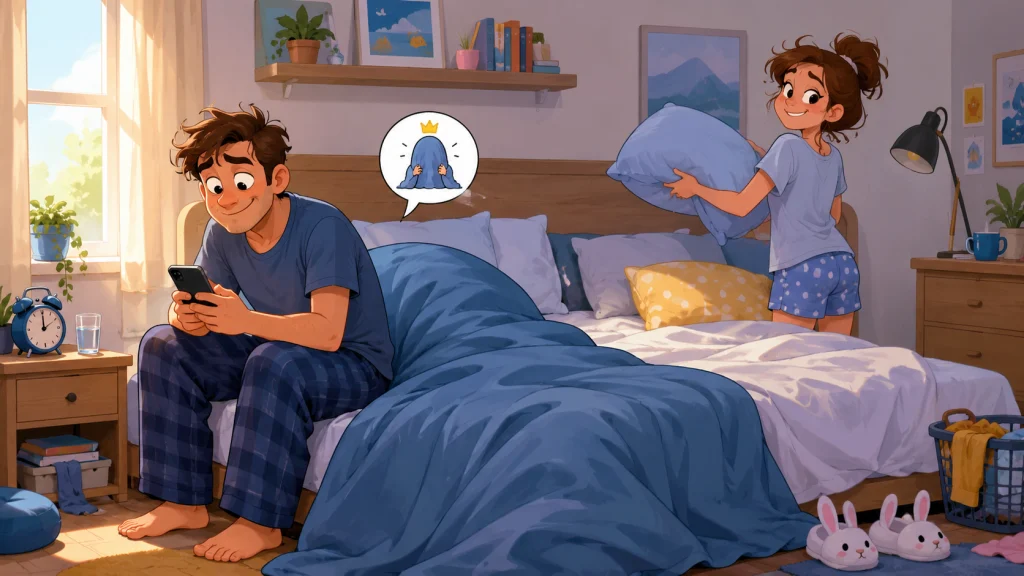
Partner-safe funny replies without turning the message flirty-first
A partner can ask “How did you sleep?” with zero hidden meaning, which is why I do not automatically turn the answer romantic. If the relationship is already affectionate, you can let warmth sit underneath the joke without making the whole reply about attraction. That matters when you actually want to answer the question instead of rerouting the conversation. Think familiar, domestic, and lightly personal rather than seductive.
- “Pretty well. Your side of the bed remains under review.”
- “Good, although the blanket custody arrangement needs work.”
- “Fine. I only stole a reasonable amount of the bed.”
- “Well enough to forgive your alarm.”
- “Great. I assume you will be taking full credit.”
- “Better than the pillow arrangement suggested I would.”
- “Solidly. We can renew the mattress contract.”
- “Pretty good. No complaints have been submitted against you.”
- “Like a person who definitely did not steal the covers.”
- “Good. I am choosing not to audit the snoring department.”
If you would never normally tease your partner about blankets, snoring, or bed space, do not suddenly become a sitcom character in text. The best funny answer is still recognizably yours. If you want a broader bank of lines for ordinary text exchanges, funny replies for everyday texts gives you more room without pushing the tone into romance by default. A partner-safe joke works because the familiarity is already there, not because the line tries to manufacture it.
Why “how did you sleep?” is different from “how was your night?”
I treat “How did you sleep?” as the narrower question. It gives you permission to answer with the sleep result and stop there, which is why these short jokes work so well. “How was your night?” can naturally open the door to what happened, where you went, who you saw, or how the whole evening felt. Mixing those two questions is how a simple sleep reply turns into a recap nobody asked for.
This sounds obvious, but people over-answer because they are trying to be interesting. They get “How did you sleep?” and start explaining the movie they watched, the food they ate, the weird thing the neighbor did, and eventually the sleep part appears at the end. If the broader question is what you actually received, these funny replies to how was your night fit that wider lane better. If you want a funny answer here, stay attached to the noun the person actually handed you, sleep. The narrower you keep the target, the easier it is to sound quick instead of rehearsed.
What not to send when the joke creates the wrong problem
Some funny answers fail because the joke asks the other person to manage a situation you did not mean to create. An alarming line can sound like a real health problem, a romantic line can escalate a casual exchange, and a fake claim can force you to explain yourself later. None of that makes the reply sharper. It just turns a tiny morning question into cleanup.
I would skip anything that makes the other person wonder whether you are unsafe, seriously unwell, or suddenly confessing feelings you do not actually mean. I would also skip jokes that insult the person for asking, unless that kind of dry sparring is already normal between you. Silence is allowed too, especially if you do not feel like talking or the person asking has a history of pushing past your boundaries. A comeback is useful when it gives you your footing back, not when it commits you to a conversation you never wanted.
Final thoughts: keep the joke attached to the truth
The easiest way to choose from all seventy replies is to start with what actually happened. Slept well, sound pleased. Slept badly, keep the joke low-stakes. Barely slept and do not want a discussion, use a line that answers and gently closes the door.
Then adjust for who asked, because the same sentence can feel warm from a sibling and oddly intimate from an acquaintance. I have seen more replies go wrong from tone mismatch than from a lack of cleverness. You do not need the funniest line in the room, just one that sounds like you and fits the relationship. That is usually enough to turn “good” into an actual conversation without making the answer do too much.
FAQs
Most questions about replying to “How did you sleep?” come down to the same two decisions, how honest you want to be and how much conversation you want afterward. The funny part should sit on top of those choices, not replace them. If you are unsure, use the shortest truthful version first. You can always add more if the other person keeps talking.
I also would not over-read the question itself. A friend, partner, relative, or acquaintance can ask it simply because they are making conversation. You do not need to assign a deeper motive before you answer. Match the tone you actually have with that person and keep the reply proportionate to the moment.
😴 What is a funny answer to “how did you sleep?”
Try something that gives the real result first, then adds one twist, like “Pretty well. My alarm and I are no longer speaking.” It is short, clear, and does not make the other person decode what actually happened.
☕ How do I respond if I barely slept?
Say that plainly, then keep the joke small: “Barely, but I am accepting no further questions at this time.” If you do want to talk about why, skip the closed-door joke and leave the answer open.
😂 Can I just say “with my eyes closed”?
You can, especially with someone who already likes your deadpan humor. It is familiar enough that delivery matters more than originality, so it works best when dry one-liners already sound like you.
💬 What if I do not want them to ask why I slept badly?
Use a reply that closes itself, such as “Not much, and the story is less interesting than the result.” That answers the question without dangling a dramatic clue for them to chase.
🛏️ Should a reply to “how did you sleep?” be flirty with a partner?
Only if that is already the tone you want. A partner can ask a normal sleep question without turning it into flirting, so a warm joke about blankets, alarms, or bed space can fit better.
🌙 Is “how did you sleep?” the same as “how was your night?”
Not quite. I treat “How did you sleep?” as a narrower question about sleep, while “How was your night?” leaves more room for the whole evening and whatever happened in it.