Body shaming works by making you feel like your body is a topic open for public comment, and that you owe the room some kind of response. You do not. These 55 body shaming clapbacks are organized by situation: the offhand remark in public, the text that came out of nowhere, the comment from someone you actually care about, and the moments when leaving is the only right move. The angle here is not about hitting back hard for the sake of it. It is about lines that protect your dignity without turning your hurt into the main event.

What Body Shaming Is Actually Asking You to Do
Body shaming is not really about your body. It is an invitation to explain yourself to someone who has not earned that conversation. The comment might be about your weight, your size, what you are eating, or how your body looks in something. What it is always doing, underneath the specifics, is treating your body as a public topic and assuming you owe the person some kind of justification for existing in it.
I spent nine years behind a bar watching people receive exactly these comments and completely freeze. The fumble was almost never from lack of words. It was from playing by the wrong rules. They were trying to win an argument about their own body when the structure of the comment was designed to make that impossible. You cannot explain your way into a satisfying answer for someone who was never going to accept it. What you can do is refuse to play that game entirely.
Body shaming is one specific kind of insult, with its own particular shape. If the comments you are dealing with go beyond your body into other kinds of attacks, what to say when someone insults you covers that wider territory. And if the comments target your looks more broadly, things like how you dress or your face, rather than your body specifically, comebacks when someone makes fun of your looks sits closer to that situation. What follows here is focused on the body shaming dynamic, because it has its own rules.
A clapback that actually protects you does not defend your body. It does not explain, justify, or escalate. What it does is close the conversation, return the social pressure to the person who created it, and let you walk away from the moment without making your pain the main event. That difference, between a line that protects you and a line that just performs your hurt for the room, is what everything in here is built around.
Short Lines That Stop It Without Starting Anything
The shorter the clapback, the harder it tends to land. A long reply gives the impression the comment was worth a lot of your time and energy. These ten lines are short enough to deliver without much preparation, clear enough to work in almost any situation, and designed to close the conversation rather than extend it.
- “That is not something I need your opinion on.”
- “I did not ask.”
- “Noted. Moving on.”
- “My body is doing just fine without your input.”
- “We are not going to talk about this.”
- “That was unnecessary.”
- “I am not sure why you thought that was okay to say.”
- “Interesting that that is what you chose to say.”
- “Hard pass on that conversation.”
- “Bold of you to say that out loud.”
Most of these work precisely because they do not invite a follow-up. There is no opening for “I was just being honest” or “It is just a joke.” The conversation closes before it gets to that part. For lines with sharper teeth, savage comebacks goes further down that road. But sharper is not always right for this particular situation, and most of the time, short and calm does more damage to the comment than anything louder would.

When It Happens in Front of Other People
Public body shaming has a specific quality to it. The person is often performing for the room as much as they are speaking to you. What that means is the reply that works best in that setting is one that makes the comment look bad without making it obvious that it landed. The room was watching when they said it. The room is still watching now.
The mistake most people make in public is trying to match the energy of the comment. That either makes them look defensive or pulls everyone into something that takes longer to resolve. The better move is something that puts the comment back where it belongs, in the person’s lap, without turning the moment into theater on your end.
- “You said that out loud.”
- “Wow. Yeah, that did not land the way you hoped.”
- “I am going to pretend that did not happen for both our sakes.”
- “I always forget that you do this.”
- “You might want to try that one again.”
- “Did you mean that to sound as bad as it did?”
- “I am not sure what you were expecting me to do with that.”
- “The room heard that too, just so you know.”
- “That is a strange thing to lead with.”
- “I will give you a second to think about whether you want that to be the thing you said.”
- “We can move past this or we cannot. Up to you.”
- “I did not realize my body was on the agenda today.”
The lines that tend to work best in public are the ones that let the listener hold the awkwardness. “You said that out loud” does almost all of its work through tone. The person has to sit in what just happened. By the time they figure out what to say next, you have already moved on.
Text Replies for When It Comes Through a Screen
A body-shaming text is harder to ignore than a comment in person because it just sits there on the screen, waiting. You have time to think, which sounds helpful until you have spent twenty minutes typing and deleting variations of the same sentence. The principle over text is the same as in person: short, calm, and screenshot-safe. The reply should look fine to anyone reading the exchange later, because someone usually does.
A friend texted me a screenshot once. Someone had sent her a concern-framed message about her weight after a holiday dinner, the kind that hides body shaming behind “I just worry about you.” She had been drafting a reply for over an hour. I told her to send one short sentence. She did. The conversation ended there.
- “I am not going to respond to that.”
- “That comment says more about you than about me.”
- “I did not ask for a review.”
- “You should probably keep that kind of thing to yourself.”
- “Not sure what you were going for there.”
- “I am going to leave this one.”
- “Cool. Not sure what you wanted me to do with that.”
- “We are not doing this over text.”
- “I would appreciate it if you did not send me things like this.”
- “Take a second before you send something like that again.”
- “Thank you for that completely unsolicited opinion.”
“I am going to leave this one” is underrated because it signals that you saw the message, you chose not to engage, and you are comfortable with that decision. It does not ghost. It does not fight. It steps back with visible intention, which is a different thing entirely.
When It Comes from Someone You Actually Know
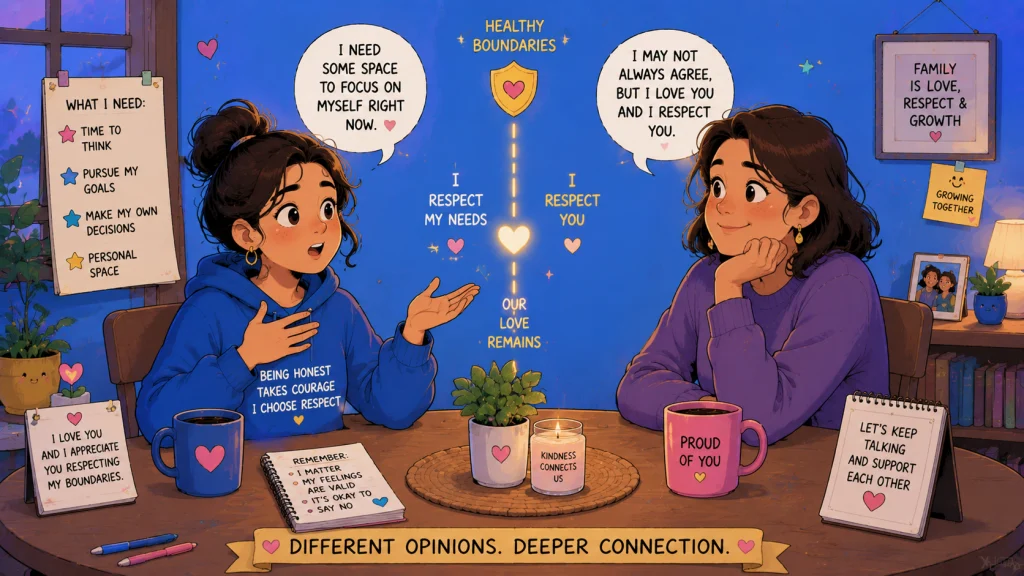
Body shaming from a friend or family member is its own thing. A stranger’s comment is easy to file away. A comment from someone you eat dinner with every week, or who watched you grow up, or who you thought knew better, lands somewhere deeper. The reply that works with a stranger does not work here, because the problem is not just one comment. It is usually a pattern.
The lines here are built to be firm enough to actually change something, not just stop the moment. That is a different ask from a clapback. It is a line that makes clear the pattern itself is the problem, not just the specific thing they said this time. That requires different wording.
- “This has to stop. I am serious.”
- “We have had this conversation before and you keep doing it.”
- “I need you to hear me when I say I do not want you commenting on my body.”
- “You do not get to do this and then pretend everything is normal.”
- “I love you and I need you to stop.”
- “I am not going to keep having meals with you if every meal comes with a comment about what is on my plate.”
- “I know you think you are helping. You are not.”
- “This is the kind of thing that changes how I feel about spending time with you.”
- “Say it one more time and I am leaving.”
- “You can love me or you can comment on my body. Not both.”
- “What made you think I wanted to hear that?”
- “I need you to think about why you keep coming back to this.”
“I know you think you are helping. You are not.” is the line I come back to most often for this situation, because it addresses the concern-trolling framing that so much family body shaming hides behind. It does not call the person cruel. It just removes the justification they were about to use.
Exit Lines for When You Are Done Engaging
Not every person deserves a clapback. Some people have shown you, through repetition or through the specific nature of what they said, that they are not safe to engage with. In those cases, the most powerful move is not a sharp reply. It is a clear signal that the conversation is over, followed by actually ending it.
These lines are not designed to win anything. There is nothing to win with someone who has already made their position clear. They are designed to exit with dignity and without explanation.
- “I am done talking about this.”
- “I am going to step away.”
- “This conversation is over.”
- “I am leaving now.”
- “I do not owe you a response to that.”
- “We are not working this out right now.”
- “I need you to not contact me for a while.”
- “I am not doing this with you today.”
- “You should probably think about why you said that.”
- “Goodbye.”
That last one is on the list because people consistently underestimate how effective a single word can be when it is delivered with full intention and zero apology. There is nothing left to argue with. The conversation has already ended.

What Not to Say Back
Some responses feel satisfying in the moment and do not actually work. The most common one is body-shaming the person back. I have watched people go there, things like “at least I can change mine” or “you are not exactly a model yourself,” and I have watched it go exactly where you would expect. Now both people are body shaming each other, and the person who started it gets to reframe themselves as the one who was attacked. You have handed them the exit.
Self-deprecating humor is the second trap. Using a joke to deflect is a reasonable instinct, and sometimes it is the right call. But when the humor is at your own body’s expense, it signals to the other person that the comment found its mark. It tells them this works on you, and they can come back to it.
The third one is harder to resist: explaining your body as though you owe the person proof. “Actually, it is a medical condition,” or “I have been working on it,” or “My doctor is aware.” Even when every word of that is true, it puts you in the position of auditioning your body for someone who had no business judging it in the first place. The explanation does not resolve anything. It just gives the conversation more room to live in.
| What to avoid | Why it works against you |
|---|---|
| Body-shaming them back | Puts you on the same level and gives them an easy reframe as the one who got attacked. |
| Self-deprecating jokes | Signals the comment landed. Invites the next one. |
| Explaining or defending your body | Implies you owe them a justification. You do not. |
| Long replies with a lot of context | Rewards the comment with more attention than it deserved. |
| Silence with no signal in a recurring situation | Can read as acceptance, especially with someone who keeps doing it. |
The hardest trap to avoid is the explanation, because it feels like the reasonable, adult response. Especially when the comment comes wrapped in concern. But explaining your body to someone who commented on it without being asked is not a conversation. It is an audition, and you were not trying out for anything.
Final Thoughts: The Only Thing You Actually Owe
Body shaming has its own script. The person who does it usually knows what to do if you get angry, they know how to reframe the comment as concern or humor if you push back, and they know how to make silence read as agreement. The lines in here work because they do not follow the expected response. They close the conversation before it gets to the part where you have to justify anything at all.
Not every situation calls for a reply. If the person has shown a pattern of behavior that makes engaging genuinely unsafe, or if you simply do not have the energy for it, not responding is a choice, not a failure. SlyLines is for the moments when you have decided you want to say something back. It does not assume that is always the right call, and it never frames disengagement as losing.
The only thing you owe any of these conversations is your own dignity. That is what these lines are protecting. Not your record in arguments, not proof of anything about your body. Just the ability to walk away from the moment feeling like yourself.
FAQs
💬 What do you say when someone body shames you?
Short and direct works better than long and explained. “That is not something I need your opinion on” or “I did not ask” closes the moment without giving the person anything to argue back with. The less you explain, the less there is to debate.
🙄 How do you shut down body shaming without making it worse?
Avoid matching the energy of the comment. A calm, dry response returns the awkwardness to the person who created it without giving them a reason to escalate. “Interesting that that is what you chose to say” does a lot of work very quietly.
👨👩👧 How do you respond to body shaming from a family member?
Strangers get a clapback. Family members need to understand that the pattern is the problem, not just the single comment. “We have had this conversation before and you keep doing it” names the pattern directly. A line that only stops the moment does not change the behavior. One that names what is actually happening might.
🤳 What is a good reply to body shaming over text?
Keep it short and screenshot-safe. “I did not ask for a review” or “I am going to leave this one” are clean, calm, and look fine to anyone who reads the exchange later. Avoid writing a paragraph. It signals the comment was worth more of your time than it was.
⚠️ Is it okay to body shame someone back when they do it to you?
Practically, no. It puts you on the same level and hands them a reframe: now they are the one who got attacked. The replies that work are the ones that make the original comment look bad without starting a second one. Counter-shaming gives the conversation somewhere to go. Closing it does not.
🚪 What if the person keeps doing it no matter what I say?
Some people are not going to stop, and a clapback is not the thing that will change them. If that is the situation, the exit lines in this piece are the place to start. At some point the reply is not a comeback. It is a limit, and then a decision about what you do with someone who keeps crossing it.