What are you doing might be the most boring honest question in texting, mostly because the honest answer is rarely worth typing out. I have watched people freeze on this exact question more times than almost any other, not because they don’t know what they’re doing, but because admitting it out loud feels weirdly embarrassing. What follows sorts the reply by what’s actually true: doing nothing, drowning in small chaos, avoiding something you should be handling, performing for a friend who wants drama, or keeping the conversation open. None of it requires lying about your day, just describing it with a little more personality than the truth usually gets.
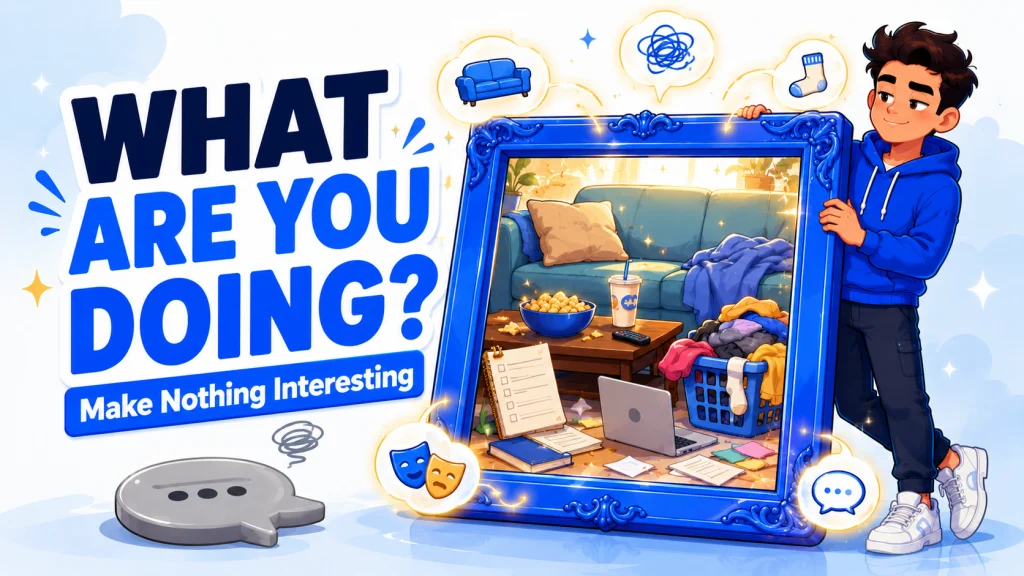
“What Are You Doing” Is Harder To Answer Than It Sounds
What are you doing sounds simple, but it’s actually a little cruel. Most people asking it already expect a boring answer, scrolling, sitting, doing some small task that isn’t worth narrating, and most people answering it know exactly how boring that answer is going to sound once it’s typed out. The honest version of almost everyone’s day at any given moment is some flavor of nothing, and admitting that out loud, even to a friend, can feel weirdly exposing. The text isn’t really asking for an itinerary. It’s asking for something that makes that nothing sound like it was a choice.
I used to keep a mental file of the best lines my regulars used when somebody asked what they were doing during a dead shift, mostly because watching someone make sitting at a bar doing nothing sound entertaining was its own kind of art. The good ones never lied. They just framed the boring part with enough personality that it stopped sounding like an apology. That’s the whole skill behind a good reply to what are you doing: honesty with better lighting.

Make Nothing Sound Like A Choice, Not An Apology
There’s a version of this where you just admit you’re bored, doing nothing, or stuck on a task you’re avoiding, and somehow it still reads as funny instead of flat. The trick isn’t inventing a more interesting day, it’s refusing to apologize for the real one. People can tell the difference between someone narrating their actual Tuesday with a little flair and someone performing a fake exciting life for an audience of one.
These split pretty cleanly by what’s actually happening when the text lands. Maybe you’re genuinely doing nothing and want that to sound intentional. Maybe you’re buried in small chaos and want to admit it without sounding stressed. Maybe you’re avoiding something you should be doing, and that’s its own specific, very relatable flavor of funny. Friends get a different register entirely, more dramatic, less filtered. And sometimes the actual goal isn’t the joke at all, it’s keeping the conversation open instead of ending it.
| What’s actually true right now | The reply style that fits |
|---|---|
| You are genuinely doing nothing | Actually doing nothing |
| You’re juggling ten small things at once | Busy but funny |
| You’re putting off something you should be doing | Avoiding responsibility |
| A close friend wants the dramatic version | Friend |
| You want to keep the conversation going | Conversation extending |
If this particular question is just one of several boring openers landing in your phone tonight, there’s a wider spread of funny text replies for whatever you’re dealing with worth keeping in your back pocket. These five styles sit inside the same logic running through funny replies built for real conversations overall, just narrowed down to the one question that asks specifically what you’re doing right now.
Actually Doing Nothing Replies That Make Laziness Feel Intentional
Some days the truthful answer really is nothing, and pretending otherwise just sounds exhausting. The move here isn’t manufacturing a more interesting day, it’s committing to the nothing so completely that it reads as a deliberate choice instead of something to be embarrassed about. Confidence does most of the work.
These land best when you actually mean it. A halfhearted “nothing lol” still reads as flat, but a fully committed bit about doing absolutely nothing on purpose tends to land funnier than most people expect.
- Lying horizontal and proud of it.
- Currently mastering the art of doing absolutely nothing.
- Staring at the ceiling like it owes me money.
- Living my best unemployed-on-a-Tuesday life, except I have a job.
- Practicing professional stillness.
- Aggressively not moving.
- Doing nothing, but make it intentional.
- Committing to a nap I haven’t earned.
- Watching my phone battery die slower than my motivation.
- Perfecting the art of horizontal.
- Currently in a staring contest with my ceiling fan.
- Doing nothing so well it should count as a skill.
- Recharging, emotionally and literally.
- Existing, mostly.
- Being one with the couch.
None of these require you to actually be doing something. The whole point is that doing nothing, said with enough conviction, is funnier than most manufactured plans would have been anyway.

Busy But Funny Replies That Admit Chaos Without Sounding Stressed
Other days the truth is the opposite, you’re buried, scattered, juggling six small things badly instead of one thing well. The temptation is to either downplay it, just busy, you know how it is, or vent about it like a complaint. Neither one is particularly fun to read. The better move treats the chaos like a bit instead of a burden.
This only works if the tone stays light. The second a busy reply starts sounding like an actual complaint, it stops being funny and starts being something the other person has to manage. Keep it self-aware instead of self-pitying.
- Drowning in tabs I’ll never close.
- Doing seven things badly instead of one thing well.
- Pretending my to-do list isn’t judging me.
- Running on caffeine and poor decisions.
- Juggling responsibilities like a circus act with no training.
- Putting out three small fires and ignoring a fourth.
- Doing damage control on a day that started fine.
- Multitasking, which is just chaos with better branding.
- Replying to twelve things at once, badly.
- Living inside my inbox against my will.
- Pretending I have a system. I do not have a system.
- Busy in the way that looks productive from far away.
- Catching up on everything I ignored yesterday.
- Surviving my own schedule, barely.
- Doing the bare minimum at maximum speed.
Busy looks different for everyone, but the tone that works is consistent: in on the joke, not drowning in it.
Avoiding Responsibility Replies That Are Relatable And Textable
This is the most universally recognizable category here, because almost everyone is avoiding something at any given moment, a text, a chore, an email, a decision they don’t want to make yet. There’s no shame in admitting it, and honestly, that’s exactly what makes this category work so well. People relate to procrastination harder than almost anything else on this list.
The trick is naming the specific thing you’re avoiding instead of staying vague. Avoiding responsibilities is fine, but avoiding a text you should have answered three days ago is funnier, because it’s specific enough to feel true.
- Avoiding a text I should have answered three days ago.
- Ignoring my laundry like it’s a personality trait.
- Pretending the dishes will wash themselves eventually.
- Procrastinating on something important with great enthusiasm.
- Avoiding eye contact with my own to-do list.
- Letting an email sit unread out of pure spite.
- Doing literally anything except the one thing I actually need to do.
- Pretending I forgot about that thing I definitely remember.
- Putting off a phone call I’ve been dreading all week.
- Avoiding adulthood, one small task at a time.
- Letting a deadline creep up on me like it’s a surprise.
- Scrolling instead of doing the one productive thing on my list.
- Avoiding a decision by making smaller, less important ones instead.
- Pretending I have more time than I actually do.
- Ignoring responsibility with real commitment.
Specificity does most of the heavy lifting in this category. The more exact the avoided task, the funnier the admission usually lands.

Friend Replies That Are More Dramatic And Less Polished
Friends get a different register entirely. There’s room for exaggeration here that wouldn’t land the same way with someone you don’t know as well, full meltdown energy over something genuinely minor, dramatic spirals, mock despair. The polish that works elsewhere on this list can actually work against you here, because the appeal is in sounding a little unhinged on purpose.
This category leans hardest into performance, and that’s intentional. A friend asking what you’re doing usually already expects something theatrical, so lean into it instead of underselling the moment.
- Suffering. Beautifully, but suffering.
- Currently spiraling about something that doesn’t matter.
- Having a full meltdown over absolutely nothing.
- Living my villain origin story in real time.
- In my flop era, thanks for asking.
- Surviving on vibes and bad choices.
- Currently a disaster, but a fun one.
- Existing in chaos and somehow still upright.
- Having main character energy with zero plot.
- Spiraling gracefully, like a true professional.
- Currently dramatic, but only as a lifestyle.
- Living proof that nothing is going according to plan.
- Emotionally overbooked for no clear reason.
- Surviving today out of spite alone.
- Currently a mess wrapped in a hoodie.
The bigger the swing, generally, the better this category lands, as long as the person on the other end already knows you well enough to get the bit.
Conversation Extending Replies That Add What About You Without Sounding Automatic
Sometimes the actual goal isn’t the joke at all, it’s keeping the exchange alive instead of letting it die after one reply. Tacking a flat “what about you” onto the end of any line can feel like an afterthought, the kind of thing typed out of habit rather than real curiosity. The better version folds the question into the same tone as the rest of the reply.
This works especially well right before a text that’s likely heading toward a funny reply to an I’m bored text anyway, since both questions are really just asking for the same kind of attention. Match the energy of your first line instead of switching tone for the follow-up question, and the whole reply reads like one continuous thought instead of two stapled together.
- Avoiding my responsibilities, the usual. What’s keeping you busy?
- Doing nothing impressive, what’s going on with you?
- Surviving, barely. What’s your excuse today?
- Procrastinating like it’s a competitive sport. You?
- Recovering from absolutely nothing. What’s your story?
- Pretending to be productive. What does your day look like?
- Doing the bare minimum, what’s your version of today?
- Avoiding adulting, what’s your excuse?
- Living my unremarkable Tuesday, what’s yours look like?
- Surviving on snacks and bad decisions. What about your day?
- Procrastinating professionally, how’s your day treating you?
- Doing nothing worth bragging about. What’s happening on your end?
- Avoiding responsibility with style. What’s your excuse today?
- Recovering from a day that hasn’t even started yet. You?
- Existing quietly. What’s going on in your world?
A good follow-up question costs almost nothing and buys you another exchange. It’s the cheapest way to keep a conversation from dying on your turn, and it’s also the easiest way to turn one funny response to wyd into an actual back and forth.
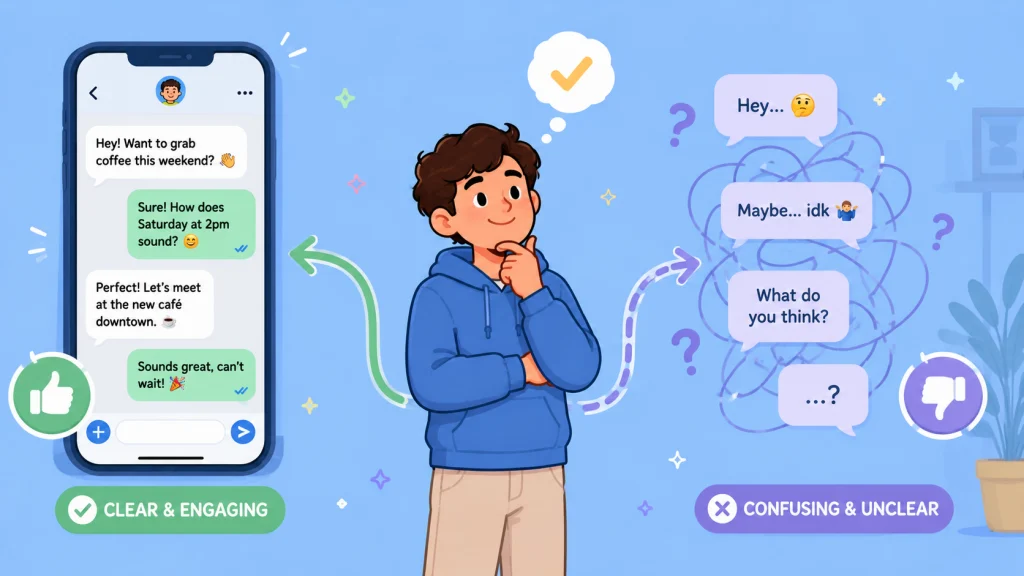
What Not To Send When Someone Asks What You’re Doing
The first mistake is the creepy joke, the kind of reply that’s supposed to sound mysterious or intense but actually just reads as unsettling. A line like “you don’t want to know” or anything implying something sinister might land as a joke with the wrong audience and as a genuine red flag with anyone who doesn’t already know you extremely well.
The second mistake is fake mystery for its own sake, being deliberately vague just to seem interesting. “Can’t say” or “you’ll find out” without any actual payoff usually reads as try-hard rather than intriguing, and it tends to kill momentum instead of building it.
The third is leaning into a thirst trap reply when that’s not actually the tone of the conversation. A flirty non-answer can work great in the right context, but dropping one into a completely platonic exchange just confuses things, and it reads as performative if the energy wasn’t already there to support it.
Final Thoughts: There’s No Wrong Answer To What Are You Doing
None of these replies require inventing a more exciting life than the one you’re actually living. The whole point is matching the truth with the right tone instead of replacing it with something fake. Most days are some mix of doing nothing, doing too much, avoiding something, or performing a little for a friend who wants the dramatic cut. Picking the right register matters more than picking the cleverest line.
If the question that landed in your phone was actually closer to a vague opener than a real activity check, the version aimed at clever responses to a how was your day text covers that slightly different, lower-stakes territory. Save a few lines from each category here, and the next what are you doing text won’t catch you scrambling for something to say.
FAQs
🛋️ What do you say when someone asks what you’re doing and you’re doing nothing?
Commit to the nothing instead of apologizing for it. A confident line like “aggressively not moving” lands funnier than a vague “nothing much,” because it sounds like a choice instead of an excuse.
😅 What are some funny replies to wyd that don’t sound boring?
Pick whichever category matches what’s actually true right now, busy, avoiding something, or doing nothing on purpose, then commit to that bit instead of giving a flat one-word answer.
🙃 What to say when someone asks wyd and you don’t feel like explaining?
A short, funny non-answer works better than a long explanation nobody asked for. Something like “avoiding a decision, the usual” tells them enough without turning into an actual report on your day.
💬 What’s a good response to wyd from a friend?
Friends usually want more drama than strangers do, so lean into a dramatic spiral or mock chaos instead of a polished one-liner. The less filtered version almost always reads funnier between people who already know each other.
🚩 Is it okay to give a mysterious answer to what are you doing?
Only if the relationship already supports that kind of tone. A vague non-answer can read as playful with the right person and as a real red flag with someone who doesn’t know you well, so read the relationship before you read the question.
🔁 How do you keep the conversation going after answering wyd?
Add a real follow-up question instead of a generic “you?” stapled onto the end. Matching the tone of your first line keeps the exchange feeling like one continuous thought instead of two separate texts.