When someone calls you boring, the cleanest response is usually the one that refuses to turn your personality into a sales pitch. You can answer dryly, tease back if the relationship can carry it, clarify whether they actually mean the activity, or set a direct boundary if the label is meant to embarrass you. The useful distinction is simple: you do not have to prove you are interesting just because somebody decided to grade you out loud. The replies below are built to keep you out of the exhausting trap of auditioning for their approval.
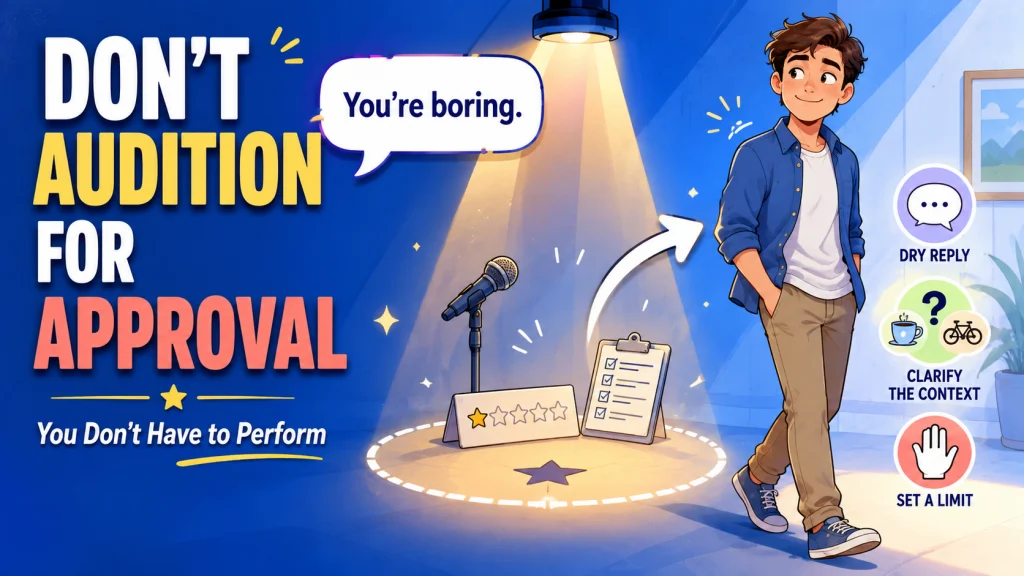
Being called boring does not require a personality defense
“You are boring.” The fastest bad move is to start listing trips, hobbies, parties, funny stories, and every other piece of evidence you can find. If you are wondering what to say when someone calls you boring, start by deciding whether you want to tease the comment, clarify it, or refuse the whole performance test. A short answer usually gives you more control than a speech because it leaves the label sitting with the person who used it. The label gets weaker the moment you stop treating it like a verdict that needs evidence.
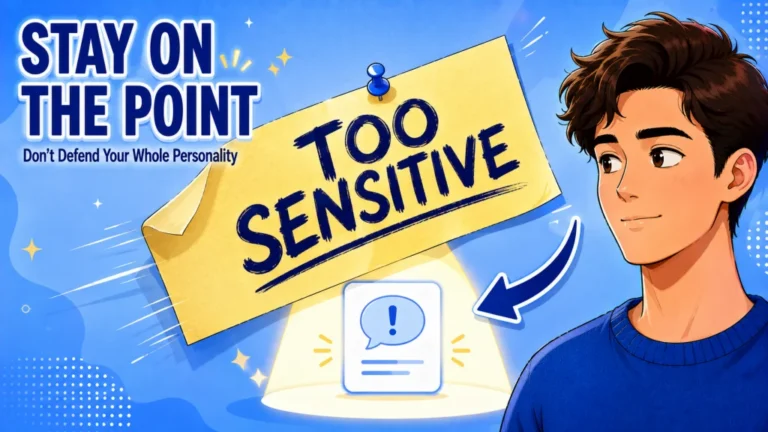
I spent years behind a bar watching people confuse quiet, low-key, or simply different interests with a duty to entertain the room. The person who tried hardest to prove they were interesting usually gave the insult more importance than it deserved, while the person who answered once and moved on kept the room moving. That does not mean every “boring” comment is malicious, because friends can tease and two people can genuinely dislike the same activity. It means you should answer the moment that is actually happening instead of defending your entire personality.
Quick replies when you want one line and nothing more
The best one-line responses to “you’re boring” do not sound as though you have been waiting all week to use them. They work because they acknowledge the comment without opening a courtroom case about whether you are fun enough. If the other person was only fishing for a reaction, a small answer gives them very little to work with. If they meant it seriously, you can still decide afterward whether the conversation deserves more.
These are the kinds of comebacks when someone calls you boring that I would keep short on purpose. Pick the line that already sounds like something you would say, because delivery matters more than clever wording. A dry person can get away with almost nothing, while a more playful person can add a little bite without turning it into a fight. The goal is not to win a personality contest, just to keep your reply proportionate to the insult.
- “Noted.”
- “Devastating review.”
- “Good thing this is not an audition.”
- “I can live with that.”
- “And yet, here you are.”
- “Okay. Anyway.”
Short does not mean weak, especially when the alternative is explaining yourself to someone who did not ask a real question. If the comment is one rude line in a bigger exchange, it may help to keep a few responses to direct insults in the same low-effort style. The moment you start adding evidence about how interesting you are, the reply changes from a comeback into a defense. That is exactly the job you do not need to take on.

Dry answers that refuse the performance test completely
Dry replies are useful when the comment feels less like teasing and more like someone demanding entertainment from you. You are not agreeing that you are boring, and you are not trying to disprove it either. You are treating their verdict as a piece of information you can survive hearing. That difference is small on paper, but in a live conversation it keeps you from chasing approval.
I like dry answers because they do not need a second act. “And?” works when you genuinely do not care to debate the label, while “That is your review?” gives the comment just enough distance to make it sound less important. “I am not accepting notes” is sharper, but it still targets the performance demand rather than the other person’s character. A clean dry response should close the loop, not bait them into a longer round of insults.
“I did not realize I was performing.”
That line works best when someone is acting as though your quietness, your refusal to join a plan, or your lack of enthusiasm is somehow a service failure. It does not work as well when a friend is obviously joking, because then it can sound colder than the moment needs. Context is doing most of the work here, not the sentence itself. If you want the conversation to stay friendly, choose a drier line with less edge and move on.
Funny replies for friends who are clearly teasing you
Funny comebacks to “you’re boring” work best when the relationship already has enough trust for both people to hear the joke instead of the literal words. With a friend, you can exaggerate the idea that they hired you as the evening’s entertainment and you have failed spectacularly. The joke stays light because you are making fun of the demand, not reaching for something personal to hurt them back. Once you start attacking their looks, dating life, money, intelligence, or insecurities, the joke has left the room.
I have watched playful teasing turn awkward because one person decided a tiny jab needed a scorched-earth answer. That is why I would rather use a ridiculous little line such as “Sorry, the entertainment budget got cut” than something designed to leave a bruise. You can also try “I left my tap shoes at home,” “Please submit your complaint in writing,” or “And somehow you keep renewing your subscription.” Each one gives the friend a laugh-sized response instead of a reason to defend themselves. The joke stays disposable, which is exactly what friendly teasing usually needs.
| What they say | A reply that fits |
|---|---|
| “You are so boring tonight.” | “And yet you keep coming back.” |
| “You never want to do anything.” | “I rejected one plan, not the concept of fun.” |
| “You are the boring one in this group.” | “Excellent, I have found my role.” |
| “Come on, stop being boring.” | “My circus license expired.” |
The table looks playful because every answer keeps the target on the moment rather than the friend’s personality. That matters more than getting the biggest laugh, especially in a group where people can feel pressure to keep escalating. A funny line should buy you one beat, then let the conversation keep moving. If you need three more jokes after it, the first one probably did not need to become a routine.

When “boring” really means they dislike the activity
“This is boring” and “you are boring” are not the same sentence, even though people blur them together constantly. If someone dislikes the movie, restaurant, game, conversation topic, or plan you picked, there may be nothing to defend at all. You can simply say, “Fair, want to do something else?” or “Not your thing, got it.” That keeps an activity preference from turning into a personality argument. It also gives both of you a practical next move instead of another round of labels.
The useful move is to make them be specific if the wording is vague. “Do you mean me or the plan?” is not a dramatic confrontation, it is a clean question that separates a workable complaint from a lazy label. If they say the activity is boring, great, now you have something concrete to change or ignore. If they insist that you are the problem because you do not enjoy what they enjoy, then you are back in performance-test territory and can answer accordingly.
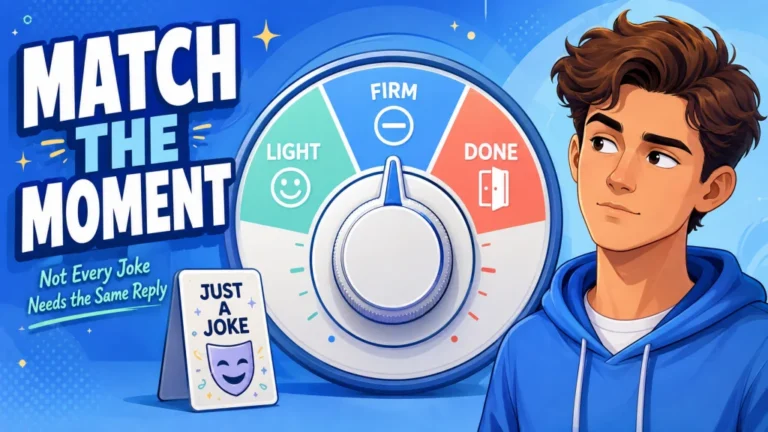
If they say “This movie is boring,” answer, “Want to switch it?” If they say “This party is boring,” answer, “We can leave whenever.” If they say, “You are boring because you do not want to go out,” try, “I said no to the plan, not to having a personality.” A bare “You are boring” with no real context can get, “That is not very specific.” None of these replies asks you to prove their taste is wrong; each one keeps an activity preference from becoming a verdict on who you are.
Group-setting responses without competing for everyone’s attention
Being called boring in front of other people creates a different pressure because now there is an audience. The temptation is to produce the biggest comeback in the room so nobody thinks the label landed. I have seen that move backfire plenty of times, because suddenly the quiet person is doing a five-minute routine to prove they are not quiet. A cleaner answer is often something like “Good thing I am not the entertainment” followed by a return to whatever the group was already doing.
You can also redirect without making the other person the new target. “Anyway, what were you saying?” works because it refuses the invitation to compete, and “You will survive” can be funny if the group tone is already playful. If the comment keeps repeating, the line can get firmer: “You have made that joke already.” That tells the room you heard it the first time and do not need a repeat performance. The important part is that you do not start fighting for the room’s approval after somebody tried to put you onstage.
“You do not have to enjoy my personality, but I am not auditioning for the table.”
That version is stronger, so I would save it for a group where the label is clearly being used to embarrass rather than tease. If you want something sharper, there are plenty of savage comebacks that stay focused on the insult without turning into a character assassination. Even then, the shorter reply usually sounds more confident because it does not need the audience to vote. You say it once, then let the room decide whether the awkwardness belongs to you or to the person who started grading personalities.

Direct boundaries when the label is meant to embarrass you
Sometimes there is no joke to rescue. If someone keeps calling you boring after you have made it clear you do not like it, a funny reply can accidentally keep the game alive. That is when plain language earns its place: “Stop calling me that,” “Drop the label,” or “You can dislike the plan without making it personal.” None of those lines is clever, and that is exactly why they are useful. They leave very little room for the other person to pretend they misunderstood you.
A boundary does not need a closing argument about why the other person is rude, insecure, jealous, or secretly threatened by you. You usually do not know what is going on in their head, and guessing only gives the exchange another lane to keep running in. Say what you want to stop, then decide whether you want to stay in the conversation. If the situation feels genuinely unsafe or threatening, the comeback is not the important part, and leaving the exchange is a completely valid choice.
Direct responses to being called boring can sound like “I am fine with teasing, not that label,” “If you mean the activity, say that,” or “I am not doing this with you.” Those lines give the other person something clear to respond to instead of another insult to volley back. They also make your position easy to repeat if necessary, because a boundary should not require a new performance every time. If you are deciding how to respond to being called boring repeatedly, clarity matters more than novelty. The point is not to make them admit you are interesting, it is to make your limit understandable.
What not to say when you feel the need to prove yourself
The first mistake is the self-defense résumé. Someone says you are boring, and suddenly you are listing concerts, trips, friends, hobbies, risks you have taken, and every funny story you can remember. I understand why people do it, because the insult makes you want to correct the record immediately. But the more evidence you submit, the more you accept the premise that this person gets to judge whether you passed.
The second mistake is inventing a wilder version of yourself just to win the moment. Fake stories, exaggerated plans, and forced jokes might get you through one conversation, but they also turn a small insult into a strange little audition you now have to maintain. The third mistake is automatically answering “you are boring too,” which is sometimes funny between close friends but usually just copies the same lazy insult. A better response decides what you actually want the exchange to do before you reach for the nearest counterattack.
- Do not list proof that you are interesting.
- Do not invent a dramatic life just to impress the person.
- Do not attack something personal because you feel cornered.
- Do not keep joking after you actually want the comment to stop.
Most people overthink this part because a personality label feels larger than a criticism of one action. The useful correction is to shrink the moment back down to size. The same restraint helps when someone calls you weird, because another label still does not require a personality defense. You need one response to one comment, not a closing statement on your entire life. Once you see it that way, the line gets shorter almost by itself.

Final thoughts: you do not owe anyone an audition
Being called boring can sting because it sounds bigger than “I do not like this plan” or “we do not have the same energy.” You still do not have to answer it as though your whole personality is on trial. Use a dry line if you want the comment to die, a playful one if a friend is teasing, a clarifying question if the activity is the real issue, or a boundary if the label is being used to embarrass you. You only need a response that fits the moment in front of you. That is enough.
The line I would avoid is the one that makes you work hardest to prove something. A good comeback does not need to convince the speaker that you are secretly fascinating, and it does not need to punish them for having an opinion. It just needs to sound like you, fit the relationship, and do the job you actually want done in that moment. Then you can stop performing and get back to the conversation, or leave it entirely.
Frequently asked questions
Most questions about being called boring come down to tone, relationship, and whether the speaker is criticizing you or just the moment. That is why there is no single perfect comeback that works with a close friend, a group chat, and somebody trying to embarrass you. I would choose the smallest response that fits the actual situation before reaching for anything sharper. The answers below keep that distinction intact.
If you freeze when somebody says it, that does not mean you need a more complicated script. Short responses are easier to remember, easier to deliver, and less likely to become an argument you never wanted. You can always say more after the first line if the other person turns the comment into a real conversation. Starting small gives you that choice.
💬 What is a good comeback when someone calls you boring?
Try “Good thing this is not an audition” if you want light pushback without attacking them. A drier option is simply “Noted” or “And?” The right choice depends on whether the comment is playful, rude, or meant to start a real conversation. Keep it short enough that you can move on after saying it.
😏 What is a funny reply when a friend says “you’re boring”?
Try “Sorry, the entertainment budget got cut” or “I left my tap shoes at home.” Those lines work because they joke about the idea that you were hired to perform. Use them with friends who already understand your tone. If the teasing is actually bothering you, skip the joke and say so directly.
🧊 How do you respond without sounding defensive?
Do not explain why you are interesting. Answer the comment itself with something like “Okay,” “That is your review?” or “Do you mean me or the plan?” Those replies create distance without pretending the comment never happened. The shorter you keep it, the less it sounds like you are pleading your case.
🎯 What if they really mean the activity is boring?
Separate the activity from your personality. You can say “Fair, want to switch?” or “Not your thing, got it.” If they keep turning that preference into “you are boring,” ask them to be specific. A plan can be a bad fit without becoming a verdict on the person who suggested it.
🚪 Should you ignore someone who keeps calling you boring?
You can, especially if the exchange is going nowhere and you do not want to keep feeding it. You can also say “Stop calling me that” once before disengaging. Silence is not a failed comeback when you have already decided the conversation is not worth continuing. If the situation feels unsafe, getting out of it matters more than landing a line.