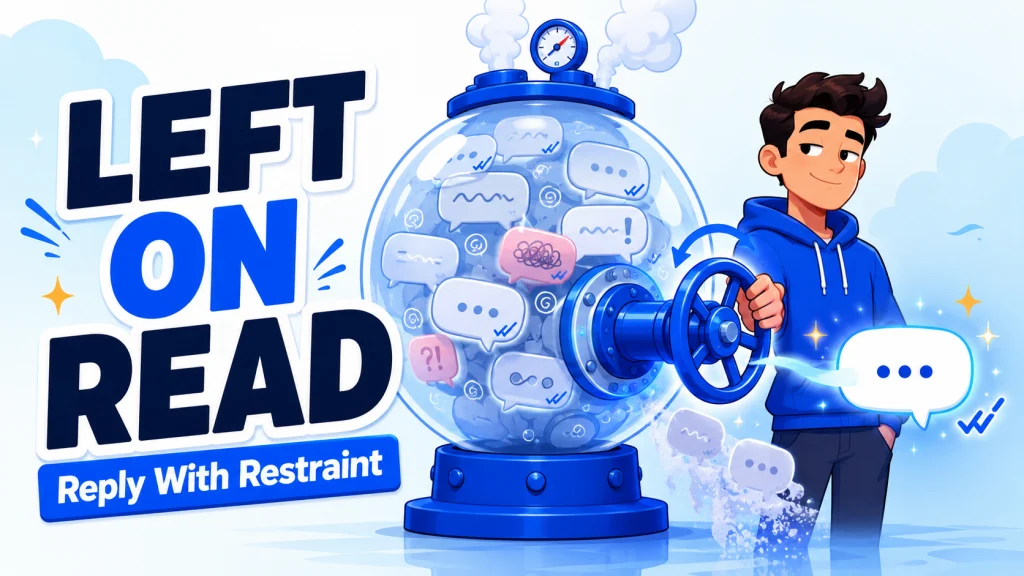
Getting left on read does something strange to the second text. The first one was easy, you barely thought about it. The second one is the one that decides whether you look fine or whether you look like you have been staring at your phone since it happened. I have watched both versions play out more times than I can count, from behind a bar and in my own group chats. What to text when someone leaves you on read comes down to one thing: restraint. Not silence, not a speech, just the version of you that was never actually rattled.
Why the Second Text Is the Dangerous One
Nobody panics over the first text. It goes out, it sits there, and for a while that is just normal life. The trouble starts when enough time passes that the silence stops feeling neutral and starts feeling like a verdict. That is the exact moment most people reach for their phone and type something they would never say out loud, usually three sentences too long and one tone too desperate. What to text when someone leaves you on read is rarely about finding clever words. It is about not writing from that exact moment of panic.
I spent nine years pouring drinks across three different cities, and one thing never changed: the person who got left on read and waited an hour before replying always looked steadier than the person who fired back in two minutes. Not because the fast responder was wrong, but because speed reads as need, and need is the one thing nobody wants to broadcast. The line you send after being left on read carries more weight than almost anything else in the conversation, simply because of when it lands.
Savage Replies When Left on Read
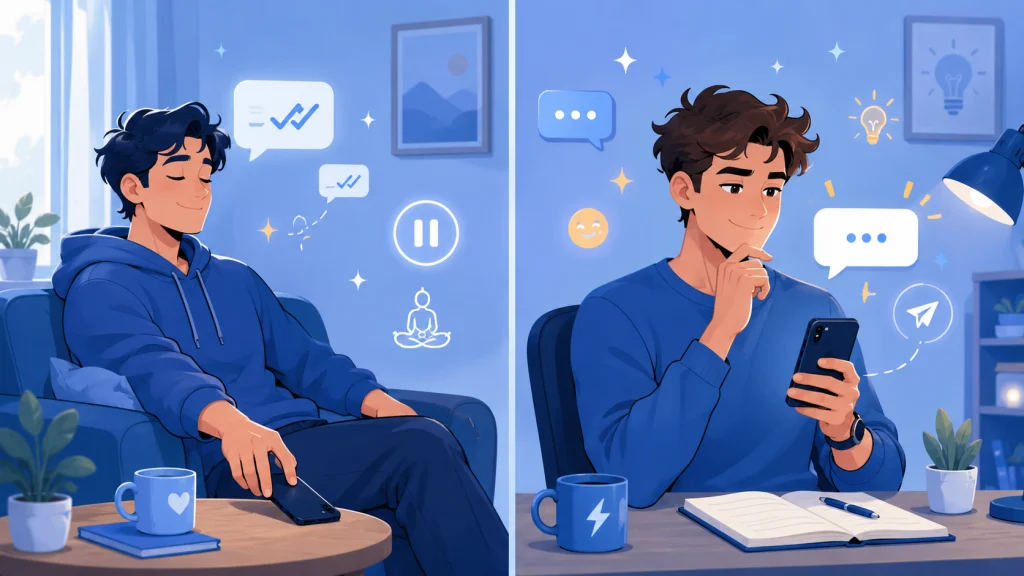
Savage works when the other person clearly saw the message, has no real excuse, and you are fine if the conversation ends right here. It does not work if you actually want this person to keep talking to you. I learned that the hard way watching a regular fire off something sharp to someone he was genuinely into, and then spend the rest of the night asking me why she never wrote back. Sharp lines close doors. Know which door you are closing before you send one.
- “Took you long enough to decide I wasn’t worth a reply either way.”
- “Bold of you to leave me on read and still expect a good morning text tomorrow.”
- “I’ll just assume the read receipt was the whole response.”
- “Cool, I’ll pencil you in for whenever you remember phones work both ways.”
- “Noted. I’ll match that energy next time you actually want something.”
- “Funny how fast you read it and how slow you typed nothing back.”
- “Guess I’ll talk to myself then, I’m decent company.”
- “Take your time, it’s not like I’m holding my breath over here.”
These sharper replies all share one trait worth noticing: none of them ask a question. A question hands the other person control again, and the whole point of going savage is keeping it for yourself.
Funny Replies That Don’t Sound Bitter
Funny is the safer lane if you are not sure how this person will take an edge. It lets you acknowledge the silence without sounding wounded by it, which is exactly why it works so well with people you actually like. The trick is keeping the joke about the situation and never about your own feelings. The second you joke about being hurt, it stops being funny and starts being a confession.
- “I’ll wait here while you finish reading that for the third time.”
- “Should I send a follow-up or a search party?”
- “Just checking, did my message get sent to airplane mode?”
- “I’m choosing to believe you got abducted right after reading this.”
- “Reply whenever, I’m just going to assume you’re busy saving the world.”
- “Was that read receipt a typo or a personality trait?”
- “At this point I respect the commitment to silence.”
- “I’ll give you points for efficiency, zero words and I still got the message.”
- “Plot twist, your phone is fine and you’re just stalling.”
- “I’ll allow it once, but only because I respect a dramatic pause.”
- “Reading this counts as a reply in my head, just so you know.”
One thing I have noticed, more than once, is that the funniest line in any group chat is almost always the shortest one in the thread. Nobody is laughing at a paragraph.
Calm Replies for When You Actually Want an Answer
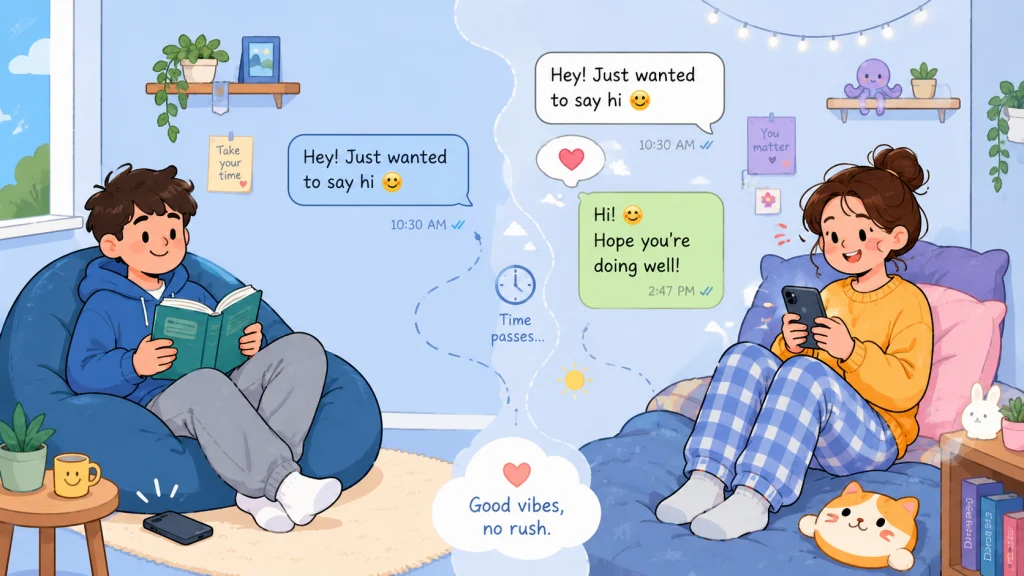
Sometimes savage or funny is not the move because you genuinely want this person to keep talking to you, and you would rather not torch that with a clever line you will regret tomorrow. Calm replies work because they remove pressure instead of adding it. They tell the other person there is room to respond without consequence, which paradoxically makes people more likely to actually respond.
- “No rush, just wanted to know what you thought.”
- “All good, just let me know whenever works for you.”
- “Saw you got it, no worries either way.”
- “Take your time, I figured I’d circle back if I didn’t hear anything.”
- “Whenever you get a second is fine by me.”
- “Just making sure this didn’t get buried, no pressure.”
- “Whenever it’s convenient, genuinely no rush on my end.”
- “Figured I’d check in once, totally fine if you’re swamped.”
- “No agenda here, just wanted to put it back on your radar.”
- “Happy to wait, just didn’t want it to slip through completely.”
What surprises a lot of people is how often calm beats clever. A line with no edge at all costs you nothing if it gets ignored again, and it costs you nothing socially either. That is the quiet appeal of staying neutral when you do not yet know what the silence actually means.
The Restraint Nobody Talks About
Here is the part most lists about being left on read skip entirely. The best response is often not about the words at all, it is about how little you send. I have watched someone craft the perfect comeback and then ruin it by sending three more texts behind it because the silence kept gnawing at them. The line was great. The follow-up barrage undid all of it. Restraint is the actual skill here, not wit.
This sounds obvious from the outside, but in the moment it rarely feels that way. When someone leaves you on read, your brain wants closure immediately, and one good text feels like it should buy that closure faster than it actually does. The lines that land best are the ones that look like they cost the sender nothing, because they refuse to chase. That effortless quality is not luck, it is restraint dressed up as confidence. If you want a deeper look at how that same principle plays out across savage replies to text messages in general, the pattern holds everywhere a reply needs to land without sounding rattled.
One Clean Follow-Up, If You Need It
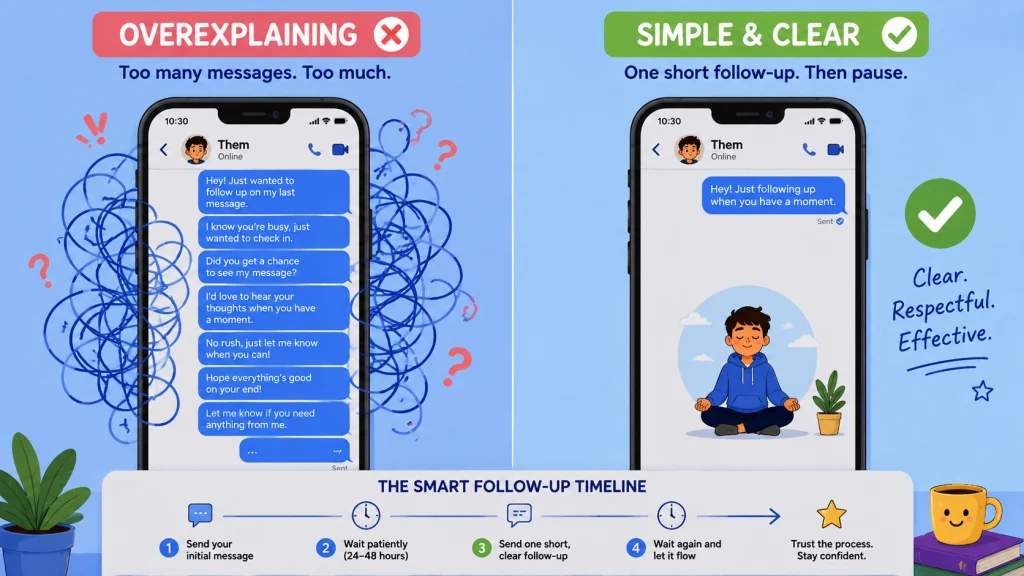
If real time has passed, a day or more, one short follow-up is fair. The rule is simple: it should be light enough that you would not be embarrassed if you reread it next week. Anything longer than a sentence starts working against you, because length is what makes a follow-up feel like checking up rather than just checking in.
- “Hey, did this end up getting lost?”
- “Still curious what you thought, whenever.”
- “No worries if not, just following up once.”
- “Closing the loop on this if you’re around.”
- “Last bump, no pressure after this.”
- “Figured I’d give it one more shot before I let it go.”
- “Quick nudge, totally fine if the answer is just busy.”
- “One more try, then I’ll assume it’s a no for now.”
One follow-up is a nudge. Two starts looking like a pattern, and a pattern is exactly what you do not want to hand someone who already left you on read once.
Playful Callouts With Friends
This category only works with people who already banter with you, the friend who teases first and laughs hardest at their own jokes, the sibling group chat where nobody takes anything personally. With that crowd, calling out the read receipt directly is part of the fun, not an accusation.
- “I saw the little ‘read’ show up, you coward.”
- “You read this standing right next to your phone, didn’t you.”
- “I know you saw it, the read receipt doesn’t lie.”
- “Bold strategy, ignoring me and still expecting a birthday shoutout.”
- “I’ll remember this next time you need a favor.”
- “Read receipts were a mistake and you’re proof.”
Try any of these on someone who does not already joke around with you and it lands completely differently. Read the relationship before you read the receipt.
When It Keeps Happening: Boundary Texts
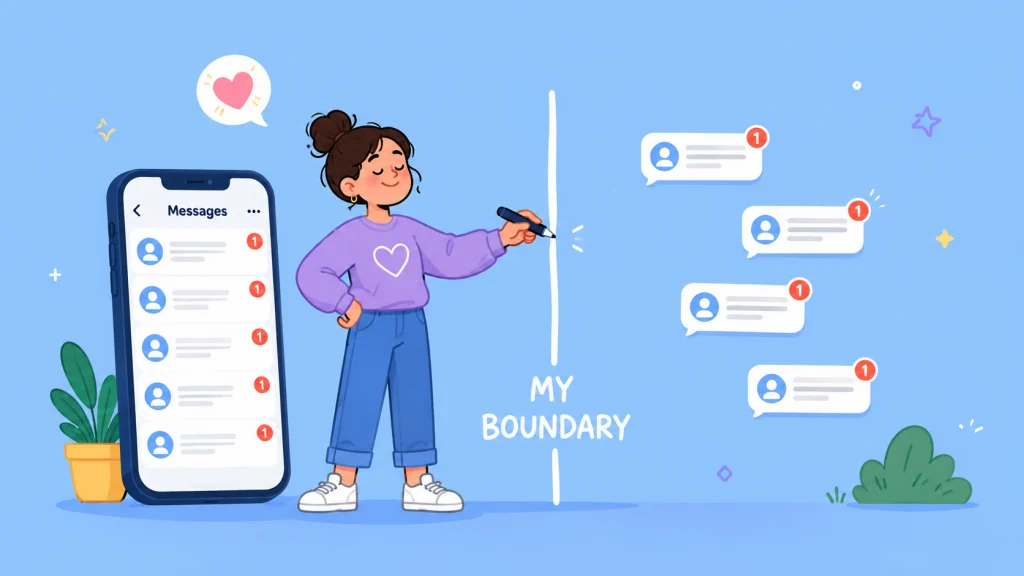
A one-off left on read is nothing. A pattern is information. If this is the third or fourth time with the same person, the smart move stops being a clever comeback and becomes a plain statement about how you want to be treated going forward. These are not meant to be witty, they are meant to be clear.
- “I’ve noticed I don’t usually hear back when I text first. Just being honest about that.”
- “No hard feelings, but I’ll probably stop initiating if this keeps happening.”
- “I’d rather know now if texting isn’t really your thing.”
- “Totally fine if you’re busy, just want to know if I should expect replies going forward.”
- “I’m not upset, just adjusting how much I reach out from here.”
- “All good either way, just want us on the same page about texting.”
- “No drama, just letting you know I’ll text less if this stays one-sided.”
- “I’d rather hear it straight than keep guessing why I don’t hear back.”
This kind of boundary text is not about winning the exchange. It is about deciding whether you want to keep showing up the same way for someone who has already shown you their pattern.
Sometimes the Strongest Move Is No Text at All
Not every silence deserves a reply, and not every left on read deserves a comeback. If the person doing the ignoring has a track record of disappearing whenever it suits them, or worse, has been outright dismissive or unkind in the conversation itself, sending another clever line just keeps you in a loop they control. Silence on your end is not losing. Sometimes it is the only response that actually changes anything.
I want to be direct about this part because it gets glossed over constantly: if the situation has crossed into something that feels disrespectful, controlling, or unsafe, that is no longer about finding the right words. That belongs to a conversation with someone you trust, not a clever reply pulled from savage comebacks for ordinary banter. There is no line good enough to fix a dynamic that was already broken before the read receipt showed up.
If They Answer Later
Eventually, a lot of these conversations do get a reply, sometimes hours later, sometimes the next day with a vague excuse attached. The instinct is to either punish them for the wait or pretend the wait never happened. Both miss the better option, which is a reply that lets the conversation move forward without rewarding the delay or relitigating it.
- “No worries, glad it wasn’t a black hole.”
- “All good, what’s up?”
- “Hey, was wondering if you fell off the grid.”
- “No stress, just catching up now?”
- “Good, thought my phone broke for a second.”
- “All good on my end, what’d you think?”
- “No worries, was just about to write you off as gone forever.”
- “Hey, good timing, what’s going on?”
- “All fine here, glad it found its way back.”
These work because they close the gap without making the other person grovel for it. A friend of mine once spent an entire reply lecturing someone about response times after they finally wrote back, and the conversation just died right there. Nobody wants to walk back into a lecture.
What Not to Text
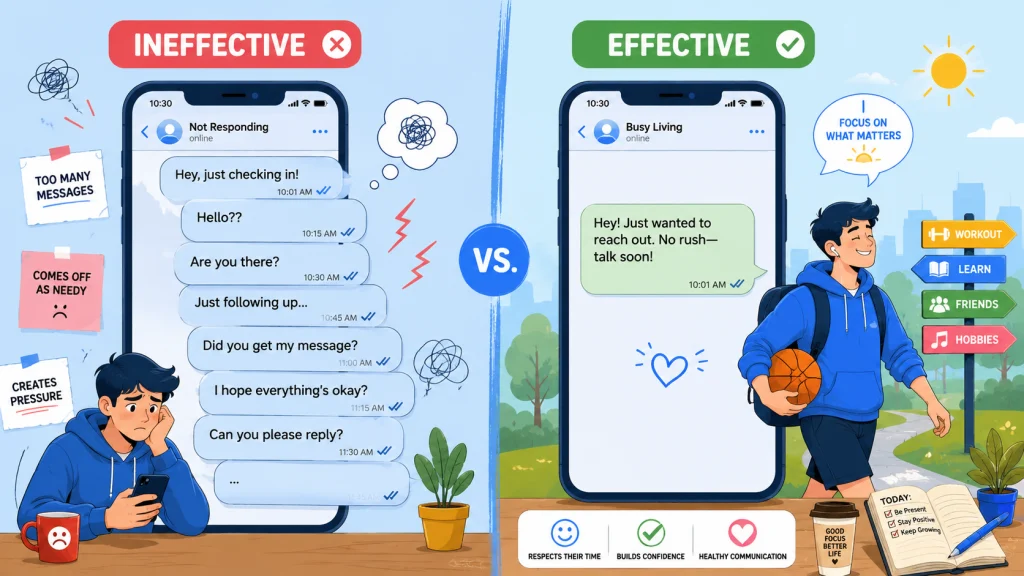
Some replies feel satisfying for about thirty seconds and then sit in your sent folder like evidence. Question stacks are the most common trap: “did you see this, are you mad, did I say something wrong” sent as three separate texts in a row. Guilt trips run a close second, anything that tries to make the other person feel bad for not replying fast enough. Needy jokes are the quiet third, humor that is really just hurt feelings wearing a costume.
| What you want to send | What to send instead |
|---|---|
| “Did you see this?? Hello???” | One clean follow-up, sent once |
| “Wow okay, guess I don’t matter” | A calm or savage line with no guilt attached |
| A three-text explanation of why you’re upset | Silence, or a single boundary text |
| A joke that’s really a complaint in disguise | A joke about the situation, not your feelings |
The test I use is simple and it has not failed me yet: if you would cringe rereading it tomorrow morning, do not send it tonight.
Final Thoughts
Being left on read is not a verdict on you, even though it feels that way in the moment. Most of the time it is a phone left in another room, a conversation someone genuinely forgot to finish, or a person who simply is not great at replying. The text you send next says far more about how you handle silence than it does about whatever they meant by it. Pick the lane that fits the relationship, savage, funny, calm, or nothing at all, and let the rest go.
If this kind of situation keeps coming up across different people in your life, it might be worth looking at how it connects to other patterns, like what happens when someone double texts you right after going quiet themselves, or how a flat-out rude text gets the right comeback without turning into a fight. The same instinct that knows when to hold back here will serve you in both.
FAQs
💬 What do you text someone who left you on read?
Match it to the relationship. A calm, low-pressure line works if you want an answer. A short funny or savage line works if you are fine either way. Keep it brief and skip the questions.
⏳ How long should you wait before texting again after being left on read?
A day is reasonable for most situations. Texting again within the hour usually reads as anxious rather than casual, even if that is not how you meant it.
🚪 Is it ever better to not respond at all?
Yes. If someone has a pattern of disappearing or has been disrespectful in the conversation, silence on your end can say more than any line you could send.
😬 Why does it feel worse to be left on read than to just not get a reply?
Because you know they saw it. There is no ambiguity left to soften it, which is exactly why the second text feels so much heavier than the first.
🔁 What if they always leave me on read and then reply hours later?
That is a pattern worth naming, not a one-off to keep excusing. A simple, honest boundary text usually says more than another clever reply ever could.
😅 Is a savage reply too much if I still like the person?
Usually, yes. Save savage for people you are fine cooling things off with. If you want this to keep going, calm or playful lands better than sharp.